

Filipino street food is one of the most exciting, flavour-packed, and affordable culinary experiences in South East Asia. From the sizzling skewers of Makati’s night markets to the steaming carts that line the streets of Cebu and Davao, eating on the go is woven into everyday Filipino life. Whether you are a first-time visitor or a seasoned traveller, no trip to the Philippines is complete without working your way through the country’s most iconic street eats. Here are ten dishes you absolutely cannot miss.
Getting to the Philippines

Before you can explore the vibrant food culture and common foods in the Philippines, you need to get there first. Ninoy Aquino International Airport (MNL) in Manila is the main gateway, with direct and connecting flights from across Europe, the Middle East, and beyond.
For travellers flying from the UK or Europe, Etihad Airways is an outstanding choice. Connecting through Abu Dhabi’s world-class Zayed International Airport, Etihad offers a seamless, comfortable journey to Manila with generous baggage allowances and exceptional in-flight service. With over 28,000 verified reviews on TripAdvisor, Etihad consistently earns praise for its reliability, luxurious cabin experience, and attentive crew, making those long-haul hours genuinely enjoyable rather than something to simply endure.
Staying Connected: Get a Philippines eSIM
Once you land, staying connected is essential, especially for navigating street food markets, finding the best local spots, and sharing your adventures. Holafly offers one of the best Philippines eSIM plans on the market, with unlimited data options that activate instantly on your smartphone before you even board the plane. Holafly holds an excellent reputation with travellers worldwide, backed by thousands of positive customer reviews on Trustpilot praising its ease of setup and reliable coverage across the Philippines.
10 Must-Have Filipino Street Foods
These are the famous Filipino dishes you will find sizzling, steaming, and bubbling on street corners across the country. Track them down, eat them fresh, and eat them often.
1. Isaw (Grilled Chicken or Pork Intestines)
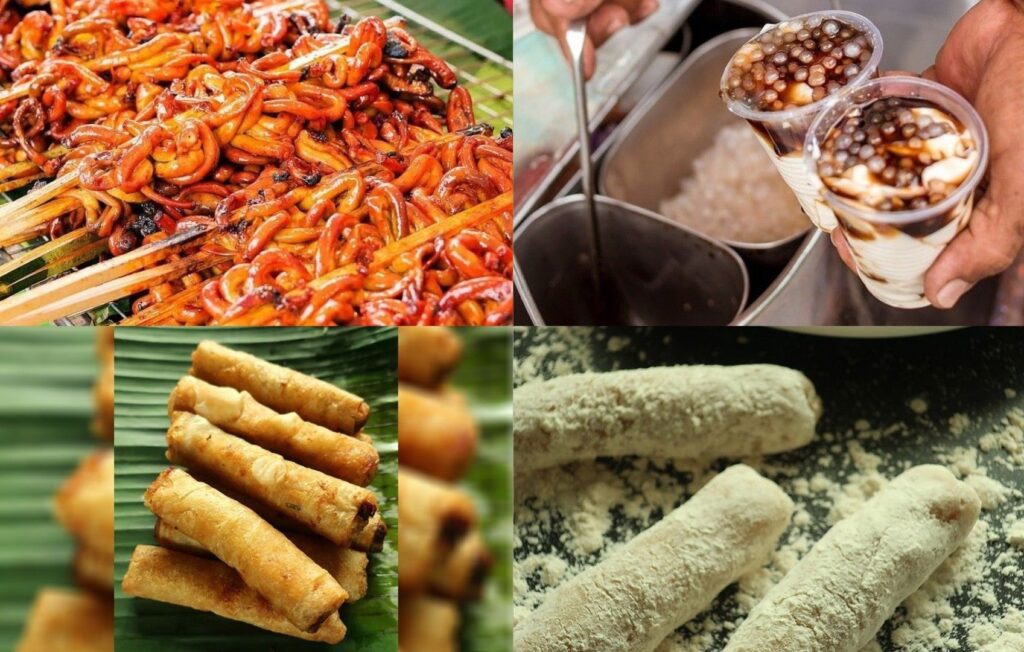
Isaw is arguably the most iconic Filipino street food of all. Chicken or pork intestines are thoroughly cleaned, marinated in a sweet and tangy vinegar-based sauce, skewered onto bamboo sticks, and grilled over charcoal until wonderfully charred. Served with a side of spiced vinegar dipping sauce, isaw is smoky, chewy, and deeply addictive. It is found at almost every street food stall across Manila and beyond.
2. Balut (Fertilised Duck Egg)
Balut is the Philippines’ most famous, and most talked-about, street food. A fertilised duck egg boiled and eaten directly from the shell, balut has a rich, savoury broth inside and a tender duck embryo that adventurous eaters will find surprisingly delicious. Seasoned with salt, chilli, and vinegar, it is a genuine Filipino rite of passage. Vendors typically sell it warm from buckets in the evening hours.
3. Kwek-Kwek (Battered Quail Eggs)
Kwek-kwek are hard-boiled quail eggs coated in a bright orange batter made with flour and annatto powder, then deep-fried until crispy. Served on skewers with vinegar, sweet sauce, or a spicy dipping sauce, they are crunchy on the outside, soft in the middle, and absolutely irresistible. Their vivid colour makes them one of the most visually striking snacks at any street food stall.
4. Fish Balls
Fish balls are the everyday snack of the Filipino street, round, bouncy, and utterly moreish. Made from fish paste, they are deep-fried and served on skewers with a choice of sauces ranging from sweet and sticky to sharp and spicy. A single peso buys you several skewers, making fish balls one of the most affordable and satisfying snacks in the country. You will find fish ball carts on virtually every busy corner in Manila.
5. Taho (Silken Tofu with Syrup and Tapioca)
Taho is the gentle, comforting side of Filipino street food, soft silken tofu served warm in a cup, topped with arnibal (a sweet brown sugar syrup) and chewy sago pearls. Taho vendors, known as magtataho, carry their wares in large aluminium buckets and call out through the streets each morning. It is a beloved breakfast staple and a deeply nostalgic taste for Filipinos of every generation.
6. Tempura (Filipino Style)
Filipino street tempura bears little resemblance to its Japanese namesake. Here, it refers to battered and deep-fried squid, fish, or vegetables served on skewers and dunked in a sweet chilli or vinegar sauce. Light, crispy, and incredibly satisfying, Filipino street tempura is a firm favourite among locals and visitors alike, and makes for a perfect late afternoon snack while wandering the markets.
7. Banana Cue (Caramelised Banana Skewers)
Banana cue is one of the most beloved afternoon snacks across the Philippines. Saba bananas, a short, starchy variety native to the region, are coated in brown sugar and deep-fried until the sugar caramelises into a rich, sticky glaze. Skewered onto bamboo sticks and sold from carts throughout the day, banana cue is sweet, warming, and deeply satisfying. It pairs beautifully with a cold glass of fresh buko (coconut) juice.
8. Sorbetes (Dirty Ice Cream)
Known affectionately as “dirty ice cream” (a reference to its street-side origins rather than any hygiene concern), sorbetes is the Philippines’ beloved artisan ice cream. Sold from colourful pushcarts by vendors known as sorbeteros, it comes in unique local flavours including ube (purple yam), cheese, and macapuno (coconut sport). Served in a cone or between two small bread rolls, sorbetes is the perfect antidote to the tropical heat.
9. Pork BBQ Skewers
Filipino pork barbecue skewers are a staple of every night market and street food scene across the archipelago. Thin strips of pork are marinated overnight in a sweet and savoury blend of soy sauce, banana ketchup, garlic, and brown sugar, then skewered and grilled over hot charcoal. The result is smoky, caramelised, and deeply flavourful. Served with steamed white rice, pork BBQ is a complete meal that costs next to nothing.
10. Halo-Halo (Mixed Shaved Ice Dessert)
Rounding off our top 10 Filipino dishes is halo-halo, the Philippines’ greatest dessert and the ultimate street food finale. A towering glass layered with shaved ice, evaporated milk, sweet red beans, coconut jelly, nata de coco, sago pearls, ube halaya (purple yam jam), leche flan, and a scoop of ube ice cream on top. Halo-halo means “mix-mix” in Filipino, and mixing it all together before eating is the only way. Colourful, complex, and gloriously refreshing, it is the perfect end to any street food crawl.
Where to Stay in Manila
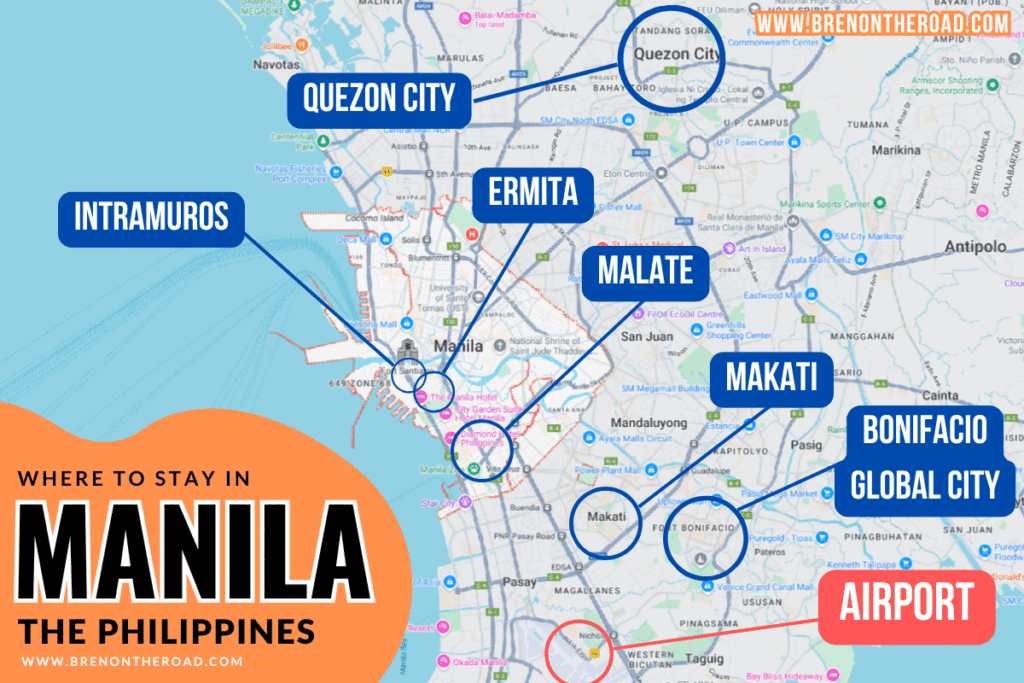
Manila is the ideal base for exploring the Philippines’ street food scene, with the districts of Binondo (the world’s oldest Chinatown), Quiapo, and Makati offering some of the best food stalls in the country. For accommodation close to the action, TripAdvisor is the best resource for comparing hotels across Manila’s diverse neighbourhoods, with a wide range of options to suit all budgets, from budget guesthouses in Ermita to five-star properties in Bonifacio Global City.
Looking for more food travel inspiration? Read our guide: Best Things to Do in London 2026
Your Philippines Food Questions Answered
1. What makes street food in the Philippines so special?
Filipino street food is unlike anything else in South East Asia. It combines bold smoky flavours from charcoal grilling, a love of sweet and sour dipping sauces, and deeply local ingredients like saba bananas, ube, and quail eggs. It is an essential part of everyday Filipino culture, typically affordable and eaten on the go. Popular examples include isaw, kwek-kwek, fish balls, taho, and halo-halo.
2. What are the most common foods in the Philippines?
The most common foods in the Philippines include rice as a staple at every meal, alongside dishes such as adobo (meat braised in vinegar and soy sauce), sinigang (sour tamarind soup), lechon (roasted pig), and kare-kare (oxtail stew). On the streets, fish balls, isaw, banana cue, and taho are among the most widely eaten snacks across the country.
3. What are the most famous Filipino dishes?
The most famous Filipino dishes include chicken adobo, sinigang, lechon, kare-kare, and pancit (noodles). On the street food side, balut, isaw, kwek-kwek, and halo-halo are internationally recognised as iconic Filipino culinary experiences. Halo-halo in particular has gained a global following and is now found in Filipino restaurants worldwide.
4. Is Filipino street food safe to eat?
Yes, eating from street stalls in the Philippines is generally very safe, particularly when you choose busy, popular vendors with high turnover, a sign that food is freshly prepared and not sitting out for long. Stick to cooked-to-order items, avoid pre-cut fruit from stalls without refrigeration, and carry hand sanitiser. Millions of tourists eat from Filipino street stalls every year without any issues.
5. Do I need an eSIM for travelling in the Philippines?
An eSIM is highly recommended for travelling in the Philippines. The country’s islands and diverse geography mean that having reliable mobile data is essential for navigation, translation apps, and finding the best local food spots. Holafly’s Philippines eSIM plan offers unlimited data, activates instantly before you travel, and is praised by travellers worldwide for its ease of use and strong coverage.
6. What is the best airline to fly to the Philippines from the UK?
Etihad Airways is an excellent choice for flights from the UK to the Philippines, connecting through Abu Dhabi with a smooth, well-regarded transit experience. Etihad has earned over 28,000 reviews on TripAdvisor and is consistently praised for its comfort, service quality, and reliability on long-haul routes, making it a top pick for the journey to Manila.
Final Thoughts: Why Filipino Street Food Should Be on Every Traveller’s List
The Philippines is one of the most exciting street food destinations in the world, and the ten dishes in this guide are just the beginning. Every region, every city, and every market has its own local specialities waiting to be discovered, from the seafood stalls of Cebu to the night markets of Davao and the turo-turo (point-point) canteens of Quezon City.
Fly there in comfort with Etihad Airways, stay connected throughout your trip with a Holafly Philippines eSIM, and use TripAdvisor to find the perfect base in Manila. Now all that is left to do is eat.