


Key Facts
Currency: Canadian Dollar (CAD). CAD 1 is approximately GBP 0.56. Flight from London Heathrow: Approximately 8 hours (Air Canada, British Airways, WestJet). UK visa: Electronic Travel Authorisation (eTA) required. Apply at canada.ca. Cost: CAD 7. Toronto public transport: TTC subway, streetcar, and bus. Single fare CAD 3.30. Presto card recommended. Best months: June to September for outdoor attractions. November to March for lower prices. Emergency number: 911. Official tourism site: seetorontonow.com.
Critical Travel Info: The CN Tower Sells Out on Clear Summer Days
The CN Tower observation deck is extremely popular on clear summer days. Consequently, tickets for peak sunset time slots sell out hours in advance. Therefore, book tickets online at cntower.ca before your visit rather than queuing on the day. Furthermore, visiting on weekday mornings typically delivers shorter queues and clearer visibility before afternoon cloud builds.
What Are the Top 20 Attractions to Visit in Toronto?
Toronto’s attractions divide naturally into five clusters: downtown and the waterfront, Midtown cultural venues, west-end neighbourhoods, outer parks and nature, and entertainment landmarks. Additionally, the TTC subway connects most of these areas quickly. As a result, two to three clusters are achievable in a single day.
Downtown and the Waterfront
1. CN Tower, Downtown Toronto

Entry: From CAD 43 adults / CAD 35 children (aged 4 to 12). LookOut Level included. Address: 290 Bremner Boulevard, Toronto, ON. TTC: Union Station (Line 1), then 10-minute walk or Rogers Centre shuttle. Hours: Daily 9am to 10:30pm.
How tall is the CN Tower and what can visitors see from the top?
The CN Tower stands 553 metres tall and held the record as the world’s tallest free-standing structure for over 30 years. The LookOut Level at 346 metres includes a glass floor and unobstructed views across Lake Ontario and the Toronto skyline. Furthermore, the revolving 360 Restaurant at 351 metres offers dining with panoramic views at an additional cost. Specifically, the EdgeWalk (an outdoor hands-free walk around the tower’s main pod) is available for an additional fee of approximately CAD 225.
Allow: 90 minutes to 2 hours.
2. Ripley’s Aquarium of Canada, Downtown Toronto
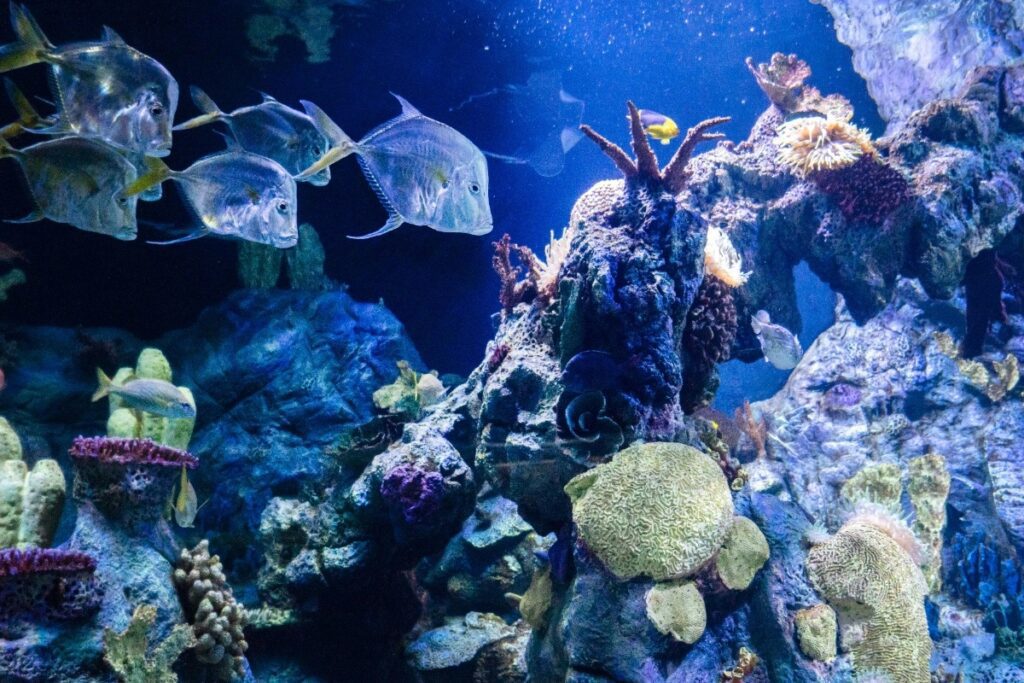
Entry: CAD 40 adults / CAD 28 children (aged 3 to 13). Address: 288 Bremner Boulevard, Toronto, ON. TTC: Union Station (Line 1). Hours: Daily 9am to 11pm.
What does Ripley’s Aquarium of Canada contain?
Ripley’s Aquarium of Canada sits adjacent to the CN Tower in downtown Toronto. It holds over 16,000 aquatic animals across nine themed galleries. Specifically, the Dangerous Lagoon gallery features a 97-metre underwater moving walkway surrounded by sharks and rays. Furthermore, the Ray Bay touch tank allows direct interaction with bat rays. Additionally, the aquarium offers behind-the-scenes tours and dive experiences at an additional charge. Consequently, it is one of Toronto’s most popular family attractions regardless of season.
Allow: 2 to 3 hours.
3. Harbourfront Centre, Lake Ontario
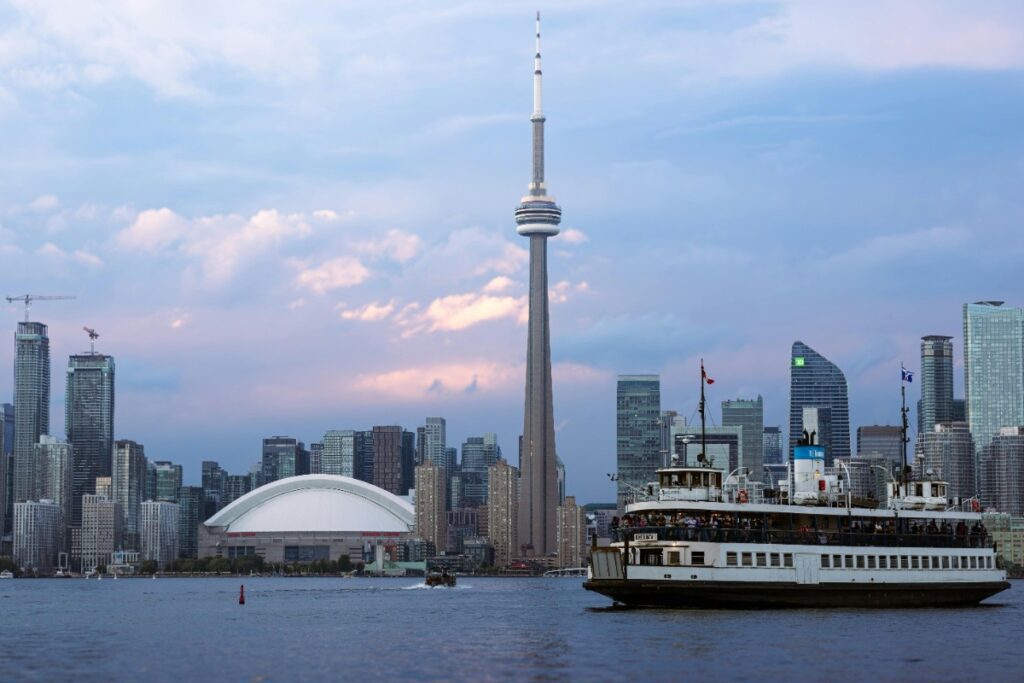
Entry: Free (general access). Ticketed events vary. Address: 235 Queens Quay West, Toronto, ON. TTC: Union Station (Line 1), then 509/510 streetcar to Rees Street. Hours: Outdoor areas open at all times. Indoor venues daily from 10am.
What is the Harbourfront Centre and is it free to visit?
Harbourfront Centre is a publicly funded arts and cultural venue on the Lake Ontario waterfront. General access to the outdoor areas, boardwalks, and waterfront promenade is completely free. Additionally, the centre hosts over 4,000 events annually, including concerts, craft markets, and dance festivals. Furthermore, ferry services to Toronto Islands depart from the nearby Jack Layton Ferry Terminal. Specifically, summer weekends see the boardwalk most active with food stalls, artisan markets, and live performances.
Allow: 1 to 3 hours depending on events.
4. Toronto Islands, Lake Ontario
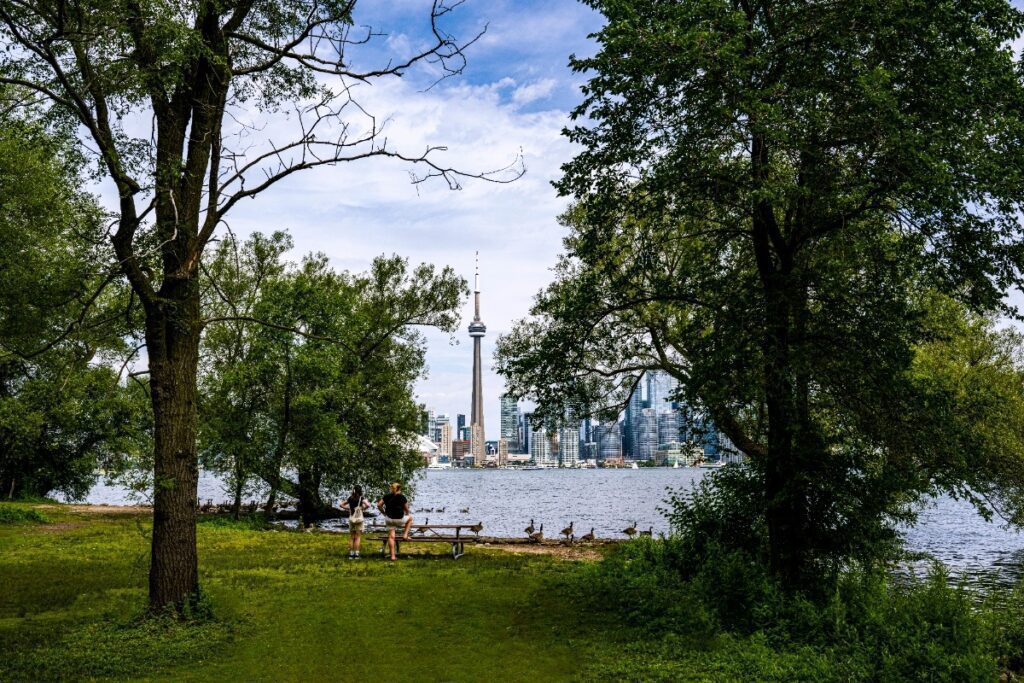
Entry: Return ferry: CAD 9.22 adults / CAD 4.61 children (aged 2 to 14). Departure: Jack Layton Ferry Terminal, 9 Queens Quay West, Toronto. TTC: Union Station (Line 1), then walk to ferry terminal. Ferry hours: Year-round, with reduced winter services.
What activities are available on the Toronto Islands?
The Toronto Islands are a chain of small islands in Lake Ontario, accessible by a 13-minute ferry from downtown Toronto. Ward’s Island and Hanlan’s Point feature beaches, cycling paths, and picnic areas. Furthermore, Centreville Amusement Park on Centre Island offers rides for children from mid-May to Labour Day. Specifically, the islands provide the best views of the Toronto skyline across the lake. Additionally, cycling is the primary mode of transport on the islands; bicycle hire is available at Centre Island. In contrast to the busy city centre, the islands offer a genuinely peaceful escape.
Allow: Half to full day.
5. Hockey Hall of Fame, Downtown Toronto
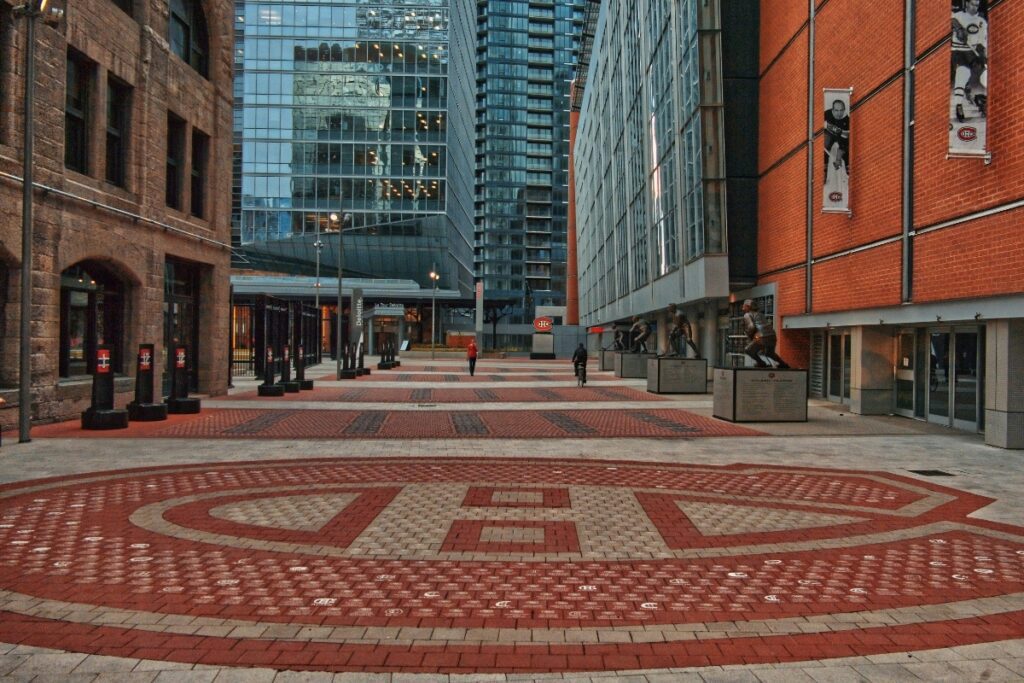
Entry: CAD 27 adults / CAD 17 children (aged 4 to 13). Address: 30 Yonge Street, Toronto, ON. TTC: Union Station (Line 1) or King Station. Hours: Monday to Friday 10am to 5pm. Saturday to Sunday 9:30am to 6pm. Extended hours in peak season.
What is the Hockey Hall of Fame and who is it for?
The Hockey Hall of Fame, 30 Yonge Street, is the world’s premier ice hockey museum. It houses the original Stanley Cup trophy and over 600,000 items of hockey memorabilia. Specifically, interactive exhibits allow visitors to face virtual NHL penalty shots and test their broadcasting skills. Furthermore, the building itself is a heritage landmark, occupying a restored 1885 Bank of Montreal branch. Additionally, the Hall of Fame suits sports enthusiasts of all ages, including those with limited prior knowledge of the game.
Allow: 90 minutes to 2 hours.
Yonge-Dundas Square and Midtown
6. Yonge-Dundas Square, Midtown Toronto
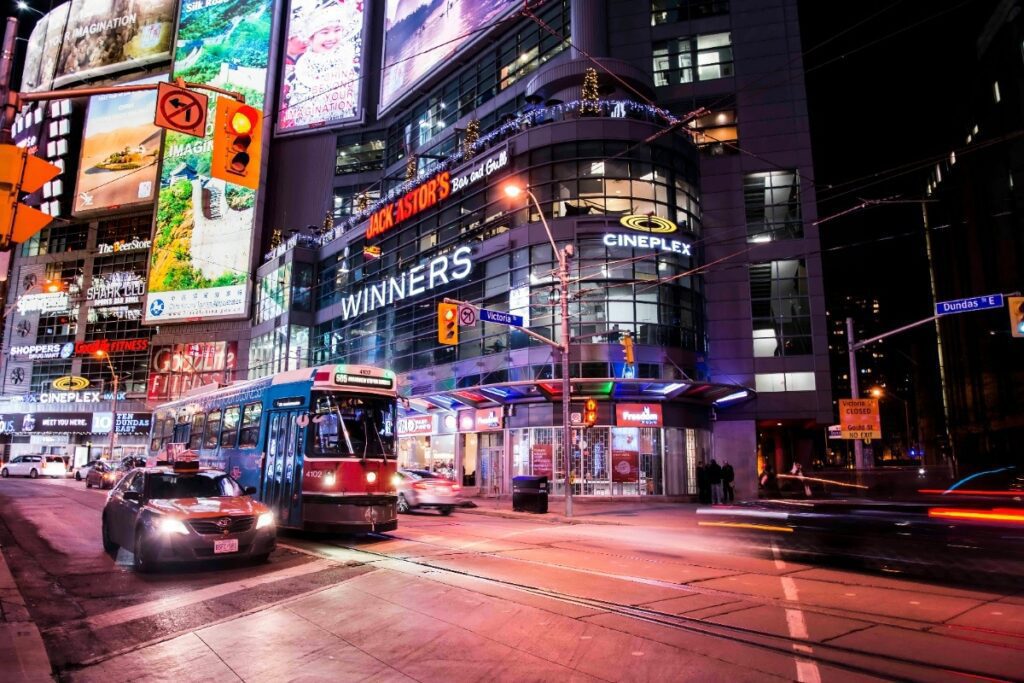
Entry: Free. Address: 1 Dundas Street East, Toronto, ON. TTC: Dundas Station (Line 1). Hours: Open at all times.
What is Yonge-Dundas Square in Toronto?
Yonge-Dundas Square is Toronto’s main public gathering space, often compared to New York’s Times Square. It hosts over 50 free outdoor events annually. Specifically, these include film screenings, live concerts, and cultural festivals throughout the year. Furthermore, the square is surrounded by major retailers, restaurants, and entertainment venues. Additionally, the Eaton Centre shopping mall sits directly adjacent and connects underground via the PATH network.
Allow: 30 minutes to 2 hours depending on events.
7. Royal Ontario Museum, Midtown Toronto
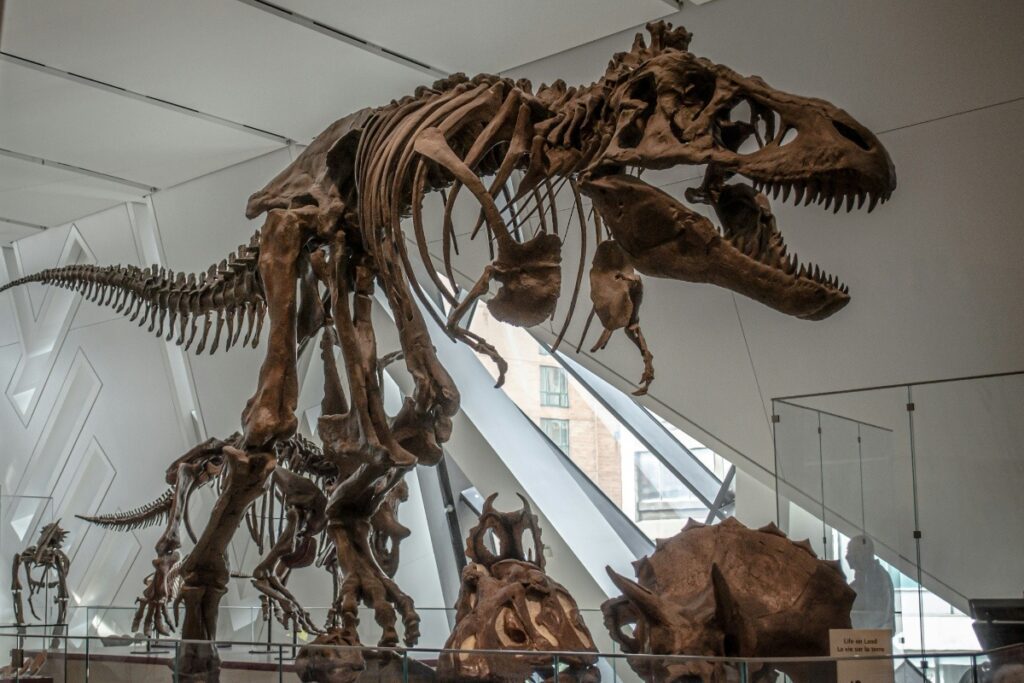
Entry: CAD 23 adults / CAD 18 youth (aged 15 to 19) / CAD 14 children (aged 4 to 14). Address: 100 Queen’s Park, Toronto, ON. TTC: Museum Station (Line 1). Hours: Saturday to Thursday 10am to 5:30pm. Friday 10am to 8:30pm.
What collections does the Royal Ontario Museum hold?
The Royal Ontario Museum (ROM) is Canada’s largest museum of natural history and world cultures. It holds over 13 million objects and 40 permanent galleries. Specifically, the museum’s collection covers ancient Egypt, dinosaurs, Indigenous art, and world minerals. Furthermore, the Michael Lee-Chin Crystal, a contemporary addition designed by Daniel Libeskind, makes the building architecturally striking from the street. Additionally, the ROM hosts major temporary exhibitions throughout the year. Consequently, visiting the website at rom.on.ca before arrival confirms current ticketing.
Allow: 2 to 3 hours.
8. Art Gallery of Ontario, West Queen West
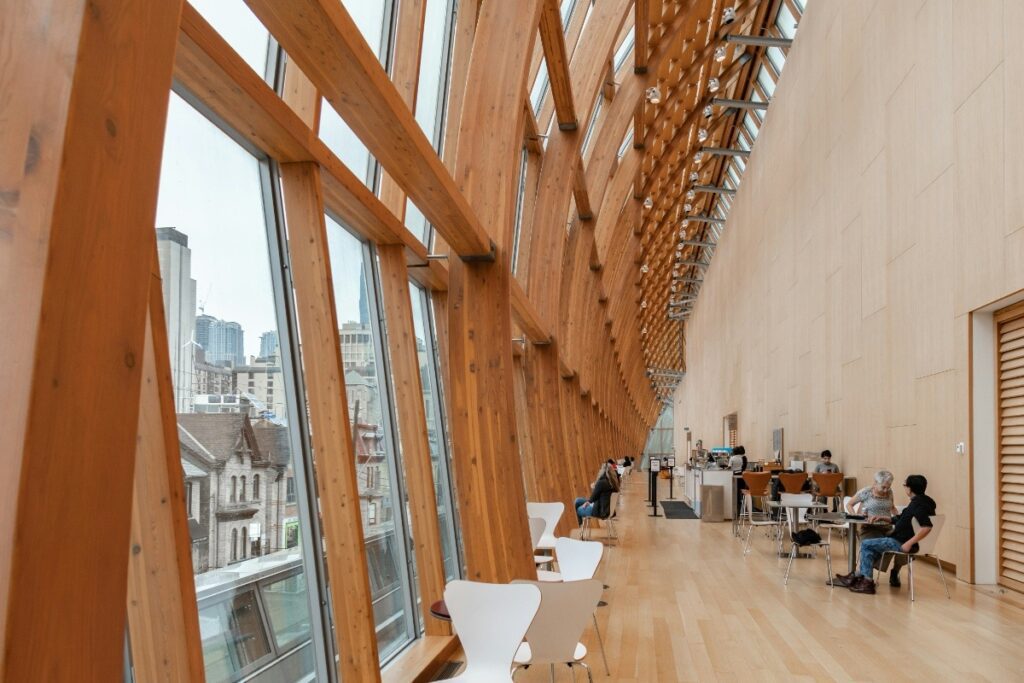
Entry: CAD 25 adults / Free for Ontario residents aged 25 and under. Address: 317 Dundas Street West, Toronto, ON. TTC: St. Patrick Station (Line 1). Hours: Tuesday to Sunday 10:30am to 5pm. Wednesday 10:30am to 9pm. Closed Mondays.
What does the Art Gallery of Ontario exhibit?
The Art Gallery of Ontario (AGO) holds one of North America’s largest art collections, with over 100,000 works spanning 2,000 years. Specifically, the collection includes works by Rubens, Rembrandt, and the Group of Seven Canadian painters. Furthermore, the Frank Gehry-designed glass and wood facade makes the building itself worth seeing from Dundas Street. Additionally, the AGO regularly hosts major international touring exhibitions. Free Wednesday evening admission from 6pm to 9pm applies for everyone, making it one of Toronto’s best-value evening experiences.
Allow: 2 to 3 hours.
9. Bata Shoe Museum, Midtown Toronto
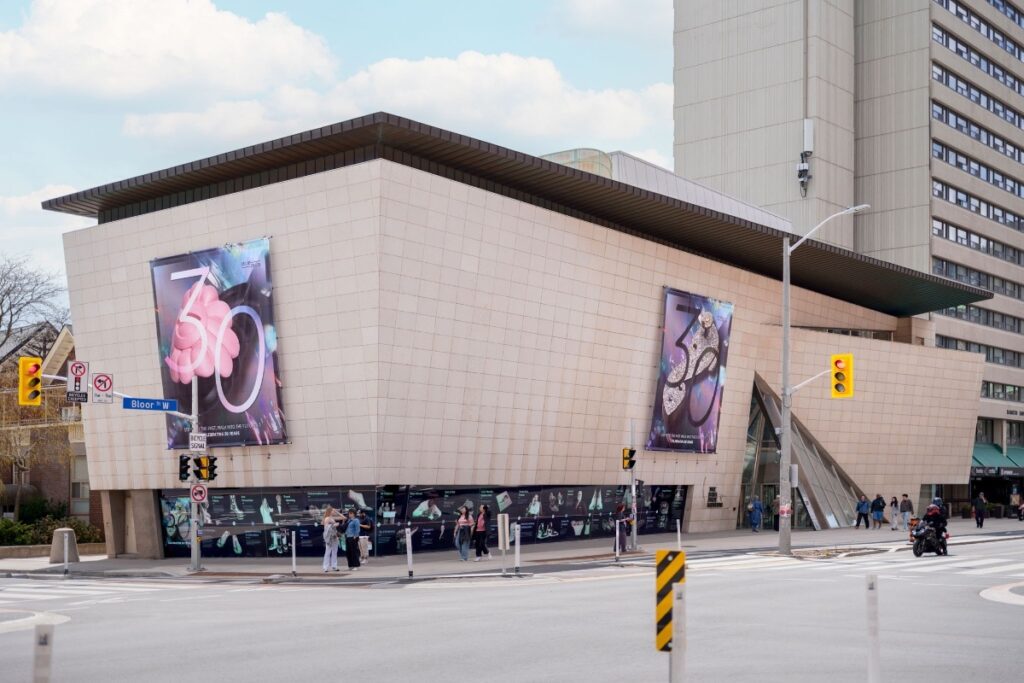
Source: batashoemuseum.ca media team
Entry: CAD 16 adults / CAD 12 students / CAD 6 children (aged 5 to 17). Address: 327 Bloor Street West, Toronto, ON. TTC: St. George Station (Lines 1 and 2). Hours: Monday to Saturday 10am to 5pm. Sunday noon to 5pm.
What is the Bata Shoe Museum and is it worth visiting?
The Bata Shoe Museum is the world’s only museum dedicated entirely to footwear history. It holds over 15,000 shoes spanning 4,500 years of human history. Specifically, the collection includes shoes worn by celebrity figures, ancient Egyptian sandals, and Chinese bound-foot shoes. Furthermore, the building’s architectural design resembles a shoebox from certain angles. Additionally, the museum delivers strong context for fashion history, cultural anthropology, and social history. Consequently, it suits both dedicated fashion enthusiasts and curious general visitors.
Visit their website: https://batashoemuseum.ca/
Allow: 60 to 90 minutes.
Heritage and Nature Districts
10. Distillery District, East Toronto
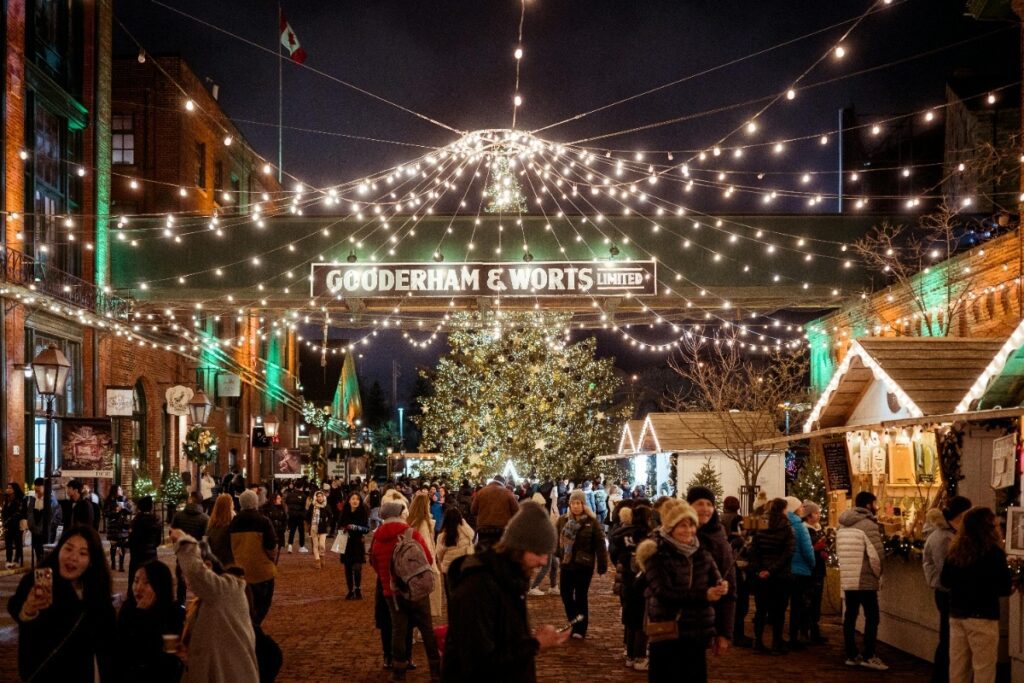
Entry: Free (outdoor pedestrian zone). Address: 55 Mill Street, Toronto, ON. TTC: King Station (Line 1), then 504 streetcar east to Parliament Street. Hours: Daily 10am to 10pm. Individual venue hours vary.
What is the Distillery District in Toronto?
The Distillery District is Toronto’s best-preserved example of Victorian industrial architecture. It occupies the site of the former Gooderham and Worts Distillery, founded in 1832. Specifically, the cobblestone pedestrian zone houses galleries, independent restaurants, craft breweries, and boutique shops. Furthermore, the district hosts major seasonal events including the Toronto Christmas Market in December and the Distillery Jazz Festival in summer. Entry to the outdoor area is completely free. Additionally, the CASE goods warehouse complex within the district contains over 50 studios and galleries.
Allow: 2 to 3 hours.
11. Kensington Market, West Toronto
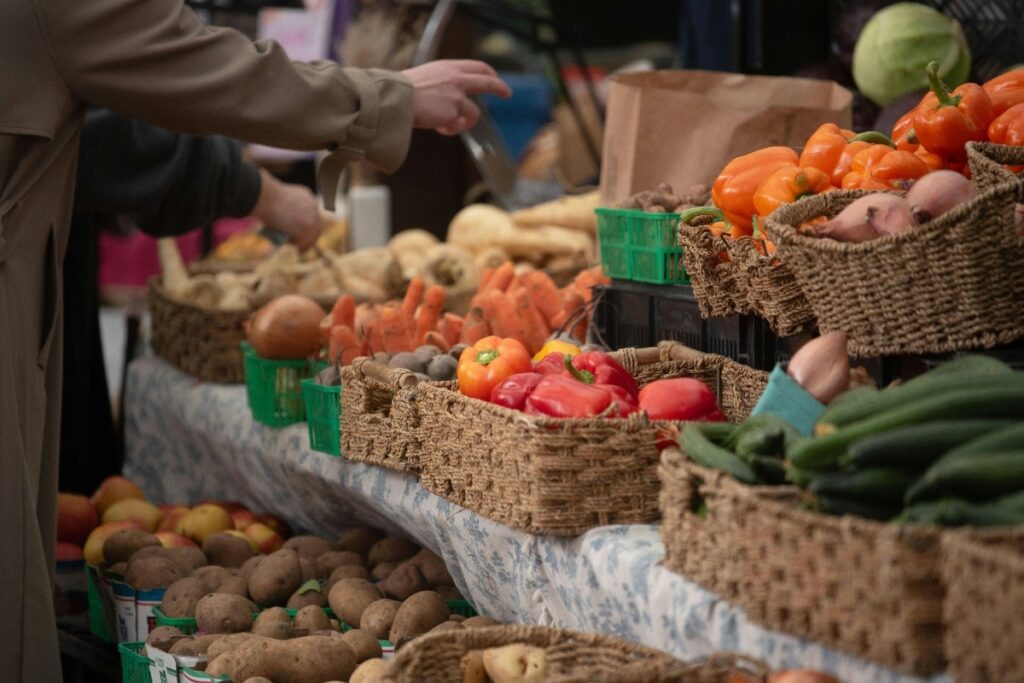
Entry: Free (outdoor neighbourhood). Address: Kensington Avenue, Toronto, ON. TTC: Spadina Station (Lines 1 and 2), then 510 streetcar south to College Street. Hours: Shops typically open Tuesday to Sunday from 11am to 6pm.
What is Kensington Market and why do visitors go there?
Kensington Market is a bohemian neighbourhood west of Chinatown, established by Jewish, Caribbean, and Latin American immigrant communities in the early 20th century. Specifically, it contains vintage clothing shops, international food stalls, independent cafés, and street art. Furthermore, Pedestrian Sundays operate from May to October on the last Sunday of each month. On these days, cars are excluded and the streets fill with live music, street performers, and food vendors. Additionally, Kensington is one of Toronto’s most culturally diverse and photogenic areas. Consequently, it suits travellers seeking an alternative to conventional tourist sites.
Allow: 1 to 2 hours.
12. St. Lawrence Market, Downtown Toronto
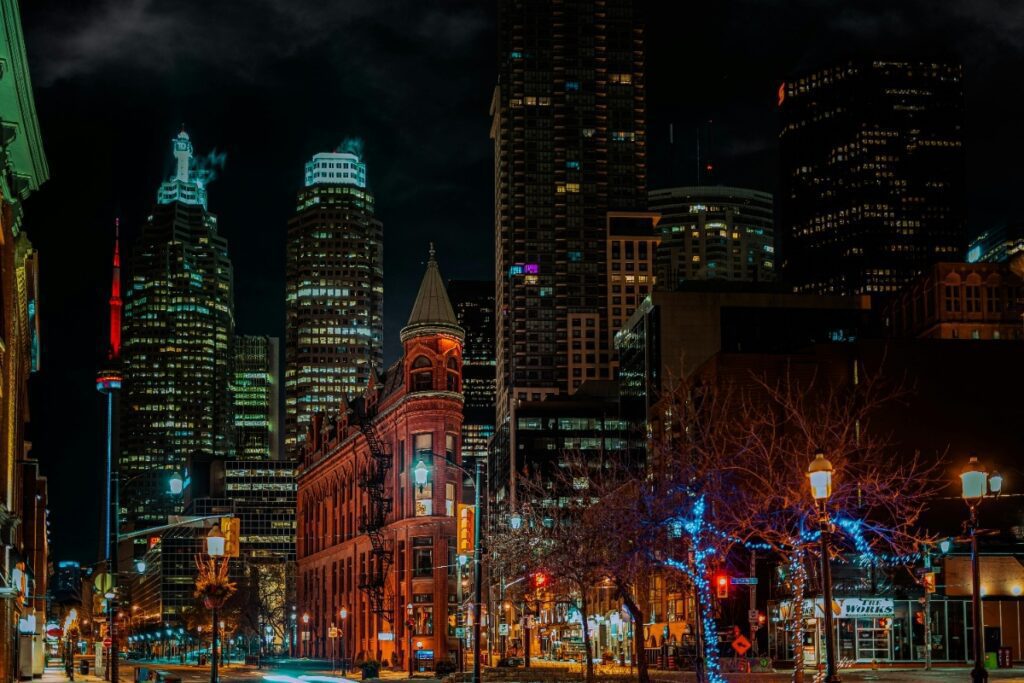
Entry: Free. Address: 93 Front Street East, Toronto, ON. TTC: Union Station (Line 1). Hours: Tuesday to Thursday 9am to 7pm. Friday 9am to 8pm. Saturday 5am to 5pm. Closed Sundays and Mondays.
What does St. Lawrence Market sell and when is it open?
St. Lawrence Market is consistently rated among the world’s best food markets. It occupies a heritage building from 1850 and houses over 120 vendors. Specifically, the market sells fresh produce, artisan cheeses, peameal bacon sandwiches, baked goods, and local honey. Furthermore, the Saturday Farmers’ Market in the North Market building opens from 5am with fresh farm produce. Additionally, the Sunday Antique Market operates in the same space on Sundays. Consequently, each day of the week delivers a different vendor mix.
Allow: 60 to 90 minutes.
13. Casa Loma, Midtown Toronto
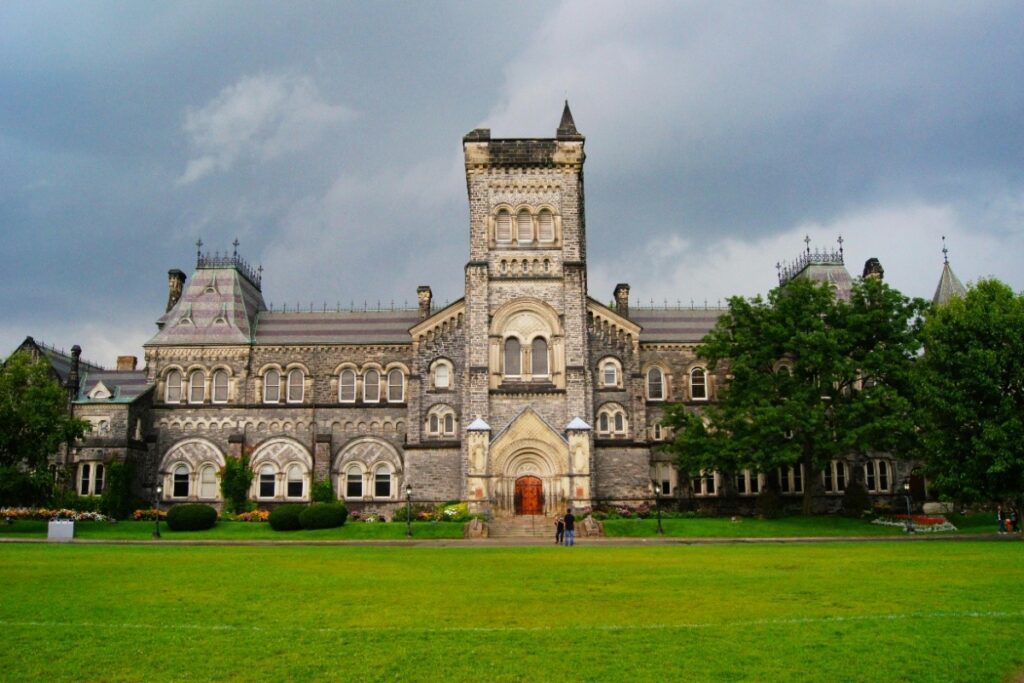
Entry: CAD 40 adults / CAD 28 youth (aged 14 to 17) / CAD 20 children (aged 4 to 13). Address: 1 Austin Terrace, Toronto, ON. TTC: Dupont Station (Line 1), then walk uphill or take the 127 bus. Hours: Daily 9:30am to 5pm.
What is Casa Loma and why is it famous in Toronto?
Casa Loma is a Gothic Revival castle built between 1911 and 1914 for financier Sir Henry Pellatt. It rises 98 steps above the city on a ravine escarpment in Midtown Toronto. Specifically, the castle contains 98 rooms, secret passages, and a 800-metre tunnel connecting to the stables. Furthermore, beautifully maintained gardens surround the castle from spring to autumn. Additionally, Casa Loma hosts seasonal events throughout the year, including Halloween experiences and winter illuminations. In contrast to many heritage sites, the castle remains genuinely immersive and dramatic.
Allow: 2 to 3 hours.
14. High Park, West Toronto
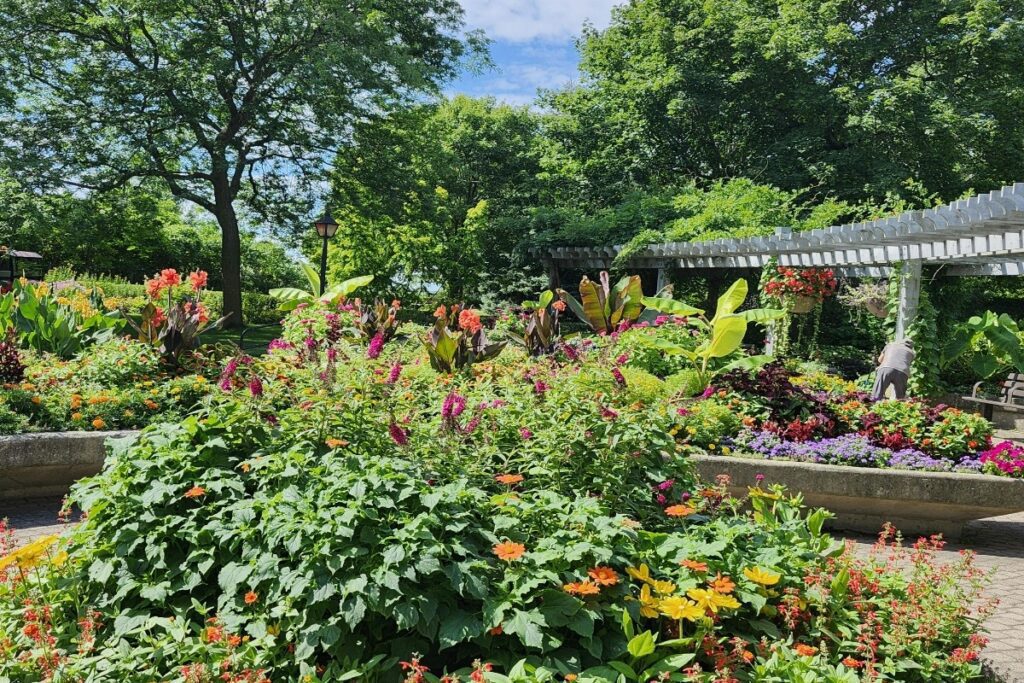
Entry: Free. Address: 1873 Bloor Street West, Toronto, ON. TTC: High Park Station (Line 2). Hours: Park open at all times. Zoo open daily 7am to dusk.
What is there to do in High Park Toronto?
High Park is Toronto’s largest public park, covering 161 hectares in the west end. It contains a free zoo, a natural swimming pool, woodland trails, sports facilities, and a Japanese cherry blossom grove. Specifically, the cherry blossoms bloom from late April to mid-May, attracting thousands of visitors annually. Furthermore, the park hosts free Shakespeare productions every summer at the outdoor amphitheatre. Additionally, Grenadier Pond within the park supports wildlife and offers calm lakeside walking. Consequently, High Park suits families, runners, and nature walkers equally well.
Allow: 2 to 4 hours depending on activities.
15. Bloor-Yorkville, Midtown Toronto
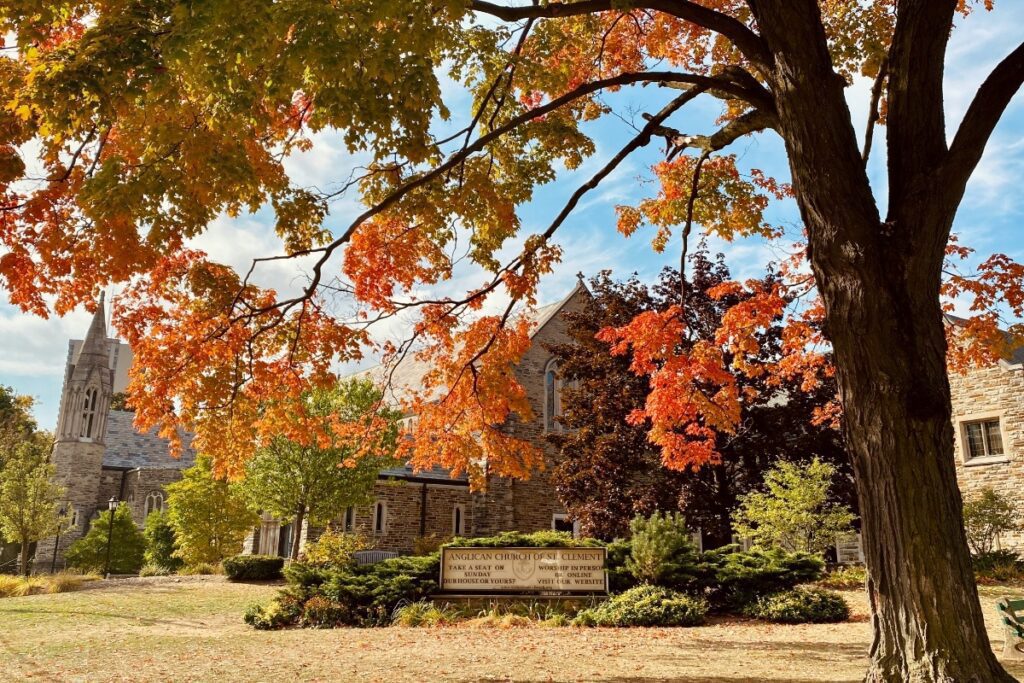
Entry: Free (neighbourhood browsing). Address: Bloor Street West at Yorkville Avenue, Toronto, ON. TTC: Bay Station or Bloor-Yonge Station (Lines 1 and 2). Hours: Shops typically open Monday to Saturday 10am to 6pm.
What is the Bloor-Yorkville neighbourhood known for in Toronto?
Bloor-Yorkville is Toronto’s premier luxury shopping and dining district, comparable to London’s Knightsbridge. Specifically, it houses flagship stores for Chanel, Prada, Louis Vuitton, and Hermès alongside independent galleries and fine dining restaurants. Furthermore, the neighbourhood contains the original Four Seasons Hotel Toronto and the Hazelton Hotel. Additionally, the annual Toronto International Film Festival (TIFF) in September centres around this area. Consequently, Bloor-Yorkville is simultaneously a residential neighbourhood and Toronto’s most cosmopolitan public space.
Allow: 1 to 2 hours.
Further Afield
16. Toronto Zoo, Scarborough

Entry: CAD 30 adults / CAD 22 youth (aged 13 to 17) / CAD 18 children (aged 3 to 12). Address: 2000 Meadowvale Road, Toronto (Scarborough), ON. TTC: Kennedy Station (Lines 2 and 4), then 86 bus to the zoo. Hours: Daily 9am to 4:30pm (7pm in summer).
What animals does Toronto Zoo house?
Toronto Zoo is one of the world’s largest zoos, covering 287 hectares and home to over 5,000 animals across 500 species. Specifically, it contains seven geographic zones representing major world ecosystems. Furthermore, the zoo participates in conservation breeding programmes for endangered species. Additionally, the African Savanna, Indo-Malaya, and Australasia zones are consistently popular with families. Consequently, a full zoo visit is best planned for a complete day with comfortable walking footwear.
Allow: Full day.
17. Evergreen Brick Works, Don Valley
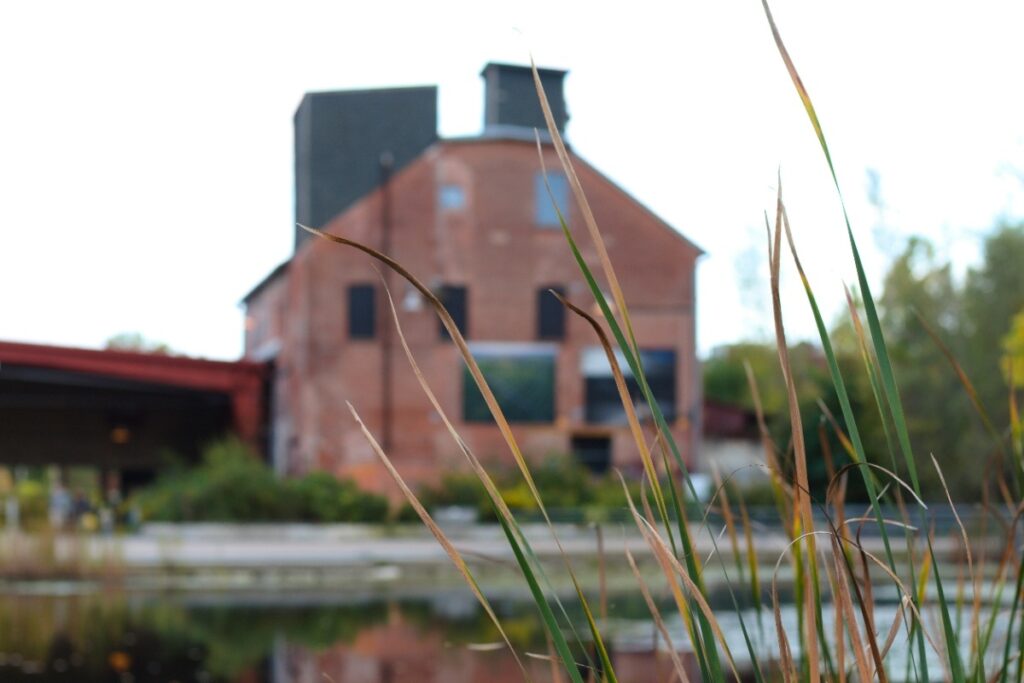
Entry: Free (general access). Markets and events vary. Address: 550 Bayview Avenue, Toronto, ON. TTC: Broadview Station (Line 2), then 28 bus to Pottery Road. Hours: Monday to Friday 9am to 5pm. Weekends 8am to 5pm. Saturday Farmers’ Market 8am to 1pm.
What is Evergreen Brick Works in Toronto?
Evergreen Brick Works is a former industrial site in the Don Valley transformed into a sustainability and community centre. It includes art galleries, restored heritage kilns, community gardens, and a Saturday Farmers’ Market. Specifically, the Don Valley Brickworks Quarry Park surrounding the site contains geological features and wildflower meadows. Furthermore, family-friendly programming including craft workshops and nature walks takes place year-round. Additionally, Dufferin Quarry Park and the Don River trail system are directly accessible from the site.
Allow: 2 to 3 hours.
18. Fort York National Historic Site, Downtown West
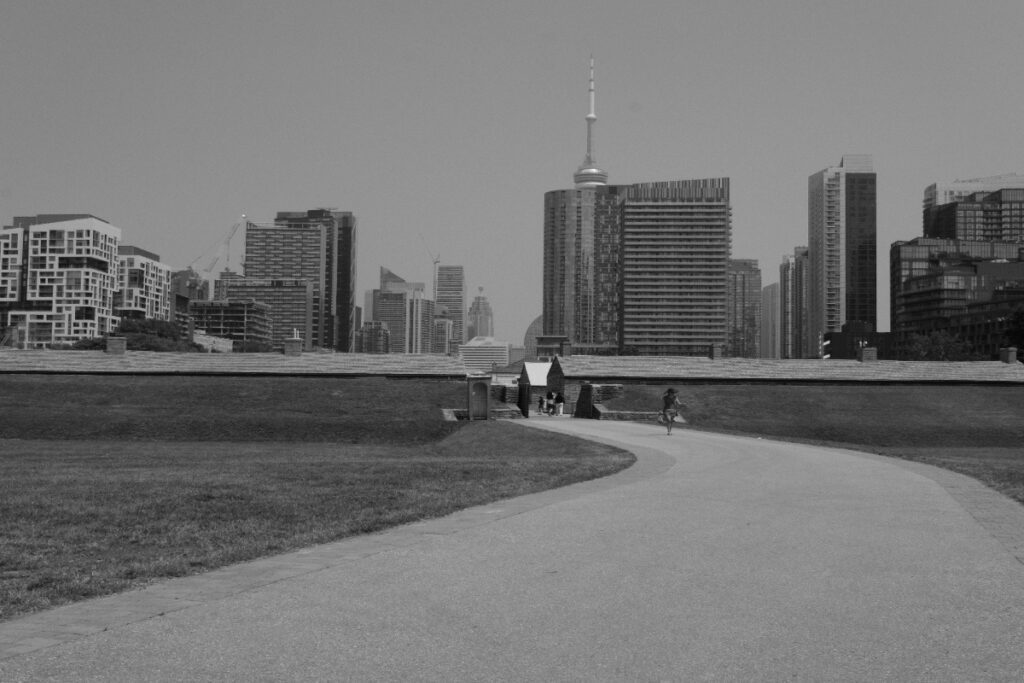
Entry: CAD 15 adults / Free for children under 12. Address: 250 Fort York Boulevard, Toronto, ON. TTC: Bathurst Station (Line 2), then short walk south. Hours: Tuesday to Sunday 10am to 4pm.
What is Fort York and what happened there historically?
Fort York is Toronto’s founding military establishment, built in 1793 and the site of the Battle of York in 1813 during the War of 1812. It is North America’s largest collection of original War of 1812-era buildings. Specifically, costumed interpreters demonstrate musket drills, cooking, and period crafts throughout the year. Furthermore, the fort sits at the original Lake Ontario shoreline, though land reclamation has moved the waterline significantly since 1793. Additionally, the site is a National Historic Site of Canada.
Allow: 60 to 90 minutes.
19. Toronto Botanical Garden, North York
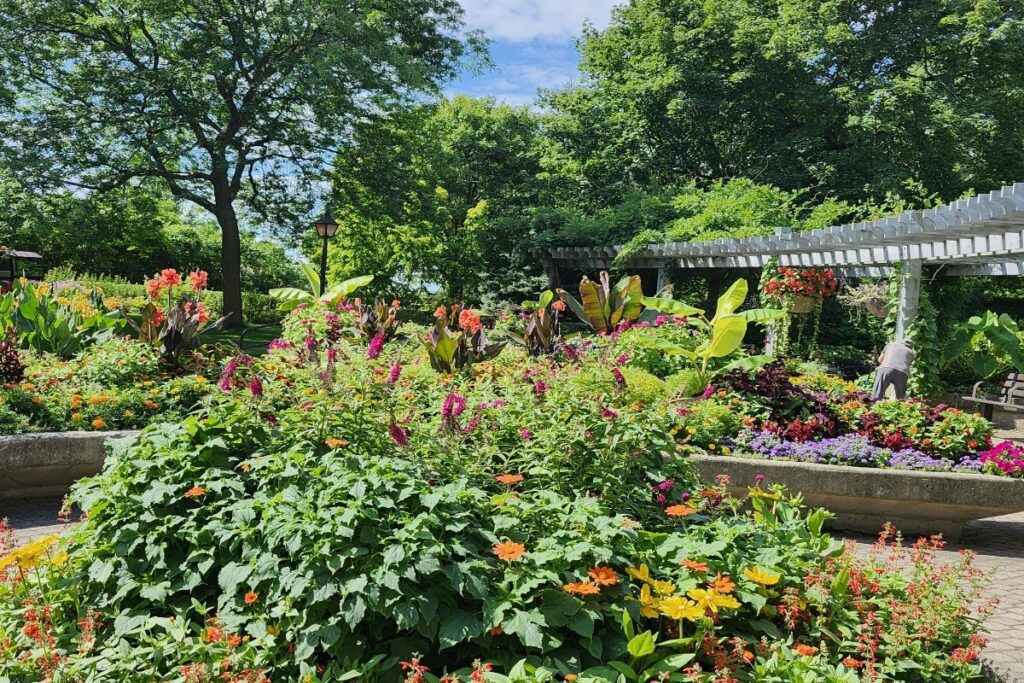
Entry: Free. Address: 777 Lawrence Avenue East, North York, Toronto, ON. TTC: Lawrence Station (Line 1), then 54 bus east. Hours: Daily dawn to dusk (year-round). Gardens indoor: Monday to Friday 9am to 5pm.
Is the Toronto Botanical Garden free to visit?
Yes, the Toronto Botanical Garden is free to visit. It covers 17 acres in North York’s Edwards Gardens. Specifically, the garden comprises 17 themed gardens including a rock garden, a woodland walk, and a kitchen garden. Furthermore, the adjacent Edwards Gardens park extends the natural green space significantly. Additionally, the Botanical Garden hosts gardening courses and horticultural workshops for adults and children. Consequently, it is an excellent destination for visitors seeking nature without entry fees.
Allow: 60 to 90 minutes.
20. Queen Street West, Downtown Toronto
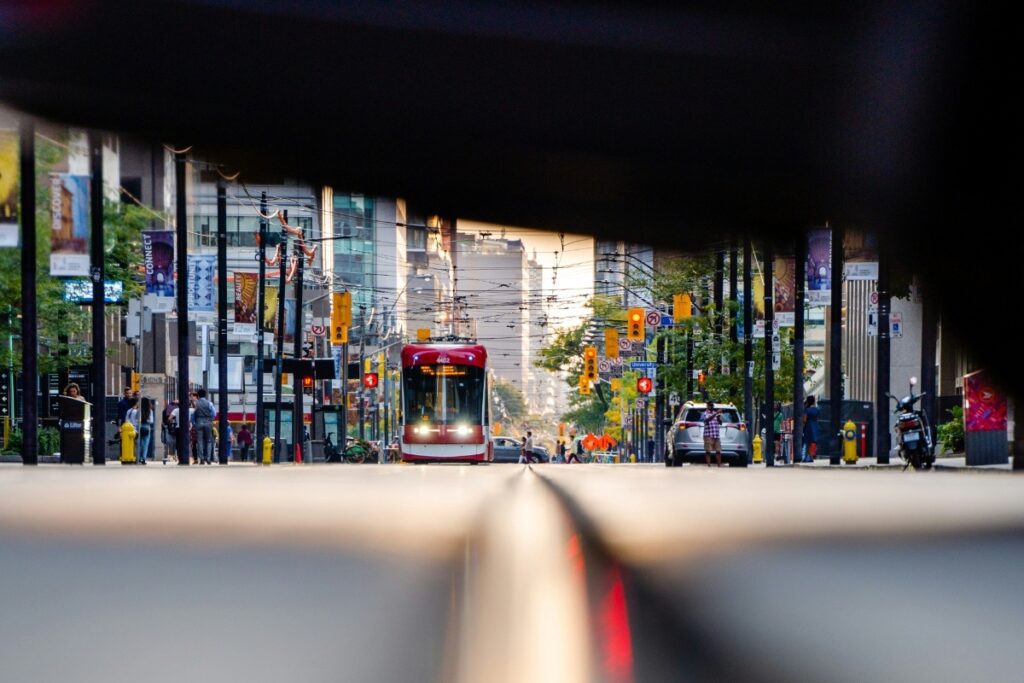
Entry: Free (neighbourhood browsing). Address: Queen Street West, between Spadina Avenue and Roncesvalles Avenue, Toronto. TTC: Osgoode Station or Queen Station (Line 1), or 501 Queen streetcar. Hours: Shops and galleries typically open Tuesday to Sunday from 11am.
What is Queen Street West known for in Toronto?
Queen Street West is Toronto’s creative and independent retail corridor, consistently recognised among the world’s coolest neighbourhoods. Specifically, it stretches west from University Avenue through the Fashion District, West Queen West, and Parkdale. Furthermore, it contains independent record shops, local designer boutiques, contemporary galleries, and some of Toronto’s most notable restaurants. Additionally, the area hosts the annual Queen West Art Crawl festival each September. In contrast to Bloor-Yorkville’s luxury positioning, Queen Street West is emphatically independent, grassroots, and eclectic.
Allow: 2 to 3 hours.
Critical Travel Info: Toronto’s Attractions Are Spread Across a Very Large City
Toronto spans 630 square kilometres. Consequently, outer attractions including the Toronto Zoo, Evergreen Brick Works, and Toronto Botanical Garden require significantly more transit time than downtown sites. Therefore, always check the TTC journey planner at ttc.ca before planning multi-site days. Furthermore, some outlying attractions require combining subway and bus connections. As a result, building realistic travel buffers between sites is essential for a comfortable itinerary.
Where Should UK Visitors Stay in Toronto?
All five hotels below are bookable through Expedia (uk.expedia.com). Creating a free account unlocks Member Prices. Furthermore, the Add-On Advantage can unlock up to 41% off selected hotels after booking a flight. Additionally, One Key Rewards earns OneKeyCash redeemable across Expedia, Hotels.com, and Vrbo.
Expedia – The One Place You Go to Go Places
Top 5 Hotels in Toronto (Verified 2026/27 Season)
| Hotel Name & Location | Contact Details | Guest Rating | Reservations |
|---|---|---|---|
| Shangri-La Toronto 188 University Avenue, Toronto, ON, M5H 0A3 | +1 647-788-8888 | BOOK NOW | |
| 1 Hotel Toronto 550 Wellington St W, Toronto, ON, M5V 2V4 | +1 416-640-7778 | BOOK NOW | |
| Four Seasons Hotel Toronto 60 Yorkville Avenue, Toronto, ON, M4W 0A4 | +1 416-964-0411 | BOOK NOW | |
| The Ritz-Carlton, Toronto 181 Wellington St W, Toronto, ON, M5V 3G7 | +1 416-585-2500 | BOOK NOW | |
| The Hazelton Hotel Toronto 118 Yorkville Ave, Toronto, ON, M5R 1C2 | +1 855-421-4087 | BOOK NOW |
When Is the Best Time to Visit Toronto?
June to September is optimal for outdoor attractions. Specifically, temperatures reach 25°C to 30°C, and Toronto Islands, High Park, and the Harbourfront are all at their most accessible. Furthermore, the Toronto International Film Festival in September brings world-class cinema to Bloor-Yorkville. In contrast, December to February sees heavy snowfall and temperatures below freezing. However, this period offers significantly lower hotel prices and indoor cultural highlights at the ROM, AGO, and Hockey Hall of Fame.
Cherry Blossom Season
High Park’s cherry blossoms typically bloom from late April to mid-May. Consequently, this brief window is one of Toronto’s most popular annual events. Furthermore, the City of Toronto provides live bloom updates at toronto.ca during the blossom season. Therefore, checking the forecast before planning a High Park visit in April is strongly recommended.
How Do UK Visitors Get to Toronto?
Direct flights from London Heathrow to Toronto Pearson International Airport (YYZ) operate with Air Canada, British Airways, and WestJet. The journey takes approximately 8 hours. Additionally, connections via Montreal or New York are available through partner airlines. UK visitors require an Electronic Travel Authorisation (eTA) before boarding. Apply online at canada.ca for CAD 7. The eTA is valid for five years or until your passport expires, whichever comes first.
EES and European Connections
EES does not apply on direct UK-to-Canada routings. However, UK visitors connecting through a Schengen Area hub encounter EES at the EU border. Specifically, connections via Amsterdam Schiphol on KLM or Frankfurt Airport on Lufthansa require biometric registration under EES, which activated on 10 April 2026. Consequently, build at least 45 to 60 minutes of extra connection time at any Schengen hub.
All ratings verified for the 2026 travel season. Prices and availability change daily. Confirm at time of booking.
Frequently Asked Questions for UK Visitors to Toronto
Do UK citizens need a visa to visit Canada? No visa is required, but UK passport holders must obtain an Electronic Travel Authorisation (eTA) before boarding any flight to Canada. Apply online at canada.ca. The cost is CAD 7. Additionally, the eTA is approved within minutes in most cases, though it is advisable to apply at least 72 hours before departure.
What currency does Canada use and can I pay by card? Canada uses the Canadian Dollar (CAD). Contactless card payment is widely accepted across Toronto. However, carry some cash for smaller markets, independent stalls, and tip payments. Specifically, ATMs are available throughout the city centre and at major TTC stations.
Timing, Transport and Language
When is the best time to visit Toronto? June to September offers the warmest weather and the most outdoor events. Specifically, the Toronto International Film Festival in September and Caribana in August are major annual highlights. However, spring (April to May) offers pleasant temperatures and significantly lower hotel rates. Furthermore, winter visits in December provide access to Christmas markets and lower accommodation costs.
How do I use the TTC in Toronto? Purchase a Presto card at any major TTC station. Specifically, this reloadable card reduces the single fare from CAD 3.30 to CAD 3.20. Additionally, two-hour transfers are included with a single Presto tap. Consequently, multiple bus and streetcar connections count as a single fare within the two-hour window. Furthermore, airport transit between Pearson International and downtown Toronto is available via the UP Express from Bloor-Yonge or Union Station for CAD 12.35.
Is English widely spoken in Toronto? Yes. English is Toronto’s primary language of daily life and commerce. However, Toronto is one of the world’s most linguistically diverse cities, with over 180 languages spoken by residents. Consequently, many neighbourhoods have areas where other languages predominate, particularly in Chinatown, Little Italy, and Greektown. Furthermore, French language services are available at all federal government facilities in Toronto.
All prices verified as of April 2026. Entry fees, opening hours, and TTC fares are subject to change. Always verify current information with official sources before travel.
Editorial & Accuracy Standards
- Expert Review:
Ammara Azmat,
Senior Travel Mobility Analyst (12+ years experience) - Status: Verified for accuracy against official 2026 service data and real-time traveller reports.
- Our Process: This content follows our Fact-Checking Policy.