

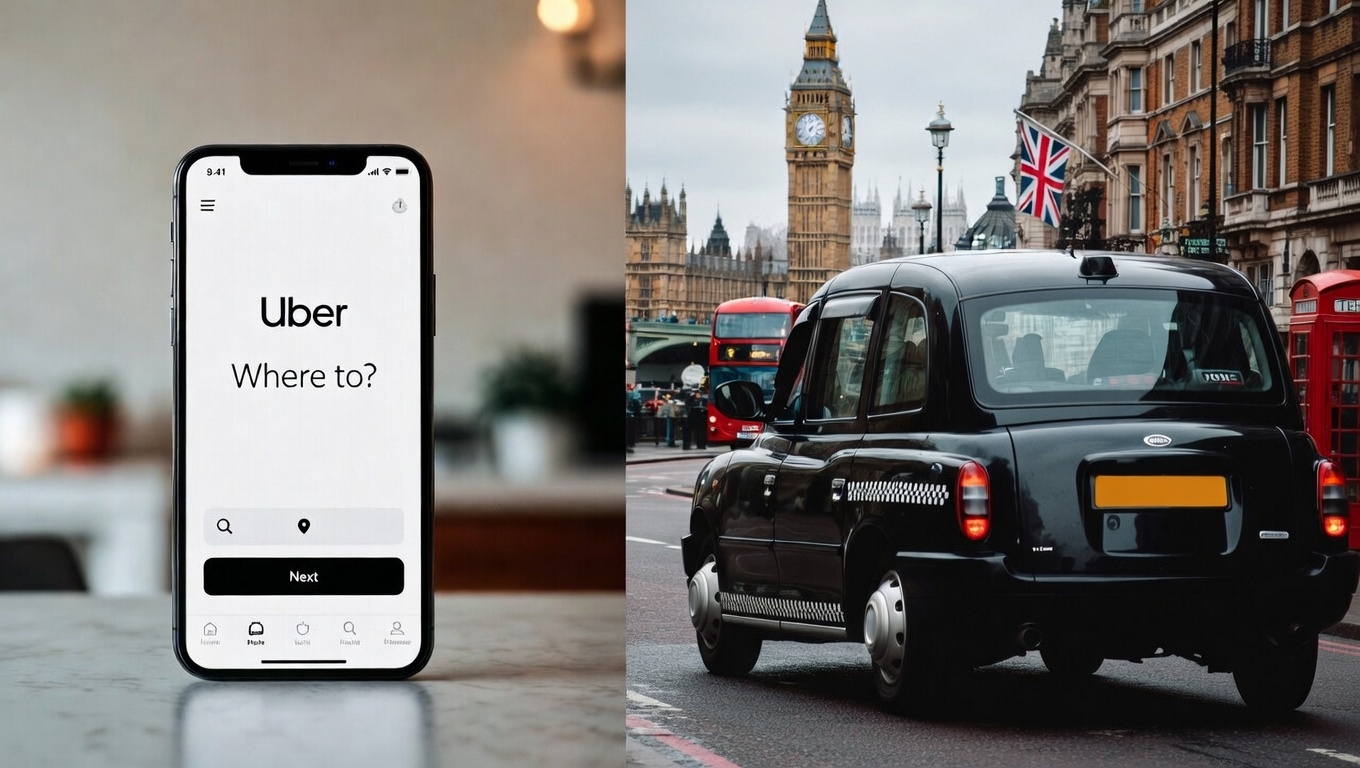
The debate of Uber vs taxi is one that modern travellers face regularly. Both get you from A to B, but they differ significantly in how you book, what you pay, the experience on board, and the convenience on offer. In this guide, we break down the key differences between Uber and traditional taxis — covering cost, safety, availability, reliability, and more — so you can make the best choice every time you need a ride.
Uber vs Taxi: Side-by-Side Comparison
What Is Uber?
Uber is the world’s leading ride-hailing platform, connecting passengers with drivers through a smartphone app in a matter of seconds. Founded in 2009, Uber now operates in over 70 countries and more than 10,000 cities worldwide, making it one of the most transformative innovations in modern transport.
With Uber, you open the app, enter your destination, see the price upfront, and your driver arrives — often within minutes. You can track your driver in real time on a live map, share your trip details with a friend or family member for added safety, and pay entirely within the app with no need for cash. At the end of your journey, both you and your driver rate the experience, creating a two-way accountability system that keeps standards consistently high. Book your next ride at Uber.
What Is a Traditional Taxi?
A traditional taxi is a licensed vehicle for hire, typically identified by a distinctive colour or roof sign and regulated by local authorities. Taxis can be hailed directly on the street, booked by phone, or picked up from designated taxi ranks at airports, train stations, and busy city areas.
The fare is calculated by a metered system based on distance and time, meaning the final cost is not known until you arrive. Payment methods vary — many taxis accept cards, but some still operate cash-only. Taxis are particularly well established in cities where hailing on the street remains a practical option.
The Key Differences Between Uber and Taxi
1. Booking: App vs Hailing
The most fundamental difference is how you book. With Uber, everything is managed through the app — you request a ride, see your driver’s name, photo, vehicle details, and live location before they even arrive. There is no uncertainty. Traditional taxis require you to be in the right place at the right time, or to make a phone call — a process that can be time-consuming and impractical late at night or in unfamiliar locations. The convenience of booking an Uber directly from your phone is one of its most compelling advantages.
2. Uber vs Taxi Cost: Which Is Cheaper?
The difference in cost between Uber and taxi is one of the most commonly asked questions. Uber typically offers competitive pricing, and crucially, you see the upfront fare before you confirm your booking. This transparency means there are no surprises. Traditional taxis use a metered rate, which can rise unpredictably in traffic. However, Uber does apply surge pricing during periods of high demand (such as Friday nights, major events, or bad weather), which can temporarily push costs higher than a standard taxi.
For everyday journeys, Uber is often comparable to or cheaper than a taxi. For airport transfers and off-peak travel, Uber’s upfront pricing makes it particularly easy to budget in advance.
3. Safety and Accountability
Both Uber and licensed taxis are regulated forms of transport, but they approach safety differently. Uber’s two-way rating system means drivers are accountable for their conduct and vehicle cleanliness. Every ride is logged, your driver’s details are visible before pickup, and you can share your live trip with a contact for additional peace of mind. Uber also provides in-app emergency assistance and records all journey data.
Licensed taxis are regulated by local authorities and drivers must pass background checks and knowledge tests. However, there is typically no rating system or real-time tracking, which limits accountability compared to Uber.
4. Availability and Reliability
Uber operates 24 hours a day, seven days a week in most cities where it is available. The app gives you an estimated arrival time for your driver, and in busy urban areas, this is often under five minutes. In rural or suburban areas, availability may be more limited.
Traditional taxis are highly available in city centres, particularly at taxi ranks near transport hubs, hotels, and entertainment districts. In areas where Uber coverage is thin, a local taxi firm may be the more reliable option.
5. Cashless and Contactless
Uber is entirely cashless. Payment is handled automatically through the app using a saved card or digital wallet, and a digital receipt is sent immediately after the journey. This is particularly convenient for business travellers who need clear records of expenses, and for international visitors who may not have local currency to hand.
While many taxis now accept card payments, cash remains common with some operators, and the experience is less streamlined than Uber’s seamless in-app payment.
6. Scheduled Rides and Advance Booking
One of Uber’s most practical features is the ability to schedule a ride in advance. Whether you need an early airport pickup or want to guarantee a lift home after an event, you can pre-book your Uber for a specific time and date. Traditional taxis can often be pre-booked by phone, but the process is less convenient and confirmation is less reliable.
7. Driver Ratings and Vehicle Standards
Uber’s driver rating system creates a meaningful incentive for drivers to maintain high standards. Drivers with consistently low ratings are removed from the platform, ensuring a baseline quality of service. Similarly, passengers are rated by drivers, encouraging respectful behaviour on both sides.
Traditional taxis are licensed and regulated, but there is no equivalent passenger-facing review system, which means quality can vary significantly between drivers and operators.
When Should You Choose Uber Over a Taxi?
Uber is generally the better choice in the following situations:
- You are in an unfamiliar city and want to know exactly who is picking you up
- You want a confirmed price before your journey begins
- You need a contactless, cashless payment option
- You are scheduling an early morning airport transfer
- You want to share your live location with someone for safety
- You are travelling late at night and want to avoid waiting at a taxi rank
Taxis remain a strong option when Uber availability is limited in your area, when you prefer paying cash, or when you need an immediate vehicle in a busy city centre where licensed taxis are plentiful.
Planning a trip to London? Our complete guide to the best things to do in London covers landmarks, museums, neighbourhoods, and everything you need to know for 2026.
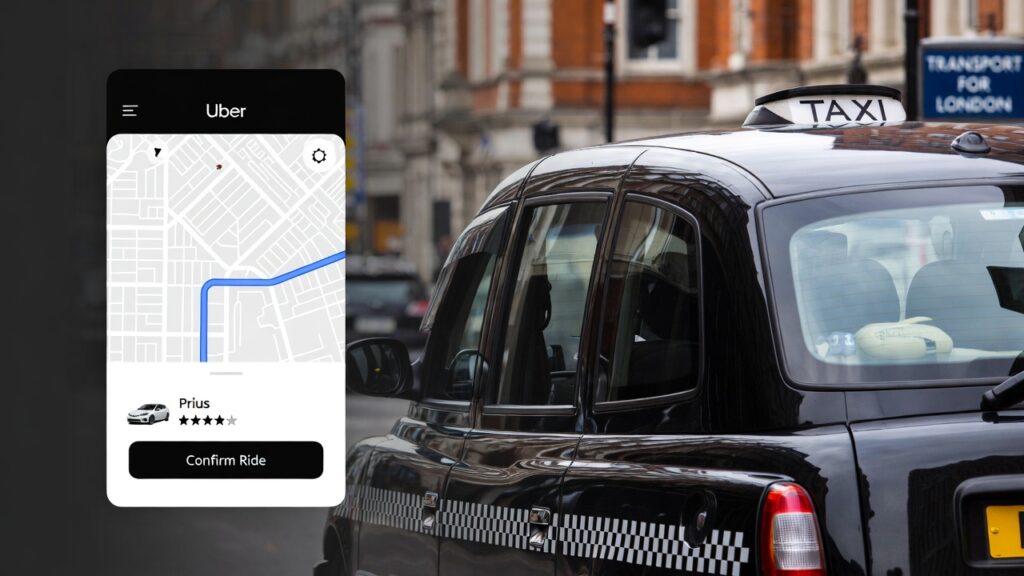
Frequently Asked Questions: Uber vs Taxi
1. What is the main difference between Uber and a taxi?
When comparing Uber vs. taxi services, the biggest distinction comes down to how you book and pay. Uber is app-based, shows you an upfront price, and payment is fully cashless. A traditional taxi can be hailed on the street or booked by phone, uses a metered fare, and may require cash. Uber also provides real-time driver tracking and a two-way rating system that taxis do not offer.
2. Is Uber cheaper than a taxi?
Uber vs taxi cost depends on the journey and timing. In most cases, Uber is comparable to or cheaper than a taxi for standard journeys. The key advantage is that Uber shows you the price upfront. During surge pricing periods — such as busy Friday nights or major events — Uber can cost more than a traditional taxi. For off-peak travel, Uber is frequently the more affordable option.
3. Is Uber safer than a taxi?
Both Uber and licensed taxis have safety regulations, but Uber offers additional features including driver identity verification before pickup, live GPS tracking, trip sharing, and an in-app emergency button. The two-way rating system also holds drivers to a consistent standard. Licensed taxis are regulated by local authorities, but do not offer the same level of in-journey transparency.
4. Can you book Uber in advance?
Yes. Uber allows you to schedule rides in advance, choosing your date, time, and pickup location. This is particularly useful for early morning airport transfers where you want certainty. The fare is shown upfront at the time of scheduling, so there are no surprises on the day.
5. What are the benefits of Uber over a taxi?
The key benefits of Uber over a traditional taxi include upfront pricing, cashless payment, real-time driver tracking, advance scheduling, a two-way accountability rating system, automatic digital receipts, and the ability to share your live trip with a contact. For travellers who value convenience, transparency, and safety, Uber consistently delivers on all fronts.
6. Does Uber operate internationally?
Yes, Uber operates in over 70 countries and more than 10,000 cities worldwide, making it an invaluable tool for international travellers. Whether you are arriving at an airport in London, Dubai, New York, or Sydney, the Uber app works the same way everywhere, with local pricing and local drivers — meaning you never have to figure out an unfamiliar taxi system in a new country.
Final Verdict: Uber vs Taxi
The debate of Uber versus taxi ultimately comes down to what matters most to you as a traveller. For convenience, transparency, safety features, and the freedom of cashless travel, Uber is the clear winner for the modern traveller. Its upfront pricing, real-time tracking, and global availability make it an indispensable travel companion whether you are navigating your home city or arriving somewhere for the first time.
We proudly support Uber for its innovation, reliability, and the positive impact it has had on modern transport around the world. Whether you are booking a quick city ride or scheduling an early airport transfer, Uber makes getting from A to B simpler, safer, and more transparent than ever before.
Editorial & Accuracy Standards
- Expert Review:
Ammara Azmat,
Senior Travel Mobility Analyst (12+ years experience) - Status: Verified for accuracy against official 2026 service data and real-time traveller reports.
- Our Process: This content follows our Fact-Checking Policy.