
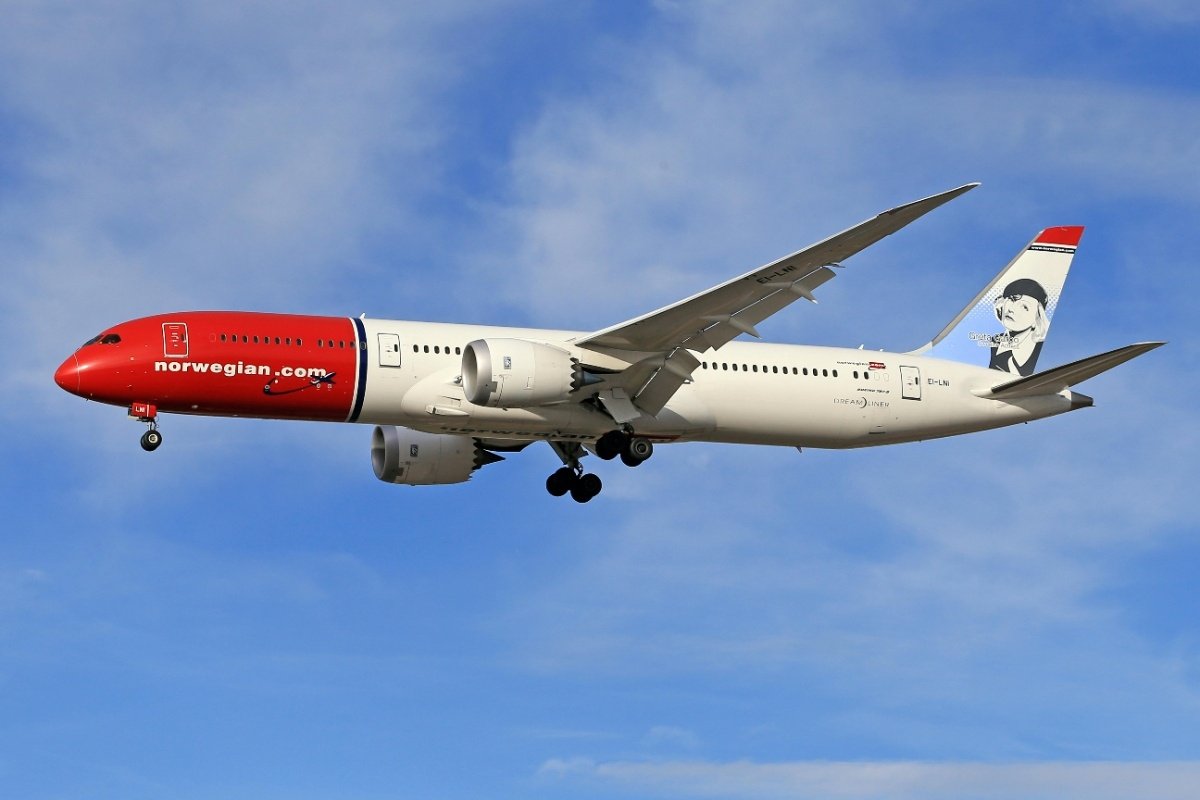
Norwegian Air Loyalty & Rewards Explained: What Travellers Need to Know
Sunset Weekly Disclosure: To help keep our guides free, this post contains affiliate links. If you click through and make a booking (such as hotels, flights, tours, or travel experiences), we may earn a commission at no extra cost to you. Sunset Weekly is an independent travel and lifestyle publication. While we may receive compensation from affiliate partners, this does not influence our editorial content, recommendations, or opinions. #ad
Quick Answer
Norwegian Air occupies an unusual position in the frequent flyer landscape. Unlike most major carriers, it does not currently operate a traditional miles-based loyalty programme. That absence shapes the entire experience of flying Norwegian regularly. It is also the first thing any frequent flier considering this airline needs to understand.
Norwegian once ran a loyalty programme called Norwegian Reward — a cashback model that accumulated CashPoints on eligible flights. However, the airline’s financial restructuring between 2020 and 2021 fundamentally changed its structure and route network. Norwegian emerged as a leaner, short-haul focused carrier. Norwegian Reward did not survive that transition in its original form.
This guide covers Norwegian’s loyalty history and its current rewards position. It also outlines the practical strategies available to frequent Norwegian fliers in 2026.
Norwegian Air: A Brief Background
Norwegian Air Shuttle built its reputation as one of Europe’s most disruptive low-cost carriers. At its peak, the airline ran an ambitious long-haul network — including transatlantic routes from London Gatwick, Edinburgh, and other European cities. Destinations included New York, Los Angeles, and Boston. Furthermore, it operated an extensive short-haul European network at aggressively competitive prices.
That expansion ultimately proved unsustainable. In late 2020, Norwegian filed for examinership in Ireland and entered a formal restructuring process in Norway. Consequently, the airline shed the vast majority of its long-haul operations and a significant portion of its fleet. It emerged in 2021 as a fundamentally different airline — primarily short-haul, Scandinavia-focused, and operationally leaner.
As part of that restructuring, Norwegian’s loyalty infrastructure underwent significant change. The Norwegian Reward programme that many passengers knew was discontinued during this period.
Norwegian Reward: What It Was
The Original CashPoints Model
Norwegian Reward operated differently from most airline loyalty programmes. Instead of earning miles by distance or fare class, members earned CashPoints — a cashback currency redeemable against future Norwegian bookings. Specifically, members earned a percentage of their ticket price back as CashPoints. They then applied those points as a discount on subsequent flights.
The model had genuine appeal for budget travellers. It was simple to understand and transparent in value. Members did not need to track complex award charts or tier requirements. Furthermore, CashPoints carried a clear monetary value rather than the opaque per-mile valuations of traditional programmes.
However, the CashPoints model also had structural weaknesses. Redemption value tied exclusively to Norwegian’s own inventory. Consequently, members held no value if Norwegian cancelled routes or restructured its operations. Unlike miles held in a stable alliance programme, CashPoints existed entirely within Norwegian’s ecosystem. There was no transfer or external redemption option.
The Restructuring Impact
When Norwegian underwent its 2020–2021 restructuring, members with CashPoints balances faced significant uncertainty. The process prioritised the airline’s financial survival. As a result, many members lost access to previously accumulated CashPoints either partially or entirely.
This outcome carries an important lesson beyond Norwegian specifically. Loyalty currencies held in standalone low-cost carrier programmes carry concentration risk. When the airline faces financial difficulty, those balances face the same vulnerability as any other unsecured creditor claim.
Norwegian’s Current Loyalty Position
No Traditional Frequent Flyer Programme
As of 2026, Norwegian does not operate a traditional tier-based frequent flyer programme. There are no miles, no status levels, and no partner earning options. The airline operates as a point-to-point low-cost carrier. It prices flights transparently and sells ancillary services — seat selection, baggage, meals — separately at the point of booking.
Norwegian has periodically explored loyalty and rewards mechanisms since its restructuring. However, it has not reinstated a comprehensive programme comparable to the original Norwegian Reward model. Travellers should therefore approach Norwegian primarily as a fare-value carrier rather than a loyalty-driven one.
Practical Loyalty Strategies for Norwegian Fliers
Strategy One: Credit Card Earning
The most practical way to extract loyalty value from Norwegian flights is through a travel credit card. Specifically, choose a card that earns points or miles on all purchases regardless of the airline you book. Cards linked to major programmes — such as American Express Membership Rewards or UK-issued cards tied to Avios — earn on every Norwegian transaction. Consequently, your Norwegian spend converts into transferable points within a stable programme.
This approach works regardless of whether Norwegian operates its own loyalty scheme. Furthermore, it concentrates your loyalty value in a programme with strong transfer partners and long-term stability — not a carrier-specific currency.
Strategy Two: Hotel and Car Loyalty Programmes
Norwegian flights frequently anchor city-break and short-haul leisure trips. Therefore, directing loyalty focus toward hotel programmes on these trips builds meaningful balances alongside your Norwegian bookings. IHG One Rewards, Marriott Bonvoy, and Hilton Honors all offer broader redemption flexibility than most airline currencies. In addition, hotel programmes carry greater financial resilience than standalone carrier schemes.
Strategy Three: Using Norwegian Within a Broader Travel Strategy
Norwegian operates primarily as an intra-European and Scandinavian carrier in its current form. Many frequent European travellers use Norwegian for price-efficient short-haul segments. Meanwhile, they direct loyalty activity toward a primary alliance programme on longer routes. In practice, this means booking Norwegian for the best available price. Separately, a programme like Flying Blue, Avios, or Miles & More accumulates through other flights and partner spend.
Who Flies Norwegian in 2026?
Norwegian’s restructured network serves a specific traveller profile. Understanding that profile helps clarify whether Norwegian belongs in your travel mix.
Leisure travellers represent Norwegian’s core market. The airline offers competitive fares on popular Scandinavian and European leisure routes. For this traveller, fare value matters more than loyalty accumulation, and Norwegian competes effectively on that basis.
Price-sensitive business travellers flying within Scandinavia or between Scandinavian cities and major European hubs use Norwegian for short-haul flexibility. However, without a business loyalty programme, this segment increasingly gravitates toward carriers that offer status benefits and lounge access.
Frequent UK-Norway travellers represent a loyal segment of Norwegian’s customer base. Routes between London, Edinburgh, and Norwegian cities remain core to the carrier’s network. For these travellers, fare competitiveness on specific routes drives booking decisions more than programme participation.
Pros and Cons: An Honest Assessment
Pros
- Competitive fares on Scandinavian and intra-European routes remain Norwegian’s primary value proposition. Travellers who prioritise price over rewards accumulation find genuine savings.
- Transparent pricing model: Norwegian’s ancillary fee structure is visible and itemised at booking. There are no hidden surcharges buried in the fare.
- Modern fleet on core routes: Norwegian operates relatively modern aircraft on its primary routes, delivering a reasonable short-haul experience.
- Freedom from loyalty lock-in: Without a programme to protect, Norwegian fliers can choose the best-priced carrier on each trip without penalty.
Cons
- No active loyalty programme means every Norwegian flight contributes zero miles, points, or status credit toward any structured reward.
- No alliance membership: Norwegian is not a member of oneworld, Star Alliance, or SkyTeam. Consequently, flights earn nothing toward any partner programme.
- Historic CashPoints loss: Members who held Norwegian Reward balances through the restructuring experienced real financial loss. That history is relevant context for any traveller considering loyalty with a non-alliance low-cost carrier.
- Limited long-haul network: Norwegian’s withdrawal from transatlantic routes removed one of its key differentiators. Its current network does not compete on range with full-service carriers.
- No upgrade path or premium benefits: Without status tiers or a loyalty programme, Norwegian offers no structured route to priority boarding, lounge access, or upgrades beyond what you purchase at booking.
Best Use Cases for Norwegian in 2026
Best suited to:
- Leisure travellers seeking competitive fares on Scandinavian and European short-haul routes, where price-efficiency matters more than loyalty accumulation.
- Travellers who earn loyalty points through credit card spend rather than flight activity, and therefore treat airline choice as fare-driven.
- Frequent travellers between the UK and Scandinavia who prioritise schedule and price on a specific route corridor.
Worth flying if:
- Norwegian offers meaningfully better pricing than alliance-carrier alternatives on your specific route and dates.
- You direct your loyalty activity through a stable credit card programme and do not rely on flight activity for points accumulation.
- You travel primarily for leisure and the fare saving outweighs the absence of miles or status credit.
Less suited to:
- Frequent business travellers who depend on status benefits, lounge access, and booking flexibility from a loyalty programme.
- Points collectors whose accumulation strategy relies on flight activity rather than card spend.
- Travellers who experienced CashPoints balance loss during the 2020–2021 restructuring and carry justified caution about airline-specific currencies.
Final Verdict: Is Norwegian Worth Flying in 2026?
Yes for fare value. No for loyalty strategy.
Norwegian Air is a competent, price-competitive short-haul carrier on its core Scandinavian and European routes. For the right traveller — particularly leisure fliers who prioritise cost efficiency — it delivers genuine value on specific route corridors.
However, Norwegian does not belong in a loyalty-driven travel strategy. Without a structured programme, alliance membership, or partner earning options, every Norwegian flight is a loyalty-neutral transaction. You receive the flight, the seat, and the fare. Nothing more carries forward.
That is not inherently a problem. Not every flight needs to earn miles. Nevertheless, travellers who treat loyalty accumulation as a serious priority should direct their Norwegian spend through a credit card programme. Channel alliance-earning flights toward carriers that reward frequency with structure.
Fly Norwegian for the fare. Build your loyalty points elsewhere.
Frequently Asked Questions: Norwegian Reward Explained
What Are CashPoints and Spenn — and What Is the Difference?
The Dual Currency Divide (Norwegian Edition)
Norwegian Reward runs two separate loyalty currencies simultaneously. Specifically, CashPoints are earned primarily through Bank Norwegian credit cards and qualifying retail partners. Spenn, in contrast, is the newer currency — earned directly on Norwegian and Widerøe flight bookings. Both sit within the same Norwegian Reward membership account, but they serve different earning purposes and different member profiles.
One fixed exchange rate anchors CashPoints to real-world value. Specifically, 1 CashPoint equals 1 Norwegian Krone (NOK). Norwegian then converts that figure dynamically into your local currency based on current exchange rates at redemption.
What You Should Know — The Dual Currency Divide (Norwegian Edition): The co-existence of CashPoints and Spenn creates a split that most members do not fully understand until they attempt a redemption. Spenn accumulates through flying. CashPoints, however, accumulate through card and retail spend. You cannot combine both currencies on a single booking — you must choose one or the other. Consequently, a member who holds a meaningful balance in both cannot pool them toward a single high-value redemption. Furthermore, the NOK-pegged value of CashPoints introduces currency fluctuation risk for non-Norwegian travellers. A CashPoints balance earned during a period of strong NOK converts to fewer euros or pounds when the NOK weakens. Indeed, unlike airline miles — which carry a fixed programme value — CashPoints behave more like a foreign currency holding.
Sunset Weekly Currency Clarity Score: 2.5 / 5 Two currencies, one account, zero combination flexibility. The NOK peg adds transparency but also exposes non-Norwegian members to exchange rate risk that traditional miles programmes avoid entirely.
What Can I Spend My Points On — and What Is Off-Limits?
The Tax Floor Reality
You can spend CashPoints and Spenn on flight tickets, seat reservations, extra baggage, Fast Track security access, and booking changes on Norwegian and Widerøe services. In practice, points cover most of the controllable costs in a Norwegian booking.
However, one structural exclusion applies across all redemptions. Specifically, you cannot use CashPoints or Spenn to pay airport taxes or certain government-mandated surcharges. These fees always require cash payment, regardless of your points balance.
What You Should Know — The Tax Floor Reality: The tax exclusion is not unique to Norwegian — most loyalty programmes enforce a similar floor on government-mandated charges. Nevertheless, it creates a gap between the advertised redemption experience and the actual checkout total. On short-haul European routes, airport taxes and government surcharges can represent a significant proportion of the overall fare. Consequently, a member who plans to cover a booking entirely with points will always find a residual cash payment at checkout. The Tax Floor Reality is the minimum cash outlay that no points balance — however large — can eliminate. Therefore, before targeting a specific redemption, check the tax component of your route. On some Scandinavian routes, those charges are considerable.
Sunset Weekly Verdict: Factor the tax floor into every redemption calculation. The headline “pay with points” experience always carries a cash tail.
Can I Claim Points After Flying?
The 30-Day Claim Ceiling
Yes. Norwegian Reward allows retroactive points claims for up to 30 days after your departure date. If your points fail to credit automatically, submit a claim through your Norwegian Reward account within that window.
Additionally, children and infants under two years old earn points on their personal tickets — provided the net fare on the ticket is higher than zero.
What You Should Know — The 30-Day Claim Ceiling: Thirty days is the shortest retroactive claim window in this entire Sunset Weekly comparison set. Cathay Pacific’s Asia Miles allows six months. Miles & More allows six months. Even programmes with relatively strict policies typically allow 60 to 90 days. Consequently, Norwegian’s 30-day ceiling leaves almost no margin for members who review account activity monthly rather than weekly. Furthermore, the children’s earning rule — while genuinely useful for family travellers — requires that the net fare exceed zero. Infant fares booked at promotional pricing occasionally produce a zero-net-fare ticket. In those cases, no points credit despite a confirmed booking. Therefore, always verify the net fare on children’s and infant tickets at the time of booking.
Sunset Weekly Claims Window Score: 1.5 / 5 The shortest retroactive window in this series. Set a calendar reminder within 48 hours of every flight — not at the end of the month.
How Does the Flight-Based Benefits System Work?
The 8-Flight Benefit Ladder
Norwegian Reward replaces traditional status tiers with a flight-count benefit system. Instead of chasing Silver or Gold, members unlock new benefits for every 8 qualifying flights within a rolling 12-month window.
The progression works as follows:
- 8 flights: Norwegian automatically applies a +2% CashPoints earning boost to your account.
- 16 flights and 24 flights: Norwegian grants you a selectable benefit at each milestone. You can choose from free standard seat reservations, free Fast Track security access, free checked baggage up to 23kg, or a free overhead cabin bag.
- 32 flights — Norwegian Reward Priority: Norwegian activates all available benefits simultaneously. In addition, two exclusive additions apply: Priority Boarding and priority customer support.
All milestones reset on a rolling 12-month basis rather than a fixed calendar year.
What You Should Know — The 8-Flight Benefit Ladder: The selectable benefit model is genuinely more flexible than fixed-tier systems. A frequent traveller who never checks bags can, for example, choose Fast Track instead of baggage allowance. However, the flexibility conceals a structural limitation that traditional tier programmes handle more predictably. The 8-Flight Benefit Ladder resets on a rolling 12-month basis. Consequently, a member who reaches 32 flights in month eight must sustain that pace to retain Priority benefits. Benefits drop not at a predictable year-end date but at a rolling point 12 months after your earliest qualifying flight exits the window. Furthermore, the +2% CashPoints boost at 8 flights is modest. On a typical short-haul fare, 2% additional CashPoints translates to a very small absolute value.
Sunset Weekly Status Flexibility Score: 3.5 / 5 More personalised than fixed tiers. However, the rolling reset and modest early-milestone value require active flight tracking to maximise.
How Does a Norwegian Reward Family Account Work?
The Family Captain Clause
Norwegian Reward allows up to seven members to link accounts into a single Family Account. All contributing members pool their CashPoints into one shared balance. A designated Family Captain controls the account and specifically manages which members hold permission to spend from the pooled balance.
One structural rule governs what happens when a member leaves. Any CashPoints that member contributed remain inside the Family Account permanently — Norwegian does not transfer them back to the departing member’s personal profile. However, the departing member retains their personal flight counts and any individual choice benefits they have unlocked.
What You Should Know — The Family Captain Clause: The pooling benefit is real and useful — particularly for families who take several Norwegian trips per year. Nevertheless, The Family Captain Clause creates an asymmetric power structure that members should understand before joining. The Family Captain holds unilateral control over spending permissions. Consequently, a contributing member who loses Captain approval loses redemption access to every CashPoint they personally earned — with no recovery mechanism. Furthermore, the permanent forfeiture of contributed CashPoints upon leaving is an unusually punitive exit condition. Cathay Pacific’s Redemption Group and Enrich’s Points Pool both handle member departure more equitably. Therefore, before contributing CashPoints to a Family Account, ensure the Family Captain arrangement reflects a stable, trusted relationship.
Sunset Weekly Family Pooling Score: 3 / 5 Useful earning mechanism. However, the Captain control model and permanent forfeiture on exit require careful consideration before joining — not after.
Can I Match My Existing Airline Status to Norwegian Reward?
The 60-Day Proving Window
Norwegian periodically offers a Status Match programme for elite members of other Nordic frequent flyer programmes — most notably SAS EuroBonus. Eligible applicants receive Norwegian Reward Priority benefits for a trial period upon approval. To retain those benefits beyond the trial, members must book and complete at least two qualifying flights with Norwegian or Widerøe within 60 days of approval.
What You Should Know — The 60-Day Proving Window: Status match offers from Norwegian target a specific competitive audience — SAS EuroBonus members who are evaluating a switch or a supplementary carrier relationship. The 60-day two-flight retention requirement is low in absolute terms. However, The 60-Day Proving Window carries two conditions worth scrutinising. First, the programme is not permanently open. Norwegian activates Status Match offers periodically rather than maintaining a standing application process. Consequently, availability depends on when you apply and what competitive pressure Norwegian faces at that moment. Second, matched status delivers Priority benefits for a trial period — but sustaining those benefits long-term still requires meeting the 32-flight rolling threshold. The match gets you in the door. Your own flying, however, keeps you there.
Sunset Weekly Status Match Value Score: 3.5 / 5 A low-friction entry point for SAS EuroBonus defectors. Nevertheless, long-term benefit retention demands genuine Norwegian flying volume — the match does not substitute for it.
An Important Note for Sunset Weekly Readers
The FAQ content above reflects Norwegian Reward as it currently operates in 2026. Specifically, readers of our main Norwegian Air article will note that the programme has evolved considerably since the airline’s 2020–2021 restructuring. The introduction of Spenn as a flight-earned currency and the 8-flight benefit ladder represent a meaningfully different product from the original CashPoints-only model. We will update the main article to reflect this current programme structure in a forthcoming revision.
Editorial & Accuracy Standards
- Expert Review:
Ammara Azmat,
Senior Travel Mobility Analyst (12+ years experience) - Status: Verified for accuracy against official 2026 service data and real-time traveller reports.
- Our Process: This content follows our Fact-Checking Policy.