
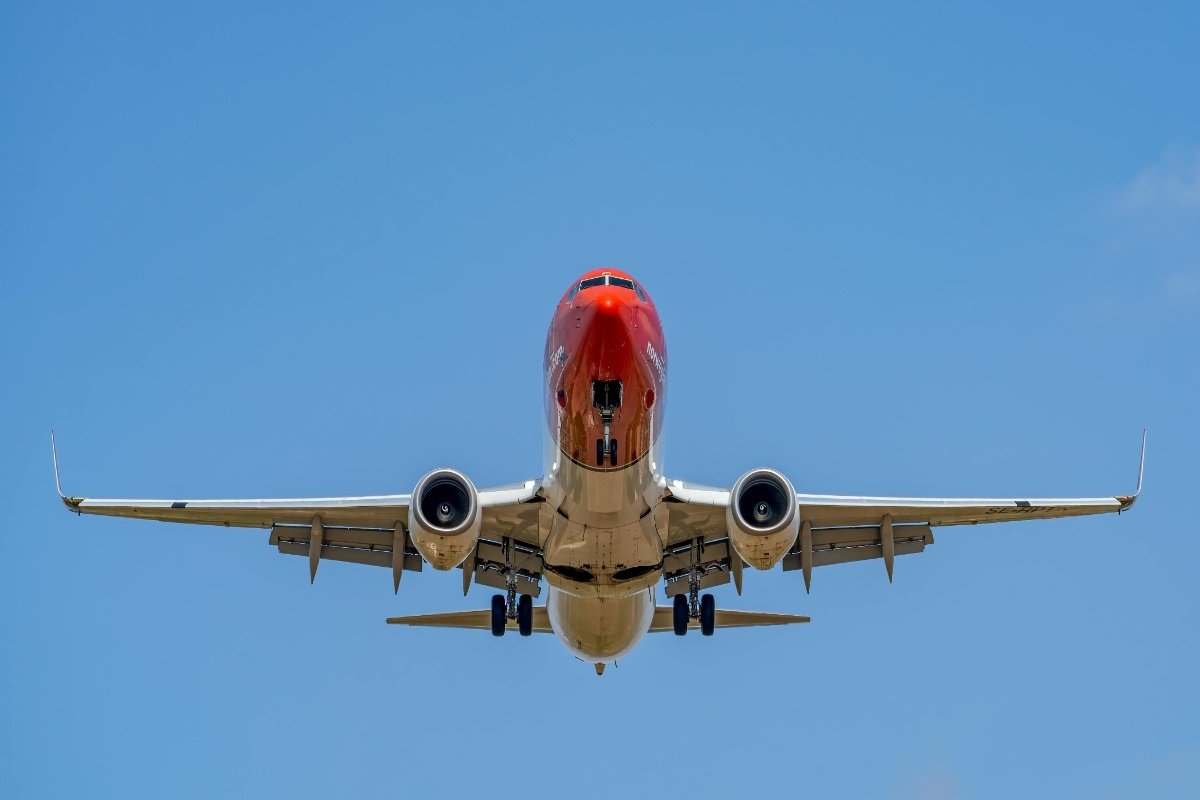
Balancing the Skies: The Smart Fleet and Wi-Fi Strategy at Norwegian Air
Sunset Weekly Disclosure: To help keep our guides free, this post contains affiliate links. If you click through and make a booking (such as hotels, flights, tours, or travel experiences), we may earn a commission at no extra cost to you. Sunset Weekly is an independent travel and lifestyle publication. While we may receive compensation from affiliate partners, this does not influence our editorial content, recommendations, or opinions. #ad
Quick Answer
Norwegian Air enters 2026 operating 62 Boeing 737-800s and 26 Boeing 737 MAX 8s. An 80-aircraft MAX 8 order targets an all-MAX fleet by 2030. Critically: Wi-Fi does not exist on any 737 MAX 8 in 2026. Anuvu satellite powers the 737-800 system. Norway’s dominant LCC is the Nordic price benchmark.
BOOK NOWWho is Norwegian Air and Why is it Europe’s Only 4-Star Low-Cost Success in 2026?
Answer: Norwegian Air Shuttle is Scandinavia’s dominant low-cost carrier, founded in 1993. It operates from Oslo, Copenhagen, Stockholm, and London Gatwick. In 2024, Norwegian carried 22.6 million passengers. It maintains a fleet of 86 Boeing 737 aircraft and owns Widerøe, Norway’s largest regional carrier.
Norwegian is a Skytrax 4-star airline — a rare distinction for a low-cost carrier. Unlike Ryanair or easyJet, Norwegian has consistently invested in a modern, single-family fleet and genuine connectivity infrastructure since becoming the first European airline to offer Wi-Fi on single-aisle aircraft in 2011. Furthermore, the acquisition of Widerøe in 2024 added 49 regional aircraft and a state-contracted domestic Norway network to the group. Consequently, the Norwegian Group now operates seamless connections from Oslo and Bergen to Europe and beyond through a single booking platform.
The 2026 Transformation Context
In 2026, Norwegian executes the most important fleet transition in its modern history. According to its 2024 annual report, the airline targets an all-Boeing 737 MAX 8 fleet by 2030. Because the MAX 8 delivers 14% lower emissions per seat than the 737-800, this transition directly underpins Norwegian’s target of a 45% CO2 reduction by 2030. Furthermore, an 80-aircraft MAX 8 order — the original 50-aircraft 2022 agreement plus 30 options exercised in September 2025 — delivers deliveries through to 2030.
The 2026 Fleet Reality: What Aircraft Are You Actually Flying On?
Answer: Norwegian operates 62 Boeing 737-800s and 26 Boeing 737 MAX 8s as of early 2026. According to AeroLOPA fleet data, that splits as 62 and 26 aircraft. Some Norwegian Air Sweden-operated routes additionally use Airbus A320s. Norwegian Reward status does not change which aircraft serves your route.
The Sunset Weekly Fleet Decoder
Understanding which Norwegian aircraft flies your specific route is critical in 2026. Because the 737 MAX 8 carries no Wi-Fi at all, passengers booking Wi-Fi-dependent travel must specifically verify the aircraft type before purchasing. Furthermore, the 737 MAX 8 carries three more seats than the 737-800, delivering 29–30 inches of pitch versus 31 inches on some 737-800 rows. Both aircraft types appear under identical Norwegian branding.
| Aircraft | Role | Economy Pitch | Power | Wi-Fi | Biometric |
|---|---|---|---|---|---|
| Boeing 737-800 | European and Nordic routes | 29–31″ (varies by row) | None standard | Anuvu GEO satellite (3 tiers) | Not currently deployed |
| Boeing 737-800 (exit rows) | Standard European routes | 38″ | None standard | Anuvu GEO satellite | Not currently deployed |
| Boeing 737 MAX 8 | European and Nordic routes | 29–30″ (exit rows: 38″) | USB-A (select) | None — no Wi-Fi installed | Not currently deployed |
The Sunset Weekly Legroom Index™ — Norwegian Edition
Norwegian’s 737 MAX 8 delivers 29–30 inches of standard pitch at 17.2 inches wide. According to The Points Guy’s verified seat map analysis, this is “scant, including by Norwegian Air’s own standards.” Specifically, even the airline’s older 737-800 offers some Economy rows at 31 inches of pitch. The exit rows on both aircraft types deliver 38 inches — the single most impactful free booking decision on any Norwegian flight. Notably, exit row seats 15A–F do not recline on the MAX 8, while row 16 exit seats do. Exit rows require that passengers are aged 16 or over and physically able to assist in an emergency.
The Wi-Fi: The Most Critical Fact About Norwegian in 2026
Answer: Wi-Fi does not exist on any Norwegian Boeing 737 MAX 8 aircraft. Norwegian’s official Wi-Fi page confirms this directly. Wi-Fi operates only on the 737-800 fleet, powered by Anuvu’s Dedicated Space Ku-band GEO satellite system — not Starlink LEO. Always verify the specific aircraft type before booking if connectivity matters.
The Sunset Weekly Connectivity Scorecard™
This is the most important intelligence finding in this entire report. Norwegian’s official Wi-Fi page states the fact directly: “Wi-Fi is not currently available on our Boeing 737 MAX 8 aircraft.” Consequently, as Norwegian transitions to an all-MAX 8 fleet by 2030, the proportion of Wi-Fi-capable flights shrinks — not grows — each year.
For Wi-Fi on Norwegian, your flight must specifically operate a 737-800. Furthermore, not all 737-800 aircraft are equally equipped. Norwegian partnered with Anuvu in April 2023 to upgrade its 737-800 fleet with Anuvu’s Dedicated Space technology. According to Norwegian’s official press release, this delivers speeds “up to twenty times faster than what was previously available” and supports ten times as many simultaneous users without performance degradation.
Anuvu Technology: What It Is and What It Delivers
Anuvu’s Dedicated Space system uses Ku-band geostationary (GEO) satellites — not Starlink’s low-Earth orbit (LEO) constellation. Because GEO satellites orbit at approximately 35,800 km altitude, the minimum signal latency sits around 850 ms according to independent speed tests. This means round-trip internet requests take at least 1.7 seconds before any server response — regardless of bandwidth. In contrast, Starlink LEO achieves 20–40 ms latency due to its much lower 550 km orbital altitude.
What you actually get in May 2026, by tier:
- SURF (free): 15 minutes of limited-speed access. Sufficient for email and messaging apps. Not suitable for streaming or video calls.
- STREAM LIMITED (paid): 30 or 60 minutes of premium-speed access. The time window depends on flight duration. Suitable for streaming, social media, and light VPN use.
- STREAM UNLIMITED (paid): Full-flight premium access. Suitable for video streaming and sustained work use.
Insight: Even the upgraded Anuvu system is GEO satellite technology with ~850 ms latency. Independent speed tests from 2022 confirmed that bandwidth is shared across the entire aircraft. The more passengers online simultaneously, the slower each individual connection becomes. In short: the SURF free tier is reliable for messaging. The paid STREAM tiers are functional but cannot match Starlink-equipped carriers like British Airways, Emirates, or Qatar Airways on speed or latency.
The 737 MAX 8: A Better Aircraft With Less Amenities
Answer: Norwegian’s Boeing 737 MAX 8 carries 189 Economy seats in a 3-3 layout with 29–30 inch standard pitch. Exit rows deliver 38 inches. The MAX 8 features Boeing Sky Interiors, Space Bins, and LED mood lighting. However, it carries no Wi-Fi, no seatback screens, and no standard power outlets.
The Narrowbody Reality: What You’re Actually Buying
Norwegian has historically operated 737 MAX 8 aircraft on transatlantic routes to the US and Canada. This deserves direct honesty. According to The Points Guy, the 737 MAX 8 offers “scant” legroom for a transatlantic journey. Specifically, 29–30 inches of pitch across approximately 8–9 hours means roughly 1 hour of comfortable seated time per 3 inches of seat pitch — less than what long-haul carriers provide on comparable journeys. Furthermore, no seatback entertainment exists, so passengers must bring their own device with pre-downloaded content. Because no Wi-Fi exists on the MAX 8, that device cannot access streaming at altitude at all.
However, Norwegian no longer appears to actively market transatlantic MAX 8 routes in its current 2026 summer schedule. Instead, the carrier focuses on European and Nordic short-to-medium haul flying. For these sub-4-hour routes, the MAX 8 delivers a perfectly functional economy experience at genuinely low fares.
2026 Flight Trends: Two Signals Every Norwegian Passenger Should Know
SAF Surcharges and the MAX 8 Sustainability Dividend
Answer: Norwegian targets a 45% CO2 reduction by 2030 via an all-MAX 8 fleet running a 20% SAF blend. The EU ReFuelEU mandate requires 2% SAF minimum from January 2025 at all EU airports. SAF costs 2–4 times more than conventional jet fuel. Norwegian embeds these costs in base fares rather than itemising them separately.
Norwegian’s sustainability commitment is one of the most clearly costed in European aviation. The airline’s 2024 annual report states its 2030 CO2 target explicitly. It requires an all-MAX 8 fleet powered by a 20% SAF blend. Passengers can therefore trace a direct line between their fare and Norwegian’s decarbonisation trajectory. Furthermore, Norwegian confirms that “737 aircraft can fly on up to 50 percent certified SAF today” — making Norwegian technically SAF-ready ahead of most EU regulatory minimums.
The SAF Cost Reality for Passengers
The EU ReFuelEU Aviation mandate requires a 2% SAF blend minimum at all EU airports from January 2025. Because SAF costs 2 to 4 times more than conventional jet fuel, this mandate adds a measurable cost premium to every Norwegian fare departing from an EU airport. Since Norwegian does not publish a standalone SAF surcharge, these costs embed into base pricing. In practice, the 737 MAX 8’s lower per-seat fuel consumption — approximately 14% better than the 737-800 NG it replaces — offsets some of that SAF cost premium. For passengers, specifically booking a MAX 8-operated Norwegian route delivers a lower per-seat carbon footprint than an equivalent 737-800 service.
Digital Check-In and the Norwegian App Journey
Answer: Norwegian’s digital check-in opens 30 hours before departure via the Norwegian app or website. For US flights, it opens 24 hours before. The Norwegian Travel Assistant app also enables boarding pass management and seat changes. Norwegian participates in IATA digital travel initiatives through its mobile boarding pass infrastructure.
Norwegian has progressively digitised its ground experience. Online check-in opens 30 hours before departure — earlier than many legacy carriers. Furthermore, Norwegian’s airport kiosk infrastructure enables self-service check-in and baggage tag printing at major Nordic and European airports. Because Norwegian is a mobile-first carrier, the Travel Assistant app handles check-in, boarding passes, seat changes, and booking management without requiring airport counter interaction.
IATA Digital Credentials and Future Biometric Plans
Norway is an active participant in the IATA One ID digital identity initiative. While Norwegian Air does not yet operate a full biometric boarding gate programme at its primary hubs as of May 2026, the IATA OneID infrastructure underpins Norway’s national digital identity framework. Oslo Airport Gardermoen (OSL) has tested biometric e-gates in arrivals processing. For UK departures via Gatwick, biometric boarding is also at a pilot stage rather than full deployment. Passengers should use Norwegian’s mobile boarding pass as the primary digital document for the most seamless departure experience currently available.
Key Hubs: Oslo Gardermoen and London Gatwick Intelligence
Answer: Norwegian’s primary hubs are Oslo Airport Gardermoen (OSL), Copenhagen Airport (CPH), and London Gatwick (LGW). London Gatwick is Norwegian’s UK gateway, serving all Norwegian flights between the UK and Scandinavia. Minimum check-in cutoff varies by airport — always verify your specific departure airport’s deadline.
The Terminal Walk-Time Logic™ for Gatwick Connections
London Gatwick serves Norwegian from its South Terminal. Because South Terminal handles both Norwegian’s check-in zone and departure gates, no inter-terminal transit applies on Norwegian flights. Furthermore, Norwegian operates bag drop only — not full counter check-in — on many routes, since online check-in is mandatory for most fares. The South Terminal security queues at Gatwick have historically backed up during peak summer morning windows (07:00–09:00). Specifically, allow at least 90 minutes before departure for any Norwegian Gatwick flight during the summer 2026 season.
At Oslo Gardermoen, Norwegian uses the domestic and international piers in Terminal 1. Because the airport deploys automated check-in kiosks across its departure zone, Norwegian passengers can complete check-in, print bag tags, and proceed to bag drop in under 10 minutes during off-peak periods.
The Carry-On Crunch Reality™ at Norwegian Departure Gates
Norwegian’s check-in system creates a specific 2026 pressure point. According to the airline’s official LowFare ticket rules, LowFare passengers are entitled to only a 30 x 40 x 20 cm underseat bag. No overhead bin access is permitted on this fare tier. AI-driven gate scanners at Norwegian departure gates increasingly identify passengers attempting to board with overhead-sized bags on LowFare tickets. Consequently, passengers face a gate check-in fee significantly higher than the pre-booked price. Always verify your fare class before arriving at the gate with cabin luggage.
Norwegian Reward Loyalty Programme
Answer: Norwegian Reward is the airline’s free CashPoints loyalty programme. Every 10 CashPoints earned equals approximately £0.85 in redemption value. Points accumulate on flights, hotel bookings, and car rentals. There are no status tiers — Norwegian Reward operates as a pure cashback scheme rather than a tiered frequent flyer programme.
The Sunset Weekly Loyalty Scorecard™
Norwegian Reward’s pure cashback model is simultaneously its greatest strength and its primary limitation. Because there are no status tiers, no upgrade opportunities exist from Economy regardless of how many points you accumulate. Furthermore, CashPoints expire if there is no qualifying earning activity for 24 months. However, the 2% CashPoints boost on Norwegian Holidays packages — bundled flight plus hotel bookings — represents genuine incremental value for leisure travellers who would otherwise book components separately.
Insight on CashPoints: The 10 points to £0.85 conversion rate means Norwegian Reward is not a high-yield programme. For context, British Airways Avios on the same Gatwick-to-Scandinavia routes delivers higher pence-per-point returns. Specifically, Avios unlocks seat upgrades and Business Class redemptions unavailable on Norwegian. Norwegian Reward suits passengers who want flight-cost reduction on future bookings. It does not serve passengers seeking premium experiences — since no premium cabin exists on any Norwegian aircraft.
The 2026 Promotions: What’s Real and What’s Marketing
Answer: Norwegian’s primary 2026 booking strategies include the Low-Fare Calendar for scanning cheapest days. Three annual batch seat-release windows also apply: January, March/April, and September. Youth Tickets serve passengers aged 12–25. Norwegian Holidays packages earn a 2% CashPoints bonus on the total trip price.
Promotion: Reading Between the Lines
The Low-Fare Calendar is Norwegian’s most powerful booking tool for price-sensitive travellers. Because Norwegian releases seat inventory in predictable batches in January, March/April, and September, aligning searches with these windows maximises access to the lowest fare tiers. Furthermore, fares starting from €45.68 (Stockholm–Gatwick) represent the absolute cheapest available — not the average or everyday price on that route.
Youth Ticket and Baggage Add-On Intelligence
Norwegian Youth Tickets apply to passengers aged 12 to 25 on domestic Norway and Nordic regional routes specifically. They are not available on all European routes. Always verify Youth Ticket eligibility for your specific origin-destination pair before assuming the discount applies to a Gatwick or Copenhagen departure.
The Baggage add-on saving is real and significant. Pre-booking checked baggage online saves up to 50% compared to airport prices. Since Norwegian charges significantly elevated fees for bags added at the gate, adding checked luggage during initial online booking always delivers the most cost-effective total fare.
Insight on Norwegian Holidays packages: Norwegian Holidays are ATOL-protected for UK travellers — an important consumer protection that standalone flight bookings do not carry. Furthermore, the 2% CashPoints bonus applies to the total trip cost including hotel, not just the flight element. For summer 2026 Scandinavian city break travel specifically, comparing a Norwegian Holidays package total against independent flight plus hotel booking often reveals the package is equally priced or cheaper once the CashPoints credit is factored in.
FAQs
What is Norwegian’s baggage allowance in 2026?
The standard answer: LowFare includes a 10 kg underseat bag. LowFare+ and Flex add an overhead bag, with combined limits of 10 kg or 15 kg respectively.
The Carry-On Crunch Reality™: Norwegian’s baggage tier system contains a critical trap that catches passengers at the gate every year. Specifically, LowFare passengers receive only a 30 x 40 x 20 cm underseat bag — smaller than a standard airport “cabin bag” of 55 x 40 x 23 cm. Furthermore, LowFare passengers attempting to board with an overhead-sized bag face a gate check-in fee that is significantly higher than the pre-booked upgrade cost to LowFare+. Always purchase your fare tier based on the bag you plan to carry, not on the cheapest headline price. Also: power banks must remain in the cabin, under the seat or in the seat pocket — never in overhead bins, due to fire risk regulations.
What is Norwegian’s online check-in deadline?
The standard answer: Online check-in opens 30 hours before departure. US flights open 24 hours prior. Missing the boarding deadline forfeits your ticket.
The Terminal Walk-Time Logic™: Norwegian’s check-in architecture creates a specific timing risk. Because LowFare tickets often do not include checked bags, many passengers attempt to bring oversized carry-ons. This creates queue pressure at bag drop counters, particularly at Gatwick South Terminal and Oslo Gardermoen during peak summer mornings. Specifically, Norwegian gates close strictly at the published boarding cutoff — missing it results in a forfeited ticket with no rebooking right on LowFare fares. Furthermore, some routes require self-service check-in as mandatory. Always complete online check-in at 30 hours before departure rather than queuing at the airport to maximise your time buffer and avoid the kiosk queue.
Does Norwegian have good Wi-Fi?
The standard answer: Wi-Fi is available on most aircraft, with a free 15-minute baseline and paid upgrade options.
The Sunset Weekly Connectivity Scorecard™: The answer depends entirely on which aircraft type you board. Indeed, Norwegian’s own website confirms: “Wi-Fi is not currently available on our Boeing 737 MAX 8 aircraft.” The MAX 8 now makes up 26 of Norwegian’s 88 aircraft. That number grows with every new delivery through 2030. Consequently, the probability of boarding a Wi-Fi-free Norwegian aircraft increases each year. On 737-800 aircraft, Anuvu Dedicated Space uses Ku-band GEO satellite — not Starlink LEO. Latency runs approximately 850 ms minimum regardless of the paid tier. The free SURF tier provides 15 minutes of limited access. Stream tiers are functional for video but cannot match Starlink-equipped carriers on reliability or speed.
Can I change or cancel a Norwegian booking?
The standard answer: Tickets can be adjusted through the Norwegian My Travels portal. Fees apply depending on fare class.
Insight: LowFare tickets are essentially non-changeable and non-refundable outside the standard 24-hour booking window. However, if your Norwegian flight is cancelled or delayed by more than 3 hours, EU Regulation EC 261/2004 entitles you to compensation of €250–€400 regardless of fare class. File directly through norwegian.com — never through a third-party claims handler, who typically retains 20–35% of your payout as commission. The Norwegian UK customer service number is +44 (0)330 828 0854. Furthermore, for delay claims, the airline is legally required to respond within 30 days under EC 261 — this deadline is your most important documentation anchor.
Editorial & Accuracy Standards
- Expert Review:
Ammara Azmat,
Senior Travel Mobility Analyst (12+ years experience) - Status: Verified for accuracy against official 2026 service data and real-time traveller reports.
- Our Process: This content follows our Fact-Checking Policy.