
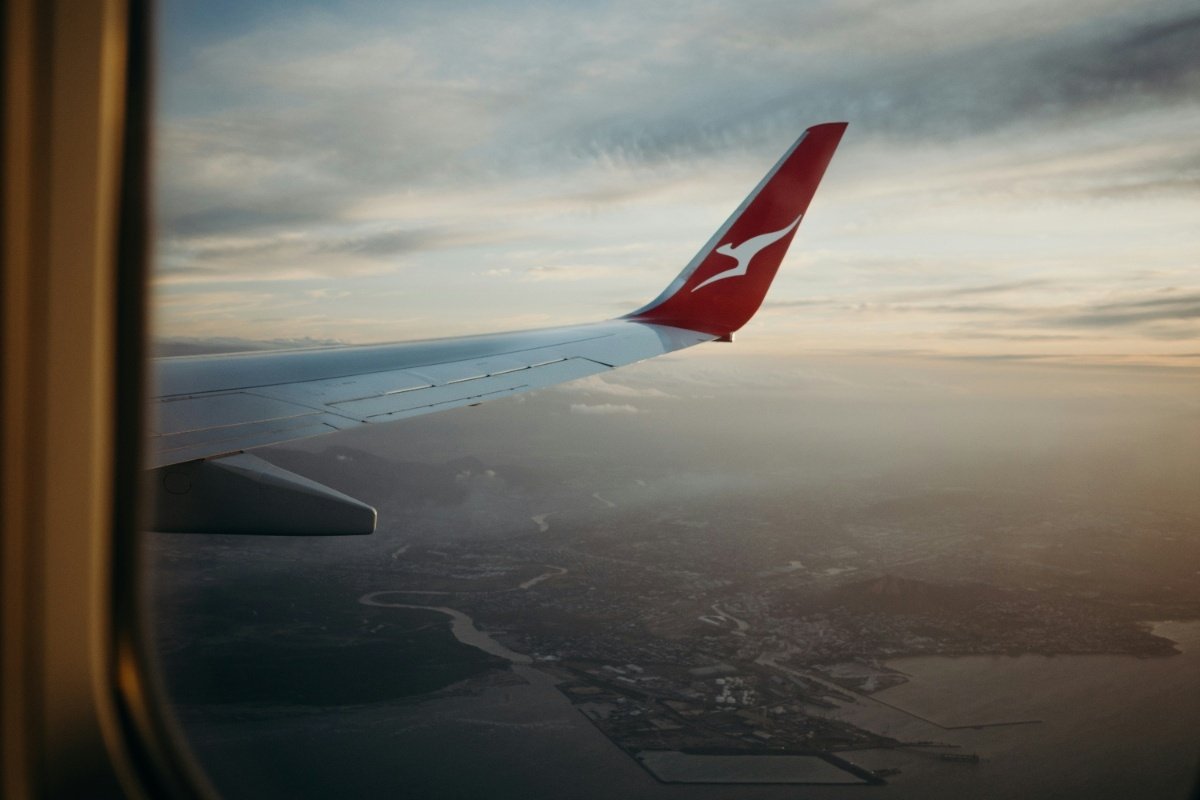
Ultra-Long Distance Reset: The Massive Fleet Upgrades Transforming Qantas
Sunset Weekly Disclosure: To help keep our guides free, this post contains affiliate links. If you click through and make a booking (such as hotels, flights, tours, or travel experiences), we may earn a commission at no extra cost to you. Sunset Weekly is an independent travel and lifestyle publication. While we may receive compensation from affiliate partners, this does not influence our editorial content, recommendations, or opinions. #ad
Quick Answer
Qantas enters 2026 with three simultaneous fleet stories. Project Sunrise delivers the world’s longest commercial flight on an A350-1000ULR by March 2027. The A321XLR launches on Brisbane–Manila in October 2026 — with no flat beds. Critically, the 787 and A380 currently carry no Wi-Fi. Viasat is the planned provider.
BOOK NOWWho is Qantas and Can ‘Project Sunrise’ Redefine the 20-Hour Flight in 2026?
Answer: Qantas is Australia’s flag carrier, founded in 1920 and the world’s oldest continuously operating airline. It operates from Sydney, Melbourne, Brisbane, and Perth. AirlineRatings gives Qantas a Seven Star Safety Rating — the highest achievable. It is a oneworld alliance member serving more than 100 destinations globally.
Qantas operates in 2026 as a genuinely distinctive airline. Unlike most global legacy carriers, Qantas serves the world’s most isolated continent. Routinely long flights are simply the minimum required to connect Australia with its nearest major partners. Furthermore, Project Sunrise will cement its status as the operator of the world’s longest commercial flight: non-stop Sydney to London at approximately 20 hours. Consequently, everything Qantas does with cabin design in 2026 carries unusual weight.
The 2026 Strategic Context
Qantas is simultaneously managing three fleet transitions. According to Aviation A2Z, the fleet currently includes 10 Airbus A380-800s, 14 Boeing 787-9s, 16 Airbus A330-200s, 12 Airbus A330-300s, and 79 Boeing 737-800s. The A321XLR is progressively replacing the 737-800 fleet. Furthermore, Project Sunrise A350-1000ULRs are entering production for delivery from October 2026. Additionally, Project Fysh — comprising 12 Airbus A350-1000LRs, 4 Boeing 787-9s, and 8 Boeing 787-10s — will progressively replace the A330 fleet from 2027 onwards.
The 2026 Fleet Reality: What Aircraft Are You Actually Flying On?
Answer: Qantas’ active long-haul fleet in 2026 centres on 10 Airbus A380-800s and 14 Boeing 787-9s. The A380 carries First, Business, Premium Economy, and Economy across 485 seats. The 787-9 covers long-haul to the US and UK. Neither aircraft currently carries Wi-Fi. The A321XLR serves domestic and select regional routes.
The Sunset Weekly Fleet Decoder
Understanding Qantas’ aircraft assignment is the most critical booking step in 2026. Because the A380 carries First Class and the 787 does not, and because both aircraft lack Wi-Fi, knowing your aircraft type directly determines your premium product and connectivity experience.
| Aircraft | Role | Economy Pitch | Business/First | Power | Wi-Fi |
|---|---|---|---|---|---|
| A380-800 | Long-haul flagship (LHR, LAX, SIN, HKG, DFW) | 31″ / 18″ wide | Business 78″ flat, First 79″ flat | AC + USB-A | NO — rollout in progress |
| Boeing 787-9 | Long-haul (LHR via SIN, PER-LHR, US routes) | 31–32″ | Business 79″ lie-flat, 1-2-1 | AC + USB-A | NO — rollout planned 2026 |
| A330-200/300 | Medium-haul Asia (select: Wi-Fi) | 30–31″ | Business lie-flat | AC + USB-A | Selected aircraft: Viasat |
| A321XLR (domestic config) | Domestic + BNE–MNL (from Oct 2026) | 30″ / 17.6″ wide | Recliner 37″ — NO flat bed | USB-A (select) | Yes — Viasat |
| A321XLR (international config, from 2028) | Medium-haul intl + transcontinental Perth | 30″ | Lie-flat (arriving 2028) | USB-A + USB-C | Yes — Viasat |
| Boeing 737-800 | Domestic (selected: Wi-Fi) | 30–31″ | N/A domestic | USB-A (select) | Selected aircraft: Viasat |
| A220-300 | Domestic shorter routes | 30–31″ | N/A | USB-A | Yes — Viasat |
| A350-1000ULR (Project Sunrise, from late 2026) | SYD–LHR nonstop (from Mar 2027), SYD–JFK | 33″ | Business 2m lie-flat | USB-A + USB-C + wireless | Yes — Viasat free all cabins |
The Sunset Weekly Legroom Index™ — Qantas Edition
Qantas Economy delivers 31 inches of pitch on the A380 and 787-9. However, the Project Sunrise A350-1000ULR Economy cabin delivers 33 inches — two inches more than either existing long-haul aircraft. Furthermore, the A321XLR domestic cabin only delivers 30 inches standard pitch, which is below the current A380 and 787 Economy standard. The A321XLR now flies the 8-hour Brisbane–Manila route from October 2026. Consequently, specifically booking an A330-operated equivalent route via Sydney is the most impactful seat upgrade available to Manila-bound passengers before 2028.
Project Sunrise: The A350-1000ULR
Answer: Qantas’ Project Sunrise A350-1000ULR will deliver the world’s longest commercial flight: Sydney to London nonstop at approximately 20 hours. The first aircraft delivers in October 2026. Sydney–London nonstop launches in March 2027. Sydney–New York follows as subsequent aircraft arrive through 2028. The cabin carries just 238 seats — the lowest count on any A350-1000 globally.
The Four Cabins
Business Class: 63.5 cm wide (approximately 25 inches) — 2.5 cm wider than the A380 equivalent. Lie-flat bed converts to a 2-metre flat surface. Direct aisle access for all passengers. Specifically, Business Class seats face forward and aft alternately in a herringbone 1-2-1 pattern.
Premium Economy: 1 metre (39.4 inches) of pitch. Each seat features a 20.3 cm adjustable winged privacy headrest. This pitch exceeds most competitors’ Premium Economy standards on equivalent routes.
Economy Class: 83.8 cm (33 inches) of pitch. The seat includes a calf rest and 6-way adjustable headrest. This is 2–3 inches more legroom than on Qantas’ existing 787-9 and A380 Economy cabins. Furthermore, every Economy row has window access — no windowless seats exist in the Project Sunrise cabin configuration.
The Wellbeing Zone: A dedicated movement area sits between Premium Economy and Economy. It includes stretch handles, guided on-screen exercise programmes, a hydration station, and premium snacks. In collaboration with the University of Sydney’s Charles Perkins Centre, cabin lighting runs 12 programmable circadian-rhythm scenes. These scenes include “Sunrise,” “Sunset,” and “Awake” settings designed specifically to reduce jet lag on ultra-long-haul missions.
Project Sunrise Wi-Fi and Technology
According to Euronews’ verified April 2026 cabin briefing, Project Sunrise provides free high-speed Viasat Wi-Fi for all passengers on every flight. Bluetooth audio connects personal headphones directly to the inflight entertainment system. The aircraft is powered by Rolls-Royce Trent XWB-97 engines and carries 130,700 kg of fuel — 6,000 kg more than the standard A350-1000 — via a modified rear centre fuel tank. All 12 Project Sunrise aircraft will be named after stars or constellations, referencing Qantas’ WWII “Double Sunrise” Catalina flights between Perth and Sri Lanka.
What This Means For UK Travellers Right Now
The first Project Sunrise A350-1000ULR delivers to Qantas in October 2026. According to Aircraft Insider’s verified April 2026 report, it will first operate shorter routes — including an Auckland deployment — while crews train on the type. Sydney–London nonstop service in commercial passenger operations is confirmed for March 2027. Until then, London Heathrow continues to be served via Singapore on the A380, with A380 Business Class flat beds and First Class suites as the current Qantas premium long-haul product.
The A321XLR “Narrowbody Reality” Check
Answer: Qantas operates 4 A321XLR aircraft domestically in 2026. Brisbane– Manila launches as the first international A321XLR route on October 25, 2026. The current aircraft carry no flat beds in Business Class — only 37-inch recliners in a 2-2 layout. No seatback screens exist in Economy. Qantas charges the same Business Class fare ($4,230 return) as the A330 it replaces.
What Travellers Need to Know Before Booking Business Class
This is the most important consumer warning in this report. According to verified reporting from One Mile at a Time, Australian Frequent Flyer, and 2PAXfly, the Brisbane–Manila A321XLR deployment raises a specific commercial issue. Specifically, Qantas is replacing a wide-body A330-200 — with 27 international lie-flat Business Class seats — with a domestically-configured narrow-body A321XLR carrying 20 recliner seats in a 2-2 layout. Furthermore, Qantas is charging the same Business Class fare as the A330 product it replaces. No price reduction accompanies the cabin downgrade.
The direct competitor on this route — Philippine Airlines — operates an Airbus A321neo specifically configured with lie-flat Business Class seats. Consequently, passengers booking Brisbane–Manila Business Class who prioritise sleep on the 8-hour overnight return leg (QF98, departing Manila 9:30 PM, arriving Brisbane 7:25 AM) should specifically check aircraft type at booking. Until the 16 internationally-configured A321XLRs arrive from 2028, flat-bed Business Class on this route requires either routing via Sydney on the A330 or choosing Philippine Airlines.
A321XLR: What You Do Get
The A321XLR genuinely improves on the 737-800 it replaces on domestic routes. According to Simple Flying’s verified Cirium data review, the cabin features LED mood lighting, large windows, higher-than-normal ceilings, and overhead lockers carrying 60% more carry-on storage than the 737-800. Furthermore, the A321XLR has onboard Wi-Fi via Viasat — unlike the 737-800s it replaces on most routes. The fourth lavatory introduced on VH-OGD reduces the passenger-to-lavatory ratio from 90:1 to 59:1. Earlier aircraft (VH-OGA, OGB, OGC) are scheduled for retrofit to match this updated configuration.
The A380 in 2026: What You’re Actually Getting
Answer: Qantas operates 10 A380-800s on its highest-frequency long-haul routes — Singapore, London Heathrow, Los Angeles, Dallas Fort Worth, and Sydney–Hong Kong. The A380 carries 14 First, 70 Business, 60 Premium Economy, and 341 Economy seats. Wi-Fi rollout is in progress but not confirmed across all aircraft in May 2026.
A380 Seat Specs
The A380 is Qantas’ current premium flagship for UK travellers on the LHR–SIN–SYD route. Business Class delivers 78-inch (198 cm) pitch in a lie-flat 2-metre bed at 20 inches width. According to verified seat map data, AC power outlets and USB-A ports are standard. No USB-C charging exists on the current A380 specification. Furthermore, Executive Traveller confirmed the A380 currently lacks Wi-Fi. The reviewer noted it is “finally on the way, with the airline starting a rollout of Wi-Fi on the A380 in 2025.”
The A380 also carries the only Qantas First Class product currently flying. First Class delivers 79-inch (201 cm) pitch and 22-inch width across 14 private suites. Access to the A380’s First and Business Class Onboard Lounge — a social space for upper-deck premium passengers — is exclusive to this aircraft type within the Qantas long-haul fleet.
Wi-Fi: The Most Critical Fact About Qantas in 2026
Answer: According to Qantas’ official Wi-Fi page, the Boeing 787, A380, Embraer E190, Dash 8, F100, A319, A320, and selected 737-800s and A330s carry no Wi-Fi. Wi-Fi-equipped Qantas aircraft include the A321XLR, A220-300, and selected 737-800s and A330s. The Wi-Fi provider is Viasat — not Starlink LEO. Project Sunrise A350-1000ULR will carry free Viasat Wi-Fi for all passengers.
The Sunset Weekly Connectivity Scorecard™
Qantas’ Wi-Fi architecture in 2026 creates a counterintuitive reality. The airline’s main domestic narrow-body fleet (A321XLR, A220-300, selected 737-800s) carries Wi-Fi. However, both main long-haul widebody types — the A380 and 787-9 — currently do not. According to Simple Flying’s June 2025 reporting, the Wi-Fi rollout plan progresses as follows: A330 international fleet first, then 787s from the start of 2026, then the A380. However, Qantas’ official Wi-Fi page still lists the 787 and A380 as “Non Wi-Fi connected aircraft” — as published in May 2026. Always check the current status at qantas.com/wifi before booking specifically for connectivity needs.
The Viasat vs Starlink Reality: Qantas uses Viasat — a GEO Ka-band satellite system — not Starlink LEO. Because GEO satellites orbit at approximately 35,800 km altitude, latency runs higher than Starlink’s low-Earth orbit constellation at 550 km. However, Viasat’s aviation solution delivers functional streaming and browsing on most routes. Furthermore, the Project Sunrise A350-1000ULR will carry Viasat connectivity from delivery, with free access for all passengers confirmed by Euronews in April 2026.
Sydney Airport
Answer: Sydney Kingsford Smith Airport (SYD) is Qantas’ primary international hub. Qantas operates from Terminal 1 (international) and Terminal 3 (domestic). Online check-in opens 48 hours before departure for international flights. Airport check-in closes 90 minutes before international departure. Qantas recommends arriving at least 2 hours before intercontinental flights.
The Terminal Walk-Time Logic™ for SYD Connections
Sydney Airport operates two main Qantas terminals — Terminal 1 and Terminal 3 — connected by a free Qantas transfer bus rather than an airside walkway. Because this bus operates on the ground level between terminals, domestic-to-international connections at SYD require clearing customs and immigration in addition to the terminal transit time. Specifically, minimum connection times at SYD for domestic-to-international Qantas connections sit at 90 minutes. Longer connections of 2 hours or more are strongly recommended during peak summer periods (December–January) when the international terminal operates at high passenger density.
Furthermore, Qantas Platinum and Platinum One members access dedicated fast-track immigration lanes at SYD that bypass standard queues. Business Class passengers also receive priority check-in and security access, reducing pre-flight processing time by approximately 20–30 minutes versus Economy queues during peak periods.
Biometric Boarding at SYD and Australian Major Airports
Sydney, Melbourne, Brisbane, and Perth airports all deploy SmartGate biometric e-gate technology at immigration. Australian SmartGate uses facial recognition matched to passport chip data. Eligible passport holders process through immigration without a manual officer check. This covers Australian, New Zealand, UK, US, Canadian, Japanese, South Korean, and most EU nationals. In 2026, SmartGate processes an increasing majority of international arrivals at Sydney within approximately 30–45 seconds per passenger.
Furthermore, Qantas’ app integrates Apple Wallet and Google Wallet boarding passes for all domestic and international flights. Biometric boarding gates at Qantas domestic terminals process passengers via facial recognition linked to the Qantas app boarding pass, enabling boarding without physical document presentation at the gate.
The Carry-On Crunch Reality™ at Australian Airports
Qantas deployed enhanced AI-assisted baggage scanning at departure gates across Sydney, Melbourne, and Brisbane airports progressively from 2024. These systems flag non-compliant carry-on bags before boarding, applying a gate check-in fee if bags exceed the 7 kg limit for Economy or 14 kg for Business Class. Always weigh cabin bags before arriving at the gate, particularly when connecting domestically before an international Qantas departure.
2026 Flight Trends: Two Signals Every Qantas Traveller Should Know
SAF and the A350-1000ULR Sustainability Deal
Answer: Qantas’ Project Sunrise deal with Airbus includes access to 500 million litres of SAF per year from 2028. This is enough to meet up to 90% of the airline’s fuel requirements. The EU ReFuelEU mandate requires a 2% SAF minimum at EU airports from January 2025. Qantas’ Sydney–London nonstop will bypass EU airports entirely.
The Project Sunrise SAF arrangement is among the most significant sustainability commitments in Australian aviation history. According to Airline Ratings’ April 2026 report, the deal with Airbus includes a long-term SAF supply agreement alongside the aircraft order. Because SAF costs 2 to 4 times more than conventional jet fuel, this supply agreement de-risks Qantas’ cost exposure significantly compared to buying SAF on the open market. Furthermore, the A321XLR burns approximately 20% less fuel per seat than the 737-800s and A330s it replaces on equivalent routes. Consequently, every A321XLR route departure at the current Brisbane–Manila frequency increase delivers a lower per-seat emissions profile than the A330 it replaces.
The A321XLR “Long & Skinny” Revolution in Australian Aviation
Answer: Qantas operates 4 A321XLR aircraft in May 2026 — out of 48 total on order. The aircraft enters its first international route, Brisbane–Manila, on October 25. Further international routes across Southeast Asia and the Pacific are expected as more XLRs arrive. The 16 internationally-configured variants with flat beds arrive from 2028.
The A321XLR fundamentally changes Qantas’ network logic. For decades, Australia’s geographic isolation meant that only widebody aircraft could serve international markets from secondary cities. The A321XLR has a range of 8,700 km. Brisbane to Manila and Sydney to Tokyo are both within that range. Consequently, city pairs previously requiring A330 or 787 deployment at uneconomical load factors now work on a narrowbody. Specifically, routes from Brisbane, Adelaide, and Perth to Southeast Asia now become viable. Furthermore, the A321XLR delivers improved fuel efficiency, reduced noise for communities around smaller airports, and faster turnaround times compared to the widebodies it replaces.
However, the 2026 domestic configuration carries an important passenger warning. Until the internationally-configured A321XLRs arrive from 2028, every Qantas international A321XLR route will deliver domestic-grade cabin product on routes historically served by international-standard widebody aircraft. Always verify the specific cabin configuration for any Qantas A321XLR international booking before confirming.
Qantas Frequent Flyer Program
Answer: Qantas Frequent Flyer uses Qantas Points as its currency. Members earn on Qantas flights, partners, and everyday spending. Classic Reward seats offer the strongest value. Status tiers — Bronze, Silver, Gold, Platinum, and Platinum One — deliver escalating lounge access and seat upgrade benefits. US portal users currently earn 20% bonus points on Capital One transfers until 31 May 2026.
The Sunset Weekly Loyalty Scorecard™
Qantas Frequent Flyer delivers its strongest redemption value on international Classic Reward seats in Business and First Class on A380-operated routes. Because the A380 carries Qantas’ only current First Class product on the LHR–SIN–SYD route, targeting First Class Classic Reward availability on A380 dates maximises hard product quality per point spent. Furthermore, the Capital One 20% transfer bonus active until 31 May 2026 represents one of the strongest short-term point-acquisition opportunities available to US-based Qantas Frequent Flyers. Specifically, transferring Capital One miles during this window inflates the effective Qantas Point value by 20% compared to the standard non-bonus rate.
Insight on Qantas Points Expiry: Qantas Points expire after 18 months of account inactivity. Any qualifying earning or redemption activity — including hotel bookings, car hire, or Qantas Wine purchases — resets the clock. Consequently, frequent flyers approaching the 18-month threshold should make a qualifying partner transaction before points expire rather than allowing the balance to lapse.
The 2026 Promotions: What’s Real and What’s Marketing
Answer: Active Qantas 2026 promotions include the Capital One 20% point transfer bonus until 31 May 2026. Additionally, Qantas UK members receive 25% off selected partner experiences. The Economy Plus cabin is rolling out across the A330 fleet. Historically, Qantas runs major network sales in January/February, April/May, and September/October.
Promotion
Qantas’ major sale windows are predictable. January/February focuses on global network routes with 500,000+ international seats. April/May is the domestic mega sale — 2 million+ seats from ~$99 one-way. September/October covers spring and end-of-year Tasman and regional routes. Because Qantas releases promotional inventory in batches on these timelines, setting fare alerts during these windows on the Qantas Flight Finder is more effective than continuous monitoring throughout the year.
Economy Plus A330 Rollout
According to the brief, Qantas is rolling out a new Economy Plus cabin product across the A330 fleet in 2026. Economy Plus seats deliver extra legroom and priority boarding. This represents a meaningful upgrade for A330 passengers. It is particularly valuable on routes to Manila, Bali, and other Asia destinations. Specifically, from October 2026, those routes may otherwise shift to the domestic-configured A321XLR. Booking an A330-operated date with Economy Plus seats before the A321XLR transition on any given route preserves the superior cabin product at Economy-level pricing.
FAQs
What are Qantas’ check-in times?
The standard answer: Domestic check-in closes 30 minutes before departure. Arrive 45 minutes early. International check-in closes 90 minutes before departure. Arrive 2 hours early.
The Terminal Walk-Time Logic™: At Sydney Airport specifically, Qantas operates domestic departures from Terminal 3 and international from Terminal 1. Because no airside connection exists between the terminals, domestic-to-international connections at SYD require allowing at least 90 minutes minimum, and 2 hours is strongly recommended during summer peak periods (December–January). Furthermore, Platinum and Business Class passengers accessing dedicated fast-track lanes save approximately 20–30 minutes on security and check-in processing. Always set arrival time based on the specific terminal and connection type — not the minimum published check-in deadline alone.
What is Qantas’ baggage allowance?
The standard answer: Every Qantas ticket includes a checked baggage allowance. Carry-on must meet size limits. Excess cabin bags at the gate incur a check-in fee.
The Carry-On Crunch Reality™: AI-assisted gate scanning at Sydney, Melbourne, and Brisbane airports now identifies oversize and overweight carry-on bags before boarding. Specifically, Economy Class carry-on is limited to 7 kg. Business Class allows 14 kg. Bags exceeding these limits face gate check-in fees significantly higher than pre-booked additional baggage prices. Furthermore, the A321XLR’s larger overhead bins (60% more capacity than the 737-800) do accommodate more carry-on bags per passenger — however, the 7 kg weight limit still applies. Always weigh your bag before arriving at the gate rather than relying on the bin size alone.
Can I change or cancel a Qantas flight?
The standard answer: Flight changes and cancellations are managed through the Qantas Manage Booking tool online. No booking fee applies for direct qantas.com bookings. Contact Centre and airport changes incur service fees. US bookings include a 24-hour penalty-free cancellation window.
Insight: Qantas’ flight credits — issued when passengers cancel non-refundable fares — have specific expiry terms. Always verify the expiry date on any Qantas credit before it lapses. Furthermore, when Qantas downgrades cabin product, you have rights. For example, a switch from an A330 flat bed to an A321XLR recliner on Brisbane–Manila represents a material product change. According to Australian Consumer Law, a significant aircraft downgrade entitles passengers to a refund if the revised product materially differs from what was purchased. Always document the original booking aircraft type before accepting any change.
How much does an infant ticket cost on Qantas?
The standard answer: An infant lap ticket costs 10% of the adult fare. Infants need their own individual ticket for international travel. One adult is required per infant.
The Connection Reality™ — A321XLR Infant Travel: On Qantas A321XLR international routes, bassinets may not be available in the same configuration as on widebody aircraft. Specifically, on the Brisbane–Manila A321XLR from October 2026, the domestically configured cabin does not carry the same bassinet provisions as the A330-200 international cabin it replaces. Passengers travelling with infants on this route should verify bassinet availability directly with Qantas before booking. Furthermore, for long-haul overnight routes — specifically the 7h55m Manila–Brisbane leg — the absence of a bassinet on a domestically-configured A321XLR is a material consideration when booking infant travel.
Editorial & Accuracy Standards
- Expert Review:
Ammara Azmat,
Senior Travel Mobility Analyst (12+ years experience) - Status: Verified for accuracy against official 2026 service data and real-time traveller reports.
- Our Process: This content follows our Fact-Checking Policy.