
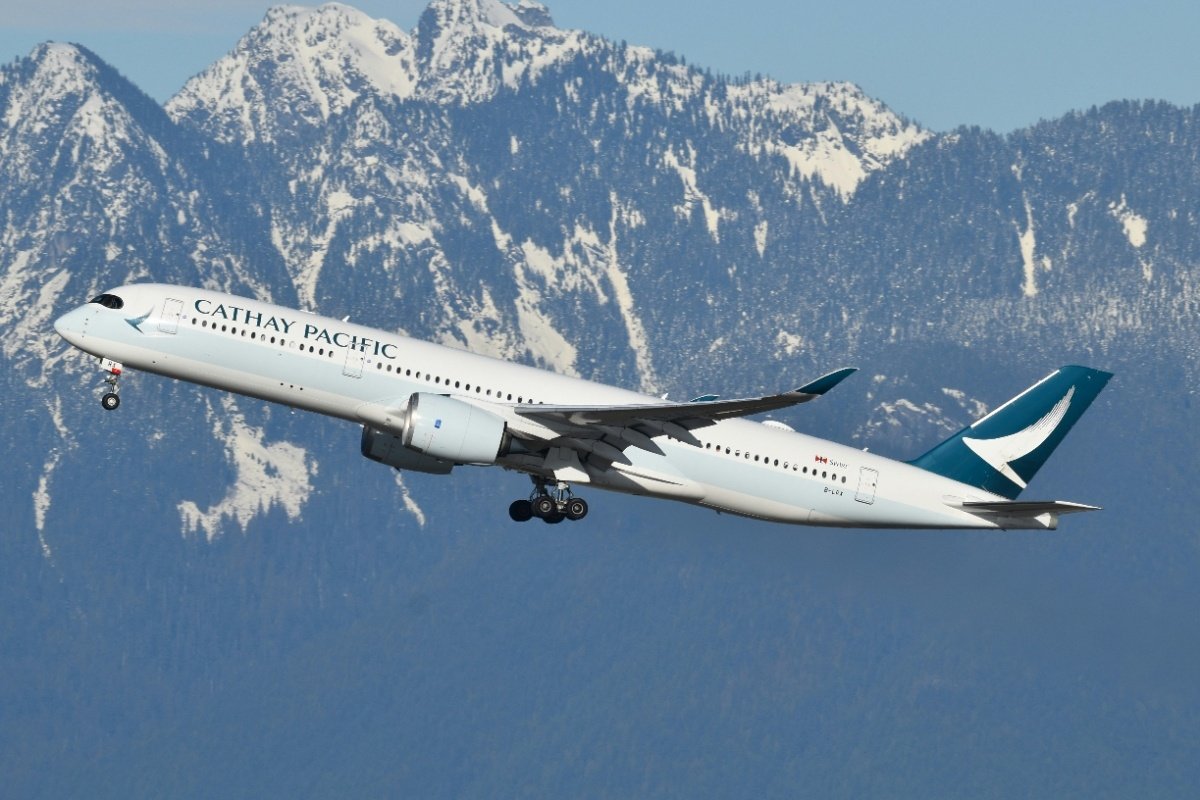
Where Artistry Takes Flight: The New Premium Aria Cabins at Cathay Pacific
Sunset Weekly Disclosure: To help keep our guides free, this post contains affiliate links. If you click through and make a booking (such as hotels, flights, tours, or travel experiences), we may earn a commission at no extra cost to you. Sunset Weekly is an independent travel and lifestyle publication. While we may receive compensation from affiliate partners, this does not influence our editorial content, recommendations, or opinions. #ad
Quick Answer
Cathay Pacific enters 2026 mid-reinvention — rolling out the Aria Suite business class across its 777-300ER fleet, unveiling the new Aria Studio regional flat bed, and doubling its Corporate SAF programme commitments. Skytrax ranks it third-best airline in the world in 2025. Hong Kong’s flag carrier is engineering its most ambitious product era yet.
BOOK NOWWho is Cathay Pacific and What is the ‘Aria Suite’ 2026 Reinvention?
Answer: Cathay Pacific is Hong Kong’s flag carrier, founded on 24 September 1946. It operates 179 passenger aircraft to more than 190 destinations across 60 countries. Skytrax ranked it the world’s third-best airline in 2025 and a 5-star carrier. It is a founding member of the Oneworld alliance.
Cathay Pacific operates one of the most premium-weighted networks in global aviation. Because it anchors at Hong Kong International Airport — one of the busiest cargo and passenger hubs in the world — its strategy combines high-yield passenger revenue with a dominant cargo operation. Furthermore, the airline’s majority shareholders are Swire Pacific and Air China, giving it both commercial independence and mainland Chinese market access simultaneously.
The 2026 Reinvention Context
In 2026, Cathay Pacific executes the most comprehensive cabin overhaul in its history. According to aviation industry sources, the multi-year programme delivers six new cabin concepts within a short span: the Aria Suite business class on retrofitted 777-300ERs, the new Aria Studio regional flat bed on A330s, a new first class product (Halo Suites) due in 2027 on the 777X, and refreshed Wing lounges at Hong Kong International Airport. Furthermore, its Corporate SAF Programme doubled commitments in 2025, and its IATA digital identity pilot at HKIA and Narita is shaping the future of seamless boarding. This is a pivotal year for the carrier.
The 2026 Fleet Reality: What Aircraft Are You Actually Flying On?
Answer: Cathay Pacific’s 179-aircraft fleet consists of 16 A321neos, 43 A330s, 48 A350s (900 and 1000 variants), and 52 Boeing 777s. Long-haul flying concentrates on the A350-900, A350-1000, and 777-300ER. The 777X arrives no earlier than 2027. A330neos follow in 2028.
The Sunset Weekly Fleet Decoder
Understanding which Cathay aircraft operates your route determines whether you receive the new Aria Suite or the legacy reverse-herringbone business class at identical pricing. Because Cathay operates four different 777-300ER configurations, the aircraft type alone does not guarantee the product you expect.
| Aircraft | Role | Economy Pitch | Business Pitch | Power | Wi-Fi |
|---|---|---|---|---|---|
| A321neo | Regional short-haul | 32″ | 47″ recline (regional) | USB-A | Intelsat 2Ku |
| A330-300 (long-haul) | Medium long-haul | 32″ | 82″ lie-flat, 1-2-1 | USB-A + AC | Intelsat / Gogo |
| A330-300 (regional) | Asia-Pacific | 32″ | 2-2-2 recliner (pre-Studio) | USB-A | Intelsat / Gogo |
| A350-900 | Long-haul (Europe, US, Aus) | 32″ | 75″ lie-flat, 1-2-1 | USB-A + AC | Panasonic satellite |
| A350-1000 | ULR (HKG–BOS, HKG–JFK) | 32″ | 75″ lie-flat, 1-2-1 | USB-A + AC | Panasonic satellite |
| B777-300ER (Aria Suite — 77J) | Flagship routes | 32″ | 78″ lie-flat, 1-2-1, sliding door | USB-A + USB-C + AC + wireless | Intelsat 2Ku |
| B777-300ER (legacy — 77A/W) | Other long-haul | 32″ | 82″ lie-flat, 1-2-1 (no door) | USB-A + AC | Intelsat 2Ku |
The Sunset Weekly Legroom Index™ — Cathay Edition
Cathay Pacific Economy delivers 32 inches of pitch across all long-haul widebody aircraft. The 777-300ER economy cabin offers 18.5 inches of seat width — wider than both the A350-900 and A350-1000. However, the A350 delivers better entertainment screens, newer cabin pressure systems, and quieter acoustics. Because neither aircraft type guarantees a specific economy experience without checking the specific seat map, always verify via Cathay’s website or AeroLOPA before purchasing.
The Aria Suite Reality: The Most Important Check Before Booking
Answer: Cathay Pacific’s Aria Suite is its new 777-300ER business class, featuring a sliding privacy door, 24-inch 4K screen, wireless charging, USB-C, and a 78-inch lie-flat bed at 43 inches pitch. As of March 2026, over 60% of long-haul 777s carry Aria Suite. The retrofit targets full fleet completion by end of 2027.
The Connection Reality™ — Aria Suite vs Legacy Business Class
Cathay Pacific’s Aria Suite debuted in late 2024 and now operates across an expanding set of 777-300ER routes. Because the airline runs multiple 777-300ER configurations in parallel, the product you receive at business class pricing depends entirely on which aircraft variant operates your specific flight. At identical fares, a passenger on a 77J seat map receives a sliding-door suite, wireless charging, and a 24-inch 4K screen. A passenger on a 77A seat map receives the legacy reverse-herringbone seat with no door, no wireless charging, and a smaller screen.
The easiest verification method is to check the seat map on Cathay’s website. If the business class cabin shows 45 seats in a 1-2-1 layout with a row 14 present, the aircraft carries the Aria Suite. The legacy configuration shows a different row structure. According to One Mile at a Time, this 77J designation is the definitive identifier.
Aria Suite Specs: The Forensic Detail
The Aria Suite on the 777-300ER offers 43 inches of pitch, 21 inches of width at the armrest, and approximately 25 inches at shoulder level. The bed converts to 78 inches fully flat. Furthermore, each suite features customisable mood lighting across six sources, a sliding privacy door with acoustic damping, and Bamford skincare amenities. As of April 2026, Cathay operates Aria Suite on flights to Frankfurt, London Heathrow, Melbourne, Milan, San Francisco, Sydney, Tokyo, and Vancouver, with Los Angeles added from May 2026.
| Feature | Aria Suite (77J) | Legacy Business (77A) | A350 Business |
|---|---|---|---|
| Seat pitch | 43″ | 72″ (effective) | 75″ |
| Lie-flat length | 78″ | 82″ | 75″ |
| Sliding door | Yes | No | No |
| Screen | 24″ 4K | 18.5″ HD | 17″ HD |
| USB-C | Yes | No | No |
| Wireless charging | Yes | No | No |
| AC power | Yes | Yes | Yes |
| Biometric boarding | HKIA: active system | HKIA: active system | HKIA: active system |
The Aria Studio: The Regional Flat-Bed Story for Late 2026
Answer: Cathay Pacific unveiled the Aria Studio in February 2026 — a new flat-bed regional business class for its A330 fleet. The 1-2-1 reverse herringbone layout delivers all-aisle access and a lie-flat bed to regional Asia-Pacific routes for the first time. Retrofits begin on existing A330s in late 2026, with A330neos arriving from 2028.
Why the Aria Studio Matters for 2026 Travellers
The Aria Studio addresses a long-standing gap in Cathay’s regional product. Currently, A330 regional flights — covering routes such as Singapore, Bangkok, Tokyo, and Seoul — use 2-2-2 recliner seats that do not convert to flat beds. The Aria Studio brings a 1-2-1 lie-flat layout to these same aircraft, matching the visual aesthetic of the Aria Suite with the same neutral palette of greens, browns, and bronze trim.
According to aviation sources, Cathay plans to refurbish 20 of its 43 existing A330s with Aria Studio, while all incoming A330-900neos — due from 2028 — receive the seat at delivery. Furthermore, A321neo regional flights will not receive Aria Studio. So the distinction between A321neo regional business and A330 Aria Studio business class becomes increasingly important to check before booking Asia-Pacific sectors.
Wi-Fi: What Cathay’s Connectivity Actually Delivers
Answer: Cathay Pacific uses Intelsat’s 2Ku GEO satellite on 777 and A330 aircraft and Panasonic’s GEO system on A350 aircraft. Neither uses Starlink LEO. Speeds run 4–10 Mbps typically. Business and First Class passengers receive complimentary Wi-Fi. Premium Economy passengers receive free Wi-Fi only with a Cathay membership number attached.
The Sunset Weekly Connectivity Scorecard™
Cathay Pacific operates 100% Wi-Fi coverage across its entire passenger fleet — a genuinely rare achievement. However, the technology powering that coverage matters for passengers expecting Starlink-level speeds. According to The Alviator and One Mile at a Time, the A350 fleet uses Panasonic’s GEO satellite system and the 777 and A330 fleets use Intelsat’s 2Ku GEO satellite. Both are traditional geostationary satellite systems — not Starlink LEO or any other low-Earth orbit provider.
Wi-Fi Speed, Pricing, and the Polar Gap
What you actually get by cabin and route in May 2026:
- First and Business Class (all aircraft): Free, unlimited, no data cap throughout the flight. One device at a time — switch between devices freely.
- Premium Economy (with Cathay membership number attached): Free Wi-Fi included. Without a Cathay membership number, Economy-tier pricing applies.
- Economy: Paid tiers. Message Pass: US$3.95 (flights under 6 hours). Full flight pass: US$19.95–US$24.95 depending on route length. No data cap on full-flight passes.
Insight: The A350’s Panasonic system caps at approximately 3 Mbps. The 777’s Intelsat 2Ku runs faster at up to 10 Mbps. However, on polar routes between Hong Kong and North America’s east coast, connectivity drops out for 1–3 hours during the polar transit — a confirmed coverage gap that Cathay’s own engineering team has acknowledged publicly. During that window, no connectivity exists regardless of your pass type. Plan offline downloads before boarding any HKG–JFK or HKG–BOS flight accordingly.
Hong Kong International Airport:
Answer: Hong Kong International Airport (HKIA) is Cathay Pacific’s primary hub and one of Asia’s most efficient transit airports. It features biometric self-boarding gates, Express Bag Drop, and active IATA OneID digital identity integration. The Wing and Pier business class lounges both receive significant refurbishments in 2026.
The Terminal Walk-Time Logic™ for HKIA Connections
HKIA operates as a single-terminal complex connected by an automated people mover to the remote Midfield Concourse. Because all Cathay Pacific flights depart from the same terminal structure, minimum connection times at HKIA run shorter than most hub airports. Cathay officially quotes 60 minutes as the minimum international connection time, though experienced travellers recommend 90 minutes during peak hours due to security queuing.
Biometric Boarding and Digital ID at HKIA
Cathay Pacific and HKIA operate biometric self-boarding using facial recognition at departure gates. According to Cathay’s official airport guidance, passengers who cannot proceed via the biometric self-boarding system receive a manual document check as a fallback. Furthermore, Cathay participated in an IATA OneID digital identity pilot with HKIA and Narita Airport, testing verifiable credentials and biometric authentication. That pilot demonstrated a 40% reduction in processing time at key touchpoints, according to Neoke, the technology partner. In 2026, digital identity integration at HKIA continues to mature as Cathay scales its digital boarding infrastructure.
2026 Flight Trends: Two Signals Every Cathay Traveller Should Know
SAF: Cathay’s Corporate Programme Doubles Again
Answer: Cathay Pacific’s Corporate SAF Programme recorded a 180% increase in corporate partner commitments in 2025 — totalling 17,400 tonnes of SAF and 54,600 tonnes of CO2e reduction. The airline targets 10% SAF in total fuel consumption by 2030. Hong Kong’s government announced support for a local SAF blending facility in the Greater Bay Area.
Cathay Pacific was among the first airlines in the world to commit to a 10% SAF usage target by 2030, according to Cathay’s official sustainability communications. Since launching its Corporate SAF Programme in 2022, the airline has grown commitments 22-fold. In 2025, 17 corporate partners — including HSBC, Neste, Shell Aviation, and Sinopec — contributed to approximately 17,400 tonnes of SAF usage.
The SAF Cost Reality for Passengers
Unlike KLM, which charges a visible SAF surcharge of €2–€24 per ticket, Cathay Pacific does not currently publish a separate SAF line item on passenger bookings. However, since SAF costs 2–4 times more than conventional jet fuel, and SAF currently accounts for just 0.3% of global jet fuel, those cost differentials embed themselves into base fares as programme scale increases. Furthermore, Hong Kong’s government committed to setting a specific SAF consumption ratio target for HKIA departures by the end of 2025. As that target enters enforcement, Cathay passengers will increasingly bear SAF costs through higher base fares — whether or not the surcharge appears as a line item.
Insight: Cathay’s SAF lifecycle carbon reduction runs at approximately 80% compared to conventional jet fuel, based on its 2024-certified procurement. That is significantly higher than the industry average. So while passengers do not yet see a visible SAF surcharge, their Cathay ticket already funds one of Asia’s more credible decarbonisation programmes — at a scale that few carriers outside Europe currently match.
The IATA Digital Identity Pilot: Cathay Leads Asia
Answer: Cathay Pacific participated in a landmark IATA OneID digital identity pilot at HKIA and Narita, testing verifiable digital credentials and facial biometric authentication. The pilot reduced processing time by 40% at key touchpoints. In 2026, HKIA’s biometric boarding gates are active across Cathay’s departure gates.
Cathay Pacific and HKIA completed an IATA OneID pilot that tested a fully digital passenger journey from pre-departure credential upload to biometric gate clearance. Passengers stored passport information in a digital wallet, combined it with a facial photograph, and cleared border and boarding touchpoints without manual document presentation. Because HKIA handles over 70 million passengers annually — and Cathay occupies the majority of that capacity — the scale of digital identity implementation here matters for millions of annual journeys.
The Carry-On Crunch Reality™ at HKIA: Hong Kong International Airport implemented AI-driven carry-on bag scanning at Cathay Pacific departure gates progressively from 2025. Because these systems flag oversized bags before boarding rather than at the aircraft door, passengers who arrive at the gate with non-compliant cabin bags face mandatory check-in with an additional fee. Since Cathay enforces a 7 kg cabin bag limit in Economy and 10 kg in Business, always weigh your bag before departure.
The Cathay Membership Programme: Asia Miles
Answer: Asia Miles is Cathay Pacific’s frequent flyer currency. It accumulates on Cathay Pacific, Cathay Cargo, and 750+ Oneworld and partner airline flights. Asia Miles redeem for flights, upgrades, and lifestyle rewards. Cathay members also unlock free in-flight Wi-Fi in premium economy — without status, paid rates apply.
The Sunset Weekly Loyalty Scorecard™
Cathay Pacific’s award programme concentrates its best value in Business Class redemptions on the 777-300ER Aria Suite (77J configuration). Because Cathay’s own programme offers the most award space on Aria Suite routes — more than any Oneworld partner programme — booking directly through Asia Miles delivers the most consistent access to this product. According to flightsmilesandpoints.com, Oneworld partner programmes such as American AAdvantage and Alaska Mileage Plan have virtually no long-haul Cathay award space in practice.
Booking Strategy: The 77J Seat Map Check
The single most impactful booking step for any Asia Miles business class redemption is verifying the seat map before confirming. Because Cathay deploys multiple 777-300ER configurations on the same route at different times, checking the aircraft variant on the day of booking — and again 48 hours before departure — gives the most reliable guarantee of Aria Suite service.
Insight on Partner Awards: If you hold AAdvantage, Alaska, or British Airways Avios miles, do not expect long-haul Cathay business class availability. According to fleet intelligence sources, Cathay protects premium yield aggressively on the routes that carry the Aria Suite. However, short-haul and regional redemptions through partner programmes are more accessible. Consider these for Asia-Pacific hops where the new Aria Studio product will appear later in 2026.
The 2026 Promotions: What’s Real and What’s Marketing
Answer: UK promotions include return flights to Hong Kong from £730, Australia and New Zealand from £936, and up to 10% off for students via StudentUniverse. Additionally, £100 off selected Australia, New Zealand, and North America routes when booking direct. Stopover packages in Hong Kong save up to £150 per person.
Promotion:
The Hong Kong stopover deal — up to £150 off per person — represents one of Cathay’s most genuinely compelling offers for UK travellers heading beyond Hong Kong. Because HKIA functions as one of Asia’s most efficient hub airports, combining an Australia or Southeast Asia itinerary with a Hong Kong stopover adds minimal extra flying time while delivering meaningful fare savings.
The Student Discount and Luggage Delivery Reality
The student discount of up to 10% requires verification through a StudentUniverse-linked flow at checkout. Because the discount applies on top of standard promotional fares rather than on full-price tickets, the combined saving can be material on long-haul Economy fares.
The 15% off luggage delivery via LuggAgent applies to pre-booked door-to-airport services. Since Cathay allows one checked bag in Economy on most long-haul routes, LuggAgent makes most sense for travellers carrying oversized or multiple bags who want to avoid gate queuing.
Insight on Fares: The £730 return London to Hong Kong represents the lowest available promotional price — not an everyday guarantee. These prices appear in specific booking windows on specific dates. Furthermore, flying to Hong Kong with connecting onward travel to Australia (from £936 return) requires careful consideration of whether a direct carrier like Qantas or a non-stop alternative on fewer sectors delivers better total journey time for comparable cost.
FAQs
Is Cathay Pacific business class good in 2026?
The standard answer: Yes — Cathay Pacific business class offers lie-flat beds, excellent dining, and world-class service on all long-haul aircraft.
The Connection Reality™: The answer splits sharply by aircraft. On a 777-300ER Aria Suite (77J seat map), Cathay Pacific business class now ranks among the world’s finest — sliding door, 24-inch 4K screen, wireless charging, Bamford amenities, and understated luxury design. Passengers on an A350-900 or A350-1000, however, receive a very good legacy reverse-herringbone product without a door and with a smaller screen. An unretrofitted 777-300ER delivers the same legacy seat on a significantly wider fuselage — different aircraft, identical branding, meaningfully different experience. Always check the seat map. The aircraft code and seat count are everything.
Does Cathay Pacific have good Wi-Fi?
The standard answer: Yes — Cathay Pacific offers Wi-Fi across 100% of its fleet.
The Sunset Weekly Connectivity Scorecard™: Coverage is complete, but Cathay’s system is GEO satellite — Intelsat 2Ku on 777 and A330 aircraft, Panasonic on A350s. This is not Starlink. The A350 delivers around 3 Mbps maximum. The 777 reaches up to 10 Mbps under good conditions. Furthermore, on HKG–JFK and HKG–BOS polar routes, a 1–3 hour polar connectivity blackout occurs regardless of pass type. Business Class passengers fly free; Economy passengers pay US$19.95–$24.95 for full-flight access. No data cap applies once a full-flight pass is purchased.
What is the best Cathay Pacific aircraft for business class?
The standard answer: The A350-1000 and 777-300ER both offer strong business class.
Insight: In 2026, the 777-300ER with Aria Suite (77J) delivers the best Cathay business class. Its 24-inch 4K screen, sliding privacy door, and wireless charging exceed what the A350 business class offers. However, the A350-1000 outperforms the 777 on cabin noise, air quality, and humidity. Since the Aria Suite only exists on the 77J configuration, passengers on A350 routes receive strong but older-generation seats. Use Google Flights — it shows “Individual suite” for Aria Suite routes, vs “Lie flat seat” for legacy configurations.
How does Cathay Pacific compare to Singapore Airlines?
The standard answer: Both are world-class Asian carriers regularly topping global rankings.
The Terminal Walk-Time Logic™: In 2026, Cathay Pacific wins on business class hard product on Aria Suite routes — the sliding door, wireless charging, and 24-inch 4K screen edges ahead of Singapore Airlines’ current regional A350 business product. However, Singapore Airlines’ KrisWorld entertainment system offers approximately 1,800 content options vs Cathay’s strong but smaller library. Furthermore, Singapore Airlines’ premium economy pitch runs 38 inches vs Cathay’s 40 inches on the A350 — giving Cathay a meaningful legroom advantage in that cabin. For connectivity, both use GEO satellite systems — neither currently deploys Starlink.
Is the Cathay Pacific Hong Kong stopover worth it?
The standard answer: Yes — stopover packages save up to £150 per person.
The Sunset Weekly Legroom Index™ for Stopovers: A Hong Kong stopover adds the world’s third-ranked airline (Skytrax 2025), one of Asia’s best airport lounge networks in The Wing and The Pier, and genuine access to Hong Kong as a destination in its own right. Because HKIA biometric boarding gates and IATA digital identity integration make transit smooth and fast, connection stress is lower here than at most comparable hub airports. For UK travellers routing to Australia, Japan, or Southeast Asia, stopping in Hong Kong through Cathay adds genuine value — provided you verify your business class seat map and target an Aria Suite flight.
Editorial & Accuracy Standards
- Expert Review:
Ammara Azmat,
Senior Travel Mobility Analyst (12+ years experience) - Status: Verified for accuracy against official 2026 service data and real-time traveller reports.
- Our Process: This content follows our Fact-Checking Policy.