
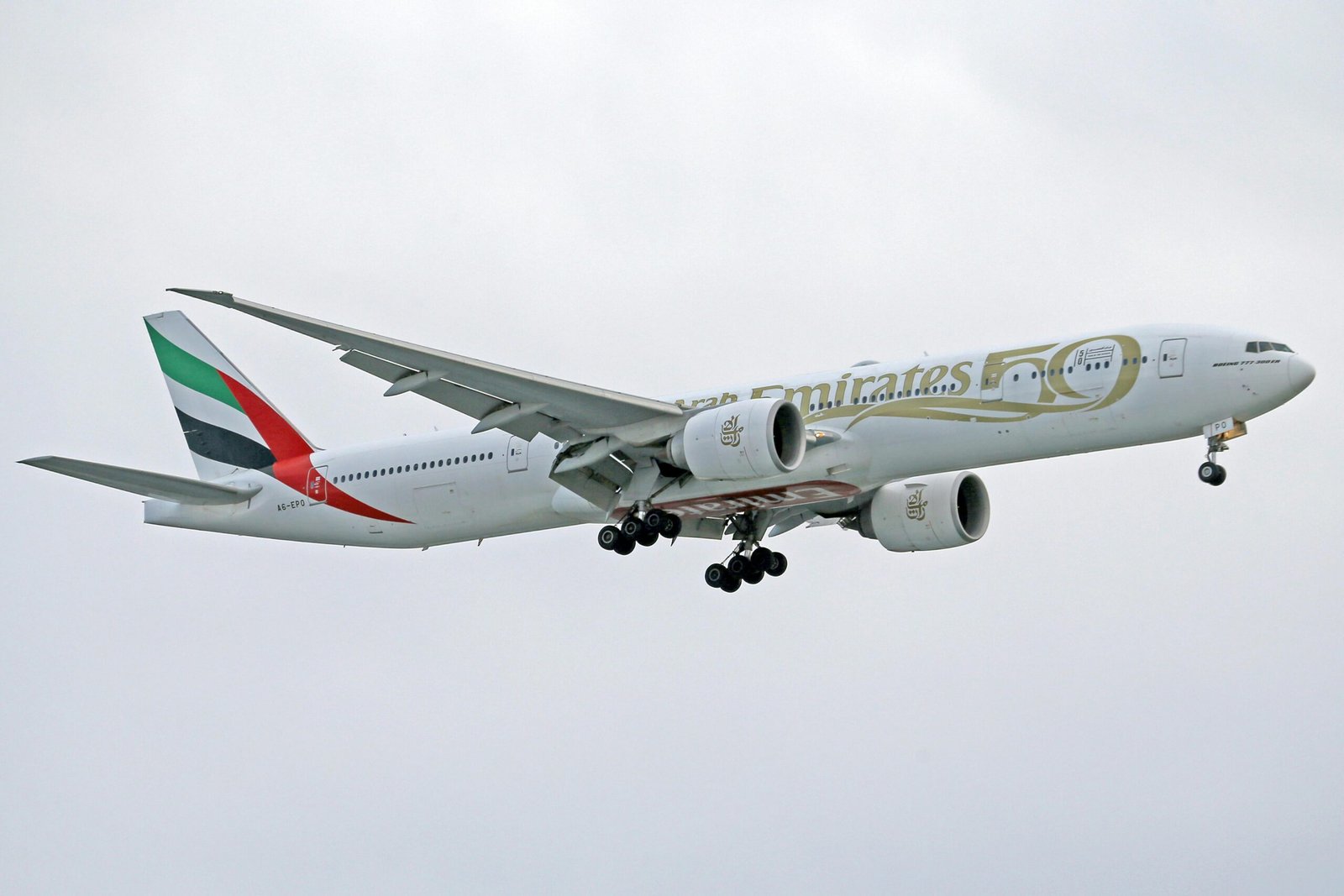
The Fleet Evolution Transforming the Emirates Passenger Experience
Sunset Weekly Disclosure: To help keep our guides free, this post contains affiliate links. If you click through and make a booking (such as hotels, flights, tours, or travel experiences), we may earn a commission at no extra cost to you. Sunset Weekly is an independent travel and lifestyle publication. While we may receive compensation from affiliate partners, this does not influence our editorial content, recommendations, or opinions. #ad
Quick Answer
Emirates enters 2026 operating 123 A380s and a growing A350 fleet — alongside the most ambitious retrofit programme in aviation history. Starlink LEO Wi-Fi reached its first A380 in May 2026, delivering 2 Gbps of bandwidth. A $23 million biometric path at DXB now lets passengers board without touching a passport or boarding pass.
BOOK NOWWho is Emirates and How Does the ‘8-Hour Rule’ Fuel its 2026 Global Dominance?
Answer: Emirates is Dubai’s flag carrier, founded in 1985 with two aircraft. Today it operates an all-widebody fleet of 123 Airbus A380s, a growing A350-900 fleet, and approximately 130 Boeing 777 variants. The airline serves more than 140 destinations and carries over 50 million passengers annually through its Dubai hub.
Emirates built its network on a single, powerful strategic insight: Dubai sits within eight hours of two-thirds of the world’s population. Because of this geography, almost every long-haul route between Europe, Africa, and Asia passes close to Dubai — and Emirates captures that demand at scale. Furthermore, the airline operates the world’s largest fleets of both the Airbus A380 and the Boeing 777, making it the definitive widebody specialist in global aviation.
The 2026 Transformation Context
In 2026, Emirates executes what it describes as the most ambitious retrofit programme in aviation history. According to Emirates’ corporate communications, the $5 billion Project Phoenix targets 219 aircraft — 110 A380s and 109 Boeing 777s — for full cabin refurbishment. So far, 93 aircraft have completed the refresh, introducing Premium Economy, enhanced Business Class suites, and updated First Class products. Furthermore, Starlink LEO Wi-Fi began rolling out fleet-wide from November 2025, replacing OnAir — a legacy system described by aviation reviewers as essentially unusable for anything beyond texting.
The 2026 Fleet Reality: What Aircraft Are You Actually Flying On?
Answer: Emirates operates three mainline aircraft types in 2026: the Airbus A380-800, the Airbus A350-900, and the Boeing 777 family (200LR, 300, and 300ER). Each type carries multiple cabin configurations. The 777X arrives no earlier than 2027. No narrowbody aircraft exists in the Emirates fleet.
The Sunset Weekly Fleet Decoder
Because Emirates operates multiple cabin configurations across the same aircraft type, verifying the seat map before booking remains the single most important step for any cabin class. A Boeing 777-300ER on a retrofitted route delivers a 1-2-1 Business Class layout. However, the same aircraft type on an un-retrofitted route still carries the older 2-3-2 layout — where some passengers step over others to reach the aisle.
| Aircraft | Role | Economy Pitch | Business Pitch | First Class | Wi-Fi |
|---|---|---|---|---|---|
| A380-800 (4-class, retrofitted) | Flagship long-haul | 32–34″ | 48″, lie-flat | 86″ Private Suite | Starlink (rolling out) |
| A380-800 (3-class, legacy) | High-density | 32″ | 48″, lie-flat (no First) | N/A | Starlink (rolling out) |
| A350-900 | New routes (Montreal, Cape Town, Rome) | 32″ | 1-2-1 lie-flat | N/A | Starlink (rolling out) |
| B777-300ER (retrofitted) | Premium trunk routes | 32″ | 1-2-1 lie-flat, August 2026 | Yes (select) | Starlink (rolling out) |
| B777-300ER (legacy) | Other trunk routes | 32″ | 2-3-2 (some no aisle access) | Yes (select) | OnAir legacy (paid) |
| B777-200LR | Long-range thinner routes | 32″ | 1-2-1 lie-flat | Yes (select) | Mixed |
The Sunset Weekly Legroom Index™ — Emirates Edition
Emirates Economy delivers 32–34 inches of pitch depending on aircraft configuration. The A380 Economy cabin features 17.9-inch-wide Safran seats at 32 inches pitch. The retrofitted A380 Premium Economy offers a clear upgrade: Recaro PL3530 seats at 40 inches pitch, 19.5 inches wide, with USB-A, USB-C, and a shared AC outlet. Because Premium Economy now covers more than 84 routes worldwide by July 2026, it represents Emirates’ most important mid-tier product expansion since the airline’s founding.
The A380: Crown Jewel, Multiple Configurations, One Check You Must Make
Answer: Emirates operates 123 Airbus A380s in multiple configurations ranging from the high-density two-class 615-seat layout to a four-class 384-seat flagship version. First Class Private Suites sit at 86 inches pitch with a Shower Spa and Onboard Lounge. All 15 two-class A380s convert to three-class by November 2026.
Reading the A380 Seat Map Before Booking
Emirates operates eight distinct A380 configurations. The key difference for Business Class passengers is whether their aircraft carries the older Safran SkyLounge seats (70–79 inch flat bed) or a fully retrofitted layout. All A380 Business Class configurations deliver direct aisle access and a 48-inch pitch — unlike the 777, where older layouts still feature a 2-3-2 arrangement.
First Class on the A380 sits at the front of the upper deck in a 1-2-1 layout across 14 suites. Each suite offers 86 inches of pitch, a 22-to-28-inch width depending on seat position, full sliding privacy doors, and access to the A380 Shower Spa — a feature no other commercial aircraft offers. The Onboard Lounge at the rear of the upper deck is exclusive to First and Business Class passengers.
The 777-300ER Business Class Reality Check
The Boeing 777-300ER presents the most confusing product landscape in the Emirates fleet in 2026. According to Project Phoenix timelines, Emirates begins retrofitting 777-300ERs with a new 1-2-1 Business Class layout in August 2026. Before that date, however, some aircraft still carry the older 2-3-2 arrangement — where passengers in the B, D, and G seats must step over their neighbours to reach the aisle.
The Connection Reality™ — 777 Business Class: Until the retrofit completes across the 777 fleet, checking the seat map for your specific flight matters more than booking the aircraft type alone. A 1-2-1 seat map confirms the new layout. A 2-3-2 map confirms the legacy product — same price, meaningfully different experience.
| Feature | A380 Business (all configs) | 777-300ER (new, post-Aug 2026) | 777-300ER (legacy) |
|---|---|---|---|
| Layout | Direct aisle access all seats | 1-2-1 direct aisle | 2-3-2 (some step-over) |
| Flat-bed length | 70–79″ | Lie-flat | Lie-flat (angled on oldest) |
| Onboard Bar | Yes — upper deck | No | No |
| Screen | 18″ HD | Updated | Older generation |
| USB-C | Select retrofits | Yes | No |
| AC power | Yes | Yes | Yes |
| Biometric boarding | DXB Concourses A, B, C | DXB Concourses A, B, C | DXB Concourses A, B, C |
The A350-900: Emirates’ Newest Aircraft and What It Delivers
Answer: Emirates received its first A350-900 in November 2024. As of mid-2026, 16 aircraft operate, with more deliveries ongoing. Each A350-900 carries 312 passengers in Business, Premium Economy, and Economy. Routes include Montreal, Rome, Taipei, Cape Town, Kuwait City, and Phuket.
Why the A350 Matters for Passengers in 2026
The A350-900 represents Emirates’ first truly new aircraft type since the A380 era. Because the airline previously ran only A380s and 777s, the A350 opens routes that neither type could serve efficiently — including thinner long-haul markets where the 298-seat capacity right-sizes passenger demand. Furthermore, the A350 delivers quieter cabins, higher cabin pressure, and improved humidity compared to older 777 variants.
Business Class on the A350 sits in a 1-2-1 reverse herringbone layout with 32 lie-flat seats. Premium Economy offers 28 seats in a 2-3-2 configuration at 40 inches pitch. Economy carries 238 seats. All classes receive Emirates’ ice entertainment system with over 6,500 channels. Notably, the A350 Business Class lacks the Onboard Bar — a feature exclusive to the A380. However, it gains quieter acoustics, newer cabin materials, and faster Starlink Wi-Fi rollout priority over the older 777 variants.
Wi-Fi: The Starlink Transformation — Live in 2026
Answer: Emirates launched Starlink LEO Wi-Fi on its first Boeing 777-300ER in November 2025, then debuted the first Starlink-equipped A380 in May 2026. The A380 carries three Starlink antennas, delivering more than 2 Gbps of bandwidth — a thousand-fold improvement over the previous OnAir system. The service is free, no login required.
The Sunset Weekly Connectivity Scorecard™
Emirates’ Starlink rollout began on 23 November 2025 with a commercial 777-300ER flight. According to Emirates’ official communications, the airline targets 14 aircraft per month, with full fleet coverage of 232 aircraft (777s and A380s) by mid-2027. As of 14 May 2026, 33 aircraft carry Starlink. The A350 fleet receives a separate connectivity solution and will join the Starlink rollout as deliveries continue.
The Bandwidth Reality: From OnAir to Starlink
Starlink uses more than 10,000 low-Earth orbit (LEO) satellites at approximately 550 kilometres altitude. The A380 installation uses three antennas — an industry first — delivering more than 2 Gbps of bandwidth across the double-decker cabin. By comparison, Emirates’ previous OnAir system offered less than 1 Mbps total aircraft bandwidth. According to One Mile at a Time, the legacy system was essentially unusable for anything beyond basic texting.
What you actually get in May 2026, by aircraft:
- Starlink-equipped 777s and A380s (33 aircraft as of 14 May 2026): Free, gate-to-gate, all cabins, all classes, no login required, no Skywards membership needed. Multiple devices simultaneously without speed reduction. Full streaming, gaming, and video calls available.
- Non-Starlink 777s and older A380s: OnAir legacy system. Paid tiers apply. According to aviation reviewers, speeds rarely exceeded 1–2 Mbps even on paid plans.
- A350-900 fleet: Satellite Wi-Fi fitted at delivery. Emirates describes it as “faster Wi-Fi” — but Starlink installation timelines for the A350 are not yet confirmed.
Insight: Because Starlink covers only 33 of 232 aircraft as of mid-May 2026, the majority of Emirates flights still carry the legacy OnAir system. Always check whether your specific aircraft and flight number carries Starlink before booking. Emirates does not yet prominently mark Starlink availability at the route-booking stage. Track aircraft by tail number on FlightRadar24 — Starlink-equipped 777s are identifiable by the distinctive dome antenna on the fuselage.
Dubai International Airport: The Biometric Hub
Answer: Emirates invested AED 85 million ($23 million) to install more than 200 facial recognition cameras across Terminal 3 at DXB. Passengers who register via the Emirates app can clear check-in, immigration, lounge access, and boarding using facial recognition alone — no passport or boarding pass required at any touchpoint.
The Terminal Walk-Time Logic™ for Dubai Connections
Dubai International Airport Terminal 3 handles all Emirates flights from a single mega-terminal complex across Concourses A, B, and C. Because the biometric path covers all key touchpoints — from check-in kiosks through immigration Smart Gates to departure gates — registered passengers bypass document queues entirely, processing immigration in as little as 3.4–4 seconds according to GDRFA performance data.
Minimum connection times at DXB for Emirates-to-Emirates transfers sit at 60–90 minutes for most routes. However, during peak periods — particularly morning waves from 07:00–10:00 and evening waves from 22:00–01:00 — security queues at non-biometric lanes can extend significantly. Registering for Emirates Biometrics via the app before arrival eliminates this risk and routes passengers through dedicated fast lanes.
The Carry-On Crunch Reality™ at DXB
Emirates deployed AI-driven carry-on bag scanning at select departure gates in Terminal 3 from 2025. Because these systems detect non-compliant bags at the gate rather than the aircraft door, passengers who carry oversized cabin bags now face mandatory hold check-in at the gate — often with a fee applied. Emirates allows 7 kg in Economy and 10 kg in Business Class as cabin bag limits. Always weigh your bag before arriving at DXB.
2026 Flight Trends: Two Signals Every Emirates Traveller Should Know
Digital ID Wallets: Emirates Leads the Biometric Boarding Revolution
Answer: Emirates invested AED 85 million in biometric cameras at DXB Terminal 3. Registration takes minutes via the Emirates app. The system matches passenger faces against the GDRFA Dubai database, enabling passport-free and boarding-pass-free travel from check-in through aircraft boarding. Registration opens to all Emirates passengers aged 18 and above.
Emirates’ biometric system represents the most comprehensive facial recognition deployment at any single airline’s hub airport globally. Because it integrates directly with the GDRFA Dubai government database, the verification layer carries regulatory weight — not just commercial convenience. Furthermore, once enrolled, the system recognises passengers from one metre away as they walk through Biometric Smart Zones, requiring no stopping, scanning, or document handling.
What Biometric Registration Actually Unlocks
The Emirates Biometrics Path covers five distinct touchpoints at DXB:
- Check-in: Facial recognition at self-service kiosks replaces manual document checks.
- Immigration: Smart Gates use facial recognition to process eligible travellers in 3.4–4 seconds. Available to UAE citizens, residents, GCC nationals, and visa-on-arrival visitors with biometric passports.
- Lounge access: Five facial recognition entry points at Concourse B lounge.
- Boarding gates: Biometric boarding active on select gates in Concourses A, B, and C.
- Future expansion: Emirates confirms connection boarding via biometrics is in development.
Insight: Biometric boarding at DXB currently covers select gates across Concourses A, B, and C — not every departure gate. Since Emirates operates more than 45 daily A380 departures alone from DXB, full Biometric Path coverage requires continued infrastructure rollout. Also, Smart Gate immigration applies only to specific passport nationalities. UK and EU passport holders should verify Smart Gate eligibility before depending on the biometric route.
SAF: Emirates’ Sustainability Position in 2026
Answer: Emirates has not yet introduced a visible SAF surcharge on passenger bookings. The airline operates under UAE regulatory frameworks that sit outside the EU ReFuelEU 2% SAF blending mandate. However, SAF costs 2–4 times more than conventional jet fuel, and those costs embed into base fares as Emirates scales its decarbonisation commitments.
Emirates operates outside the EU ReFuelEU Aviation regulation — which mandates a minimum 2% SAF blend on all flights departing EU airports from 2025. Because Dubai International sits outside EU jurisdiction, Emirates faces no immediate statutory SAF blending obligation. This differs materially from European carriers like KLM, which charges an explicit SAF surcharge of €2–€24 per ticket on all Schiphol-departing flights.
The SAF Cost Reality for Emirates Passengers
However, UK-originating Emirates flights depart from airports covered by the UK’s own SAF Order, which mandates a 2% SAF blend from January 2025. So UK passengers booking Emirates via Heathrow or Manchester effectively fund SAF compliance through the UK supply chain — even without a visible line item on their booking confirmation.
Emirates has committed to industry-wide net zero by 2050 and participates in SAF procurement partnerships globally. Since SAF costs 2 to 4 times more than conventional jet fuel, scaling that commitment will increasingly flow through to fares. Furthermore, the airline’s A350 fleet delivers approximately 25% better fuel efficiency per seat than the 777-200ER it displaces, generating a measurable carbon benefit without any surcharge at all.
The Emirates Skywards Loyalty Programme
Answer: Emirates Skywards earns miles on flights, hotels, cars, and retail. Miles redeem for flights, upgrades, and holidays. Four tiers — Blue, Silver, Gold, Platinum — unlock escalating benefits. Skywards members also receive complimentary access to Emirates’ biometric registration service and free messaging-tier Wi-Fi on legacy-equipped aircraft.
The Sunset Weekly Loyalty Scorecard™
Emirates Skywards delivers its strongest redemption value in Business Class on A380 routes. Because the A380 Business Class consistently offers the Onboard Lounge and Bar — unique features unavailable on any 777 or A350 — targeting A380-operated flights for Skywards redemptions delivers a meaningfully superior hard product for the same miles.
Gold members unlock one of Skywards’ most practical benefits: complimentary upgrades at check-in when available. Since Emirates frequently releases upgrade inventory at T-24 hours rather than at booking, checking the Emirates app the night before departure maximises upgrade capture on cash bookings.
Insight: Skywards miles expire after three years of account inactivity. However, any qualifying transaction — including purchasing a coffee through an Emirates partner — resets the clock. Because many Skywards members lose significant balances through inactivity without knowing, setting a calendar reminder to make one qualifying transaction annually protects accumulated miles at no cost.
The 2026 Promotions: What’s Real and What’s Marketing
Answer: Emirates 2026 promotions include the student promo code STUDENT for up to 10% off Economy and 5% off Business Class. Emirates Holidays early booking offers up to 40% off luxury stays in the Maldives and Dubai. Best Fare Finder shows lowest prices across a 12-month rolling window for flexible travellers.
Promotion
The student discount code STUDENT applies to passengers aged 16–31 who verify their status at checkout. Because the discount stacks on top of promotional base fares rather than applying to full-price tickets, the most strategic use involves combining the code with a Featured Fare window — typically a 24–72 hour booking window offering specific route reductions.
The Emirates Holidays early booking offer of up to 40% off applies to package bookings that combine Emirates flights with hotel stays. Furthermore, because the package includes Emirates flights, the hotel rate reduction does not apply to independently arranged accommodation. For independent travellers already holding a hotel booking, the Featured Fares standalone flight option delivers more flexibility at comparable pricing.
The Best Fare Finder
Emirates’ Best Fare Finder tool shows the lowest available price across a 12-month calendar for any given route. Since Emirates uses fully dynamic pricing, this tool surfaces genuinely lower prices on specific date combinations — not just promotional labels on standard fares. For UK travellers with flexible holiday windows, running a Best Fare Finder search before committing to specific dates consistently identifies savings of 15–30% compared to peak-period pricing on popular routes such as London Heathrow to Dubai, New York, or Sydney.
FAQs
Is Emirates Business Class worth the price in 2026?
The standard answer: Yes — Emirates Business Class offers lie-flat beds, excellent dining, lounge access, and the iconic A380 Onboard Bar.
The Connection Reality™: The answer splits sharply by aircraft. On an A380, Business Class delivers direct aisle access, the Onboard Bar, and a bed length of 70–79 inches in a social, double-decker environment that no other aircraft replicates. On a legacy 777-300ER with the 2-3-2 layout — still operating until the August 2026 retrofit begins — you receive a lie-flat bed without direct aisle access, no bar, and an older cabin. Always check the seat map before purchasing. A 1-2-1 layout confirms modern product. A 2-3-2 layout signals the legacy configuration — at the same price.
Does Emirates have free Wi-Fi in 2026?
The standard answer: Yes — Emirates is rolling out free Starlink Wi-Fi across its fleet for all passengers in all cabins.
The Sunset Weekly Connectivity Scorecard™: As of 14 May 2026, Starlink runs on 33 of 232 target aircraft. On Starlink-equipped 777s and the first A380s, the service is genuinely free — no login, no payment, no Skywards membership required. Multiple devices connect simultaneously. Bandwidth reaches 2 Gbps on the A380. However, on the remaining 199 non-Starlink aircraft, the legacy OnAir system still operates with paid tiers. Check aircraft tail numbers on FlightRadar24 before departure to confirm Starlink status.
What is Emirates First Class like on the A380?
The standard answer: Emirates First Class features Private Suites, a Shower Spa, and access to the Onboard Lounge on the A380.
The Sunset Weekly Legroom Index™ for First Class: Emirates A380 First Class delivers 86 inches of pitch, a suite width of 22–28 inches depending on seat position, and a fully flat bed accessed via sliding privacy doors. The Shower Spa — located on the upper deck — remains the only in-flight shower available on a commercial aircraft outside of Etihad’s discontinued The Residence. Each suite includes a 27-inch HD screen, noise- cancelling headphones, and Bulgari amenity kits. However, First Class sits on A380s only — not on the 777 or A350 in most configurations. Always check before booking a First Class fare whether an A380 operates your specific route and flight number.
How does Emirates compare to Qatar Airways in 2026?
The standard answer: Both carriers compete strongly from the Gulf, with world-class Business Class products and strong long-haul networks.
The Terminal Walk-Time Logic™: In 2026, Emirates wins on cabin scale — 123 A380s with Onboard Bars and Shower Spas, plus an expanding A350 fleet with 1-2-1 Business. Qatar Airways wins on Business Class consistency — Qsuites run on virtually all long-haul Qatar aircraft with closing doors and double-bed configuration, while Emirates’ Business Class inconsistency on legacy 777s persists until the retrofit completes. Furthermore, Qatar already completed its Starlink rollout fleet-wide. Emirates trails by roughly 18 months on connectivity reach. For Wi-Fi reliability today, Qatar is ahead — for A380 scale and social travel, Emirates leads.
Is the Emirates student discount worth using?
The standard answer: Yes — the STUDENT promo code gives up to 10% off Economy and 5% off Business Class for passengers aged 16–31.
Insight: The discount is genuine and straightforward to apply. However, the 10% saving reaches its maximum value when combined with a Featured Fare promotion rather than on a standard-priced ticket. Since Emirates runs Featured Fare windows at least monthly on major routes, waiting to stack the student code on top of a featured price — rather than applying it to a full-price ticket — consistently delivers the largest absolute saving. Furthermore, the extra baggage allowance for students adds real value on routes from the UK to destinations in Australia and Southeast Asia, where checked baggage fees on non-student fares can run £80–£150 each way.
Editorial & Accuracy Standards
- Expert Review:
Ammara Azmat,
Senior Travel Mobility Analyst (12+ years experience) - Status: Verified for accuracy against official 2026 service data and real-time traveller reports.
- Our Process: This content follows our Fact-Checking Policy.