
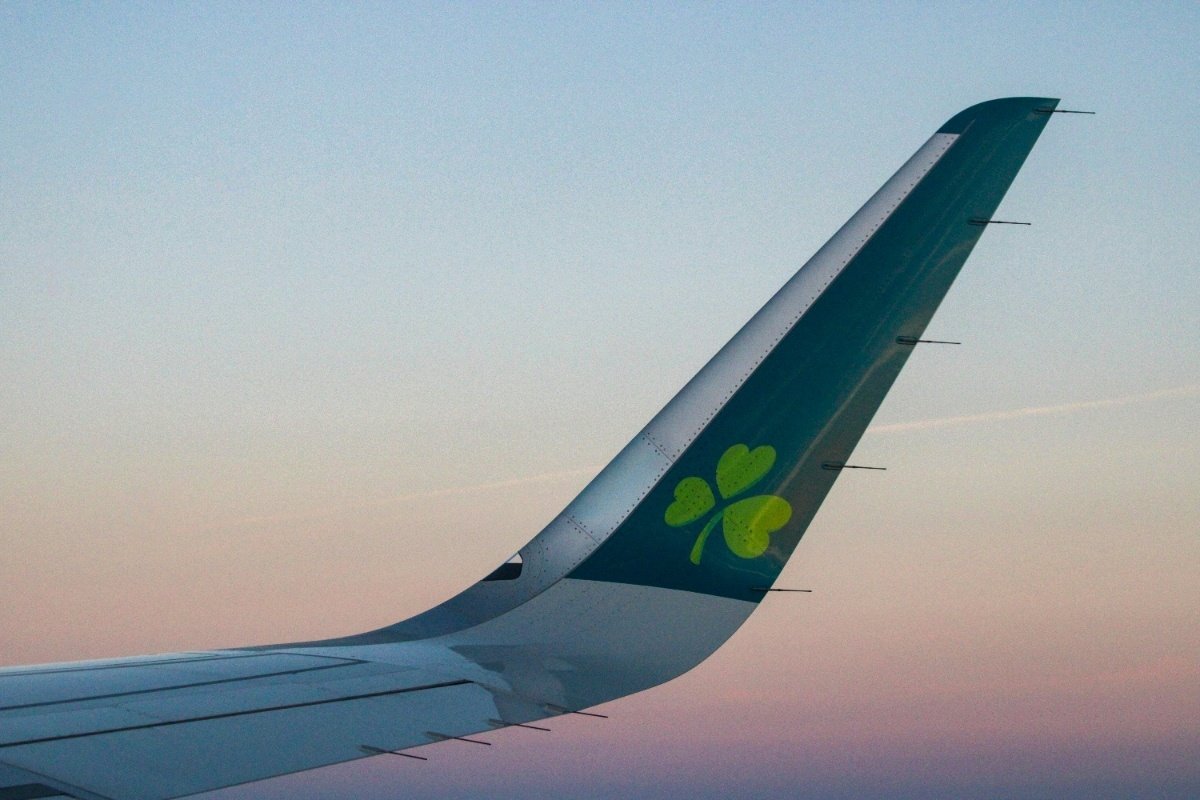
Aer Lingus vs Widebody Rivals: The Truth About Their New Long-Haul Jets
Sunset Weekly Disclosure: To help keep our guides free, this post contains affiliate links. If you click through and make a booking (such as hotels, flights, tours, or travel experiences), we may earn a commission at no extra cost to you. Sunset Weekly is an independent travel and lifestyle publication. While we may receive compensation from affiliate partners, this does not influence our editorial content, recommendations, or opinions. #ad
Quick Answer
Aer Lingus enters 2026 operating its largest-ever transatlantic schedule — 26 North American routes — powered by a fleet of 14 A321neo family aircraft. In March 2026, it became one of the first airlines in the world to launch Starlink LEO Wi-Fi onboard. Ireland’s flag carrier turns 90 this year and flies further than ever before.
BOOK NOWWho is Aer Lingus and How did it Become a Transatlantic Narrowbody Giant in 2026?
Answer: Aer Lingus is Ireland’s flag carrier, founded in 1936. It holds a 4-star Skytrax rating, operates over 100 routes from Dublin, Cork, Shannon, and Knock, and flies as a member of International Airlines Group (IAG), alongside British Airways, Iberia, and Vueling.
Aer Lingus built its identity as a short-haul European carrier for most of its 90-year history. However, since 2019, it has transformed into a transatlantic specialist. Because of Ireland’s unique geographic position on the western edge of Europe, Dublin Airport functions as an extremely efficient gateway between North America and the wider European network.
According to aviation industry sources, Aer Lingus now operates 24 direct routes to North America in summer 2026, the largest transatlantic schedule in its history. Furthermore, its entire transatlantic operation runs on narrowbody A321neo family aircraft, which dramatically changes the passenger experience compared to widebody rivals.
The 2026 Fleet Reality: What Aircraft Are You Actually Flying On?
Answer: Aer Lingus operates five aircraft types in 2026: the A320neo, A321neo, A321LR, A321XLR, and A330. The A321 family handles all transatlantic flying. The A330 covers higher-demand routes. No widebody replaces the narrowbody on thinner US routes.
The Sunset Weekly Fleet Decoder
Understanding which aircraft Aer Lingus assigns to your route matters enormously. Because the A321XLR and A321LR are narrowbody jets, they deliver a fundamentally different physical experience from the A330 — even though both offer lie-flat Business Class seats.
| Aircraft | Primary Role | Economy Pitch | Business Pitch | Power Outlets | Wi-Fi |
|---|---|---|---|---|---|
| A320neo | Short-haul Europe | 31–32″ | N/A (one cabin) | USB-A | No (rolling out) |
| A321neo | European routes | 31–32″ | N/A | USB-A | No (rolling out) |
| A321LR | Transatlantic (thin routes) | 31–32″ | 47″ lie-flat | USB-A only | Paid tiers |
| A321XLR | Transatlantic (new markets) | 30.5–32″ (varies by row) | 47″ lie-flat | USB-A + USB-C + AC | Paid / free for Business |
| A330 | Transatlantic (high-demand) | 31–32″ | Lie-flat | USB-A + AC | Starlink (rolling out) |
The Sunset Weekly Legroom Index™ — A321XLR Edition: According to The Points Guy’s verified review, economy seat pitch on the A321XLR varies by row. Rows 16–21 and 22–34 ABC offer only 30.5 inches of pitch — tighter than average for a long-haul flight. However, rows 7–13 and 22–34 DEF provide 32 inches. Because seat selection determines your legroom on this aircraft, choosing the right side of the plane matters more on Aer Lingus than on almost any other transatlantic carrier.
The A321XLR: The Long & Skinny Reality Check
Answer: Aer Lingus operates six A321XLR aircraft in 2026, using them to serve Nashville, Indianapolis, Minneapolis, and Raleigh-Durham from Dublin. Flight times reach up to nine hours. The aircraft seats 184 passengers: 16 in lie-flat Business and 168 in Economy across a 3-3 narrowbody cabin.
What the Marketing Says vs The Connection Reality™
Aer Lingus took delivery of its first two A321XLRs in December 2024, registered as EI-XLR and EI-XLT, and became the second airline in the world to operate the type. Since then, it has added further aircraft and deployed them on some of the most ambitious thin transatlantic routes in the industry.
However, understanding what the A321XLR actually is matters before booking. The cabin is 3-3 narrowbody — six seats across, one aisle. By comparison, an A330 runs 2-4-2 across the same route. On a nine-hour Dublin–Nashville flight, that physical reality shapes the entire experience. Since no premium economy cabin exists on the A321XLR, passengers choose between lie-flat Business or standard Economy. There is no middle tier.
The Business Class Truth
Business class on the A321XLR uses Thompson Aero Vantage seats, offering 47 inches of pitch, 22 inches of width, and a fully flat bed 77 inches long. The cabin alternates between a 2-2 and 1-1 layout across 16 seats. Single “throne” seats in rows 3 and 5 attract the most demand. Furthermore, an 18-inch 4K UHD touchscreen and universal AC, USB-A, and USB-C power outlets come standard at every Business Class seat.
Insight: Despite the impressive seat specs, business-class Wi-Fi on the A321XLR delivered speeds under 5 Mbps download and 1 Mbps upload at time of testing, according to The Points Guy. That is slow for a lie-flat transatlantic product. The Starlink rollout (see below) specifically began with the A330 first — not the A321XLR. So as of May 2026, A321XLR flights do not yet carry Starlink.
Wi-Fi: What the Connectivity Reality Actually Looks Like
Answer: Aer Lingus launched Starlink LEO Wi-Fi on 29 March 2026 on flight EI105, Dublin to New York JFK. The rollout starts with A330 aircraft serving transatlantic routes. Speeds reach 500+ Mbps. The service is free across all cabins on Starlink-equipped aircraft.
The Sunset Weekly Connectivity Scorecard™
Aer Lingus equipped its first aircraft with Starlink on 29 March 2026, debuting the service on flight EI105 from Dublin to New York JFK, with download speeds reaching 500+ Mbps across all cabins. This positions Aer Lingus among the most advanced carriers for in-flight connectivity globally.
Starlink uses more than 10,000 low-Earth orbit (LEO) satellites at approximately 550 kilometres altitude, enabling lower latency and higher speeds than traditional GEO satellite systems. For transatlantic routes, this solves the coverage gap over the ocean that legacy providers consistently struggled with.
What you actually get, by aircraft and route:
- A330 transatlantic routes (Starlink-equipped): Free, no login required, all cabins. Speeds up to 500+ Mbps. Gate-to-gate connectivity. However, full fleet rollout continues through 2027 — not every A330 carries Starlink today.
- A321XLR / A321LR transatlantic routes: Older connectivity system. Business Class receives complimentary access. Economy passengers pay from €3.49 for one hour of messaging up to €20.49 for full-flight browsing. Speeds test under 5 Mbps on Business.
- A320neo / A321neo European routes: Starlink rollout follows long-haul priority. Short-haul Wi-Fi availability varies by aircraft.
Insight: Aer Lingus will equip all aircraft with Starlink in a phased rollout, beginning with aircraft flying to North America, followed by those serving European destinations. However, “phased” matters. Passengers booking a transatlantic A321XLR today should not assume Starlink connectivity. Always check the specific aircraft registration before boarding if connectivity matters to your trip.
The 2026 Promotions: What’s Real and What’s Marketing
Answer: Aer Lingus 2026 promotions include a Summer Seat Sale offering up to 20% off base fares and baggage on European routes. Transatlantic fares from Manchester to New York start around £291. The AerClub Avios programme rewards loyalty across all IAG airlines.
Promotion:
The Summer Seat Sale applies to short-haul travel within the UK and Europe — not transatlantic routes. Because transatlantic fares carry separate pricing structures, the 20% headline discount does not apply to the long-haul product that most readers associate with Aer Lingus’s 2026 expansion story. That distinction rewards careful reading.
The AerClub programme collects Avios — the shared currency across all IAG airlines. This makes Aer Lingus miles more useful than many standalone loyalty programmes, since Avios transfer seamlessly to British Airways, Iberia, and Vueling. Furthermore, IAG’s scale means reward seat availability often exceeds what a smaller airline loyalty programme can offer independently.
Route-Specific Starting Prices from the UK (verified at time of report):
- London Heathrow to Dublin: from £21.79 one-way
- Manchester to New York JFK: from approximately £291 one-way
- UK to US via Dublin: from approximately £274 return
- Birmingham to Belfast: from £39.99 one-way
- Manchester to Barbados: from £233.90 return
The Terminal Walk-Time Logic™ for Dublin Transfers: Aer Lingus uses Dublin’s US Customs and Border Protection pre-clearance facility. Since passengers clear US immigration in Dublin rather than on arrival, they land in the US as domestic arrivals. This eliminates the queue that passengers on every other transatlantic carrier face on landing. For connecting travellers, this alone can justify choosing Dublin as a hub over London or Amsterdam.
2026 Flight Trends: Two Signals Every Aer Lingus Traveller Should Know
The A321XLR “Long & Skinny” Revolution: What It Actually Means
Answer: Aer Lingus operates 11 exclusively A321neo transatlantic routes in summer 2026. These aircraft reach Nashville (9h 20m block time) and Indianapolis on routes that previously had no nonstop option. The A321XLR’s economics allow Aer Lingus to serve cities that a widebody aircraft could never profitably reach nonstop.
The carrier received its first two A321XLRs in December 2024 and used the aircraft to open routes to Nashville and Indianapolis. Overall, Aer Lingus operates its largest-ever transatlantic schedule in summer 2026.
This “Long & Skinny” model represents a fundamental shift in transatlantic aviation. Rather than funnelling all passengers through hub airports like Heathrow or JFK, Aer Lingus connects secondary US markets directly to Dublin — and through Dublin to Europe. Because the economics work at lower passenger volumes, routes like Dublin–Raleigh-Durham and Dublin–Nashville become viable for the first time. Furthermore, new A321XLR routes saw average load factors above 80%, despite launching just weeks earlier, which indicates strong genuine demand rather than promotional pricing.
SAF Surcharges: The Mathematical Reality of Flying Greener
Answer: As an IAG member, Aer Lingus has committed to powering 10% of its flights using Sustainable Aviation Fuel (SAF) by 2030. EU ReFuelEU regulation mandates a 2% SAF blend minimum from 2025. SAF costs 2–4 times more than conventional jet fuel, and those costs flow through to ticket prices.
Aer Lingus, as part of IAG, benefits from the group’s scale in SAF procurement. However, the underlying economics affect every passenger. SAF currently costs 2 to 4 times more than conventional jet fuel, and the price impact can reach up to 25% on the fuel component of a flight. Since fuel represents approximately 25–30% of airline operating costs, SAF exposure on transatlantic routes represents a meaningful fare input.
Some airlines already pass the cost of SAF compliance onto consumers via explicit SAF surcharges — including TAP and Lufthansa Cargo. Aer Lingus has not yet introduced a standalone SAF line item. However, as EU mandates increase toward 10% by 2030, those costs will increasingly flow through to base fares — whether passengers notice them or not.
Insight: Aer Lingus’s investment in the A321neo family already reduces CO₂ emissions compared to the aircraft it replaced. The new A321XLR burns significantly less fuel per seat than an A330 on the same route. So even without SAF, every A321XLR transatlantic flight carries a meaningfully lower emissions footprint than a comparable widebody operation.
The Cabin Product: What Business Class Actually Means on Aer Lingus
Answer: Aer Lingus Business Class on transatlantic routes delivers genuine lie-flat beds with 47 inches of pitch on both the A321 family and the A330. However, the A321XLR’s narrowbody single-aisle environment differs fundamentally from the widebody A330 cabin width and overall sense of space.
| Feature | A321XLR / A321LR Business | A330 Business |
|---|---|---|
| Seat pitch | 47″ | 47″ |
| Lie-flat length | 77″ | 77″ |
| Seat width | 22″ | 22″ |
| Aisle layout | Staggered 2-2 / 1-1, one aisle | 2-2, two aisles |
| Screen size | 18″ 4K UHD (XLR) / 13″ (LR) | 16″ HD |
| Power | USB-A + USB-C + AC (XLR) | USB-A + AC |
| Wi-Fi | Paid / free Business (pre-Starlink) | Starlink — free all cabins (where fitted) |
| Biometric boarding | Dublin: US Pre-Clearance standard | Dublin: US Pre-Clearance standard |
| No premium economy | Confirmed — no middle tier exists | Confirmed — no middle tier exists |
Insight — The Narrowbody Reality Check: On a nine-hour Dublin–Nashville flight, the A321XLR Business Class lies flat, the screen shows 4K, and the seat measures 22 inches wide. However, you still share a single aisle with 168 economy passengers. The galley sits at the rear. Turbulence rocks a narrowbody more noticeably than a widebody. Since no premium economy option exists, passengers weighing up an upgrade face a starker binary choice than on comparable A330 routes.
The AerClub Loyalty Programme: Is It Worth Joining?
Answer: AerClub collects Avios — the shared loyalty currency across all IAG airlines. Because Avios transfer between Aer Lingus, British Airways, Iberia, and Vueling, the programme delivers more flexibility than most single-airline loyalty schemes. Joining costs nothing and carries no minimum spend requirement.
AerClub’s most distinctive feature is Avios transferability across IAG. A member who collects miles on Aer Lingus transatlantic flights can redeem those same Avios on British Airways for a Heathrow route, or on Iberia for a Madrid connection. Furthermore, IAG’s scale means partner redemption opportunities — hotels, car hire, and retail — run broader than a standalone Irish carrier could independently support.
The Sunset Weekly Loyalty Scorecard™: AerClub earns a strong recommendation for frequent transatlantic travellers, particularly those using Dublin as a hub. However, for pure short-haul European flying, collecting Avios through British Airways or Iberia spending first may build balances faster, given Aer Lingus’s smaller European footprint compared to its IAG partners.
FAQs
Is Aer Lingus a good airline for transatlantic flights?
The standard answer: Yes — it holds a 4-star Skytrax rating and offers lie-flat Business Class on all transatlantic routes.
The Connection Reality™: Yes, but the answer depends entirely on which aircraft you board. On an A330 with Starlink, the transatlantic experience is genuinely excellent. On an A321XLR to Nashville or Indianapolis, you fly a 9-hour narrowbody with one aisle, no premium economy, and Wi-Fi under 5 Mbps — at Business Class prices that rival widebody competitors. The lie-flat seat is real. However, the surrounding narrowbody environment is equally real.
Does Aer Lingus have Wi-Fi on transatlantic flights?
The standard answer: Yes — Wi-Fi is available on transatlantic routes.
The Sunset Weekly Connectivity Scorecard™: As of May 2026, the answer splits by aircraft. Starlink launched on 29 March 2026 on a Dublin–New York A330 flight, delivering speeds up to 500+ Mbps for free across all cabins. However, A321XLR and A321LR aircraft do not yet carry Starlink. On those flights, Business Class passengers receive complimentary access to legacy connectivity, while Economy passengers pay from €3.49 per hour. Always check the specific aircraft type before boarding.
What is the best seat on Aer Lingus A321XLR economy?
The standard answer: Exit rows offer extra legroom.
The Sunset Weekly Legroom Index™: According to verified passenger reviews, rows 7–13 and the DEF seats in rows 22–34 on the right side of the aircraft deliver 32 inches of pitch. Because the ABC seats in rows 16–21 and 22–34 compress to 30.5 inches, the difference between a good and a poor seat choice reaches 1.5 inches on a 9-hour flight. Furthermore, since no seat upgrade to premium economy exists on this aircraft, seat selection represents your only legroom lever.
How do Aer Lingus transatlantic fares compare in 2026?
The standard answer: Fares from Manchester to New York start around £291 one-way.
The Terminal Walk-Time Logic™: Aer Lingus routes UK passengers via Dublin, where US Customs pre-clearance eliminates the arrival immigration queue in the US. Since that connection benefit can save 60–90 minutes on arrival, it adds genuine value beyond the ticket price. Furthermore, the Travel Tuesday hub on aerlingus.com regularly surfaces promotional fares for US-based and European-based travellers below the standard listed prices. Combining a promotional code with a midweek departure often delivers the sharpest savings available.
Does Aer Lingus offer premium economy on transatlantic routes?
The standard answer: No — Aer Lingus does not currently operate a premium economy cabin.
Insight: This is one of the most important facts to understand before booking Aer Lingus on a transatlantic route. Because no premium economy tier exists on any aircraft — A330, A321LR, or A321XLR — travellers who want more space than standard economy must buy a lie-flat Business Class seat. Given that Business fares can run two to four times the economy price on busy routes, this binary pricing structure makes upgrade decisions more consequential than on carriers like British Airways or Virgin Atlantic, which both offer a genuine middle tier.
Editorial & Accuracy Standards
- Expert Review:
Ammara Azmat,
Senior Travel Mobility Analyst (12+ years experience) - Status: Verified for accuracy against official 2026 service data and real-time traveller reports.
- Our Process: This content follows our Fact-Checking Policy.