

Quick Answer
A genuinely luxury-feeling London day costs under £30 per person if you spend on food, not admission. Five free stops, a skyline viewing gallery, a grand neoclassical courtyard, a premium street-food market, an indoor sky garden, and a mansion art museum, cost £0 to enter.
Only lunch, a coffee, and the TfL daily transport cap (£8.90 for Zones 1–2) cost anything, bringing the realistic total to £25–£29.
The Sunset Weekly Connection Reality: Experiencing premium London does not require expensive attraction tickets. Taking advantage of free-entry galleries, public sky gardens, and public transport price caps allows you to enjoy an upscale capital itinerary while keeping total daily expenditure well under £30.
BOOK NOWIf You’re Arriving From Outside France, Start Here
Landing at Charles de Gaulle or Orly, or arriving by international train, puts you in exactly the situation SNCF Connect is built for. It’s the official app of the French national rail operator. It’s also the single most useful app on this list for anyone whose trip involves getting to Paris, then out of central Paris again for a day trip.
What SNCF Connect actually covers: TGV high-speed trains, regional TER trains, the RER B airport line connecting CDG to central Paris, and journeys to Versailles, Disneyland Paris, and destinations across France. A single flat-rate ticket for the Paris airports currently costs €14. Multiple current pricing guides confirm this, regardless of which station you board from within the network.
SNCF Connect vs. Booking Through a Reseller

This is the comparison worth understanding before you book anything, since it directly affects what you pay.
SNCF Connect charges no booking fee. You’re buying directly from the operator. The price shown is the actual fare, nothing added on top.
Third-party resellers like Trainline and Omio add a booking fee, typically €1–4 per ticket or roughly 1–3% of the fare. They’re routing your purchase through SNCF’s own system and taking a cut for the convenience layer they provide.
That said, it’s worth being honest about where resellers genuinely earn their fee:
- Trainline sometimes shows more route options. This includes competing operators on specific routes (Trenitalia now operates Paris–Lyon–Marseille, for example), which SNCF Connect’s own app doesn’t always surface.
- Non-French payment cards occasionally have friction on SNCF Connect specifically. This is a known pain point for international travelers. Trainline’s checkout is often described as smoother for cards issued outside France.
- If your trip extends beyond France (multi-country rail), a reseller showing multiple national operators side by side saves you juggling several separate apps.
The practical rule: if you know you’re taking an SNCF train and nothing else, book directly through SNCF Connect to skip the fee entirely. Use a reseller only when you’re comparing operators on a competitive route, or your card genuinely won’t process on the SNCF site.
Google Maps: Your Walking and Orientation Layer
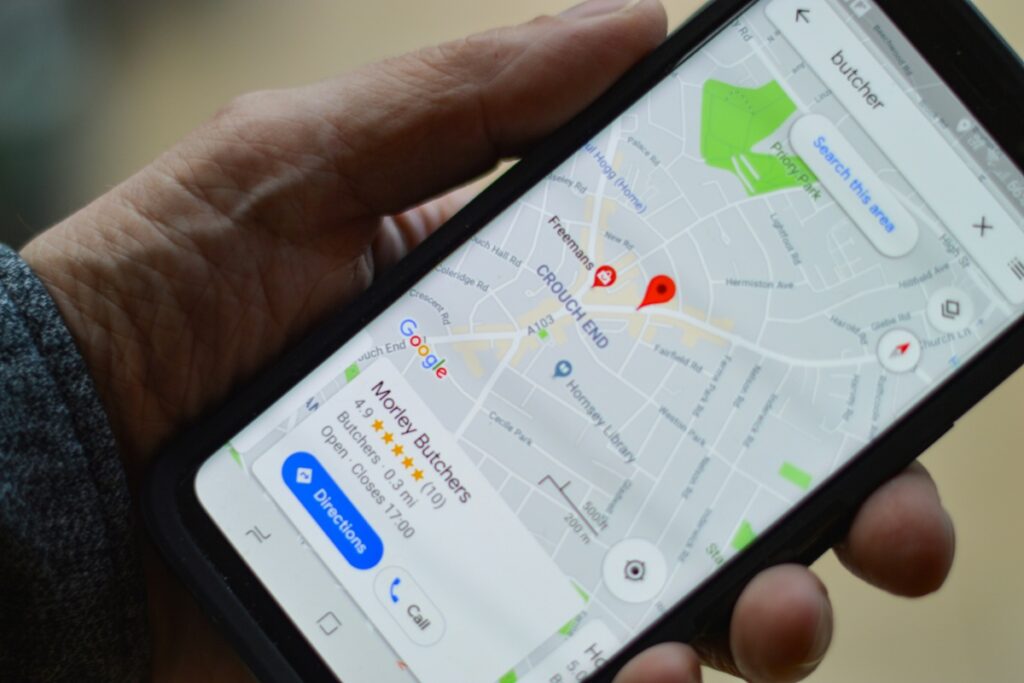
Use Google Maps for what it’s actually best at in Paris: walking directions, restaurant and café discovery, checking opening hours, and finding your hotel. Download the offline map area for Paris before you fly. Underground Metro stations frequently have no signal, and a dead phone with no cached map is a genuinely bad position to be in.
Where Google Maps is weaker: its public transport routing in Paris, especially during disruptions, isn’t as precise as a dedicated transit app. That’s exactly the gap Citymapper fills.
Citymapper: Your Day-to-Day Metro and Bus Planner

Citymapper is consistently the most recommended app for actually navigating the Paris Metro, RER, and bus network day to day. It tells you which carriage to board for the fastest exit and which station exit to take once you arrive, detail Google Maps doesn’t reliably provide. It also handles live disruptions, strikes, and sudden closures more clearly than a general-purpose map.
Set the city to Paris after installing. Consider it your default app the moment you’re actually on the move within the city, saving Google Maps for planning and discovery.
Bonjour RATP: Official Tickets and Real-Time Disruptions
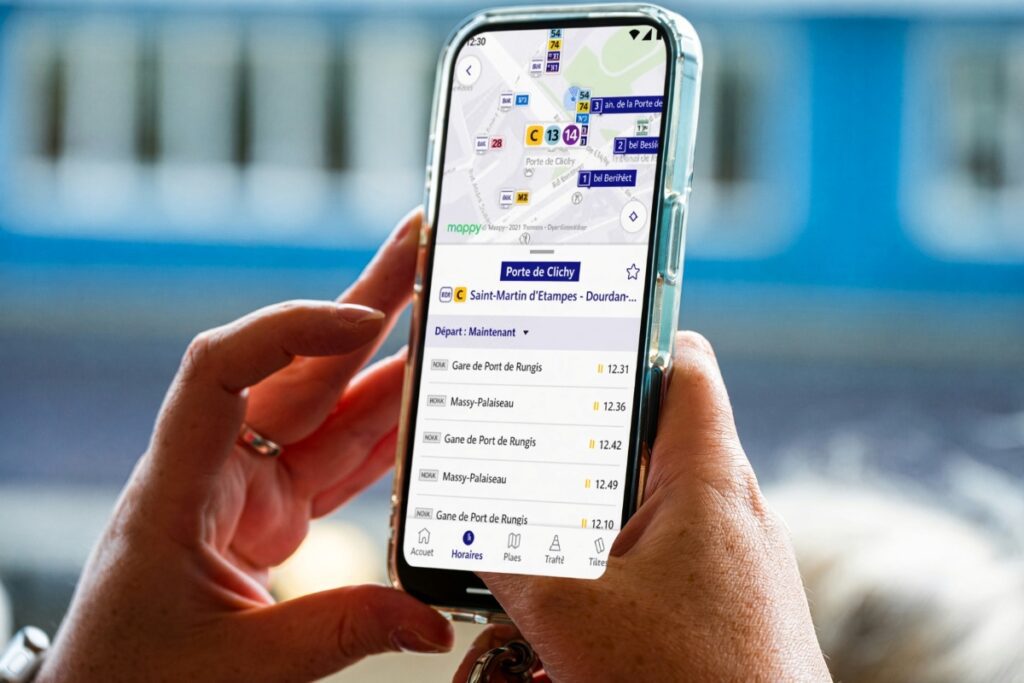
This is RATP’s official companion app, not a typo of something else. It’s worth being precise about the name, since it’s easy to mishear or misspell.
Use it for real-time departure boards and official service alerts, strikes, planned works, closures. You can also buy tickets directly onto your phone. Some devices support tapping straight through turnstiles via NFC.
Worth knowing: Île-de-France Mobilités, the regional transport authority’s own app, covers much of the same ground. Several travelers report finding it the more reliable option specifically for loading a Navigo Easy card. Installing both costs nothing, and gives you a backup if one app has an off day. Genuine travelers report occasional friction with non-European numbers or certain Android setups on either platform.
Google Translate: Menus, Signs, and Conversations

Download the French language pack for offline use before you fly. The camera translation feature is the one that gets used constantly in practice. Point it at a menu, a museum plaque, or a pharmacy label for an instant translation without typing anything.
Paris Metro Peak Hours: What Actually Changes (and What Doesn’t)
Here’s something worth getting right, since it differs from how transport pricing works in cities like London. Paris Metro and RER tickets are flat-rate regardless of time of day. A single ticket costs €2.55 whether you travel at 8am or 2pm. There’s no cheaper off-peak fare to chase.
What does change at peak times is crowding, not price. Weekday mornings (roughly 7:30–9:30am) and evenings (roughly 5:30–7:30pm) see the heaviest traffic. The busiest lines, Line 1 and Line 14, run trains every 90–95 seconds just to keep up with demand.
Travelling outside these windows means the same fare for a noticeably less crowded ride. This matters particularly if you’re carrying luggage or travelling with children.
Practical takeaway: if your schedule is flexible, shift Metro-heavy travel, airport transfers, cross-city trips, to mid-morning or mid-afternoon. You won’t save money doing this in Paris the way you might in London, but you’ll have a considerably more comfortable journey.
5 Apps at a Glance
| App | Best For | Cost to Use | Key Limitation |
|---|---|---|---|
| SNCF Connect | Trains beyond central Paris (airports, TGV, day trips) | Free app; no booking fee on tickets | Payment can be finicky for non-French cards |
| Google Maps | Walking, restaurants, general orientation | Free | Transit routing less precise during disruptions |
| Citymapper | Day-to-day Metro/bus/RER navigation | Free | Not built for booking intercity trains |
| Bonjour RATP | Official tickets, real-time disruption alerts | Free app; tickets priced per fare | Some users report friction with non-European numbers |
| Google Translate | Menus, signs, conversation | Free | Offline pack needed before you lose signal |
What Real Travelers Say
Genuine discussion across Reddit and other travel forums surfaces more specific, sometimes conflicting, feedback than a single blended consensus suggests.
On the app combination itself, one traveler described relying on Citymapper for precise carriage and exit guidance that Google Maps simply doesn’t offer. That same traveler kept Bonjour RATP installed purely for official strike alerts, checking it every morning before heading out. Another commenter pushed back slightly. They’d found Île-de-France Mobilités easier specifically for loading a Navigo Easy card, and suggested installing both official apps rather than picking one.
On SNCF Connect versus booking through a reseller, the split is genuinely real, not manufactured for balance. One traveler described SNCF Connect’s checkout as laborious, and specifically praised Trainline’s smoother card handling for a non-French bank. Another traveler took the opposite view. They said they’d stick with SNCF Connect specifically because of how it handled a delay, direct booking made rebooking simpler than going through a middleman when something actually went wrong.
On Metro accessibility, a genuine and recurring complaint: several travelers separately flagged that many older stations still have no elevators. This is a real planning consideration for anyone with heavy luggage, a stroller, or mobility needs. Worth checking a station’s accessibility before relying on it as a connection point.
Which Apps Should You Actually Install First?
Arriving from outside Europe or taking any train beyond central Paris? Install SNCF Connect first and book directly through it rather than a reseller, unless you’re specifically comparing competing operators on a shared route.
Staying entirely within central Paris on Metro and bus? Citymapper and Bonjour RATP cover nearly everything you’ll need day to day. Google Maps fills in the walking and restaurant-finding gaps.
Traveling with limited data or on a budget-conscious trip? Download offline packs for Google Maps and Google Translate before you fly. This alone removes most of the anxiety around losing signal underground.
Want the fullest safety net? All five apps, plus Île-de-France Mobilités as a backup ticket-buying option, cost nothing to install and cover every scenario in this guide.
Whichever combination you choose, book directly through SNCF Connect for train travel specifically. The fee-free advantage is real and consistent, and it’s the one clear cost saving available across this entire list.
FAQs
Trains and SNCF Connect
1. Is SNCF Connect cheaper than Trainline?
For the same ticket, yes, since SNCF Connect charges no booking fee while Trainline typically adds €1–4 or 1–3% per booking. Trainline can occasionally surface more route options or handle non-French cards more smoothly, genuine trade-offs worth weighing against the fee.
2. Do I need SNCF Connect for regular Paris Metro trips?
No. SNCF Connect is for trains beyond central Paris, airports, TGV, regional trains, Versailles, Disneyland. Everyday Metro and bus trips run through Citymapper and Bonjour RATP instead.
3. How much does the airport train into Paris cost?
€14 flat rate via the RER, confirmed as the current 2026 fare for the Paris Region–Airports ticket, regardless of which station within the network you board from.
Apps and Navigation
4. Is “Bonjour RATFP” a real app?
No, that’s a common misspelling. The correct name is Bonjour RATP, the official app of the Paris transport authority.
5. Should I use Google Maps or Citymapper for the Metro?
Citymapper, for day-to-day transit routing, since it gives more precise guidance on carriage position, station exits, and live disruptions. Google Maps remains stronger for walking directions and finding restaurants or shops.
6. Is Île-de-France Mobilités worth installing alongside Bonjour RATP?
Yes, worth having both. Several travelers report IDFM as the more reliable platform specifically for loading a Navigo Easy card, and having a second option helps if one app has technical issues on a given day.
Peak Hours and Pricing
7. Are Paris Metro tickets cheaper outside peak hours?
No. Paris Metro and RER tickets are flat-rate regardless of time of day, a single ticket costs €2.55 whether you travel at rush hour or midday.
8. What are Paris Metro’s actual rush hours?
Roughly 7:30–9:30am and 5:30–7:30pm on weekdays, when the busiest lines run trains every 90–95 seconds to handle demand. Travelling outside these windows won’t save money, but it’s noticeably less crowded.
9. What’s the current single Metro ticket price in 2026?
€2.55 for Metro, RER, or train within the network (airports excluded), and €2.05 for bus or tram, following the pricing update that took effect 1 January 2026.
Practical Setup
10. What should I do before I fly to make these apps work immediately on landing?
Download offline maps in Google Maps and the French language pack in Google Translate, create accounts in SNCF Connect and Bonjour RATP in advance, and add a payment card to your phone’s wallet so you’re not setting any of this up for the first time at the airport.
Editorial & Accuracy Standards
- Expert Review:
Ammara Azmat,
Senior Travel Mobility Analyst (12+ years experience) - Status: Verified for accuracy against official 2026 service data and real-time traveller reports.
- Our Process: This content follows our Fact-Checking Policy.