
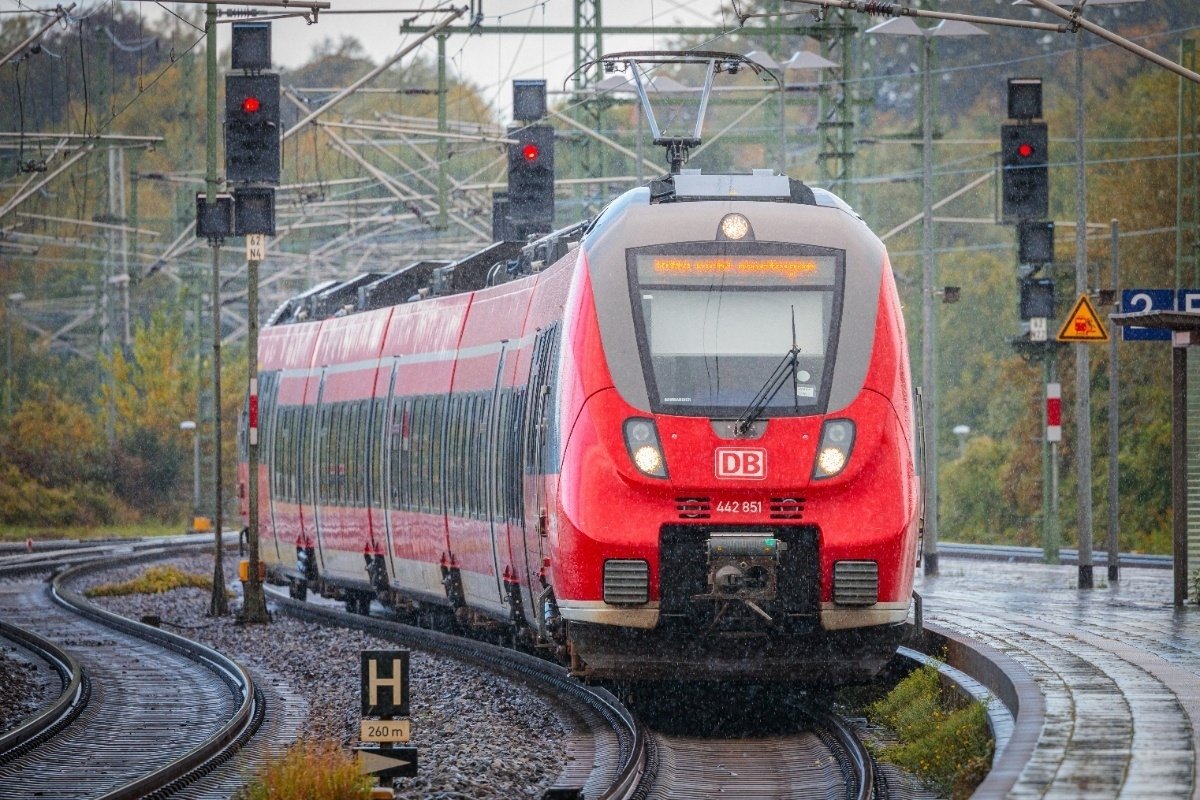
Deutsche Bahn: The Complete Guide to Train Travel in Germany and Beyond
Sunset Weekly Disclosure: To help keep our guides free, this post contains affiliate links. If you click through and make a booking (such as hotels, flights, tours, or travel experiences), we may earn a commission at no extra cost to you. Sunset Weekly is an independent travel and lifestyle publication. While we may receive compensation from affiliate partners, this does not influence our editorial content, recommendations, or opinions. #ad
Deutsche Bahn (DB) is Germany’s national rail operator and one of the largest railway networks in Europe. Running services across the entire country — from the Baltic coast in the north to the Bavarian Alps in the south — DB also connects Germany to neighbouring countries including Austria, Switzerland, France, Belgium, and the Netherlands. Deutsche Bahn suits a wide range of travellers: those exploring multiple German cities on a single trip, business passengers moving between Frankfurt, Berlin, and Munich, and anyone building a longer European rail itinerary. The network is frequent, largely punctual on long-distance routes, and well integrated with local public transport at most major stations. If you are planning train travel in Germany, Deutsche Bahn will almost certainly be your primary operator.
Quick Overview
- Type: National rail operator (public)
- Coverage: Germany-wide, plus cross-border routes into Austria, Switzerland, France, Belgium, Netherlands, and beyond
- Train types: ICE (high-speed), IC/EC (intercity), RE/RB (regional)
- Key hubs: Frankfurt, Berlin, Munich, Hamburg, Cologne
- Best for: Long-distance city-to-city travel, regional day trips, cross-border European journeys, business travel
Deutsche Bahn Routes: Major Train Journeys in Germany
Berlin to Munich
The Berlin–Munich route is one of the most-used Deutsche Bahn connections in Germany. Since the Nuremberg–Erfurt–Berlin high-speed line opened in 2017, ICE services now cover the journey in around 4 hours. Before this line launched, the same trip took over six hours — a useful illustration of how significantly Germany’s high-speed rail investment has reshaped domestic travel times.
Berlin rewards time spent across multiple neighbourhoods. The area around Prenzlauer Berg offers a very different character to Mitte or Kreuzberg, and the city’s museum island ranks among the more concentrated collections of civic architecture in Northern Europe. Munich, at the southern end, functions as a practical base for day trips into Bavaria — Regensburg and Augsburg are both under an hour away by regional train.
Frankfurt to Cologne
Frankfurt to Cologne takes approximately 1 hour by ICE, making it one of the fastest domestic connections on the network. As Germany’s busiest rail terminal, Frankfurt Hauptbahnhof serves as the central interchange for much of the country. For passengers connecting between international and domestic services, Frankfurt is consistently the most reliable hub.
Cologne is accessible, compact, and straightforward to navigate. The cathedral and the Romano-Germanic Museum sit within a short walk of Cologne Hauptbahnhof, directly adjacent to the Rhine waterfront. As a result, the city works particularly well as a one-night stop on a longer westward route.
Hamburg to the North and West
Hamburg is a natural starting point for exploring Northern Germany and connecting west towards the Netherlands. Throughout the day, ICE services link Hamburg with Bremen, Hanover, and Cologne at regular intervals. In addition, Deutsche Bahn runs services north into Denmark, making Hamburg a useful gateway for Scandinavian travel.
Beyond its port history, the city has developed a strong cultural identity of its own — the Elbphilharmonie, the Speicherstadt warehouse district, and the Schanzenviertel neighbourhood are all worth your time. Hamburg is walkable in parts and benefits from a well-connected local S-Bahn and U-Bahn network, both of which connect directly to DB’s ticketing system.
Cross-Border Routes
Deutsche Bahn operates or co-operates several significant cross-border routes:
- Frankfurt to Zurich (approx. 4 hours): Travels via the Rhine Valley and ranks among the more scenic long-distance journeys in Central Europe.
- Munich to Vienna (approx. 4 hours): EC trains run frequently and comfortably on this corridor, offering a reliable connection for Austria-bound travellers.
- Cologne to Brussels and Amsterdam: IC and Eurostar-connected services run west from Cologne, linking Germany directly into the broader high-speed European rail network.
- Frankfurt to Paris: A direct TGV/ICE service connects Frankfurt with Paris Gare de l’Est in approximately 3 hours 45 minutes.
Deutsche Bahn Ticket Types, Prices and How to Book
Train Categories
ICE (Intercity-Express) trains form Deutsche Bahn’s high-speed fleet, operating at up to 300 km/h on dedicated track. They serve as the primary long-distance option for most major city pairs and carry both first and second class seating.
IC and EC (Intercity / Eurocity) trains serve longer-distance routes at lower speeds and also cover cross-border services into neighbouring countries. Comfort levels are good, and journey times stay competitive on routes that lack dedicated high-speed track.
RE and RB (Regional-Express and Regionalbahn) trains handle shorter, local routes. Unlike ICE services, regional trains do not accept advance Saver fares — instead, they work with regional day tickets or standard flexible fares.
Fares and Booking
Deutsche Bahn uses a tiered advance pricing model. Saver fares (Sparpreise) offer the cheapest prices but tie you to a specific train and departure time. You cannot get a refund on these tickets, though you can sometimes exchange them for a fee. DB typically opens advance bookings six months ahead, and the lowest price bands fill quickly on popular routes, so early booking is essential.
Flexible fares (Flexpreise) allow travel on any train on the day of departure and carry full refund rights. However, they cost considerably more than Saver fares and suit primarily business travellers or those who cannot commit to a fixed departure.
One lesser-known detail worth knowing: Deutsche Bahn’s Supersparpreis fare — the deepest discount tier — sometimes reappears within days of a departure when previously booked seats are released. So if a specific journey appears sold out at a low price, check back closer to the date before assuming nothing is available.
You can buy tickets directly through the DB website or app. Alternatively, platforms such as Rail Europe, Trainline, or Omio are useful for combining DB legs with services from other European operators.
Seat Reservations
Seat reservations on ICE and IC trains are optional and carry an additional fee of typically €4–€5 per journey. DB does not include reservations automatically with your ticket, which differs from some other European operators. On busy routes — Berlin to Munich on a Friday afternoon, for example — travelling without a reservation is possible, though it risks standing for part of the journey. During school holidays and public holiday weekends, booking a seat in advance is strongly advisable.
Why Deutsche Bahn Is the Best Way to Travel Germany by Train
Network density. Very few destinations in Germany fall outside the rail network’s reach. The combination of ICE main lines and regional connections means Deutsche Bahn serves both large cities and smaller towns that would not justify air connections.
Frequency. On major corridors, ICE trains run hourly or more frequently throughout the day. Consequently, missing one departure rarely means a long wait, which makes Deutsche Bahn practical for flexible itineraries.
Station locations. German Hauptbahnhöfe (main stations) sit at the centre of most cities, with direct connections to local trams, metro, and buses. There is no equivalent of a remote airport to navigate.
EU rail integration. Deutsche Bahn works interoperably with Eurostar, TGV, ÖBB (Austrian rail), and Swiss Federal Railways, making Germany a natural hub for multi-country rail journeys. Furthermore, through-ticketing options exist on many cross-border routes, simplifying booking considerably.
First class value on advance fares. First class Saver fares on ICE trains are often only marginally more expensive than second class equivalents when you book early. For longer journeys, the additional space and quieter environment represent genuinely good value.
Deutsche Bahn Travel Tips: Booking, Connections and Delays
Check platform information early. German stations display platform (Gleis) numbers on departure boards, though confirmation sometimes arrives only 10–15 minutes before departure at busy hubs like Frankfurt. Familiarise yourself with the station layout in advance if your connection is tight.
Allow sufficient time at large stations. Frankfurt, Munich, and Berlin Hauptbahnhof are large and require time to navigate between platforms. Generally, a minimum of 10 minutes works for connections; if you are carrying luggage, budget for 15–20 minutes to be comfortable.
Travel off-peak where possible. Friday evenings and Sunday afternoons bring the heaviest demand on most routes. By contrast, mid-week departures and Saturday morning travel are consistently quieter and often cheaper on Saver fares.
Download the DB Navigator app. This tool handles ticket purchase, live journey tracking, platform updates, and real-time delay information. Moreover, it outperforms third-party apps for live DB service data, particularly during disruptions.
Verify your route before weekend travel. Deutsche Bahn runs a significant ongoing infrastructure investment programme, and weekend engineering works (Bauarbeiten) are common in summer. On affected sections, bus replacements often substitute for trains — always check before setting off on regional routes at weekends.
Final Verdict
Deutsche Bahn is the practical backbone of train travel in Germany and a key component of any broader European rail itinerary. Overall, it performs best on long-distance ICE routes between major cities, where frequency, speed, and city-centre arrival make it a strong alternative to domestic flights. Regional routes, meanwhile, add useful coverage for day trips and onward connections.
Book Saver fares as early as possible, add a seat reservation on busy routes, and use the DB Navigator app to manage disruption on the day. For multi-country journeys, compare through-ticket options via Rail Europe or Trainline alongside direct DB bookings.
Plan your journey across Germany and Europe’s rail network to find the combination of routes and fares that works best for your trip.
FAQs
Can Deutsche Bahn tickets be cancelled shortly after booking?
Yes. Tickets purchased via the DB Navigator app or the official Deutsche Bahn website can be cancelled free of charge within a short period after booking, provided the journey has not yet started.
Are Saver fare (Sparpreis) tickets refundable?
Saver fare tickets offer lower prices but limited flexibility.
Once the day of travel begins, Sparpreis tickets can no longer be cancelled, making them unsuitable for travellers who may need to change plans at short notice.
Is the return portion of a Deutsche Bahn ticket still valid if the outbound trip is missed?
Yes. Outbound and return journeys are treated as separate travel contracts.
If the outward leg is missed, the return trip normally remains valid and can still be used as booked.
What is Komfort Check‑in on Deutsche Bahn?
Komfort Check‑in allows passengers with a digital ticket to check in using the DB Navigator app after taking their seat.
Once checked in, ticket inspections are usually handled electronically, allowing passengers to remain seated for the duration of the journey.
How does Deutsche Bahn handle lost property?
Deutsche Bahn operates an online lost‑and‑found service through its official website.
Passengers can report lost or found items digitally and track their request without visiting a station in person.
Editorial & Accuracy Standards
- Expert Review:
Ammara Azmat,
Senior Travel Mobility Analyst (12+ years experience) - Status: Verified for accuracy against official 2026 service data and real-time traveller reports.
- Our Process: This content follows our Fact-Checking Policy.