
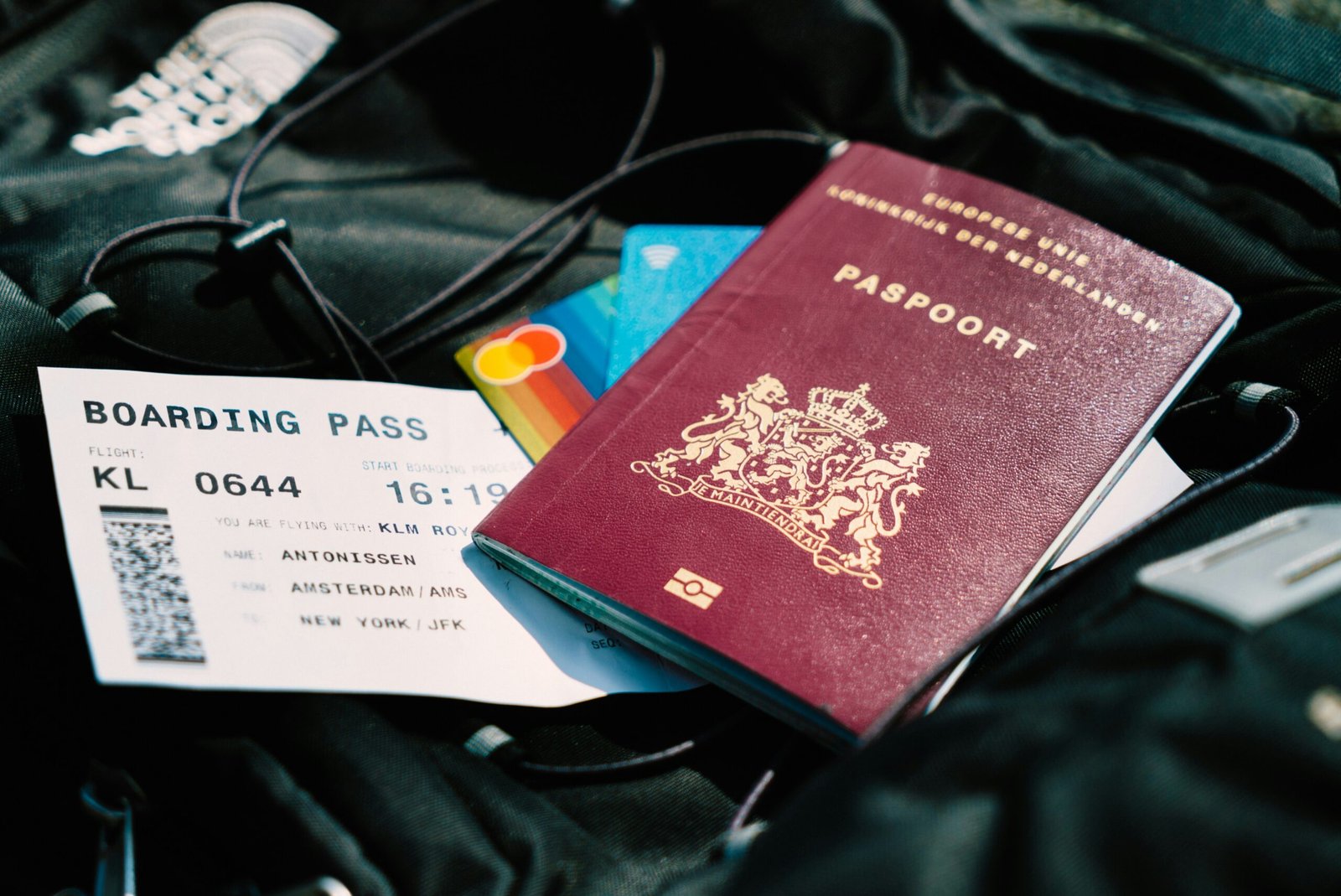
EU Entry/Exit System 2026: What UK Travellers Actually Face
Sunset Weekly Disclosure: To help keep our guides free, this post contains affiliate links. If you click through and make a booking (such as hotels, flights, tours, or travel experiences), we may earn a commission at no extra cost to you. Sunset Weekly is an independent travel and lifestyle publication. While we may receive compensation from affiliate partners, this does not influence our editorial content, recommendations, or opinions. #ad
Sunset Weekly Quick Answer The EU Entry/Exit System (EES) became fully mandatory on 10 April 2026 across all 29 Schengen countries. UK travellers must now register fingerprints and a facial scan at the border on their first Schengen crossing. On launch day, queues reached 2–4 hours at major airports. Brussels, Lisbon, Milan, and Paris CDG saw the worst disruption. Eurostar and Dover ferry passengers still go through conventional processing — full EES at those crossings has not yet activated. Allow at least two extra hours at European airports for the foreseeable future.
British travellers heading to Europe face a new reality at the border. The EU Entry/Exit System — six years in the making and delayed four times — became fully mandatory at 00:01 CET on 10 April 2026. Within hours, queues of two to four hours had formed at airports across the Schengen Area. Airlines missed departures. Families paid for hotel rooms they had not planned to book. And three of the continent’s most important airport bodies jointly described the rollout as a “systemic failure.”
This article explains what EES is, what actually happened on and after launch day, which airports and routes the delays hit hardest, and exactly what UK travellers should do before their next European trip.
What Is EES and Why Does It Affect UK Travellers?
EES is a digital border management system that replaces passport stamping for non-EU nationals entering or leaving the Schengen Area. Instead of an ink stamp, border authorities now record your fingerprints, a facial image, and your entry and exit dates in a central EU database that eu-LISA — the EU agency for large-scale IT systems — operates and maintains.
Since Brexit, the EU classifies UK passport holders as third-country nationals. EES therefore applies on every trip to any of the 29 Schengen countries — which covers the majority of mainland Europe, including France, Spain, Germany, Italy, Portugal, the Netherlands, and 23 others.
The process covers short-stay visits only. Long-term residents holding EU residency status receive an exemption. Children under six receive a fingerprinting exemption. Children aged 6–11 may provide fingerprints but face no requirement to do so.
The EU retains your biometric data for three years — or five years if you overstay your permitted period. Border authorities can deny entry to any traveller who refuses to provide biometrics.
You may also like: For more detailed advice on the ideal dates, check our guide on the Best Time to Go to Portugal: A Complete Travel Guide for 2026.
The Rollout Timeline: How We Got Here
EES was originally scheduled to launch in 2022. Four successive delays pushed the phased rollout back to 12 October 2025, when the system began processing 10% of eligible travellers at participating border points. The schedule then expanded in stages:
- 12 October 2025 — Phased rollout begins at 10% of third-country nationals
- 9 January 2026 — Threshold rises to 35% of eligible travellers
- March 2026 — Coverage expands to 50% of Schengen border points
- 10 April 2026 — Full mandatory deployment at 100% of Schengen external borders
Even at 10% coverage in October 2025, Airports Council International (ACI) Europe reported a 70% increase in border processing times at participating airports. System crashes at Gran Canaria Airport in late December and January caused repeated border gate failures. Portugal suspended EES at Lisbon, Porto, and Faro airports in December 2025 to prevent excessive queuing.
By February 2026, ACI Europe, Airlines for Europe (A4E), and IATA sent a joint letter to EU Commissioner Magnus Brunner warning that summer 2026 queues could reach four hours or more if the system remained unstabilised. They urged the Commission to allow member states to fully suspend EES through October 2026 when queues became unmanageable.
What Happened on Launch Day: 10 April 2026
The first day of full mandatory EES deployment was, by the assessment of Europe’s own airport and airline associations, a failure.
Airports across the Schengen zone recorded queues of 2–4 hours. Airlines for Europe (A4E) issued a statement on launch day itself, calling the disruptions “a reality” and describing the situation as a “systemic failure” rather than teething trouble. ACI Europe and A4E jointly called on the European Commission to immediately restore full suspension rights for airports where queues became excessive — rights that the move to full deployment on 10 April had removed.
The European Commission responded by noting that registering a traveller takes on average 70 seconds when EES functions at full capacity. Airport bodies rejected that figure as unrepresentative of real-world conditions, where understaffing, kiosk outages, and first-time registrant volume all combine to push processing times well beyond the theoretical minimum.
Airport by Airport: Where the Worst Delays Hit
The following data draws from verified reports by ACI Europe, Airlines for Europe, Biometric Update, and contemporaneous news coverage.
Worst-Affected Airports: April 2026 Launch Window
| Airport | What Happened |
|---|---|
| Brussels Airport (BRU) | In late March 2026, nearly 600 passengers missed flights in a single four-day period due to EES queues. On 18 April, a software glitch took all 24 e-gates offline simultaneously — the same fault hit airports in France and Germany. ACI Europe confirmed approximately 500 e-gates across 15 countries needed emergency reboots. Peak queues reached 90 minutes during the outage alone. |
| Lisbon Humberto Delgado (LIS) | Portugal suspended EES in December 2025 due to excessive queues. Authorities suspended it again on the morning of 11 April 2026 — the day after full launch — before restarting it in the afternoon. Porto and Faro airports also suspended operations that morning. |
| Milan Linate (LIN) | On Sunday 13 April 2026, only 34 of 156 passengers managed to board an easyJet flight to Manchester. A UK family that arrived nearly three hours before departure still missed their flight. EasyJet stated the delays were “out of its control.” |
Additional Airports Reporting Significant Disruption
| Airport | What Happened |
|---|---|
| Paris CDG and Orly (CDG/ORY) | On 11–12 April, automated kiosks crashed repeatedly at both airports, forcing border guards to switch to full manual processing. A4E and ACI Europe jointly described this as a “systemic failure.” Parafe e-gates at CDG do not process UK passports — UK travellers must avoid these fast-track lanes and join the manual “All Passports” queue instead. |
| Geneva (GVA) | Geneva became the most prominent EES chaos story of winter 2026. UK ski travellers returning from Swiss Alpine resorts faced biometric registration waits of 5–6 hours. Videos of the queues went viral on social media in January 2026. |
| Madrid-Barajas (MAD), Berlin Brandenburg (BER) | Both airports reported notable queues since the phased launch in October 2025, confirmed by The Guardian in coverage published 15 April 2026. |
One confirmed real-world cost: the Hume family, a UK group caught in EES delays, paid an additional £1,600 for unplanned hotel accommodation and replacement flights, according to reporting by Biometric Update (April 2026).
You may also like: Stay connected throughout the festival and your trip with our Holafly Review 2026: Best Unlimited Data eSIM with Always On Backup.
The Eurostar, Dover Ferry, and Channel Tunnel: A Different Picture
The UK-France border operates under different rules to airports — a complication rooted in the Le Touquet Treaty of 2003, which established juxtaposed border controls. Both French and British authorities check UK travellers before departure, not on arrival in France.
The current position at each crossing point is as follows:
Eurostar at London St Pancras: EES kiosks stand installed and operational at St Pancras. However, border officers still complete most enrolments manually while Eurostar awaits French Interior Ministry sign-off to scale up kiosk use. In practice, most cross-Channel passengers via Eurostar still go through conventional processing.
Eurotunnel / LeShuttle at Folkestone: A purpose-built pre-registration area with self-service kiosks now exists at Folkestone. Currently, EES processes only coach passengers and freight. Tourist vehicles have not yet entered the system, pending coordination with French authorities.
Port of Dover: Since October 2025, EES has processed tens of thousands of coach, freight, and foot passengers at Dover. Tourist car passengers await full processing, pending French authorisation.
In April 2026, French authorities confirmed that equipment shortages left juxtaposed control points at St Pancras, Dover, and Folkestone unready for full EES deployment. The Connexion reported that cross-Channel routes would continue with conventional passport stamping for “several weeks” beyond the April 10 full-launch deadline.
The practical implication: if you cross via Eurostar or Dover ferry in summer 2026, you will likely not face full biometric EES registration yet. This will change. Monitor updates from Eurostar, P&O Ferries, DFDS, and the UK government’s travel guidance pages before you travel.
Why the System Is Struggling: The Three Root Causes
Industry bodies have consistently identified the same three structural problems since the phased rollout began.
Root Cause 1: Chronic Understaffing
ACI Europe and A4E have repeatedly flagged that airports do not employ enough trained border guards to manage the added workload. During peak travel periods, multiple wave arrivals create simultaneous surges that existing staffing levels cannot absorb, even when kiosks function correctly.
Root Cause 2: Unresolved Technical Failures
The Brussels e-gate outage of 18 April — which knocked out 500 gates across 15 countries simultaneously — confirmed that the EES infrastructure carries systemic vulnerabilities. When kiosks fail, processing reverts to manual desks, which move far more slowly and cannot handle volume at major hubs.
Root Cause 3: The First-Time Registration Bottleneck
Every traveller entering EES for the first time must complete full enrolment: passport scan, fingerprints, facial image capture, and four questions about accommodation, return tickets, funds, and insurance. This takes significantly longer than repeat crossings. With millions of UK travellers yet to complete first-time registration, this bottleneck will persist throughout the peak 2026 summer season.
The Pre-Registration Gap
A fourth factor compounds all three. The Frontex “Travel to Europe” pre-registration app lets travellers submit passport and facial data up to 72 hours before arrival, reducing steps at the border. However, only Sweden and Portugal have formally integrated the app into their national border systems. Its potential to ease first-registration pressure has not translated into real-world impact at scale.
What to Do as a UK Traveller: A Practical Checklist
Before You Travel
Check your passport. It must carry an issue date within the last 10 years and remain valid for at least three months beyond your return date. EES kiosks read the biometric chip in your passport — look for the chip symbol on the cover. Without a chip, a border officer must handle your registration manually, which takes longer.
Download the Frontex “Travel to Europe” app if your destination country supports it. Pre-register your passport details and facial image within 72 hours of travel. This does not replace border control but removes steps on arrival. Sweden and Portugal currently support the app; check frontex.europa.eu for the current list of participating countries.
Allow extra time. ABTA, the UK’s travel trade association, advises arriving at European airports earlier than usual for the foreseeable future. Wizz Air now advises passengers to arrive three hours before departure. Build at least two additional hours into any itinerary involving a Schengen border.
Avoid tight connections. If your trip involves a connecting flight through a Schengen hub, give the layover enough room to absorb EES processing delays. Aviation industry guidance as of June 2026 is that standard 60–90 minute connections at major hubs no longer provide sufficient buffer.
At Paris CDG specifically: do not attempt to use Parafe fast-track e-gates. They do not process UK passports. Join the manual “All Passports” queue directly to avoid wasting time on a redirect.
At the Border
The EES process at a kiosk typically follows these steps:
- Scan your biometric passport on the kiosk reader
- Answer four questions: proof of accommodation, return ticket, sufficient funds for your stay, and travel insurance
- Provide fingerprints (all ten fingers go through the scanner)
- Complete a facial image capture
On subsequent crossings within three years, the system recognises your stored biometric data, which speeds up processing considerably. The European Commission states that repeat registrations take an average of 70 seconds under normal operating conditions.
If you answer “no” to any of the four entry questions, a French or local border police officer will receive an alert and may question you further or refuse entry. Keep documentation for your accommodation bookings, return travel, and travel insurance accessible before you reach the kiosk.
Travelling with children? Children under six receive a fingerprinting exemption. Children aged 6–11 may provide fingerprints but face no requirement to do so. Authorities capture facial images for all children.
You may also like: Booking trains or buses across Europe? Read our Omio: The Complete Guide to Booking Trains, Buses and Routes Across Europe.
The Summer 2026 Outlook: Will It Get Better?
The honest answer is: not immediately, and possibly worse before it improves.
ACI Europe and A4E have formally asked the European Commission to extend full and partial EES suspension rights through the entire 2026 summer season and into winter 2026/2027 if technical and operational problems remain unresolved. Their joint statement reads: “If the technical and operational issues with EES are not resolved, this flexibility should remain available during future peak travel periods, such as winter 2026/2027.”
The Commission has resisted full suspension, maintaining that EES is working as intended. The gap between that position and the documented real-world experience of travellers — families absorbing thousands in unplanned costs, passengers missing flights at Milan, Brussels, and Paris — remains stark.
The FCDO has issued travel advisories for several European destinations, including Denmark, specifically noting EES-related queue delays. UK travellers should monitor FCDO guidance at gov.uk/foreign-travel-advice before departing for any Schengen country.
For summer 2026 travel: build buffer time aggressively, carry accommodation and return travel bookings in paper or accessible digital form, and check the latest operational position for your specific airport the day before you travel.
Frequently Asked Questions
EES Basics
When did EES become mandatory for UK travellers? EES became fully mandatory at all Schengen external borders at 00:01 CET on 10 April 2026. The phased rollout started on 12 October 2025 at 10% of eligible travellers and expanded in stages before reaching 100% coverage on 10 April.
Does EES apply if I travel to Ireland or Cyprus? No. The Republic of Ireland and Cyprus sit outside the Schengen Area, so EES does not apply at those borders. UK travellers enter Ireland without biometric registration.
How long does EES registration take? The European Commission states that a full first-time registration takes approximately 70 seconds under optimal conditions. Real-world data from ACI Europe shows that processing times rose by 70% at airports during the rollout. First-time registrations during peak periods ran considerably longer, driving the multi-hour queues at major hubs.
Border-Specific Questions
Does EES run on Eurostar at St Pancras? Kiosks stand installed at St Pancras, but the French Interior Ministry has not yet authorised full automated EES activation for most passengers. Border officers currently handle most processing manually. Most Eurostar passengers still go through conventional checks.
Does EES run at Dover and the Channel Tunnel? Partially. Since October 2025, Dover has processed coach, freight, and foot passengers through EES. Tourist car passengers have not yet entered the system. The Eurotunnel at Folkestone has built kiosks but processes only coach passengers and freight through EES. Full tourist vehicle processing awaits French authorisation.
Which airports saw the worst EES delays? Brussels (BRU), Lisbon (LIS), Milan Linate (LIN), Paris CDG and Orly, and Geneva (GVA) saw the most documented disruption. Madrid-Barajas and Berlin Brandenburg also reported significant queues during the phased rollout.
Practical Preparation
Can I pre-register for EES before I travel? Yes, optionally. The Frontex “Travel to Europe” app accepts pre-registration of passport details and a facial image up to 72 hours before arrival. Sweden and Portugal currently support it. Check frontex.europa.eu for the updated list of participating countries. Pre-registration speeds up border processing but does not replace it.
What documents should I carry for EES border questions? Carry evidence of your accommodation booking or address in the EU, a return or onward travel ticket, sufficient funds to cover your stay, and travel insurance. Keep digital or paper copies accessible before you reach the kiosk. Answering “no” to any of the four automated questions triggers a manual review and may result in denial of entry.
Should I get travel insurance that covers EES delays? Yes. Standard travel insurance does not always cover missed connections that border processing delays cause. Check your policy specifically for border delay cover. Some insurers updated their policies in 2026 to name EES as a covered cause of disruption — ABTA advises checking policy wording before you travel.
Last updated: June 2026. Information verified against official sources including ACI Europe, Airlines for Europe (A4E), IATA, Frontex, ABTA, The Guardian, The Connexion, and Biometric Update. Border operational status changes frequently — always check the latest FCDO guidance at gov.uk/foreign-travel-advice and your airline’s communications before travel.
Editorial & Accuracy Standards
- Expert Review:
Ammara Azmat,
Senior Travel Mobility Analyst (12+ years experience) - Status: Verified for accuracy against official 2026 service data and real-time traveller reports.
- Our Process: This content follows our Fact-Checking Policy.