

Quick Answer
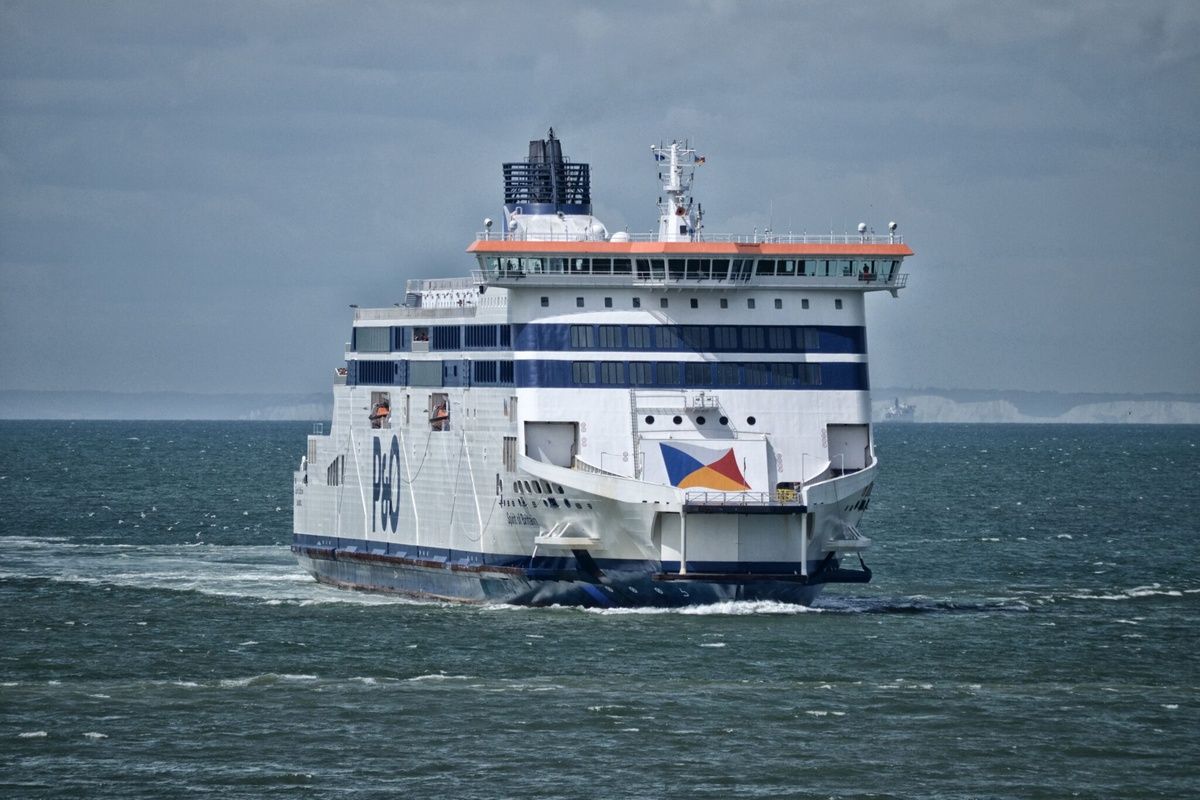
P&O Ferries runs up to 15 daily sailings on the Dover to Calais route in 2026, with crossings taking approximately 90 minutes. Standard fares start from £105.50. The EU Entry/Exit System (EES) is now fully operational — allow extra time at the border for biometric registration on your first Schengen crossing.
The Sunset Weekly Connection Reality: P&O Ferries provides frequent, reliable 90-minute crossings between Dover and Calais, but passengers must factor in additional border buffer times for mandatory EES biometric checks.
Why the Dover to Calais Ferry Still Makes Sense in 2026
The shortest crossing between England and France runs 33 nautical miles and takes around 90 minutes on a P&O ferry. Eurotunnel does it faster — but not cheaper, and not with space to stand up, eat a hot meal, or let children burn off energy. That trade-off is why P&O Ferries remains the busiest operator on this route, running up to 15 sailings a day in each direction throughout 2026.
Three operators serve Dover to Calais: P&O Ferries, DFDS Seaways, and Irish Ferries. Between them, the route sees around 165 weekly sailings. P&O holds the frequency advantage and operates the newest vessels on the crossing. DFDS also runs Dover to Dunkirk — a useful alternative if your destination in northern France or Belgium makes Dunkirk the smarter landfall. For most travellers heading straight into France, Dover to Calais with P&O is the practical default.
The P&O Fleet on Dover to Calais: What You’re Actually Boarding
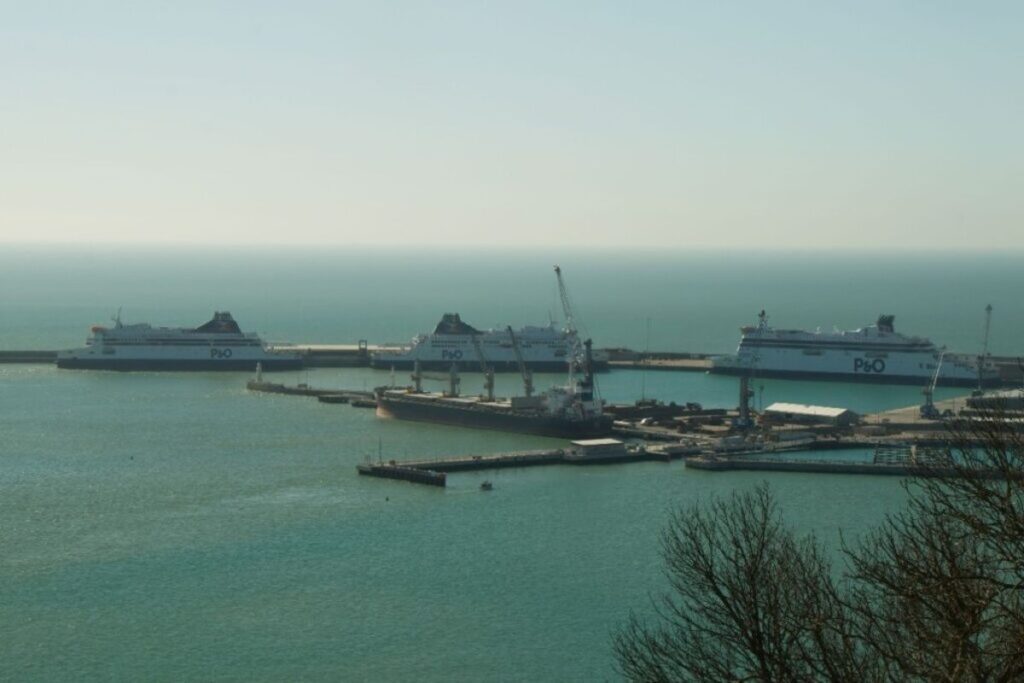
Two generations of ship now share this route, and the difference is noticeable.
P&O Pioneer and P&O Liberté — the new eco-fleet
Both launched in 2022–23, these 230.5-metre hybrid vessels are the largest double-ended ferries ever to operate on the Channel. Double-ended means they dock bow or stern first without needing to turn around — saving two minutes in each harbour per crossing. Each carries 1,500 passengers and runs on a combination of Wärtsilä diesel engines and an 8.8 MWh battery pack, allowing a battery-only departure from Dover or Calais without firing the main engines. They were each built for around £130 million and designed to be retrofitted for full battery-electric propulsion when charging infrastructure is ready on both sides of the Channel.
Spirit of France
The older vessel in the passenger fleet measures 213 metres and carries up to 2,000 passengers and 1,059 cars. It offers a stable, well-proven ride and strong vehicle capacity on busy sailings.
In practice, all three ships provide comfortable crossings. The newer vessels are quieter, smoother, and more fuel-efficient. The Spirit of France is more familiar to regular crossers and handles heavy loads equally well.
You may also like: If you’re planning to extend your trip into Europe, check out our Ouigo: The Complete Guide to Budget High-Speed Train Travel in France.
Dover to Calais: P&O Ferry Ticket Types Compared (2026)
Choosing your fare before you book is important — P&O’s three ticket types carry meaningfully different cancellation and amendment terms, and the price gap between them is significant.
| Ticket Type | Travel Window | Amendment Fee | Refundable | From |
|---|---|---|---|---|
| Standard | Within ±4 hours of booked sailing | Yes — fee applies | No | £105.50 |
| Standard Flexi | Within ±4 hours of booked sailing | No fee — pay price difference only | Yes — fully | £135.50 |
| Fully Flexi | Any departure time, subject to availability | No fee — details matching | Yes — fully | £211.50 |
Prices verified for the 2026 travel season. Services and add-ons are subject to route and availability.
Which fare fits your trip? Standard suits travellers with a locked-in schedule who want the lowest price. Standard Flexi is worth the £30 premium if there is any chance your plans will shift — it removes amendment penalties entirely. Fully Flexi makes sense for business travellers, those coordinating group crossings, or anyone who genuinely needs to board a different sailing on the day without pre-arranging it.
Book 56 days in advance for the best Standard fares. Prices rise as the sailing fills, so early booking is the most reliable way to reduce cost — particularly for peak summer departures and school holiday dates.
Check-In Times and What to Expect at Dover
The latest check-in time for vehicles is 60 minutes before departure. Foot passengers and pet owners must check in at least 90 minutes before sailing. These are hard cut-offs — arriving late means losing your crossing without a refund on Standard fares.
Dover is the UK’s busiest international ferry port, handling over 11 million passengers a year. On peak days — bank holidays, the first weekend of school summer holidays, Easter Sunday — allow at least two hours before your departure. The outbound queue from Dover can stretch back before you reach the port itself during these periods.
Add your Advance Passenger Information (API) — passport numbers and travel document details — to your booking online before you travel. This avoids delays at check-in and is a legal requirement under French border rules.
EES: The New EU Border System and What It Means for Your Crossing in 2026

The EU Entry/Exit System (EES) became fully operational across all Schengen countries on 10 April 2026. It replaces passport stamping with a digital biometric registration — facial image and fingerprints — for all non-EU nationals, including British passport holders, entering the Schengen area.
Implementation at Dover began in phases from October 2025. Coach and freight traffic registered first; tourist vehicle processing followed in early 2026. France temporarily paused EES checks at Dover during certain high-traffic periods to prevent multi-hour queues, though the system remains fully operative and mandatory.
What this means practically: First-time Schengen entrants since the system launched must register at a self-service kiosk at the border. This takes a few minutes but adds to processing time across the port. Subsequent crossings within three years use the stored biometric data and are faster. Allow an extra 30–45 minutes on your first crossing under EES, particularly during busy periods. P&O Ferries and the Port of Dover both advise checking for updates before travel, as operational details continue to be refined.
British passports must also meet Schengen validity rules: issued within the last 10 years and valid for at least three months beyond your planned return date.
Onboard Experience: What the 90 Minutes Feels Like
The crossing is long enough to be a proper break rather than merely a transit. Onboard facilities across the fleet include:
- Restaurants and cafés — hot food, Costa Coffee, and a bar. Food pricing is higher than the high street; passengers note a sandwich can reach £7.50. Bringing your own snacks is permitted and common.
- Duty-free shopping — alcohol, fragrances, confectionery, and tobacco at below-UK prices. Popular with regular crossers, particularly those who know what they want before boarding.
- Lounges and seating — generous open-deck and indoor seating. The newer ships in particular offer well-designed common areas that feel calm rather than crowded on average sailings.
- Children’s play areas — enclosed play zones on all ships, useful for families with young children.
- Pet lounge — P&O operates a dedicated pet lounge with large booths and an exercise deck for dogs, a genuine differentiator over Eurotunnel’s vehicle-only pet policy.
Over 38,000 Trustpilot reviews give P&O Ferries a rating of 4.1 stars. Recurring themes in positive reviews include helpful staff, smooth boarding, and clean facilities. Negative reviews most commonly cite onboard food pricing and occasional departures running late — a reality of any sea crossing that depends on weather and port traffic.
Honest note: time-keeping is not always perfect. One 2026 Trustpilot reviewer observed a service shown as on time becoming over an hour late in both directions. Delays are not routine, but they do happen. Build buffer time into connections at Calais.
You may also like: For seamless connectivity in Bali and beyond, read our Airalo Review 2026: Is the World’s First eSIM Unicorn Still the Best?
P&O vs DFDS: Which Operator Should You Choose?
Both P&O and DFDS operate on Dover to Calais, and both offer a competent crossing. The decision usually comes down to three factors.
Frequency: P&O runs more sailings per day on Dover to Calais and has the larger fleet on this specific route. If your schedule is tight or you want maximum flexibility to switch sailings, P&O gives you more options.
Routing: DFDS also operates Dover to Dunkirk, which is around 45 minutes longer than the Calais crossing but can save driving time if your destination is in northern Belgium or the Netherlands. If Calais is your target, P&O is the more direct choice.
Fleet age: P&O’s Pioneer and Liberté are newer than the current DFDS vessels on this route. Passengers who prioritise modern ships and quieter engines tend to prefer the P&O eco-ships when they can choose their sailing.
On price, the two operators are broadly comparable. Average car fares on Dover to Calais typically range between £82 and £160 one-way, with both operators applying dynamic pricing tied to demand and booking lead time.
5 Things Worth Doing When You Arrive in Calais
Calais is worth more than the time it takes to leave the port. The town centre sits minutes from the terminal and offers a genuinely compact, walkable set of stops.
1. Plage de Calais — the beach promenade
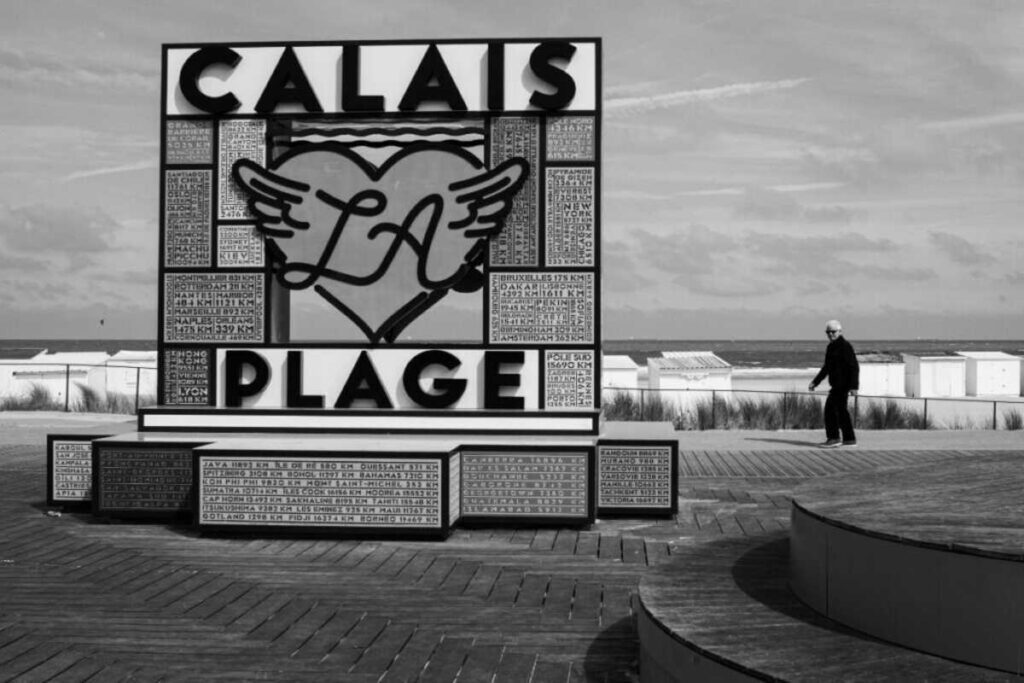
Calais beach stretches along the seafront with fine sand, a promenade, free beach volleyball courts, a skate park, and food trucks in summer. It is one of the most accessible city beaches in northern France. Families find it particularly useful because everything is free and within a short walk of town. The beach at Blérot-Plage, a few kilometres west, is equally good and quieter.
Address: 123 Digue Gaston Berthe, 62100 Calais, France
2. Hôtel de Ville and the Burghers of Calais

The UNESCO-listed town hall belfry is one of the finest examples of Flemish Gothic architecture in France. Outside it stands Auguste Rodin’s most powerful public sculpture — six bronze figures commissioned in 1884 to commemorate the townspeople who surrendered to Edward III during the Hundred Years’ War. The belfry is climbable (271 steps; a lift is available) and offers wide views across the town and port. The square around it is pleasant even if you don’t go up.
Address: Pl. du Soldat Inconnu, 62100 Calais, France
3. Cité de la Dentelle et de la Mode — the lace and fashion museum

Established inside a 19th-century lace factory, this specialist museum covers the industrial history of Calais lace and its influence on global fashion. Calais lace — made on Leavers looms — supplied the haute couture houses of Paris, London, and New York for over a century. The museum shows lacemaking machines in working condition and traces the trade from Victorian factories through to contemporary fashion design. Adults consistently rate it as one of Calais’s most surprising and worthwhile stops.
Address: Cité de la dentelle et de la mode 135, quai du Commerce 62100 CALAIS
4. Calais Lighthouse — 271 steps, with views to Dover
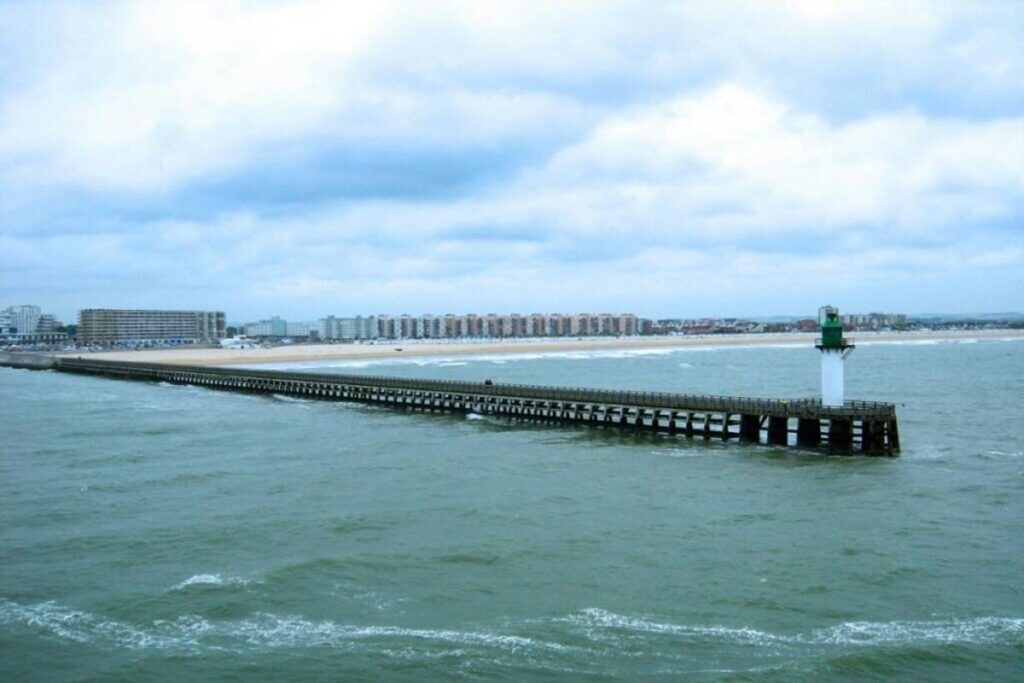
The lighthouse near the port has been operating since 1848 and is still accessible to visitors. Climb 271 steps for clear-day views that include the English coastline. There is a small museum at the base with exhibits in French, English, and Dutch. It is one of the most underrated stops in Calais.
Address: Pl. Henri Barbusse, 62100 Calais, France
5. Parc Saint-Pierre and street art trail

The park in front of the Hôtel de Ville is the natural anchor for a walk through the town centre. Calais has built a notable street art scene across the surrounding streets — murals commissioned by the town and visiting artists cover building facades throughout the centre. The Musée des Beaux-Arts et de la Dentelle on rue Richelieu holds works by Rodin and local artists and charges modest entry. It fits easily into a two-hour stop between the beach and the town hall.
Address: 75004 Paris, France
Most of these stops cluster within a 20-minute walk of the port. A short taxi ride connects those further afield.
You may also like: Looking for premium luggage? Our RIMOWA 2026 Review helps you decide if the iconic aluminium case is worth the investment.
Practical Checklist Before You Sail
Passports: Must be issued within the last 10 years and valid for at least three months beyond your return date. EU/EEA nationals use their national ID cards.
EES registration: First-time Schengen entrants since October 2025 will need to register biometrics at the border kiosk. This is mandatory. Allow extra time.
API (Advance Passenger Information): Add passport details to your P&O booking online before travel. Required by law and faster at check-in.
Check-in windows: Vehicles — 60 minutes before departure. Foot passengers and pets — 90 minutes. Confirm exact times for your sailing on the P&O website.
Amendments and cancellations: Standard fares are non-refundable. Standard Flexi and Fully Flexi are fully refundable, with different amendment conditions. Check current P&O terms before booking if flexibility matters.
Coach passengers: Coach services operate at both Dover and Calais ports. Check pick-up and drop-off timings on your booking confirmation or at poferries.com.
Frequently Asked Questions
Crossing Times, Sailings and Check-In
How long is the P&O Ferries Dover to Calais crossing? The sailing itself takes approximately 90 minutes. Factor in boarding time at Dover and driving away from the Calais terminal, and you should allow at least two hours from port arrival to being on the road in France. On peak days — bank holidays and school holiday weekends — build in even more buffer at Dover, where queues can form before you reach the port.
How many sailings does P&O Ferries run per day on Dover to Calais? P&O operates up to 15 sailings per day on this route throughout 2026, making it the highest-frequency operator on the crossing. Exact departure times vary by season and day of the week. Always check the live timetable on the P&O website before travel, particularly over bank holidays when schedules can shift.
What is the latest check-in time for P&O Ferries Dover to Calais? Vehicles must check in no later than 60 minutes before departure. Foot passengers and pet owners both need to check in at least 90 minutes before sailing. P&O treats these as firm cut-offs — arriving late on a Standard fare means forfeiting your crossing without a refund. On busy days, arrive earlier than the minimum.
What are my rights if my P&O sailing is delayed or cancelled? If P&O cancels your sailing, you are entitled to a free alternative crossing at the earliest opportunity. Under EU maritime passenger rights regulations, you are also entitled to compensation of 25% of your ticket price if your crossing arrives more than two hours late — though this does not apply when the delay is caused by severe weather or extraordinary circumstances beyond P&O’s control. For operational delays, P&O will move you to the next available sailing at no charge.
Tickets, Border Rules and Pets
Is the EU Entry/Exit System (EES) now active for UK travellers at Dover? Yes. EES became fully operational across all Schengen borders on 10 April 2026. UK travellers entering France for the first time since the system launched must register biometric data — fingerprints and a facial scan — at a self-service kiosk at the border. This takes a few minutes. On repeat crossings within three years, the stored data speeds up the process. Allow an extra 30–45 minutes on your first post-EES crossing, particularly during peak summer periods.
Can I take my dog on P&O Ferries Dover to Calais — and what documents do I need? Yes, dogs are welcome. By default, dogs remain in your vehicle for the 90-minute crossing. You can upgrade to the P&O Pet Lounge — a dedicated space with an outside exercise deck, leather seating, free WiFi, and complimentary drinks — from £12 per dog each way. On documentation: as of 22 April 2026, EU pet passports issued to GB residents are no longer valid for travel to France. You now need a GB Animal Health Certificate (AHC), issued by a vet, for every individual trip. Dogs must also be microchipped and have tapeworm treatment administered 1–5 days before returning to the UK.
Is P&O Ferries cheaper than Eurotunnel on Dover to Calais? Generally yes, particularly when booking in advance. P&O Standard fares start from around £105.50, while Eurotunnel standard one-way tickets begin at approximately £117 — though both operators use dynamic pricing, meaning fares rise as departures fill. The more useful comparison is value per journey: P&O gives you 90 minutes of onboard space, food, duty-free shopping, and a pet lounge. Eurotunnel takes 35 minutes but you stay in your vehicle throughout. For families, the ferry often justifies the extra time and modest price premium.
Editorial & Accuracy Standards
- Expert Review:
Ammara Azmat,
Senior Travel Mobility Analyst (12+ years experience) - Status: Verified for accuracy against official 2026 service data and real-time traveller reports.
- Our Process: This content follows our Fact-Checking Policy.