
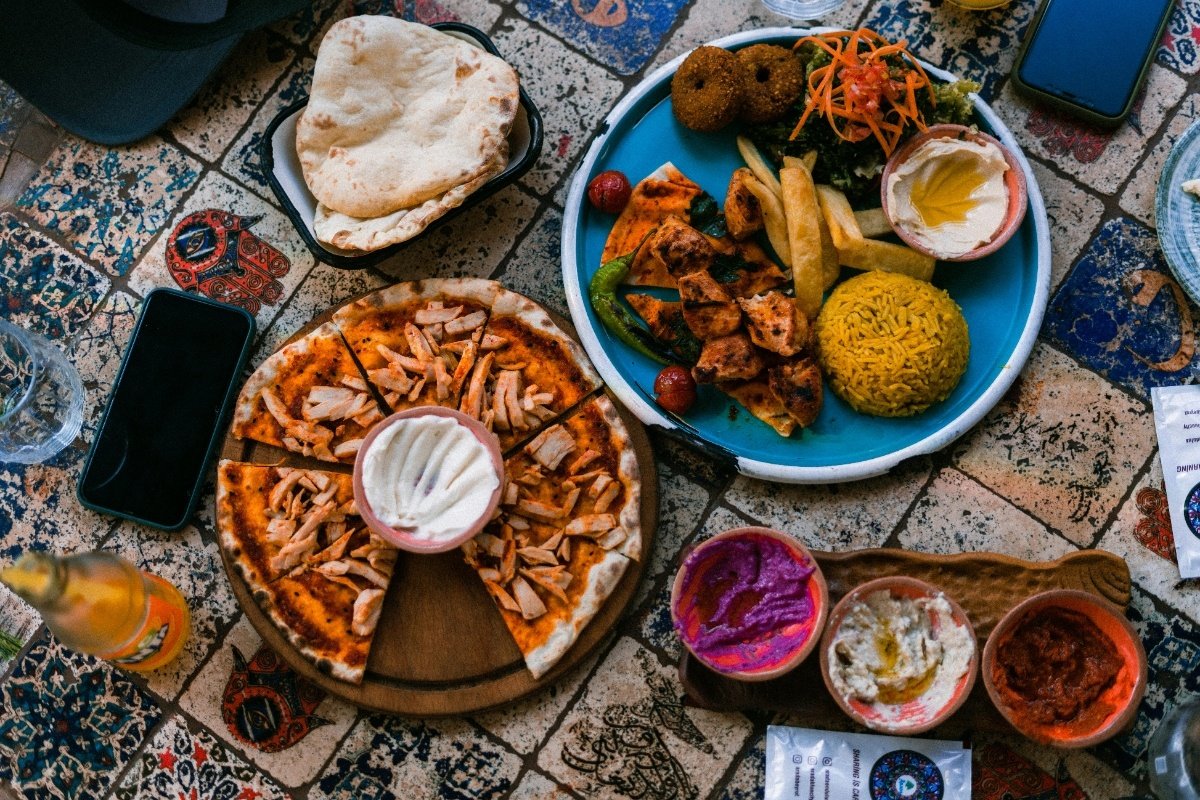
From Al Mina’s Fish Market to Hotel Brunches: A Deep Dive into Abu Dhabi Dining
Sunset Weekly Disclosure: To help keep our guides free, this post contains affiliate links. If you click through and make a booking (such as hotels, flights, tours, or travel experiences), we may earn a commission at no extra cost to you. Sunset Weekly is an independent travel and lifestyle publication. While we may receive compensation from affiliate partners, this does not influence our editorial content, recommendations, or opinions. #ad
Quick Answer: Abu Dhabi runs two food economies simultaneously. The first is a high-end hotel and mall dining circuit that charges European fine-dining prices for international food. The second is a city of South Asian lunch counters, Levantine shawarma shops, Emirati fish markets, and local karak tea stalls where a full meal costs AED 15–35. Most visitors only encounter the first. The second is more interesting and costs a fraction of the price.
Editorial note: This guide covers Emirati cuisine, the local dining landscape, alcohol licensing, and practical eating across all price levels. Pricing reflects 2025–2026 conditions. No restaurants, tourism boards, or commercial operators have contributed to or influenced this content.
Abu Dhabi’s food identity does not resolve into a single narrative. The capital of the UAE is home to a small Emirati population, an enormous South Asian expat community, a sizeable Levantine Arab community, and a mobile international professional class. Consequently, the city produces excellent Indian biryani, outstanding Lebanese mezze, genuine Emirati machboos, and competent international hotel dining in roughly equal abundance. However, Emirati food — the actual cooking tradition of the pearl-diving and Bedouin heritage — is the rarest thing to find. It requires looking beyond the tourist corridor entirely.
What Food Is Abu Dhabi Known For?
Answer capsule: Abu Dhabi is known for machboos, harees, and luqaimat. Machboos combines spiced rice in a broth with meat or fish; harees slow-cooks wheat with meat to a porridge; luqaimat are dough balls deep-fried and drizzled with date syrup. Arabic coffee (qahwa) and dates form the foundation of Emirati hospitality culture. However, South Asian and Levantine cooking dominates the city’s everyday food landscape rather than Emirati cuisine.
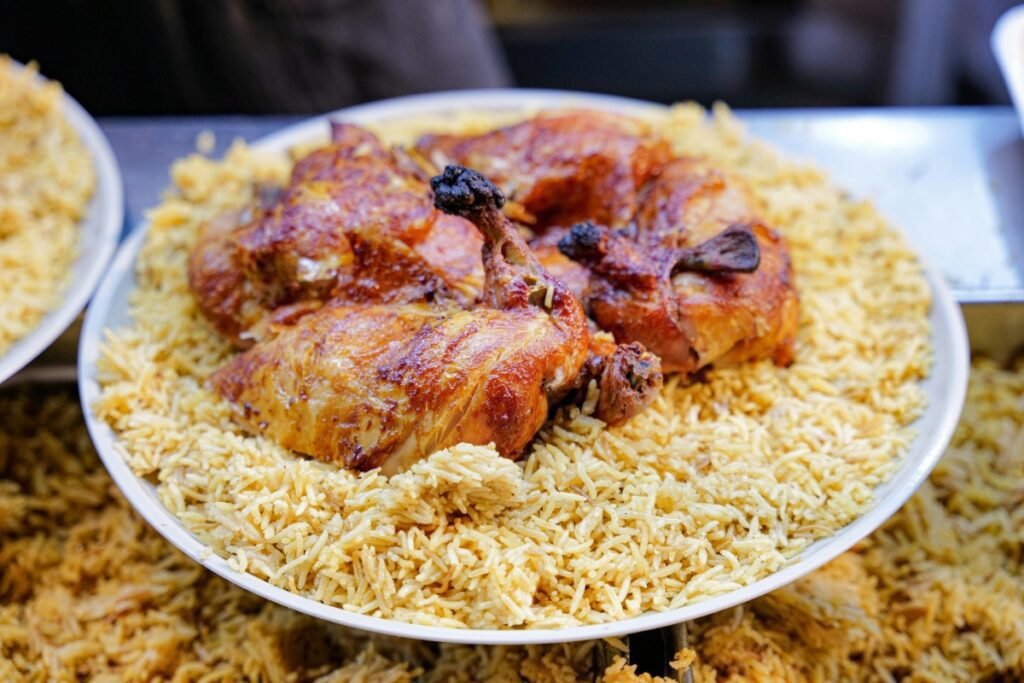
Emirati food reflects the Pearl Coast and the desert interior. Dried fish, dates, rice, and camel milk formed the historical diet. Trade routes through the Gulf introduced Indian spice combinations — saffron, cardamom, dried limes (loomi), turmeric, and cinnamon now appear throughout Emirati cooking. Consequently, machboos carries a flavour profile closer to South Asian biryani than to Arabic food as understood in Lebanon or Egypt.
Furthermore, the date palm runs through Emirati food culture at every level. Dates appear at breakfast, as a snack with coffee throughout the day, in sweet rice dishes, and as the base for date syrup (dibs) poured over luqaimat. The ritual offering of qahwa and dates to any arriving guest remains deeply consistent in Emirati life. Encountering it genuinely — rather than as a hotel performance — requires visiting a traditional café or a local family’s space.
Emirati Cuisine: Essential Dishes
| Dish | What It Is | Best Context |
|---|---|---|
| Machboos | Spiced rice dish with chicken, lamb, or fish; dried limes (loomi) and warm spices | Emirati restaurants; Friday family gatherings |
| Harees | Slow-cooked wheat and meat (lamb or chicken) pounded to a porridge; eaten at celebrations | Ramadan and Eid; some Emirati restaurants year-round |
| Luqaimat | Deep-fried dough balls drizzled with date syrup and sesame seeds | Street stalls; Ramadan markets; traditional cafés |
| Balaleet | Sweet saffron-spiced vermicelli topped with a savoury egg omelette | Emirati breakfast; brunch cafés |
| Regag | Paper-thin crispy Emirati bread; eaten plain or with egg and cheese | Emirati breakfast stalls; mornings only |
| Muhammar | Sweet rice cooked with dates and served with fish | Coastal areas; traditional Emirati restaurants |
| Salona | Slow-cooked lamb or chicken in a tomato-based vegetable stew | Home cooking; Emirati family restaurants |
| Khameer | Slightly sweet, saffron-infused leavened bread | Emirati bakeries; eaten with cheese or cream |
| Hammour (grilled) | Gulf grouper, the most prized local fish; simply grilled or fried | Al Mina fish restaurants; seafood stalls |
| Madrooba | Slow-cooked fish with rice and spices; coastal dish | Coastal towns; heritage restaurants |
Understanding Abu Dhabi’s Food Landscape
Answer: Abu Dhabi’s food divides into three distinct layers. Hotel and mall dining serves international food at high prices primarily to business travellers and tourists. South Asian and Levantine mid-range restaurants serve the expat majority at accessible prices. The Emirati and Gulf food tradition is the smallest and least visible layer. Navigating the city’s food well requires knowing which layer you are entering at each meal.
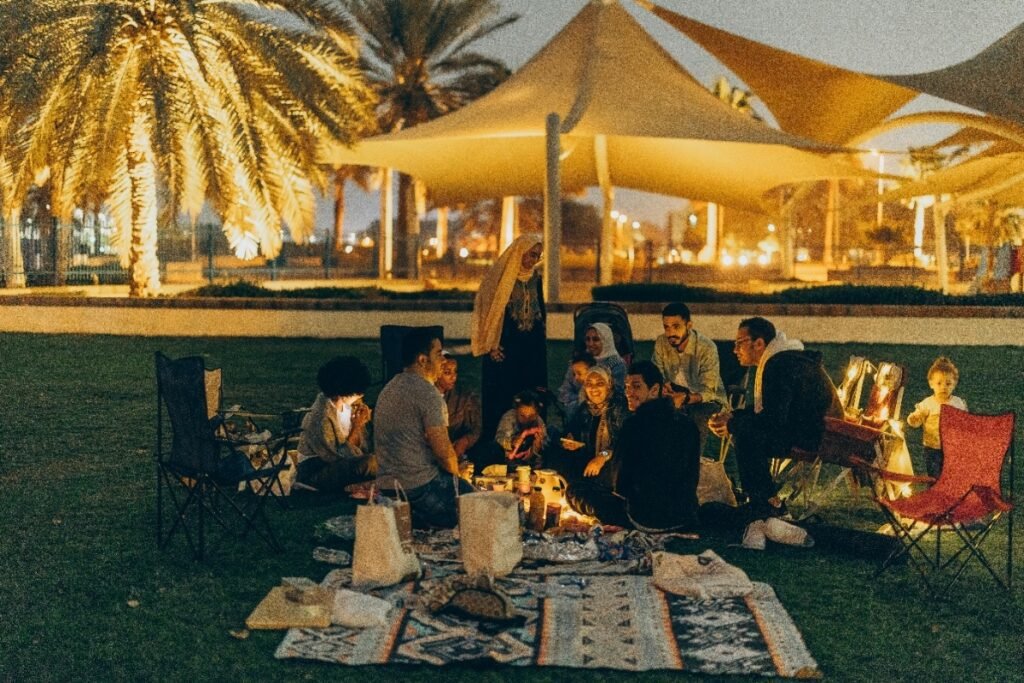
The Hotel and Mall Circuit
The Corniche promenade, Yas Island, Saadiyat Island, and the major shopping malls concentrate the city’s most visible and most expensive restaurants. Specifically, hotel restaurants dominate the licensed dining landscape because alcohol licences in Abu Dhabi tie almost exclusively to hotel premises. Consequently, travellers who want alcohol with dinner usually find themselves in hotel restaurants paying hotel prices.
The food quality at Abu Dhabi’s leading hotel restaurants is genuinely high. The Friday brunch — a long, indulgent buffet-and-drinks event at major hotels — represents the city’s most developed food culture in the tourist and expat sectors. However, brunch prices run AED 300–800 per person with drinks. The experience is valid within its context. It is not Emirati food, and it is not budget eating.
The South Asian and Levantine Sector
The most practical and honest food in Abu Dhabi concentrates in the Khalidiyah and Mussafah areas and the streets around Al Wahda Mall. These dense commercial zones serve the working expat population at local prices. Specifically, Keralite and South Indian restaurants here serve thali lunches — multiple curries, rice, dhal, and pickle on a steel tray — for AED 20–40. These restaurants open at 06:00 for breakfast and run continuous service through to late night.
Lebanese and Levantine restaurants provide the city’s most consistent mid-range dining. Mezze plates, grilled meats, fresh flatbread, and the full range of Levantine salads appear at restaurants throughout the city. Additionally, Iranian restaurants — reflecting Abu Dhabi’s significant Iranian community — provide excellent slow-cooked stews and rice dishes at accessible prices.
Emirati Food: Where to Find It
Genuine Emirati food is genuinely difficult to find in a commercial restaurant context. Most Emirati families eat at home. The handful of Emirati restaurants that exist tend toward the upscale cultural-experience format rather than everyday eating. However, several areas provide more authentic access.
The area around Al Mina (the port and market district) holds the most accessible genuine food culture in the city. The fish market, produce market, and surrounding stalls and cafés provide a context for eating that reflects actual Abu Dhabi rather than the tourist or expat version. Specifically, luqaimat stalls operate in the markets and on the surrounding streets in the mornings and evenings.
Al Mina Fish Market
Answer: Al Mina Fish Market is the most important food destination in Abu Dhabi for travellers interested in genuine local food culture. Located near the Corniche’s eastern end, the market trades fresh Gulf seafood every morning. Hammour, kingfish, shrimp, and local reef fish arrive daily from Gulf fishing boats. Additionally, surrounding restaurants buy direct from the market and cook it simply — the freshest and cheapest fish eating in the city.
How the Market Works
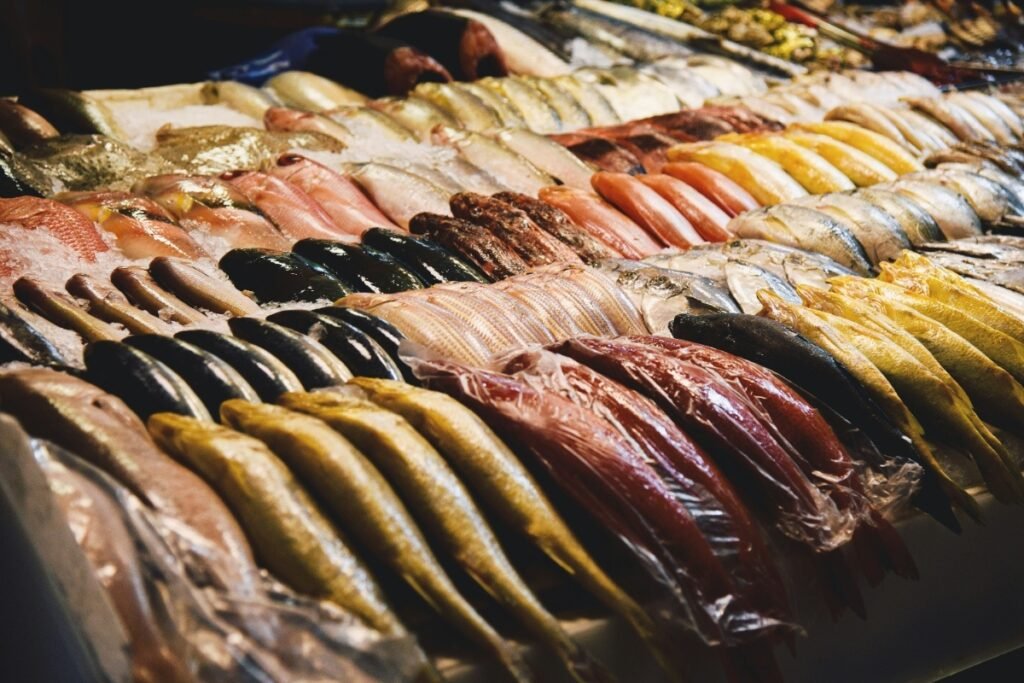
Al Mina operates in the early morning, from approximately 05:00–09:00, when the fishing boats return. The catch — hammour (grouper), kanaad (kingfish), safi (rabbitfish), and various Gulf shrimp — sells to restaurant buyers and the public simultaneously. Consequently, arriving before 08:00 produces the fullest selection.
The market sits adjacent to a large produce market and a cluster of simple restaurants. Specifically, several restaurants around the market perimeter buy morning catch and cook it for lunch customers from around 11:00 onwards. A plate of fresh grilled hammour with rice, salad, and flatbread costs AED 25–50 at these restaurants. That is a fraction of what the same quality fish costs at hotel venues. Furthermore, the experience connects directly to Abu Dhabi’s fishing heritage rather than its hotel dining economy.
What to Buy and Eat
Hammour (Gulf grouper) represents Abu Dhabi’s most celebrated local fish. It is firm, white-fleshed, and mild. Kingfish (kanaad), safi (rabbitfish), and zubaidi (pomfret) are all excellent fresh. However, note that some market-adjacent restaurants cook to order while others operate more as canteen-style operations. Pointing at the fish in the display and asking for it grilled is the most reliable approach.
How Expensive Is Food in Abu Dhabi?
Answer: Abu Dhabi is moderately expensive for mid-range and tourist dining but extremely affordable for South Asian and Levantine local eating. A full South Indian thali lunch costs AED 20–40. A hotel restaurant dinner runs AED 200–500 per person. Additionally, UAE VAT of 5% applies to all restaurant bills — some establishments also add a service charge of 10%, bringing the effective add-on to 15% above menu prices.
Pricing by Context
| Meal Type | AED | Approx. GBP | Notes |
|---|---|---|---|
| Shawarma wrap (local shop) | 10–18 | £2.10–£3.80 | The most reliable cheap meal in Abu Dhabi |
| South Indian thali lunch | 20–45 | £4.25–£9.55 | Rice, dal, curries; working-expat pricing |
| Karak tea (teahouse) | 5–8 | £1.05–£1.70 | Spiced condensed milk tea; a city staple |
| Luqaimat (stall) | 10–20 per portion | £2.10–£4.25 | Best at Ramadan markets; available year-round |
| Lebanese mezze spread (restaurant) | 80–180 per person | £17–£38 | Generous; easily a complete meal |
| Mid-range dinner (hotel-adjacent restaurant) | 150–350 per person | £32–£74 | Before 5% VAT and service charge |
| Hotel restaurant fine dining | 400–900 per person | £85–£191 | Before wine; food quality reflects price |
| Friday brunch (hotel, with drinks) | 300–800 per person | £64–£170 | A separate cultural institution |
| Beer (hotel bar) | 40–70 | £8.50–£14.85 | Only available at licensed venues |
| Glass of wine (hotel restaurant) | 60–100 | £12.75–£21.25 | Sin taxes apply to all alcohol |
| Arabic coffee and dates (café) | 20–40 | £4.25–£8.50 | The essential Abu Dhabi hospitality drink |
| Fresh coconut water (stall) | 5–12 | £1.05–£2.55 | Market stalls and street vendors |
VAT and Service Charges
UAE VAT of 5% applies to all restaurant bills. Furthermore, many hotels and formal restaurants add a 10% service charge on top. Consequently, a dinner priced at AED 500 on the menu can reach AED 575 after these additions. Budget for 15% above listed menu prices at any formal restaurant. Cafeterias, food stalls, and takeaway shops typically include VAT in the displayed price without a separate service charge.
Arabic Coffee, Karak, and the Drinks Culture
Answer: Abu Dhabi’s non-alcoholic drinks culture builds around two institutions: qahwa (Arabic coffee) and karak tea. Qahwa is a light, cardamom-infused green coffee served in tiny cups as a hospitality gesture throughout the day. Karak is a strong, spiced black tea with condensed milk — the city’s everyday drink, served at Indian tea stalls from early morning. Neither costs more than AED 8. Both are as representative of daily Abu Dhabi as any restaurant meal.
Qahwa: Arabic Coffee Culture
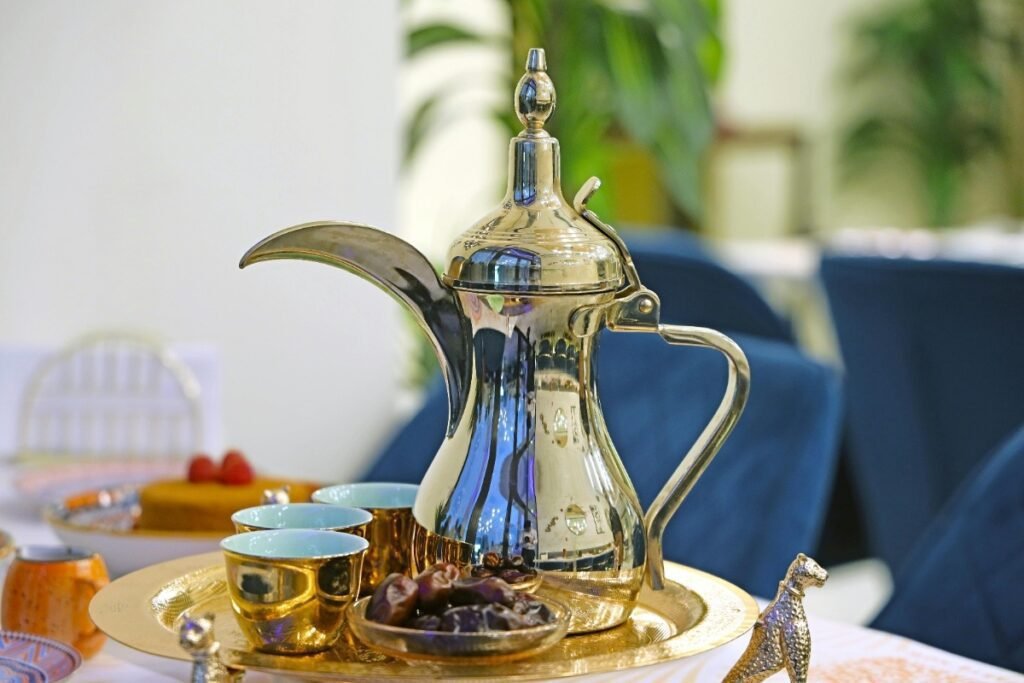
Qahwa is not espresso. It uses green (unroasted) or lightly roasted coffee beans, heavily infused with cardamom and sometimes saffron, rosewater, or cloves. The colour ranges from pale yellow to amber. It arrives in a dallah (a long-spouted pot) and pours into small handleless cups. Specifically, refusing qahwa when offered — in a home, a hotel lobby, or a traditional business — carries a degree of impoliteness. Accepting one or two cups, then placing the cup on its side or gently shaking it, signals that you have finished.
Qahwa at a traditional café or market stall costs AED 5–15 and arrives with dates automatically. Furthermore, the combination of slightly bitter cardamom coffee with the intense sweetness of Medjool dates represents one of Abu Dhabi’s most accessible and genuinely local food experiences. Specifically, Al Mina market area cafés serve this combination to the fishing community from early morning.
Karak Tea
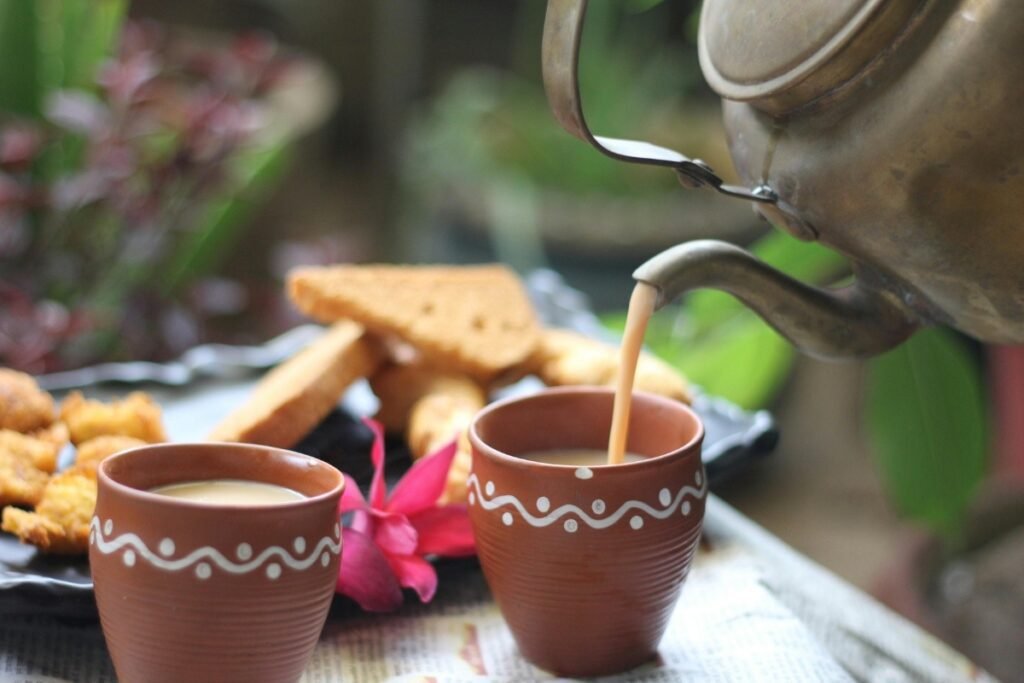
Karak tea (chai karak) originated in India and arrived in the Gulf with South Asian workers. Today it is as culturally embedded in Abu Dhabi as qahwa. It involves simmering black tea with cardamom, condensed milk, and sometimes saffron until thick and intensely flavoured. Specifically, Pakistani and Indian tea stalls in the Khalidiyah and Al Dhafra areas serve it from small roadside operations at AED 5–8 per cup.
Karak is the working city’s drink — consumed at breakfast, mid-morning, and after dinner across every community. Consequently, finding a good karak stall outside tourist areas provides an immediate sense of the city’s actual social rhythm.
Alcohol in Abu Dhabi: The Licensing Reality
Answer: Alcohol is legal in Abu Dhabi but only at venues holding a specific liquor licence. In practice, this means hotel restaurants, hotel bars, and a small number of licensed club restaurants. Standalone restaurants — including all independent Lebanese, Indian, and Emirati restaurants — cannot serve alcohol. Consequently, choosing where to eat dinner determines whether alcohol is available, often regardless of food quality at that venue.
Where Alcohol Is Available
Hotel restaurants and hotel bars in Abu Dhabi hold licences to serve alcohol. This includes the restaurant and bar facilities of international hotel chains across the city. Additionally, a number of licensed club venues — including beach clubs and members’ clubs — hold licences. Specifically, the city’s major hotel strips on the Corniche, Yas Island, and Saadiyat Island all have licensed venues.
Standalone restaurants — even high-quality Lebanese, Indian, and Iranian restaurants — rarely hold alcohol licences. This distinguishes Abu Dhabi meaningfully from Dubai, where independent restaurant licences are more accessible. Consequently, a traveller who wants wine with dinner usually ends up at a hotel restaurant, regardless of whether that represents the city’s best food.
Alcohol Pricing
Sin taxes apply to all alcohol in the UAE. Beer at a hotel bar costs AED 40–70 per bottle. House wine runs AED 60–100 per glass. A cocktail at a rooftop hotel bar reaches AED 80–140. Furthermore, 5% VAT and service charge add on top of these prices. Specifically, an evening of moderate drinking at a hotel bar costs AED 200–400 per person — a significant addition to any Abu Dhabi meal budget.
Non-Alcoholic Alternatives
The mocktail culture in Abu Dhabi is well-developed by global standards. Hotel bars and mid-range restaurants offer elaborate non-alcoholic cocktails, fresh juices, and regional cold drinks (jallab, tamarind juice, hibiscus drink) that are genuinely worth ordering. Specifically, fresh pomegranate juice and jallab (grape juice with rose water and pine nuts) represent the most distinctly regional non-alcoholic options available at Lebanese and Gulf restaurants.
What Should Tourists Avoid?
Answer: Tourist-facing restaurants along the Corniche, in the Yas Island mall complex, and in major mall food courts charge significantly more than comparable quality in residential areas. Additionally, Ramadan dining restrictions apply to all visitors. Additionally, Ramadan dining restrictions apply to all visitors — eating, drinking, or smoking in public during daylight hours during Ramadan carries legal consequences.
Tourist-Zone Pricing
Corniche-front restaurants primarily serve tourists and hotel guests. They charge AED 150–400 per person for mezze and grilled meat that costs AED 60–120 at genuinely local Lebanese restaurants in Khalidiyah or Al Wahda area. The view explains some premium — however, the food quality rarely matches the price differential. Furthermore, the Corniche strip includes a significant number of restaurant tours and hawkers that target pedestrian visitors.
Yas Island restaurants serve a captive audience of theme park visitors and hotel guests at elevated prices. Specifically, those within Yas Mall and adjacent to the major hotel complex charge 40–60% above equivalent city-centre food. Specifically, a meal on Yas Island costs 40–60% more than comparable food at an equivalent-quality restaurant in the city centre.
Ramadan Restrictions
During Ramadan, the law prohibits eating, drinking, and smoking in public spaces during daylight hours for all people — locals and visitors alike. This applies to streets, parks, public transport, and any publicly visible location. Specifically, eating in a car with tinted windows is generally tolerated but eating in any visible public space is not. Hotel restaurants and some enclosed restaurants provide screened dining areas throughout Ramadan. Furthermore, Ramadan evenings (after iftar) produce the most vibrant street food atmosphere of the year. Luqaimat stalls, dates, and Arabic sweets concentrate around mosques and markets.
Traveller Practicality: Halal, Vegetarians, Families
Answer: Abu Dhabi is straightforward for Muslim travellers — virtually all food is halal by default. Pork is available only at licensed hotel restaurants clearly marked as such. Vegetarians eat well through South Indian and Lebanese cuisines. However, vegans face challenges as dairy appears in most regional cuisines. Families eat well across all formats — children are genuinely welcomed in restaurants at all hours.
Halal by Default
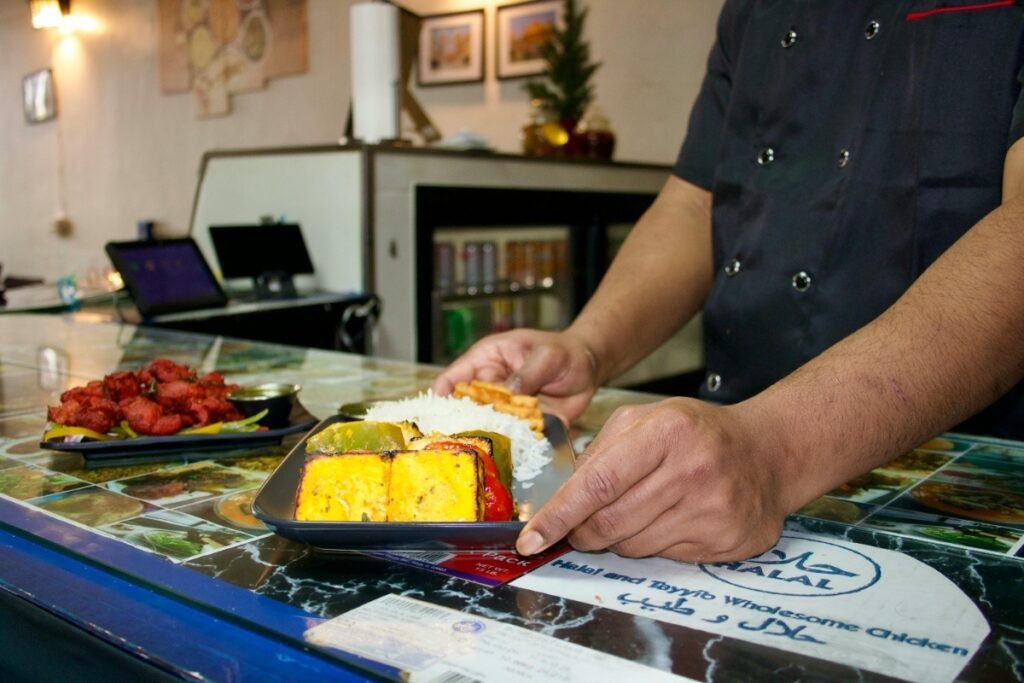
All Emirati, South Asian (Muslim-operated), and Levantine restaurants serve halal food. Pork does not appear on menus at independent restaurants. Specifically, hotel restaurants serving pork clearly label and segment it in compliance with UAE regulations. For Muslim travellers, eating outside hotels removes all halal ambiguity entirely.
Vegetarian Options
South Indian restaurants in the Khalidiyah area and around the Al Wahda and Mushrif districts provide the best vegetarian eating in Abu Dhabi. Specifically, pure vegetarian Indian restaurants — no meat, no eggs — exist alongside the more common mixed restaurants. Additionally, Lebanese mezze provides abundant vegetarian options: hummus, baba ghanoush, fattoush, tabbouleh, falafel, and grilled halloumi all appear on standard mezze menus. However, confirming that dishes are meat-stock-free at smaller restaurants requires direct enquiry.
Local Dining Etiquette in Abu Dhabi
Answer: Abu Dhabi’s dining etiquette reflects Islamic norms and Gulf hospitality traditions. Dress modestly at traditional Emirati restaurants and market areas. The right hand for eating applies in informal contexts. Accepting qahwa and dates as a hospitality gesture is culturally significant. Tipping runs 10–15% at sit-down restaurants. However, tipping is not expected at cafeterias, food stalls, or takeaway operations.
Cultural Customs at Table
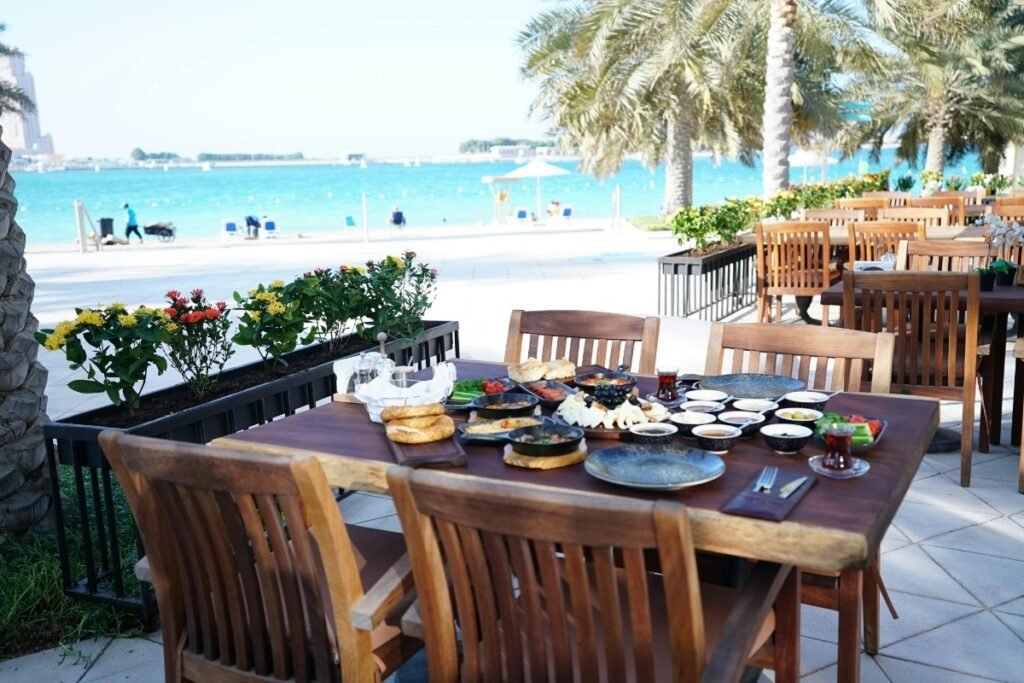
Eating with the right hand is standard in Emirati and South Asian dining contexts. However, cutlery is universally available — no establishment expects visitors to eat without it. At traditional Emirati meals, sharing dishes from a central platter is the norm. Specifically, waiting for the host’s invitation before eating at an Emirati table is the respectful approach.
Dress standards matter more than at most tourist destinations. Specifically, shorts and sleeveless tops are inappropriate at traditional cafés, local market restaurants, and any establishment clearly serving a local rather than tourist clientele. Hotels and international restaurant venues apply no dress restrictions beyond smart-casual standards. Furthermore, public displays of affection are culturally inappropriate in traditional local dining contexts.
Tipping and Bills
Most formal restaurants add a 10% service charge to bills. However, this does not always reach staff in full. Leaving an additional 5–10% tip in cash for sit-down restaurant service is the standard expat and visitor practice. At cafeterias, karak stalls, shawarma shops, and market food counters, nobody expects any tip.
Best Areas for Food by Budget and Traveller Type
| Traveller Type | Best Area | Why |
|---|---|---|
| Emirati food and culture | Al Mina market area | Fish market, luqaimat stalls, Emirati breakfast culture |
| Budget South Asian eating | Khalidiyah / Al Wahda area | South Indian thali, karak tea, biryani from AED 15 |
| Lebanese mezze and Levantine | Hamdan Street and Khalidiyah | Concentrated Lebanese restaurants at honest prices |
| Friday brunch | Major Corniche and Saadiyat hotels | The definitive Abu Dhabi brunch context |
| Fresh fish | Al Mina restaurants, post-market | Fresh Gulf catch cooked simply; best value fish in the city |
| Alcohol with dinner | Hotel restaurants, Corniche / Yas Island | Only context where licensing permits alcohol |
| Emirati sweets and coffee | Traditional cafés near Al Mina and Corniche east | Qahwa, dates, luqaimat, karak in their most authentic context |
| Short stay (1–2 days) | Al Mina morning + Khalidiyah lunch + hotel dinner | Covers the full food spectrum within a compact geography |
| Ramadan visit | Market areas after iftar | Most vibrant street food atmosphere of the year |
Where To Stay in Abu Dhabi?
Expedia’s Abu Dhabi inventory stands out for comparing sharply different trip types in one place: Yas Island theme-park resorts, central business hotels, prestige Corniche towers, and a dedicated airport transit hotel. This makes the platform effective for quick filtering, as Abu Dhabi’s hotel market is highly segmented rather than uniform.
The practical mapping is clear: Yas Island properties suit theme parks (Ferrari World, Warner Bros. World, SeaWorld) and waterfront leisure; Park Rotana works as a conventional city base near ADNEC and malls; Conrad Abu Dhabi Etihad Towers serves as the premium Corniche option; and AUHotel (airside in Terminal A) is strictly for transit layovers with no landside access. Expedia functions primarily as a comparison and booking layer rather than an editorial guide — its real value comes from matching the exact property to your trip purpose, then verifying address, recent guest scores, and access details on the individual listing.
| Hotel & Location | Best For | Unique Feature | Verified Rating | Action |
|---|---|---|---|---|
|
Conrad Abu Dhabi Etihad Towers Abu Dhabi Corniche/Etihad Towers area, Abu Dhabi, UAE |
Luxury & High-End Dining | The Etihad Towers setting is the standout feature, giving it a prime prestige address in the Corniche area. | 9.6/10 | BOOK NOW |
|
Hilton Abu Dhabi Yas Island P.O. Box 144876, Yas Bay, Yas Island, Abu Dhabi, UAE |
Yas Island & Families | Complimentary access or packages linked to Yas Theme Parks, plus waterfront access near Etihad Arena and Pier71. | 9.2/10 | BOOK NOW |
|
Park Rotana Al Salam Street, Eastern Ring Road, next to Khalifa Park, Abu Dhabi, UAE |
Business & City Base | Five-star hotel with six restaurants, spa, tennis courts, and views over Khalifa Park or Sheikh Zayed Bridge. | 9.2/10 | BOOK NOW |
|
W Abu Dhabi – Yas Island Yas Island, Abu Dhabi, UAE |
Design & Formula 1 | Built above and across the Yas Marina Circuit, with circuit or marina views from many rooms. | 9.2/10 | BOOK NOW |
|
AUHotel Zayed International Airport Terminal A, Zayed International Airport transit area, Abu Dhabi, UAE |
Layovers & Transit | Airport-transit hotel inside Terminal A, with booking tied to international transfer passengers and boarding-pass requirements. | 8.2/10 | BOOK NOW |
Important Things Travellers Should Know Before Eating in Abu Dhabi

Timing, Laws, and Practical Notes
- Ramadan restrictions apply to all visitors. During Ramadan, no eating, drinking, or smoking in public spaces between dawn and sunset. Hotel restaurants screen their dining areas. Specifically, the penalties for public eating during Ramadan are real and apply to tourists. Plan accordingly and use hotel dining rooms during daylight hours.
- Alcohol only at licensed venues. No standalone restaurant serves alcohol. Specifically, booking a restaurant outside a hotel almost always means a dry dinner. Deciding where to eat based on whether the venue holds an alcohol licence is a genuinely important planning step in Abu Dhabi.
- Friday is the weekend. In the UAE, Friday-Saturday forms the weekend. Consequently, Friday lunch and brunch represent the week’s busiest dining window. Many independent restaurants close on Friday morning. The Friday brunch culture at hotels peaks between 13:00–17:00.
- Dress modestly at local restaurants. Covered shoulders and below-the-knee clothing apply at traditional Emirati restaurants, market areas, and local cafés. Hotel and tourist restaurants have no dress restriction. Specifically, carrying a light covering when moving between contexts prevents the need to change.
Food Culture, Safety, and Seasonal Notes
- Summer (June–September) affects outdoor eating. Temperatures exceed 40°C regularly. All outdoor dining moves to enclosed, air-conditioned spaces. Consequently, the street food and market culture that operates well in cooler months becomes largely inaccessible in peak summer. Planning visits for October–April produces a significantly different outdoor food experience.
- Dates are worth taking seriously. Abu Dhabi dates — particularly Medjool and Khalas varieties from the Al Ain region — represent some of the finest in the world. Specifically, buying fresh dates from the date souq near Al Mina, or from Al Ain’s date market during harvest season (August–October), costs AED 20–60 per kilogram. The product is categorically different from imported supermarket versions.
- The 5% VAT is on top of everything. Unlike some destinations where tax folds into the menu price, UAE restaurants list pre-tax prices. Specifically, adding 5% VAT plus a typical 10% service charge brings every restaurant meal to 15% above the displayed price. Factor this into every budget calculation.
- Supermarkets are excellent. LuLu Hypermarket branches across Abu Dhabi sell fresh Gulf seafood, excellent dates, regional produce, South Asian grocery staples, and prepared foods at prices well below restaurants. Specifically, buying a portion of fresh Gulf shrimp and having the counter grill it represents one of the best-value food experiences in the city.
Frequently Asked Questions About Food in Abu Dhabi
Emirati Cuisine and Local Food
What is the national dish of the UAE? Machboos (also written as makbous or kabsa) is the most nationally representative Emirati dish. It consists of spiced basmati rice cooked in a broth with chicken, lamb, or fish. Loomi (dried black lime), saffron, turmeric, and Gulf spices provide the flavour. The dish resembles biryani in format but carries a distinctly Gulf flavour profile from the dried lime and rose water. Specifically, machboos with fresh Gulf hammour is the most celebrated coastal version.
What is qahwa and how should I drink it? Qahwa is Arabic coffee — light, pale-coloured, and infused heavily with cardamom. It is not similar to espresso. Specifically, a host pours it from a traditional pot (dallah) into small handleless cups called finjan. The host or server refills the cup until you indicate you have finished — traditionally by tilting the cup gently side to side or placing it upside down. Furthermore, refusing qahwa when offered as a hospitality gesture is impolite in Emirati culture. Accepting one cup and then indicating you have finished is entirely appropriate.
Where can I find genuine Emirati food in Abu Dhabi? Genuine Emirati cooking is hard to find commercially. The Al Mina area provides the most authentic context for Emirati breakfast and market food — luqaimat stalls, regag, and qahwa with dates. Additionally, several heritage-focused restaurants in Abu Dhabi serve machboos, harees, and traditional dishes in a more formal setting. However, the most honest Emirati cooking remains in private homes. Staying with Emirati friends or joining a cultural food experience through a local guide provides access that no restaurant replicates.
Practical Questions
Can I drink alcohol in Abu Dhabi? Yes, but only at licensed venues. All hotel restaurants, hotel bars, and a small number of licensed club venues can serve alcohol. Independent restaurants — even high-quality Lebanese or Indian restaurants — cannot. Consequently, travellers who want alcohol with dinner usually end up at hotel venues. Alcohol prices in Abu Dhabi are high due to sin taxes. A beer costs AED 40–70. A glass of wine runs AED 60–100. Budget significantly for this if it is a priority.
Is Abu Dhabi food expensive compared to other Middle Eastern cities? More expensive than Cairo or Amman, comparable to Beirut at the mid-range level, and cheaper than Dubai at the hotel dining level. Specifically, the local South Asian and Levantine eating sectors are genuinely affordable. A full South Indian lunch for AED 25–40 represents excellent value by any regional comparison. However, the hotel dining circuit charges prices comparable to London and Paris with less culinary ambition at the mid-range level.
What should I eat during Ramadan in Abu Dhabi? Ramadan produces the most vibrant street food atmosphere of the year — but only after iftar (sunset, when fasting breaks). Specifically, luqaimat stalls, dates, harees, and Ramadan sweets concentrate around mosques and markets in the evenings. Hotel and restaurant iftars often involve elaborate buffets. These represent some of the best-value food experiences in the hotel circuit, typically AED 150–250 per person. Furthermore, the late-night atmosphere in the Corniche area and market districts after iftar produces a community energy unlike any other time of year.
© 2026 — Editorial travel content. Not affiliated with the Abu Dhabi Department of Culture and Tourism, any hotel group, or any commercial food or hospitality operator. Pricing reflects 2025–2026 conditions and is subject to change.
Editorial & Accuracy Standards
- Expert Review:
Ammara Azmat,
Senior Travel Mobility Analyst (12+ years experience) - Status: Verified for accuracy against official 2026 service data and real-time traveller reports.
- Our Process: This content follows our Fact-Checking Policy.