

Last updated: May 2026 | Editorial review based on verified information from americantourister.co.uk and publicly available brand data
Quick Answer: American Tourister is an affordable mainstream luggage brand owned by Samsonite, founded in 1933. Its UK range covers hard-shell and soft-shell suitcases, cabin bags, backpacks, and Disney kids’ luggage, priced roughly between £55 and £170. It targets casual and family travellers who want reliable, colourful luggage without a premium price tag.
Editorial note: Prices and product availability should be confirmed at americantourister.co.uk before purchase, as ranges change seasonally.
For anyone buying their first suitcase, preparing for a family holiday, or replacing worn-out luggage without spending heavily, American Tourister sits in a useful spot in the market. It is not the most durable luggage money can buy — and it makes no claim to be. However, what it does offer is a well-made, attractive range at prices that suit leisure travel, occasional use, and younger travellers who need something reliable rather than indestructible.
Understanding what American Tourister is — and what it is not — therefore makes buying decisions much clearer.
What Is American Tourister?
American Tourister is a US luggage brand founded in 1933. Samsonite acquired it in 1993, and it now operates as a distinct brand within the Samsonite group, targeting mainstream leisure travellers with affordable hard-shell and soft-shell suitcases, bags, and accessories. In the UK, the brand sells directly via americantourister.co.uk.
The brand has traded for over 90 years. From the start, it built its reputation on the idea that good luggage should be accessible — not reserved for expensive wardrobes. That positioning has stayed consistent, and it is precisely what distinguishes American Tourister from its parent brand today.
Belonging to the Samsonite group also gives American Tourister access to group-level manufacturing standards, materials testing, and global repair infrastructure. Consequently, it occupies a deliberate mid-tier position: better than supermarket own-brands, more affordable than Samsonite’s own lines.
American Tourister vs Samsonite: What Is the Actual Difference?
Samsonite and American Tourister share the same parent group, but they target very different buyers. Samsonite focuses on premium, business, and frequent-traveller products. American Tourister, in contrast, targets casual and family leisure travel — offering lower price points, more expressive colour options, and materials calibrated for occasional rather than weekly use.
Here is a direct comparison:
| Feature | American Tourister | Samsonite (mid-range) |
|---|---|---|
| Typical cabin price | £80–£140 | £150–£350 |
| Target traveller | Casual, family, student | Frequent, business, premium |
| Material (hard-shell) | Polypropylene (PP) | Polycarbonate or Curv® |
| Colour range | Wide — bright and expressive | Broader but more restrained |
| Warranty | Limited, 2–3 years typically | Limited, varies by range |
| Disney/kids range | Yes | No |
| Long-haul durability | Good for occasional use | Strong for frequent use |
| Weight | Competitive across ranges | Competitive, especially at premium |
The key practical takeaway is straightforward. If you fly a couple of times a year for family holidays or city breaks, American Tourister performs well and represents fair value. However, if you fly every week for work, Samsonite or Briggs & Riley offer materials and warranties that suit the additional wear far more realistically.
The Main American Tourister Luggage Ranges
American Tourister’s UK range covers several named collections, each aimed at a slightly different traveller. The Soundbox, Airconic, Pulsonic, and FastForward form the core suitcase lines. Additionally, the Take2Cabin bag specifically targets budget airline cabin travel.
Soundbox
The Soundbox is one of the brand’s most recognisable ranges. It uses polypropylene hard-shell construction and won a Red Dot Design Award — a notable international design recognition. Furthermore, it is expandable, available in a wide range of colours, and spans cabin (55 cm) through to larger check-in sizes.
The 55 cm cabin version suits most short European trips and fits standard airline overhead bins without difficulty. Polypropylene holds its shape well under impact and resists flex cracking better than cheaper hard-shell alternatives. For this reason, the Soundbox remains a popular starting point for first-time buyers.
Airconic
American Tourister positions the Airconic as its lightest hard-shell range. The 55 cm cabin model weighs around 1.9 kg, which is competitive at this price point. For travellers on weight-restricted airlines, or anyone who wants to maximise their packing allowance, a lighter shell directly translates to more room for clothing and belongings.
Pulsonic
The Pulsonic takes a more expressive design approach — with printed details and bold colour choices — while retaining functional expandable hard-shell construction. The 55 cm cabin version sits at around £109, making it one of the more accessible entry points across the whole range.
FastForward
The FastForward targets check-in travel primarily. The 78 cm large case is priced at around £155 and suits travellers who need maximum hold capacity in a straightforward hard-shell format.
Take2Cabin
The Take2Cabin is a backpack range that American Tourister specifically engineers to fit within EasyJet’s personal item dimensions. The brand labels it as EasyJet-compliant on the website, allowing travellers to carry it on board as a free item without paying for a hand baggage fare upgrade. At around £55, the medium backpack offers a practical, airline-aware solution for weekend trips.
Cabin Luggage and Airline Compatibility
American Tourister’s UK website includes airline-specific cabin collections for Ryanair, EasyJet, British Airways, and Eurowings. This organisation helps buyers filter for a case that meets their specific carrier’s size requirements, which is the single most important factor in avoiding gate-check fees.
Airline cabin rules vary considerably, and getting the sizing wrong adds real cost. Here is a practical summary for the UK’s most-used budget carriers:
| Airline | Standard Cabin Allowance | Overhead Access | Notes |
|---|---|---|---|
| Ryanair (Priority) | 55 x 40 x 20 cm | Yes | Requires Priority fare or Plus ticket |
| Ryanair (no Priority) | 40 x 20 x 25 cm | Under seat only | Larger bag goes in hold |
| EasyJet (hand baggage) | 56 x 45 x 25 cm | Overhead | Requires Hand Baggage Included fare |
| EasyJet (personal item) | 45 x 36 x 20 cm | Under seat | Free on all fares |
| British Airways | 56 x 45 x 25 cm | Overhead | Standard hand baggage allowance |
Always verify current limits directly with your airline before travel, as carriers update their policies.
Ryanair: Understanding the Two-Tier System
For Ryanair travellers specifically, cabin sizing matters more than with most other carriers. The 55 x 40 x 20 cm overhead allowance only applies to passengers on Priority or Plus fares. Without Priority, Ryanair allows only a small personal bag (40 x 20 x 25 cm) in the cabin — all larger bags go into the hold.
American Tourister’s Ryanair-specific collection on the website filters products accordingly. When shopping for Ryanair use, starting with that filtered collection is therefore the most efficient approach.
EasyJet: The Take2Cabin Free-Bag Advantage
For EasyJet passengers on basic fares, staying within the personal item dimensions (45 x 36 x 20 cm) allows free cabin access. American Tourister engineers the Take2Cabin backpack to meet precisely these dimensions. As a result, it offers a genuinely practical solution for EasyJet weekend trips without any upgrade cost.
Hard-Shell vs Soft-Shell: Which Works Better?
American Tourister’s range leans heavily towards hard-shell suitcases, and for most travellers this is the right default. Hard-shells offer stronger impact protection, clean easily, and come in American Tourister’s full colour palette. Soft-shell options, however, suit travellers who prefer external pocket access or need flexibility around overpacking.
| Hard-Shell (Soundbox, Airconic) | Soft-Shell | |
|---|---|---|
| Impact resistance | Strong — polypropylene holds well | Moderate |
| Weight | Competitive — Airconic from ~1.9 kg | Often lighter |
| Packing flexibility | Fixed (expandable zip adds some give) | More flexible |
| External pockets | None on most models | Often available |
| Cleaning | Wipes clean easily | Fabric can absorb stains |
| Airport visibility | High with bright colour options | Variable |
| Best for | Holidays, city breaks, check-in | Flexible packing, lighter travel |
In practice, hard-shell suits the majority of family and leisure travel scenarios. Furthermore, polypropylene — the material American Tourister uses in the Soundbox — is robust for its price tier and handles normal holiday conditions well.
Wheels, Handles, and Everyday Movement
American Tourister fits four-wheel double-spinner systems across most of its hard-shell range. These multi-directional wheels roll smoothly on airport floors and station concourses. On cobblestone and rough urban surfaces, however, performance drops — the wheels serve well for typical travel but do not match the durability of premium systems at higher price points.
Spinner Wheel Performance
In particular, double-wheel spinners allow the case to move alongside you in any direction rather than pulling behind. For long airport walks — through Heathrow’s Terminal 5, Gatwick’s South Terminal, or any sizeable European hub — this multi-directional movement reduces arm fatigue considerably.
On smooth surfaces, American Tourister’s spinner wheels perform well within their price tier. On Edinburgh’s Royal Mile, Lisbon’s Alfama cobblestones, or Rome’s uneven pavements, however, they encounter the same limitations as any budget or mid-market spinner. For occasional city-break travel, this is entirely manageable. That said, for someone dragging a suitcase across rough terrain every week, upgrading to heavier-duty wheel systems becomes a more worthwhile investment.
Telescopic Handle Quality
American Tourister’s telescopic handles across the Soundbox and Airconic ranges extend and lock at standard heights. Many buyers note the Soundbox handle as particularly stable — it operates without wobble and locks firmly at each position. For general travel use, the handles across the range deliver what you need reliably.
Practical Traveller Scenarios
First Luggage Purchase — Students and Younger Travellers
Indeed, American Tourister makes a genuinely sensible first suitcase choice. The Soundbox 55 cm cabin case covers the majority of student travel situations at an accessible price: weekend trips, university travel, Interrail routes, and budget airline flights. Additionally, the colourful designs help identify bags quickly on arrivals carousels — a small but real advantage at busier airports.
Family Holidays
Families typically need luggage across multiple sizes. American Tourister’s matching set options — cabin, medium, and large in coordinating colourways — make this straightforward. Moreover, having coordinated luggage simplifies reclaim identification considerably.
In particular, the Disney and Marvel licensed range deserves specific mention for families with younger children. American Tourister produces these cases and backpacks in characters including Mickey Mouse, with appropriate sizing and durable construction for children managing their own luggage. In practice, young children engage more readily with their own travel when they recognise and own the choice.
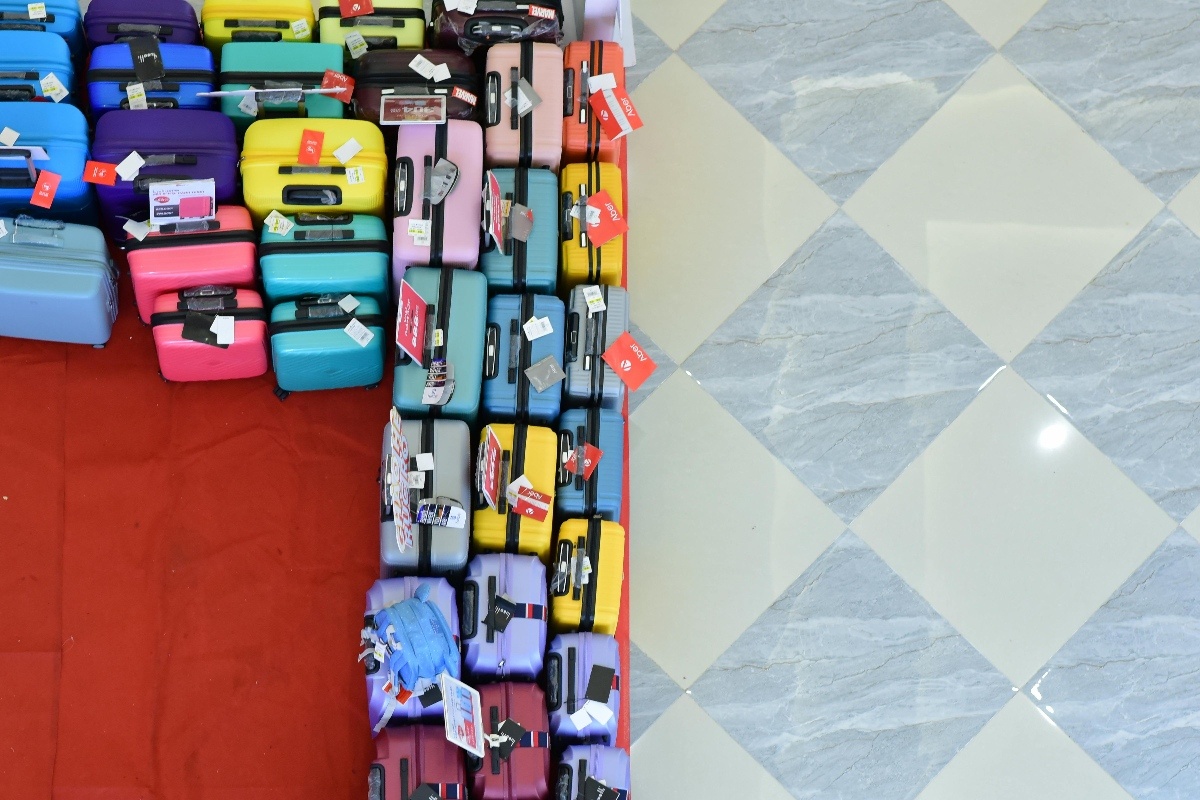
Many family travellers also note a specific practical benefit: bright hard-shell colours — lime green, coral, dusty turquoise — stand out immediately on a baggage belt crowded with dark suitcases. This saves time and removes ambiguity in a way that black or dark navy cases simply cannot match. As a result, colour choice becomes a more operationally useful decision than it first appears.
European City Breaks
A 55 cm Airconic or Soundbox cabin case suits most European city-break trips of two to four nights. Packing cabin-only and avoiding checked baggage fees saves a meaningful amount, especially on Ryanair and EasyJet. For example, Ryanair’s hold bag fees on a return booking can add £40–£80 to the cost of a trip — a cabin-only case eliminates that entirely.
In practice, urban handling on airport floors and train stations is straightforward. Where city-break travel introduces rougher streets, the practical question is how much dragging distance you realistically face. For most hotel stays with a short transfer from transport, American Tourister handles city-break conditions well.
Occasional Long-Haul Travel
For long-haul trips taken once or twice a year, American Tourister check-in luggage is a practical option. The Airconic 77 cm and FastForward 78 cm both provide generous packing capacity at moderate weights. For a traveller taking two or three long-haul trips annually, the durability level suits the use well. However, for someone taking ten or more international trips per year, investing in Samsonite or Briggs & Riley becomes a more sensible long-term calculation.
Why Colourful Luggage Makes Practical Sense
American Tourister offers one of the widest colour ranges in the mid-market. Beyond aesthetics, however, distinctive luggage provides a genuine operational advantage at airports. A bold turquoise or coral hard-shell suitcase is noticeably faster to identify on a baggage reclaim belt than a generic dark case.
At busy airports — Heathrow, Gatwick, Manchester, or large European hubs — baggage belts fill with similar dark suitcases. Choosing a distinctive colour, therefore, directly saves time and reduces the risk of picking up the wrong bag by mistake.
For families and groups, this colourful range also allows colour-coding by family member — a small practical decision that removes confusion in busy arrivals halls.
Warranty and After-Sales: What to Know
American Tourister offers a limited global warranty, typically covering two to three years on suitcases and cabin luggage. The warranty covers manufacturing defects in materials and workmanship. It does not, however, cover airline damage, normal wear and tear, accidental damage, or misuse.
What the Warranty Covers and Excludes
Key warranty terms to understand before buying:
- Covered: Manufacturing defects in materials and workmanship
- Not covered: Airline damage, cracks from overpacking or impact, wear and tear, water damage, misuse
- Repair process: American Tourister routes all warranty claims through authorised service centres — not general repair shops
- Global coverage: The warranty applies internationally, allowing repairs at authorised centres worldwide
The exclusion of airline damage is standard across nearly all mid-market luggage warranties. Consequently, if an airline damages your bag, that claim goes to the airline — not to American Tourister. For travellers who specifically want airline damage cover within their luggage warranty, Briggs & Riley’s unconditional lifetime guarantee remains the only mainstream option that includes it. That coverage, however, comes at a significantly higher price point.
Keeping Your Warranty Valid
American Tourister requires customers to use authorised service centres for all warranty repairs. Using a general repair shop voids the warranty. Therefore, before sending a bag anywhere for repair, it is worth contacting American Tourister to confirm the correct authorised centre in your area.
Is American Tourister Worth Buying?
American Tourister delivers good value for casual and family travellers who fly a few times a year and want reliable, colourful, affordable luggage. It is, however, less well suited to frequent flyers who need maximum durability, or business travellers who require structured packing systems and carry-on precision.
Who It Works Best For
- Strong fit: First luggage purchase, family holidays, European city breaks, student travel, occasional long-haul, younger travellers, budget airline travel using airline-specific cabin ranges
- Reasonable fit: Parents buying kids’ luggage, travellers who want colour visibility, anyone needing matching sets across sizes
- Less ideal: Frequent business travellers, weekly flyers, anyone needing airline damage cover in their warranty, or buyers seeking the highest possible long-term durability
The Key Buying Question
The central thing to calibrate is travel frequency. For two annual family holidays, American Tourister covers those trips comfortably and at a price that makes sense. For weekly business travel, however, the investment case shifts clearly toward brands that build specifically for that workload.
Buying Online at americantourister.co.uk
The American Tourister website organises luggage by airline, category, and trip duration — making it considerably easier to narrow choices without browsing the whole range. The airline-specific cabin filters for Ryanair, EasyJet, and British Airways are the most practically useful starting point for cabin luggage buyers.
Key purchasing details worth noting:
- Free standard delivery on orders from £65
- Free returns on all online orders
- Interest-free instalments available across three payments
- 10% off with newsletter sign-up
- Disney and Marvel ranges include kids’ suitcases, backpacks, and accessories
Frequently Asked Questions
Brand, Ownership, and Background
Is American Tourister owned by Samsonite? Yes. Samsonite acquired American Tourister in 1993. The two brands remain distinct, however — American Tourister targets affordable leisure travel, while Samsonite focuses on premium and business-use products.
What material does American Tourister use in the Soundbox? The Soundbox uses polypropylene (PP) — a durable, lightweight hard-shell material that holds its shape well under impact. It is expandable, available in a wide colour range, and won a Red Dot Design Award for its ribbed visual design.
Where does American Tourister sell in the UK? American Tourister sells directly via americantourister.co.uk. It also sells through John Lewis, Fenwick, and various luggage and department store retailers across the UK.
Cabin Luggage and Airlines
Does American Tourister make Ryanair-compliant cabin luggage? Yes. The website includes a dedicated Ryanair cabin luggage collection. For Ryanair Priority passengers, the standard overhead allowance is 55 x 40 x 20 cm. Without Priority, only a smaller personal bag fits in the cabin. Always verify the exact case dimensions — including handles and wheels — before buying.
What is the lightest American Tourister cabin suitcase? The Airconic range is American Tourister’s lightest hard-shell cabin option. Specifically, the 55 cm model weighs around 1.9 kg, making it well suited to weight-restricted routes.
Can I take the Take2Cabin backpack on EasyJet for free? American Tourister engineers the Take2Cabin to meet EasyJet’s personal item dimensions, allowing free cabin access on basic fares. Always confirm current EasyJet personal item dimensions directly with the airline before travel, as policies can change.
Choosing the Right Case
Is American Tourister good for family travel? Yes. Overall, the range suits family travel well. Matching sets span cabin and check-in sizes, and the Disney and Marvel kids’ collections offer appropriate sizing for younger children. Additionally, the wide colour palette helps families identify bags quickly on baggage belts.
Is American Tourister suitable for long-haul travel? For occasional long-haul travel — one or two trips per year — yes. American Tourister’s larger check-in cases handle long-haul use comfortably. For very frequent international travel, however, a more durable premium brand becomes a more practical long-term investment.
Warranty and After-Sales
How long is the American Tourister warranty in the UK? American Tourister offers a limited global warranty, typically two to three years on suitcases and cabin luggage. It covers manufacturing defects only. It does not, however, cover airline damage, normal wear and tear, or accidental damage. Always check the specific warranty duration on the individual product page.
Does American Tourister cover airline damage under warranty? No. Like most luggage brands, American Tourister’s warranty does not cover damage that airlines cause. Consequently, any airline damage claim should go directly to the carrier at the time of arrival.
Editorial & Accuracy Standards
- Expert Review:
Ammara Azmat,
Senior Travel Mobility Analyst (12+ years experience) - Status: Verified for accuracy against official 2026 service data and real-time traveller reports.
- Our Process: This content follows our Fact-Checking Policy.