
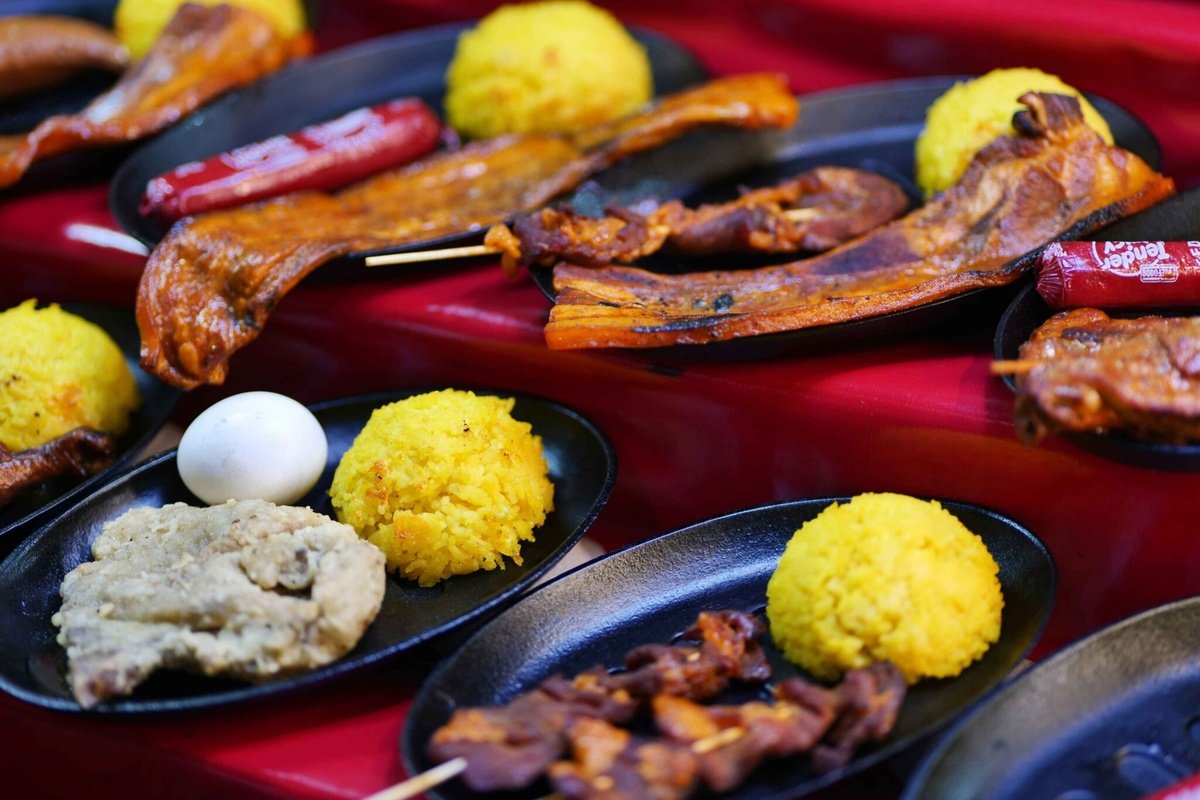
10 Must‑Have Street Foods in the Philippines (2026 Guide)
Sunset Weekly Disclosure: To help keep our guides free, this post contains affiliate links. If you click through and make a booking (such as hotels, flights, tours, or travel experiences), we may earn a commission at no extra cost to you. Sunset Weekly is an independent travel and lifestyle publication. While we may receive compensation from affiliate partners, this does not influence our editorial content, recommendations, or opinions. #ad
Last updated: 2026 | Category: Asia Travel, Food & Culture | Reading time: ~9 minutes
Why the Philippines Is Asia’s Most Exciting Street‑Food Destination
Few countries in Asia wear their culinary heritage as proudly as the Philippines. Indeed, the best evidence sits not inside restaurants but on the street corner. From Manila’s Binondo barbecue alleys to the beachside snack carts of Cebu, Filipino street food is a living expression of the nation’s soul.
What makes Filipino street food so compelling in 2026 is its extraordinary cultural layering. Over centuries, indigenous Austronesian traditions fused with Spanish colonial influences and Chinese merchant flavours. Furthermore, broader Southeast Asian techniques entered the mix, creating a cuisine unlike anything else in the region. As a result, the street‑food culture here places vinegar, annatto, sweet caramel, and bold umami on the very same skewer.
Global travel trends in 2026 confirm what food lovers have known for years: authenticity sells. Consequently, modern visitors to the Philippines actively seek hyper‑local dining experiences over resort buffets. The street stall, or tindahan, now sits firmly on the itinerary of discerning international travellers.
So, whether you are a first‑time visitor to Manila or a returning traveller exploring the Visayas, this guide covers the 10 must‑have Filipino street foods in 2026 — the dishes you simply cannot miss.
The 10 Must‑Have Street Foods in the Philippines
1. Isaw — Grilled Chicken or Pork Intestines
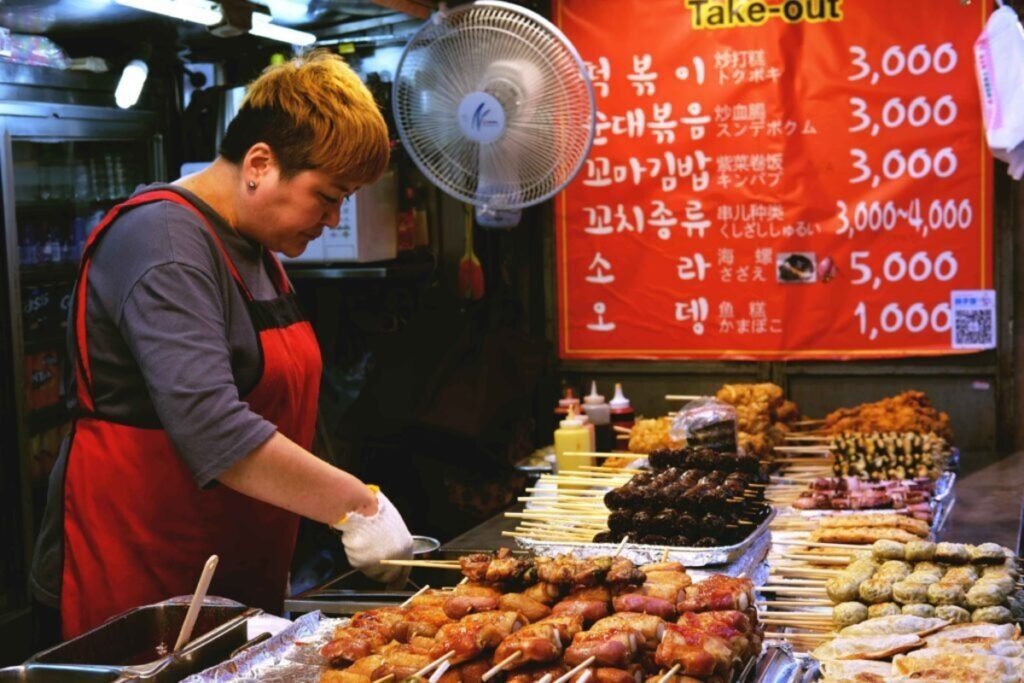
What it is: Isaw (pronounced ee-saw) consists of skewered, marinated intestines of chicken or pork. Vendors grill them over hot charcoal until charred and deeply smoky.
Why it’s iconic: According to Filipino street‑food tradition, isaw has long served as the definitive pulutan — a snack enjoyed alongside cold beer at the end of a working day. Local vendors commonly prepare the intestines by first cleaning them thoroughly. Next, they marinate them in soy sauce, garlic, and calamansi lime. Finally, they fold them accordion‑style onto bamboo skewers before grilling.
What makes it unique in 2026: A new generation of vendors now introduces exciting flavour upgrades. For instance, chilli‑garlic glazes, smoky chipotle marinades, and teriyaki‑style finishes are all emerging. Crucially, however, these innovations do not abandon the dish’s gritty street‑food roots.
Where to find it: Look for isaw in the university belts of Quezon City, along the streets near Luneta Park in Manila, and in night markets throughout the Visayas.
Flavour insight: Above all, never skip the dipping sauce — a vinegar‑based spiced sawsawan. Simply ask for matamis (sweet) or maanghang (spicy) to customise your experience.
2. Tokneneng — Deep‑Fried Hard‑Boiled Chicken Eggs
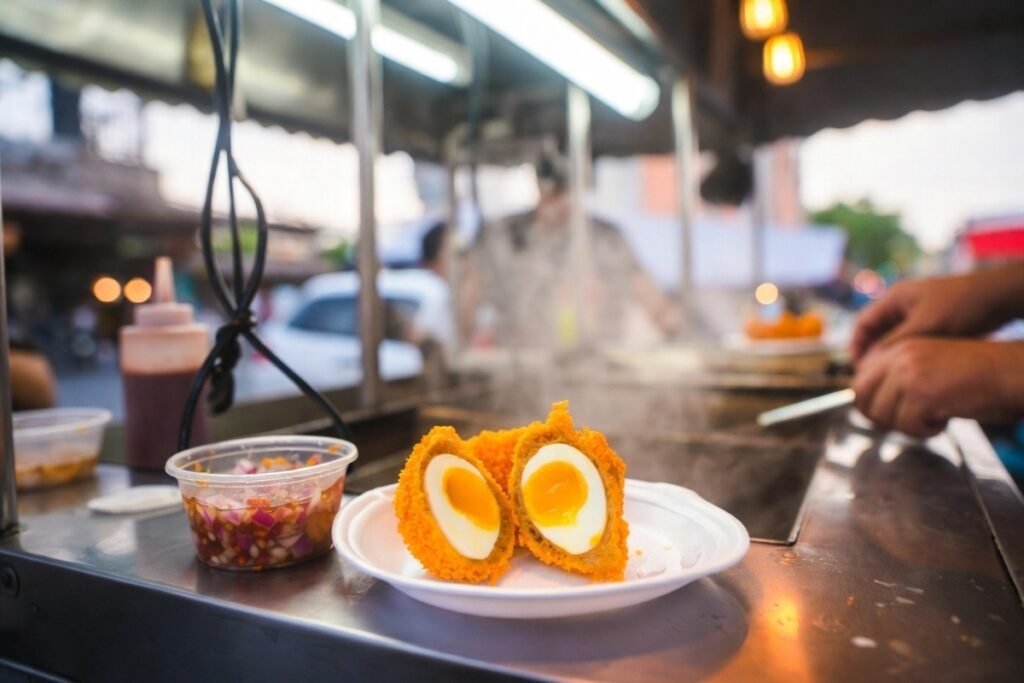
What it is: Tokneneng are whole hard‑boiled chicken eggs that vendors coat in a vivid orange flour batter and deep‑fry to a crispy finish. Notably, the striking colour comes from annatto powder (achuete), a natural dye from the achiote tree — a direct legacy of pre‑colonial Filipino cooking.
Why it’s iconic: Tokneneng rank among the most ubiquitous items in the Philippine street‑food scene. In fact, vendors and food writers alike consider them one of the definitive merienda (afternoon snack) items. The crunchy, savoury batter contrasts beautifully with the soft egg inside, and each bite delivers a minor textural revelation.
Where to find it: Head to Manila’s Quiapo district, Binondo (the world’s oldest Chinatown), or the provincial town squares across Luzon.
Cultural note: Filipinos typically pair tokneneng with spiced vinegar spiked with chopped shallots, chillies, and garlic. This sharp dip cuts perfectly through the richness of the batter.
3. Kwek‑Kwek — Battered Quail Eggs
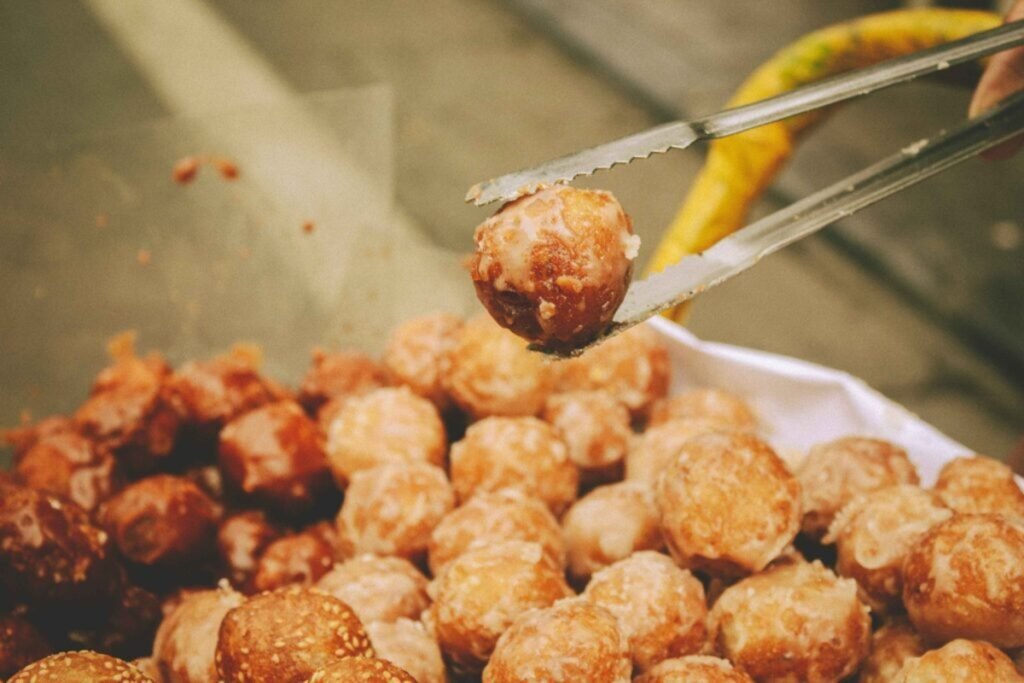
What it is: Kwek‑kwek is the smaller sibling of tokneneng. Instead of chicken eggs, vendors use quail eggs. The same vibrant orange annatto batter applies, and the bite‑sized format makes kwek‑kwek even more snackable.
Why it’s iconic: In Manila street food culture, kwek‑kwek carts are as common as convenience stores. Local vendors commonly prepare large batches each afternoon, catering specifically to the after‑school and post‑office crowd who want something cheap, filling, and flavourful.
2026 update: Artisan vendors across BGC (Bonifacio Global City) and Poblacion in Makati now serve elevated kwek‑kwek alongside truffle aioli, sriracha mayo, and kimchi dips. Clearly, this reflects the Filipino‑fusion food movement that continues to gain momentum in 2026.
4. Fish Balls — The Quintessential Manila Street Food
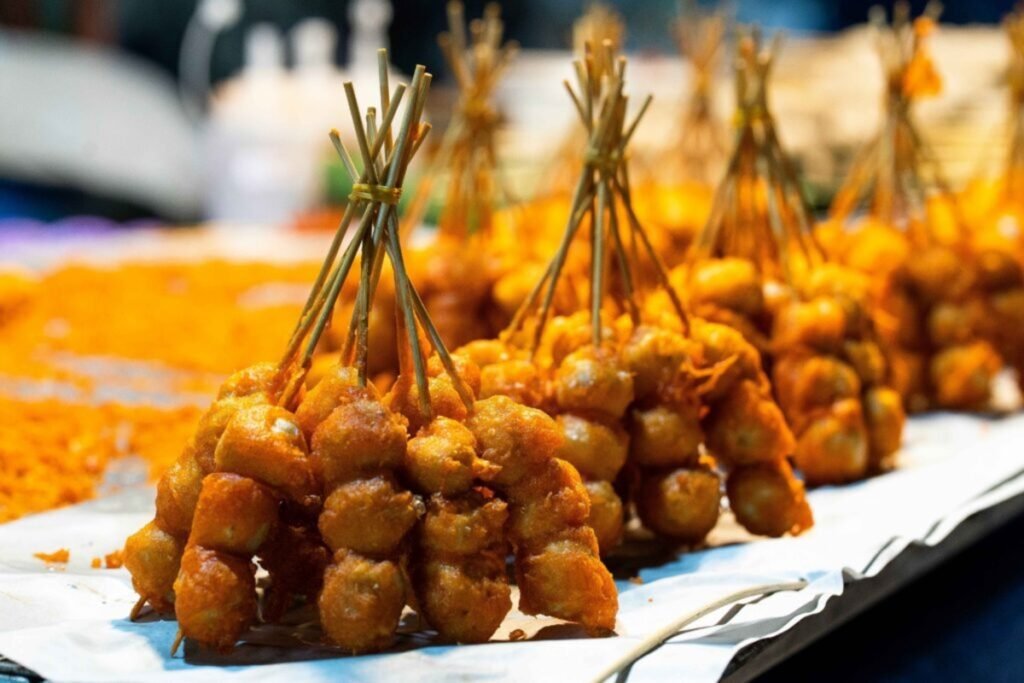
What it is: Filipino fish balls bear little resemblance to their East Asian counterparts. In contrast, these are small, flat, slightly chewy discs that vendors make from fish paste, deep‑fry in a shared vat of oil, and serve on bamboo skewers.
Why it’s iconic: According to Filipino street‑food tradition, fish balls have been Manila’s most democratic snack for decades — affordable, filling, and available on virtually every corner. Moreover, they rank among the most recognisable symbols of working‑class Manila food culture.
The sauce ritual: Choosing your sauce is almost ceremonial. Options typically include a thick sweet sauce (matamis), a spicy sauce (maanghang), and a sweet‑sour sauce (maasim). Locals dip, swirl, and repeat.
Where to find it: You will find fish balls everywhere in Metro Manila — especially around LRT and MRT stations, public markets, and school gates throughout the country.
5. Taho — Silken Tofu with Brown Sugar Syrup and Tapioca Pearls
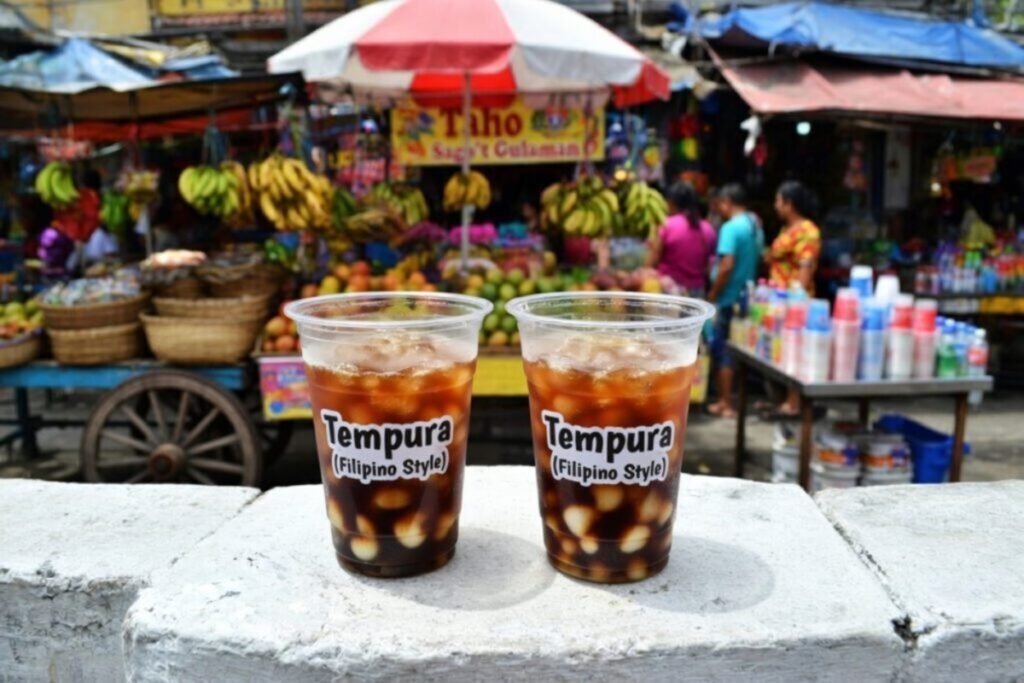
What it is: Taho is a warm, comforting snack that vendors make from ultra‑soft silken tofu. They sweeten it with arnibal (a brown sugar and vanilla syrup) and finish it with chewy sago pearls. Vendors then serve the combination warm, straight from the pail.
Why it’s iconic: The magtataho — a roving vendor who carries two large aluminium vats balanced on a shoulder pole — is one of the most enduring images of Filipino morning culture. According to Filipino culinary historians, the dish originated with Chinese immigrants who brought tofu‑based desserts to the archipelago centuries ago.
2026 update: Specialty taho variants are currently trending across the Philippines. Popular options now include ube taho (purple yam) and matcha taho. In particular, Baguio has become famous for strawberry taho, using the highland city’s own fresh fruit.
Where to find it: Listen for the magtataho on residential streets in the early morning. Alternatively, visit Baguio’s public market or weekend food markets in major cities.
6. Filipino‑Style Tempura — A Localised Classic
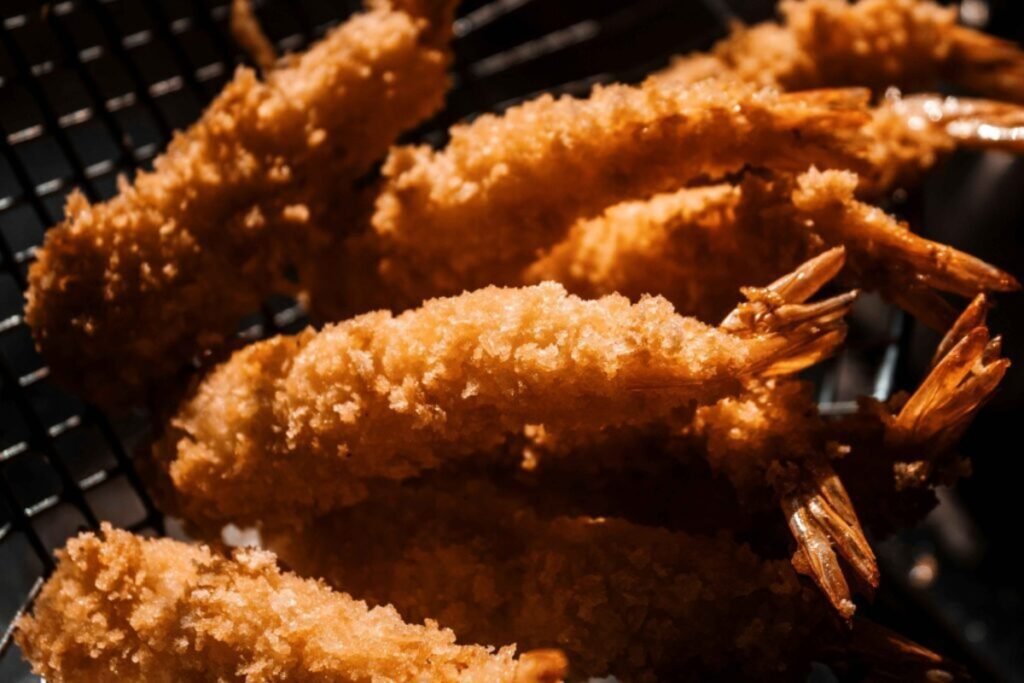
What it is: Filipino‑style tempura differs sharply from its Japanese inspiration. Rather than using a light, delicate batter, vendors coat squid or fish fillets in a thicker, spicier mixture and deep‑fry them until golden. Vendors sell this as a street snack rather than a restaurant dish.
Why it’s unique: The Filipino adaptation strips away Japanese restraint and adds bold seasoning to both the batter and the dipping sauce. Specifically, the sauce incorporates chilli, garlic, and a sharp vinegar base that makes every bite pop.
Where to find it: Cebu’s Colon Street, Davao night markets, and food stalls near provincial bus terminals are all particularly well‑known for this version.
7. Banana Cue — Caramelised Banana Skewers
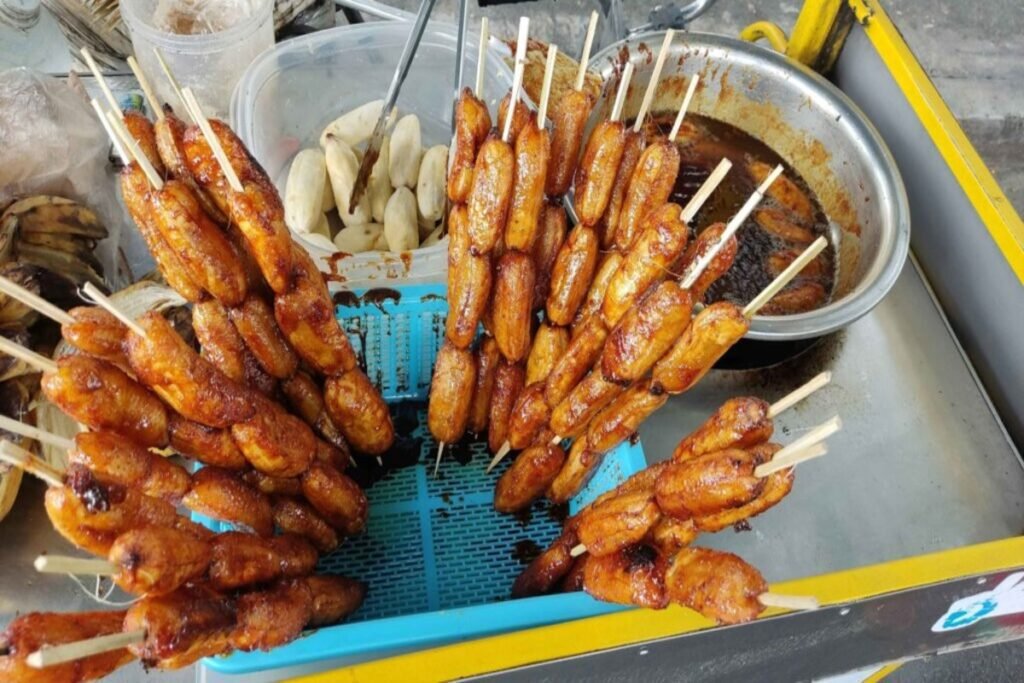
What it is: Banana cue (banana‑Q) features saba bananas — a short, starchy variety native to the Philippines. Vendors skewer them, coat them in brown sugar, and deep‑fry them until the sugar caramelises into a crackling amber shell.
Why it’s iconic: Banana cue is one of the most beloved merienda items in the Philippines. Local vendors commonly set up stalls outside elementary schools, churches, and wet markets, timing their trade precisely to coincide with mid‑morning and mid‑afternoon hunger.
Flavour insight: The saba banana is denser and less sweet than the Cavendish variety most Western travellers know. However, deep‑frying with brown sugar completely transforms its starchy flesh into something deeply caramelised and satisfying.
8. Sorbetes — Filipino “Dirty Ice Cream”
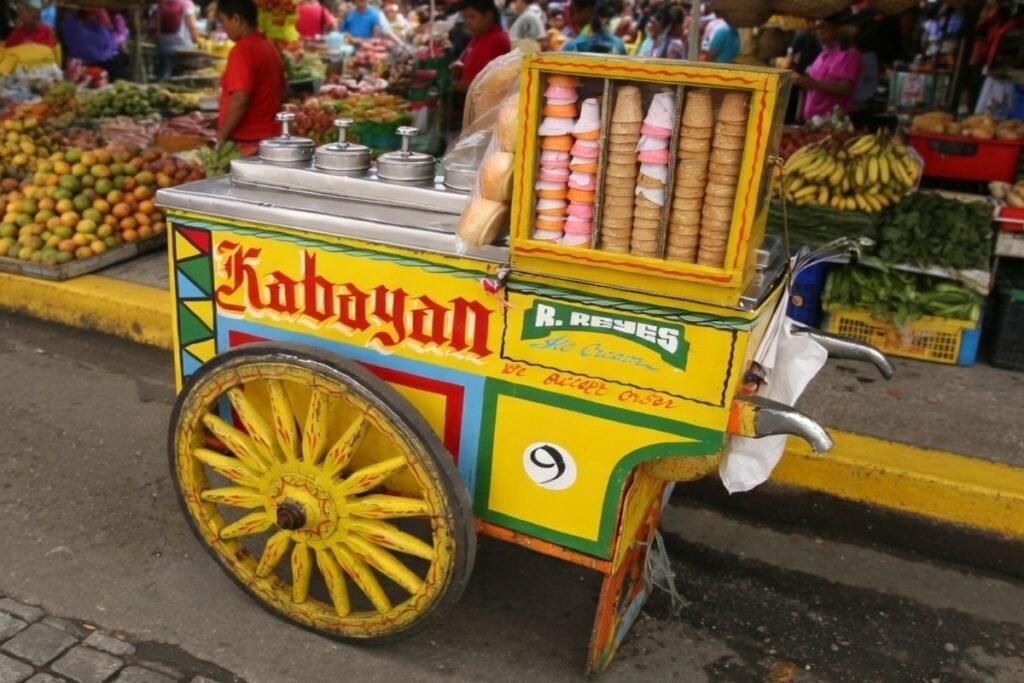
What it is: Sorbetes is the Philippines’ beloved street ice cream, sold from colourful wooden carts by vendors called sorbeteros. Traditionally, sorbeteros make it from carabao (water buffalo) milk, coconut milk, or a blend of both. Consequently, the result is denser and less sweet than commercial ice cream.
Why it’s called “dirty”: The playful nickname refers to its informal, unpretentious street origins — a counterpoint to the “clean” ice cream sold in air‑conditioned parlours. Importantly, there is nothing unhygienic about it.
Classic flavours: Ube (purple yam), mango, cheese, and langka (jackfruit) represent the quintessential Filipino options. In 2026, however, sorbeteros in Iloilo and Cebu are experimenting further. New flavours now include tablea chocolate, calamansi, and salted egg.
Where to find it: You will find sorbetes in plazas, parks, church yards, and school perimeters throughout the archipelago.
9. Pork BBQ Skewers — Smoke, Sweetness, and Soy
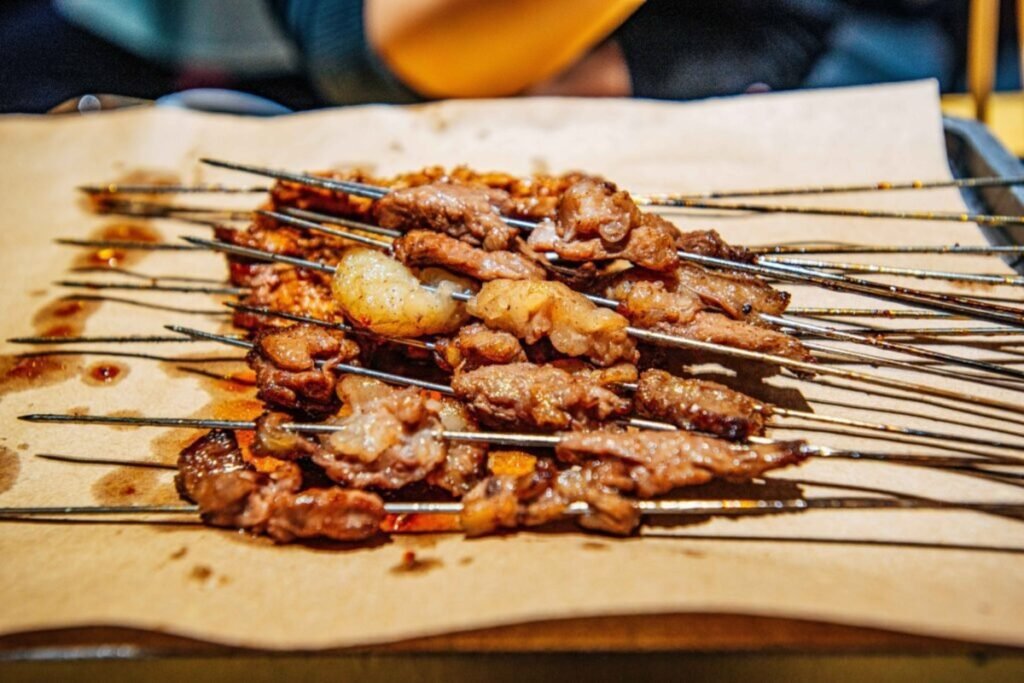
What it is: Filipino pork BBQ skewers feature pork that vendors marinate in a sweet‑savoury sauce of soy sauce, banana ketchup, calamansi, garlic, and brown sugar. They then grill the skewers over charcoal to achieve a lightly charred, sticky finish.
Why it’s iconic: The BBQ stall sits at the centre of Filipino social life. According to Filipino street‑food tradition, pork BBQ skewers rarely appear alone. Instead, people share them alongside rice wrapped in banana leaf (puso in Cebu) and wash them down with cold softdrinks or ice‑cold beer.
2026 note: Specialty BBQ markets continue to draw both locals and tourists in 2026. In particular, Cebu City’s Larsian BBQ area and Manila’s Pandacan district offer the full smoky, communal experience that makes this dish so special.
10. Halo‑Halo — The Ultimate Filipino Street Dessert
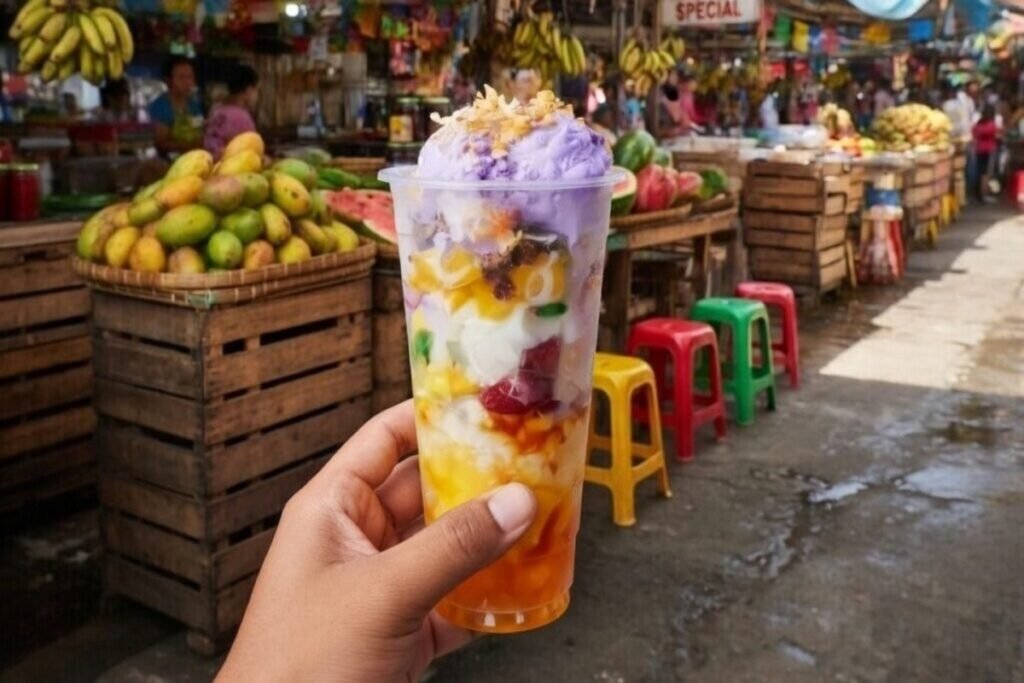
What it is: Halo‑halo (literally “mix‑mix”) is the Philippines’ most celebrated dessert — a towering glass of shaved ice that vendors load with sweet toppings. Typical inclusions are sweetened kidney beans, coconut strips, nata de coco, leche flan, and ube halaya. Finally, a scoop of ice cream crowns the whole creation.
Why it’s iconic: Halo‑halo is not merely a dessert — it is a cultural statement. The dish’s chaotic generosity reflects the Filipino spirit of pagdadamayan — communal sharing and abundance. According to Filipino culinary scholars, it draws from both Spanish colonial sweets and Japanese kakigori (shaved ice) traditions that arrived during the early 20th century.
2026 update: Premium halo‑halo has become a major food tourism draw this year. Restaurants in Manila, Cebu, and Pampanga now compete fiercely for the title of the country’s best version. While Razon’s of Guagua and Chowking remain national benchmarks, boutique dessert bars in BGC are deconstructing the classic for a new generation.
Where to find it: You will find halo‑halo everywhere — from roadside stalls to dedicated restaurants. That said, the summer months (March to May) offer the peak experience.
Where to Stay for a Smooth Street‑Food Trip in the Philippines
Choosing the right neighbourhood is half the battle when planning a street‑food‑focused trip. Fortunately, TripAdvisor remains one of the most reliable platforms for booking hotels in the Philippines in 2026. It offers verified guest reviews, transparent pricing, and neighbourhood‑level search filters, so travellers can position themselves close to the best food districts.
For first‑time visitors, TripAdvisor’s Philippines hotel listings are particularly useful for:
- Comparing price tiers across budget guesthouses, mid‑range boutique hotels, and luxury resorts.
- Reading neighbourhood guides to check whether a hotel sits within walking distance of street‑food hubs like Binondo, Quiapo, or Colon Street.
- Checking recent reviews from travellers who visited in the past 30–90 days — critical for assessing current cleanliness, safety, and service standards.
- Filtering by proximity to transport links such as MRT stations in Metro Manila, making it far easier to reach multiple food districts in a single day.
Pro tip: For street‑food immersion in Manila, consider staying in Malate, Ermita, or near Binondo. Similarly, in Cebu, the Colon Street area and IT Park neighbourhood offer excellent proximity to local food stalls.
| Hotel & Location | Best For | Unique Feature | Verified Rating | Action |
|---|---|---|---|---|
|
Fili Hotel at NUSTAR Resort Cebu Tower 1, NUSTAR Resort and Casino, Kawit Island, South Road Properties, Cebu City, 6000 Philippines |
Luxury & Hospitality | The first authentic 5-star Filipino hospitality brand and integrated resort in Cebu. | 4.8/5 | BOOK NOW |
|
Makati Diamond Residences 118 Legazpi Street, Legazpi Village, Makati City, 1229 Metro Manila, Philippines |
Families & Long Stays | Serviced-residence style rooms with fully equipped kitchenettes and washer-dryers. | 4.8/5 | BOOK NOW |
|
Solaire Resort Entertainment City 1 Aseana Avenue, Entertainment City, Parañaque, 1701 Metro Manila, Philippines |
High-End Entertainment | First integrated destination resort in Manila’s Entertainment City with a lyric theatre. | 4.6/5 | BOOK NOW |
|
New Coast Hotel Manila 1588 Pedro Gil corner M.H. Del Pilar Street, Malate, Manila, 1004 Metro Manila, Philippines |
Central City Stays | Stunning Manila Bay views and an on-site casino. | 4.5/5 | BOOK NOW |
Staying Connected in the Philippines — 2026 Connectivity Guide
Why eSIMs Are the Smart Choice for Travellers in 2026
In 2026, most international travellers arriving in the Philippines choose an eSIM over a physical SIM card. The reasons are straightforward: no queuing at telco booths, instant activation before departure, and the freedom to switch plans mid‑trip if needed. As a result, eSIMs have become the default choice for savvy travellers.
Network Coverage Across the Philippines
Globe Telecom and DITO Telecommunity — the two major Philippine telecoms — have significantly expanded their 4G LTE and 5G networks since 2023. Metro Manila, Cebu City, Davao City, and Iloilo City all now offer reliable high‑speed data. However, travellers venturing to remote islands and mountainous provinces should still expect patchy connectivity in places.
Holafly eSIM Philippines — A Convenient Option
For travellers who want hassle‑free connectivity, Holafly eSIM Philippines is a widely used option in 2026. Holafly offers unlimited data plans for the Philippines, and travellers can purchase and activate plans entirely online before departure. Furthermore, the eSIM works with most modern smartphones and connects to local networks immediately on arrival.
Practical connectivity tips for tourists:
- Activate your eSIM before boarding so you enjoy seamless connectivity upon landing at NAIA or Mactan‑Cebu International Airport.
- Download offline maps of your destination cities before you fly — Google Maps offline mode works well as a backup in low‑signal areas.
- Use data‑light navigation in dense city centres, where network congestion can temporarily reduce signal strength.
- WhatsApp and Viber dominate messaging in the Philippines, so data access lets you communicate locally with ease.
Finally, search for “Holafly eSIM Philippines” before your trip to find the most current plan pricing and compatibility details directly from the provider.
Conclusion — Why Filipino Street Food Is Essential in 2026
Filipino street food is not a sidebar to the country’s culture — it is the culture. Every isaw skewer, every cup of taho, and every towering halo‑halo tells a story of migration, adaptation, and joy. In short, to eat on the streets of Manila, Cebu, or Davao is to participate in something deeply communal and irreducibly Filipino.
The best street foods in the Philippines in 2026 sit at a fascinating crossroads. Ancient flavours meet modern sensibilities, and regional traditions encounter global food trends. Moreover, street vendors continue to adapt their craft for a new generation of discerning local and international diners.
For travellers exploring Southeast Asia, the Philippines’ street‑food scene offers remarkable depth and diversity. The charcoal smoke of the BBQ stalls is intoxicating, the electric colour of a kwek‑kwek cart is impossible to resist, and a sorbetes scoop on a hot afternoon is pure, unfiltered nostalgia. Ultimately, no trip to the Philippines is complete without eating your way through its streets.
2026 is the year to go. Bring your appetite.
Essential Pre-Trip FAQs for the Philippines
Do travellers need a visa for the Philippines?
Visitors from several countries, including the United States and the United Kingdom, can usually enter the Philippines without a visa for stays of up to 30 days. Travellers must normally present a passport valid for at least six months beyond their departure date, along with proof of onward or return travel.
What is the Philippines eTravel registration?
The Philippines requires incoming travellers to complete the official eTravel registration before arrival. This free online form is used for border processing and health monitoring and should be submitted within 72 hours of your flight to the country. After registration, travellers receive a QR code that may be requested at immigration checkpoints.
What currency should I use in the Philippines?
The official currency is the Philippine Peso (PHP). While major cities accept credit and debit cards, many smaller islands, local markets, and transport providers operate mainly in cash. It is recommended to carry enough pesos when travelling outside large tourist areas, as ATMs may be limited in remote destinations.
Is the Philippines safe for tourists?
The Philippines is considered a welcoming destination for most travellers, especially in popular tourist regions. However, visitors should stay alert in crowded transport hubs, avoid displaying valuables, and use trusted transport services. Some areas of Mindanao may have travel advisories, so checking the latest government guidance before visiting is strongly advised.
What should I pack for a trip to the Philippines?
Lightweight clothing made from breathable fabrics is ideal for the tropical climate. Useful travel essentials include sunscreen, insect repellent, a reusable water bottle, waterproof bags for island tours, comfortable sandals, and a light jumper for heavily air-conditioned buses, ferries, or shopping centres.
Health and Safety Tips
Is tap water safe to drink in the Philippines?
Travellers are generally advised to avoid drinking tap water. Bottled, purified, or filtered water is the safest option throughout most parts of the country. Ice from reputable hotels and restaurants is usually safe, but caution is recommended at small roadside stalls.
Are vaccinations recommended before travelling?
It is best to check the latest travel health advice before departure. Commonly recommended vaccinations for the Philippines may include Hepatitis A, Hepatitis B, and Typhoid, depending on your travel plans and length of stay.
Are mosquitoes a problem in the Philippines?
Mosquito-borne illnesses such as dengue fever can occur in tropical regions of the Philippines. Travellers should apply insect repellent regularly, especially during evenings and after rainfall, and consider wearing long sleeves in high-risk areas.
What is the emergency number in the Philippines?
For emergencies, travellers can dial 911 for police, ambulance, and emergency medical assistance throughout the Philippines.
Practical Travel Information
How can I stay connected in the Philippines?
Buying a local SIM card is one of the easiest ways to access affordable mobile data during your trip. Major providers such as Globe Telecom and Smart Communications offer tourist SIM packages at airports and shopping centres. Portable Wi-Fi devices are also available for travellers visiting multiple islands.
What is the best way to get around?
Using reliable transport options is highly recommended. Many travellers use Grab for airport transfers and city journeys because fares are fixed and more secure than random street taxis. Domestic ferries and budget airlines are also widely used for island hopping.
What cultural etiquette should visitors know?
Filipino culture is known for its warmth and hospitality. Showing politeness, greeting elders respectfully, and using courteous language are appreciated throughout the country. Tipping is optional but commonly welcomed in hotels, restaurants, and tour services.
When is the best time to visit the Philippines?
The dry season, typically from December to May, is considered the best period for beach holidays and island hopping. The rainy season runs from June to November and can bring heavy rainfall and typhoons, so travel insurance is strongly recommended during these months.
Editorial & Accuracy Standards
- Expert Review:
Ammara Azmat,
Senior Travel Mobility Analyst (12+ years experience) - Status: Verified for accuracy against official 2026 service data and real-time traveller reports.
- Our Process: This content follows our Fact-Checking Policy.