
The Olive Oil Trail: Navigating Greece’s Authentic Taverna Culture in 2026
Sunset Weekly Disclosure: To help keep our guides free, this post contains affiliate links. If you click through and make a booking (such as hotels, flights, tours, or travel experiences), we may earn a commission at no extra cost to you. Sunset Weekly is an independent travel and lifestyle publication. While we may receive compensation from affiliate partners, this does not influence our editorial content, recommendations, or opinions. #ad
Quick Answer: Greek food rewards travellers who eat where locals eat and order what Greeks actually order. The cuisine centres on olive oil, fresh vegetables, grilled meat and fish, mezedes (small shared dishes), and excellent regional cheeses. Eating well costs little if you stay off the tourist promenades. The biggest mistake most visitors make is paying island prices for mainland-quality food.
Editorial note: This guide is written for travellers who want to eat honestly and practically across Greece. It covers mainland and island dining with equal attention to value, quality, and realistic expectations. No restaurants, tourism boards, or commercial food operators have contributed to or influenced this content. Pricing reflects 2025–2026 conditions.
Greece is one of the easier European countries to eat well in — provided you understand how the system works. The cuisine builds on a short list of genuinely excellent ingredients: olive oil, tomatoes, aubergine, lamb, goat cheese, pulses, fresh herbs, and fish from clean seas. What makes Greek food occasionally disappointing for visitors has nothing to do with the food itself. It comes down to location. A moussaka two streets back from the Acropolis and a moussaka on a Plaka tourist terrace use different kitchens, different standards, and entirely different pricing logic.
What Food Is Greece Known For?
Answer: Greece is known for souvlaki, gyros, moussaka, spanakopita, Greek salad, feta cheese, loukoumades, baklava, and the mezedes tradition. Regional specialities matter enormously — Cretan cuisine, Thessaloniki street food, and island fish tavernas each operate as distinct culinary cultures with their own dishes and character.
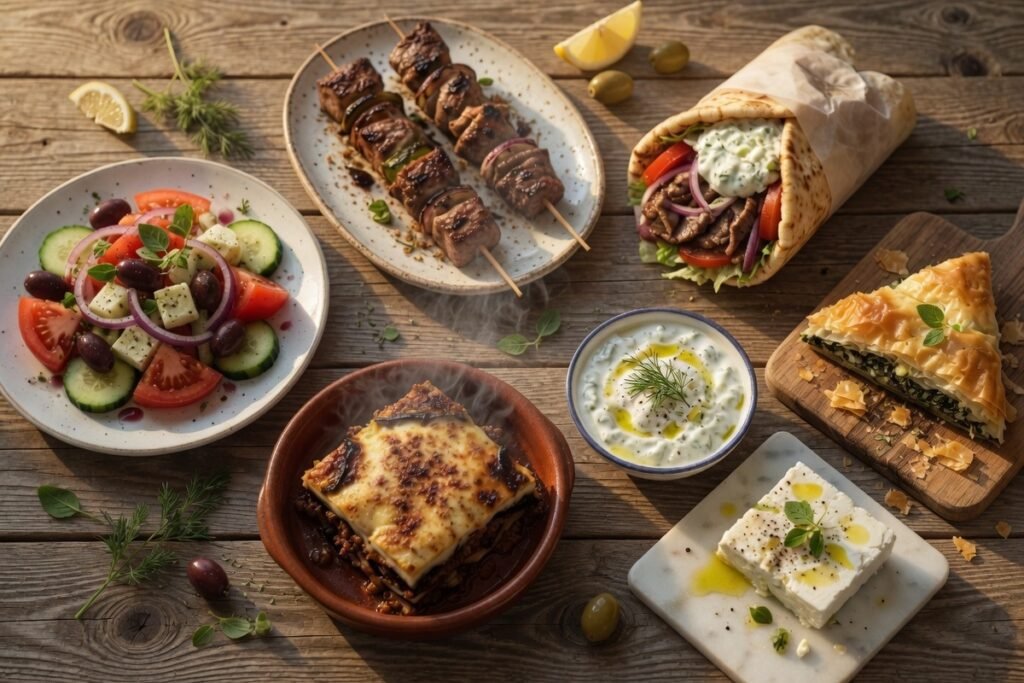
Greek cuisine draws on one of the Mediterranean’s oldest culinary traditions, but it is not a museum piece. The everyday Greek diet — yoghurt with honey, olive oil over everything, grilled fish in simple tavernas, slow-cooked lamb on Sundays — reflects a practical, ingredient-led approach to cooking that tourists often underestimate because it photographs modestly.
What makes Greece distinct from its neighbours is the role of olive oil. Greece produces some of the world’s finest extra virgin olive oil, primarily from the Peloponnese and Crete, and cooks use it in quantities that would alarm a northern European chef. It is not a finishing drizzle here; it is the base, the medium, and often the sauce.
Regional variation is also sharper than most visitors expect. Cretan food differs meaningfully from Thessaloniki food, which differs from Cycladic island cooking, which differs from the everyday Athenian taverna. Treating “Greek food” as a single category misses most of what makes the cuisine interesting.
Signature Greek Dishes Every Traveller Should Know
Answer: The essential Greek dishes to order include souvlaki, moussaka, spanakopita, horiatiki (Greek salad), saganaki, loukoumades, and fresh grilled fish. Regional dishes such as Cretan dakos, Thessaloniki bougatsa, and Santorini fava deserve attention beyond the tourist standards.
Essential Dishes: A Quick-Reference Guide
| Dish | What It Is | Best Context to Order It |
|---|---|---|
| Souvlaki | Pork or chicken skewers, grilled; served on a plate or in pitta | Street-food stalls, souvladzidiko (souvlaki shop) |
| Gyros | Rotisserie pork or chicken in pitta with tzatziki, tomato, onion, and chips | Fast-food format; order at the counter |
| Moussaka | Layered aubergine, minced meat, and béchamel sauce, baked | Tavernas; avoid pre-made versions sitting under heat lamps |
| Spanakopita | Spinach and feta in filo pastry | Bakeries, kafeneions, street stalls |
| Horiatiki | Village salad: tomatoes, cucumber, olives, peppers, red onion, feta block on top | Any taverna; best in summer with ripe tomatoes |
| Saganaki | Pan-fried hard cheese, usually kefalotiri or graviera | As a mezedes starter |
| Fava | Yellow split pea purée with olive oil and capers; Santorini’s most distinct dish | Fish tavernas, tavernas on the Cyclades |
| Dakos | Cretan rusks with crushed tomato, mizithra cheese, and olive oil | Crete only; bakeries, restaurants |
| Loukoumades | Honey-soaked fried dough balls with sesame or cinnamon | Street stalls, dedicated loukoumades shops |
| Baklava | Layered filo with nuts and honey syrup | Zacharoplasteia (patisseries); Turkish-influenced versions in northern Greece |
| Pastitsio | Baked pasta with minced meat and béchamel | Traditional tavernas; home cooking |
| Kleftiko | Slow-cooked lamb sealed in parchment with lemon and herbs | Village tavernas; Sunday lunch |
| Bougatsa | Semolina custard or minced meat in filo; Thessaloniki’s signature breakfast | Thessaloniki only; dedicated bougatsa shops in the morning |
| Galaktoboureko | Semolina custard in filo with syrup | Zacharoplasteia; pastry shops |
Understanding the Greek Mezedes Tradition
Answer: Mezedes (singular: meze) in Greece are small dishes the kitchen brings to share across the table, functioning as either a prelude to a main course or a complete meal in themselves. Unlike the Cypriot meze, Greek mezedes are usually ordered individually rather than arriving as a fixed progression. Ordering four to six dishes for two people is the standard approach.
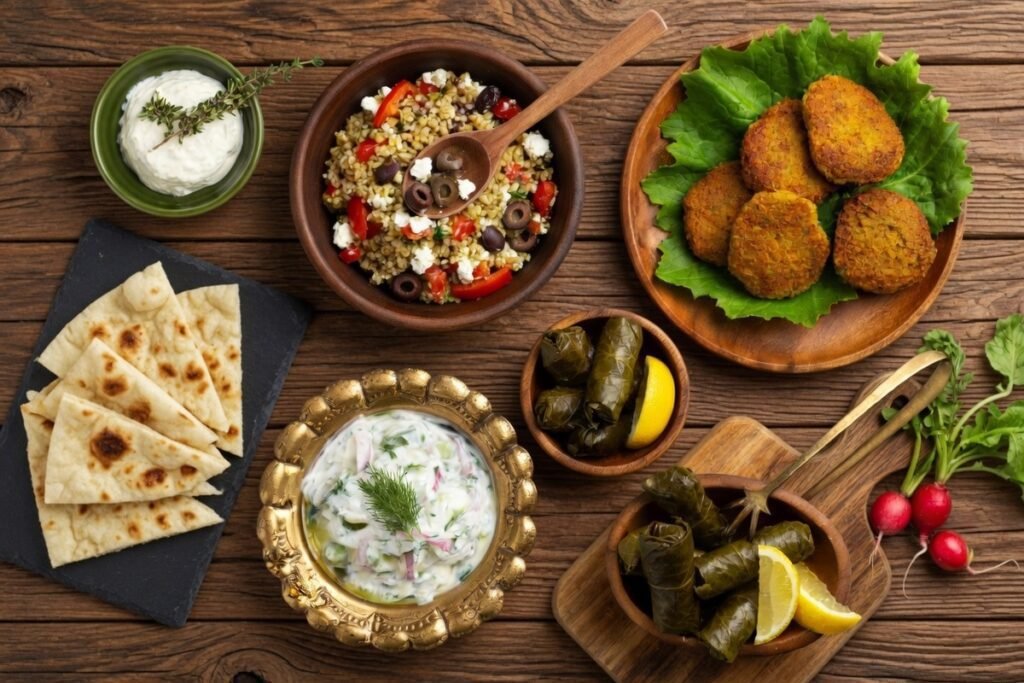
The mezedes format rewards group dining and unhurried evenings. A typical mezedes spread at a good Athens or Thessaloniki restaurant might include tzatziki, taramasalata, saganaki, fried courgette, stuffed vine leaves (dolmades), grilled octopus, and a plate of fresh cheese — ordered gradually rather than arriving all at once.
In fish tavernas (psarotavernes), mezedes tend to centre on small seafood plates: grilled sardines, fried calamari, whitebait, marinated anchovies, and grilled octopus. These precede the main fish, which the kitchen usually displays in a chiller cabinet for diners to select by eye and weight.
What to know before ordering mezedes:
- Bread arrives automatically at most tavernas and restaurants usually charge for it (see the bread charge note in the etiquette section)
- Greek tavernas bring mezedes as they finish cooking them, not simultaneously — this is normal
- Sharing across the table is the expected format; ordering for yourself alone is perfectly fine but less in the spirit of the tradition
- Dips (tzatziki, taramasalata, melitzanosalata) function as both food and bread sauce; order at least one
Where Do Locals Actually Eat in Greece?
Answer: Locals eat in neighbourhood tavernas, psarotavernes (fish restaurants), souvlaki shops, ouzeries (ouzo bars with food), kafeneions (coffee houses), and zacharoplasteia (patisseries). They avoid harbour-front restaurants in tourist areas, Plaka in Athens, and the caldera-view restaurants of Santorini — all of which charge significantly more for comparable or lower quality.
Athens
Athens has a large, serious restaurant culture that most short-stay tourists never reach because it exists in neighbourhoods away from the Acropolis tourist belt.
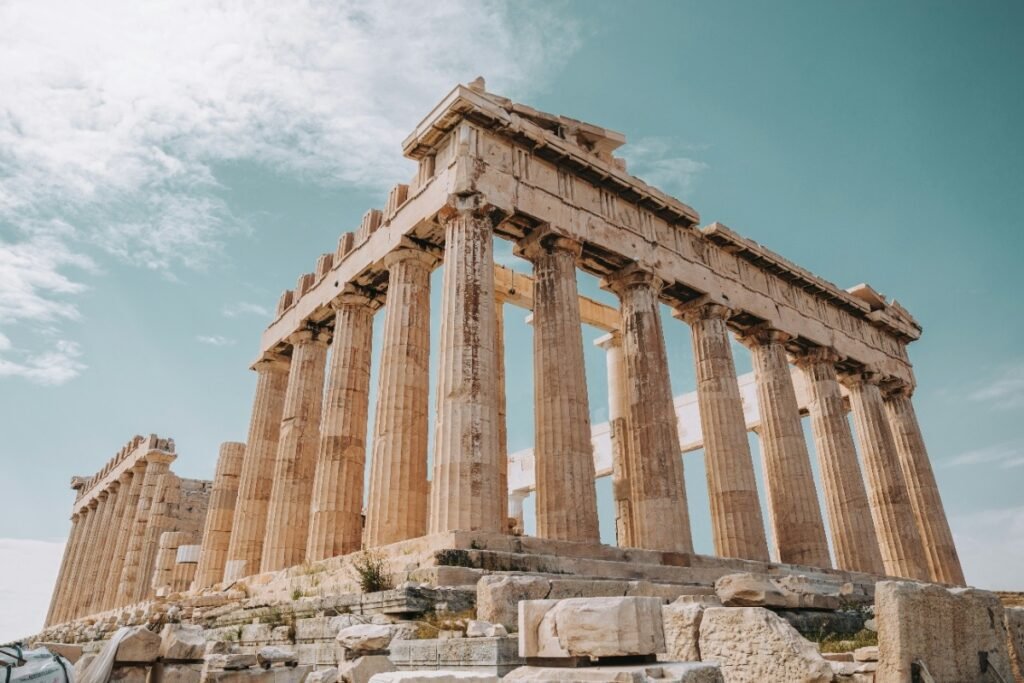
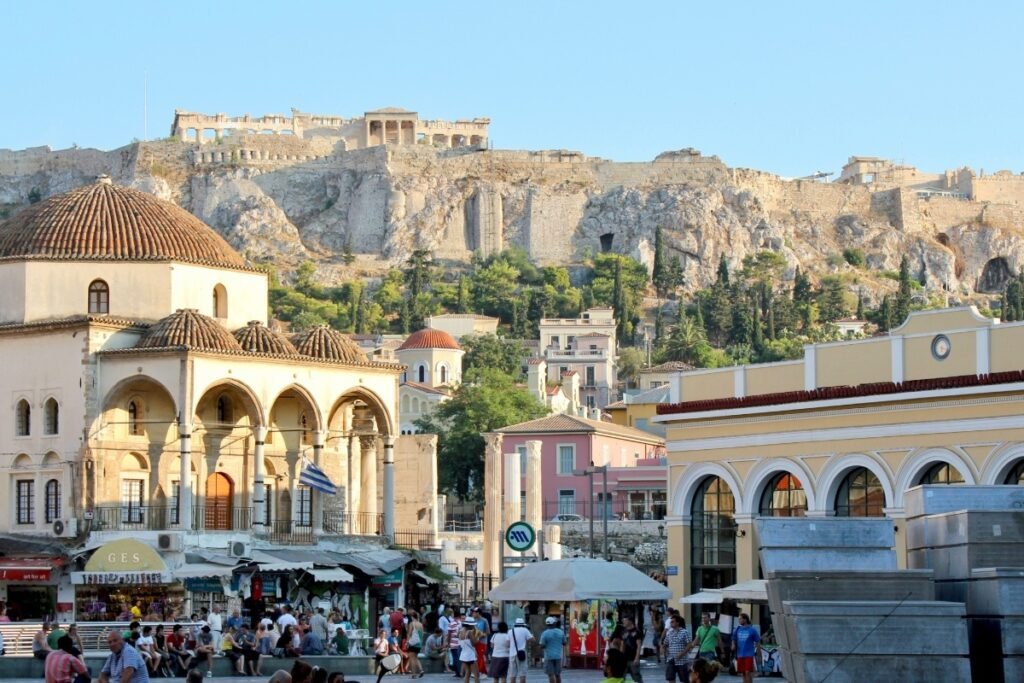
Monastiraki and Psiri draw a mix of locals and tourists, with quality varying considerably by street. The closer you sit to the Acropolis view, the more you pay for the view and the less attention the kitchen devotes to the food.
Exarchia — the anarchist-adjacent neighbourhood north of Syntagma — has some of Athens’ most honest neighbourhood tavernas. Prices run noticeably lower than tourist districts and the clientele is predominantly Athenian. It is slightly rough around the edges and entirely worth visiting for lunch.
Koukaki, just south of the Acropolis, attracts a younger local crowd and has developed a solid restaurant scene in the past decade — better for dinner than the Plaka area immediately to the north.
Kypseli, a working-class neighbourhood further north, remains largely tourist-free and rewards anyone willing to take the metro for a straightforward, inexpensive Greek lunch.
The Varvakios Agora (Athens Central Market) on Athinas Street is the city’s wholesale food market. Surrounding streets hold cheap, excellent lunch restaurants catering to market workers — open from early morning, often closed by early afternoon. Patsas (offal soup) from these kitchens is a local institution that most visitors neither seek nor miss.
Thessaloniki
Greece’s second city has a food culture that many Greeks — including Athenians — quietly consider superior to the capital’s. Thessaloniki’s mezedes tradition runs deeper and more varied than Athens’; the city’s proximity to the Balkans and its Ottoman food heritage show in everything from its pastry shops to its spice markets.

The Ladadika district (a former warehouse quarter near the port) concentrates restaurants and bars and attracts both locals and visitors. Quality varies; the most tourist-facing restaurants cluster near the waterfront, while the better-value options sit on the side streets.
Kapani Market and Modiano Market (the covered market in the city centre) provide the best concentrated food-shopping experience in northern Greece. Go in the morning.
Thessaloniki deserves its reputation for breakfast. Bougatsa shops — specialist bakeries selling semolina custard pastry — open early and operate at pace. The correct approach involves standing at the counter, ordering by weight, and eating before the city warms up.
Crete
Cretan cuisine is arguably the most distinct and developed regional food culture in Greece. The island’s olive oil, wild greens (horta), raki (the local spirit, called tsikoudia), sheep cheeses, and slow-cooked lamb dishes operate within a culinary tradition that treats simplicity as a virtue.
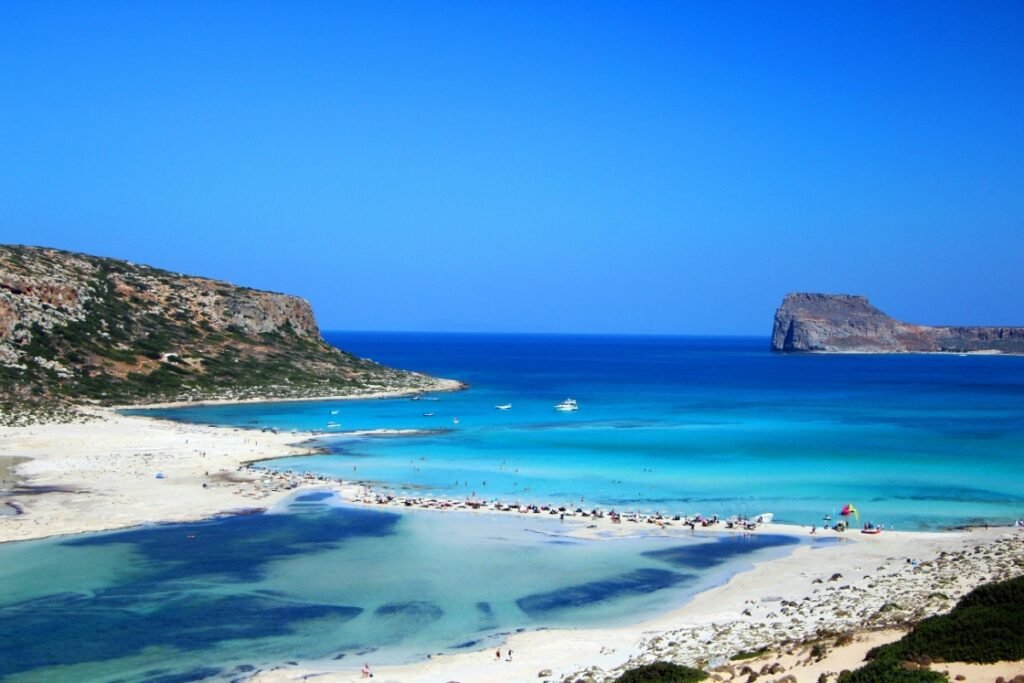
Heraklion has good food but also the tourist traps that come with being the island’s main port. The Lions Square area (Plateia Venizelou) draws tourists; the neighbourhood streets east and west of it draw locals.
Chania is often cited as Crete’s most food-forward city. The Splantzia neighbourhood and the streets around the covered market (near Plateia Venizelou) have tavernas that serve genuine Cretan food. The harbour restaurants are expensive and primarily tourist-facing.
Village tavernas across western Crete — particularly in the Apokoronas region and the Amari valley — offer the island’s best cooking, often in the form of slow-roasted lamb, dakos, and seasonal horta dressed with local oil.
The Islands: An Honest Assessment
Greek island dining operates under different economics from the mainland. On popular summer islands — Mykonos, Santorini, Paros, Rhodes — tourist demand and seasonal staffing drive prices significantly higher than the food quality justifies.
Mykonos is the most extreme example. Dining in Mykonos Town costs two to three times what comparable food costs in Athens, with no meaningful quality premium. The island does have good food if you seek out the quieter village of Ano Mera inland, but the harbour and beach-club dining ecosystem primarily sells lifestyle, not cuisine.
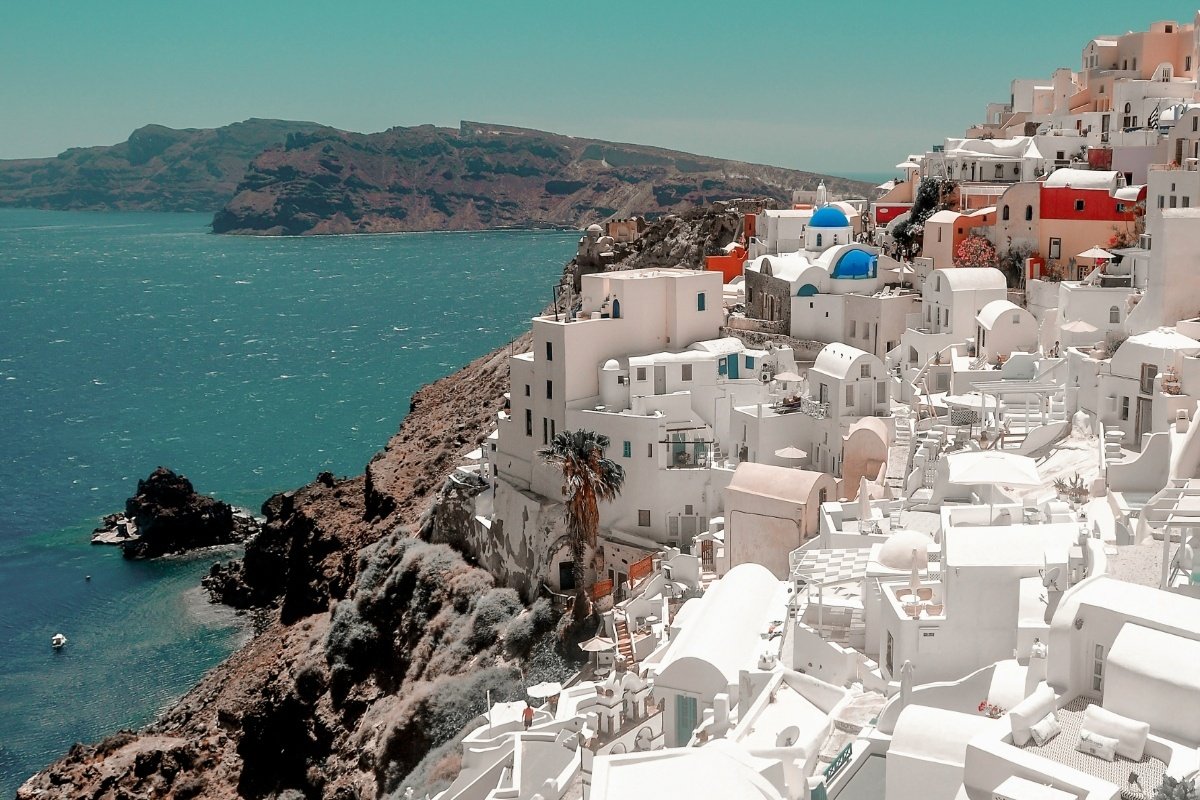
Santorini has the most beautiful dining backdrop in Greece and some of the most cynically priced food. The caldera-view restaurants on the ridge above Fira and Oia charge €20–€35 for dishes that cost €8–€12 anywhere on the mainland. Fava — the island’s genuinely distinctive yellow split pea purée — is the one dish worth seeking even at tourist-area prices.
Crete, Corfu, Lesvos, and Ikaria represent a different category of island food — genuine regional food cultures rather than tourist infrastructure dressed in a Greek flag. These islands reward travellers who treat food as a reason to visit rather than an afterthought.
How Expensive Is Food in Greece?
Answer: Greece is a mid-range European food destination. Budget travellers can eat adequately for €15–€20 per day; travellers eating properly at sit-down tavernas should budget €25–€45 per person per day including drinks. Island restaurants in high season (June–September) charge 50–100% more than comparable mainland spots, particularly on Mykonos and Santorini.
| Meal Type | Budget Range (per person) | Notes |
|---|---|---|
| Gyros or souvlaki wrap (street) | €2.50–€4.50 | Most reliable cheap meal in Greece |
| Bakery spanakopita or tiropita | €1.50–€3.00 | Morning staple |
| Taverna lunch (main + salad + water) | €10–€18 | Athens/mainland; islands add 30–60% |
| Mid-range dinner (à la carte) | €20–€35 | Starter, main, wine; good neighbourhood taverna |
| Full mezedes spread (sharing dinner) | €25–€45 | Per person with wine |
| Fish taverna dinner | €30–€60 | Depends heavily on fish selection |
| Tasting menu (modern Athenian restaurant) | €65–€120 | Fine dining; Athens and Thessaloniki |
| Greek coffee (kafeneion) | €1.50–€2.50 | |
| Freddo espresso or freddo cappuccino | €2.50–€4.50 | Cafés; tourist zones charge more |
| Local Mythos or Fix beer (bar) | €3.00–€5.00 | Bottle; cans cheaper in supermarkets |
| Glass of local wine (house) | €4.00–€8.00 | |
| Ouzo (restaurant measure) | €3.00–€5.00 | Often comes with small mezedes |
| Bottle of assyrtiko (Santorini wine) | €25–€60 | Restaurants; retail price lower |
Island premium in high season: On Mykonos and Santorini, add 60–100% to every category above. On mid-tier summer islands (Paros, Ios, Naxos), add 30–50%. Crete runs closer to mainland pricing outside of Heraklion and Chania harbour areas.
Street Food Reality in Greece
Answer: Greek street food centres on the gyros and souvlaki format, which the country executes at a very high level. Beyond these, bakery pastries — spanakopita, tiropita, bougatsa in Thessaloniki — form the backbone of the Greek street-food diet. Loukoumades shops and koulouri sellers add to the offer in cities. Street-food culture in the Southeast Asian sense does not exist here.
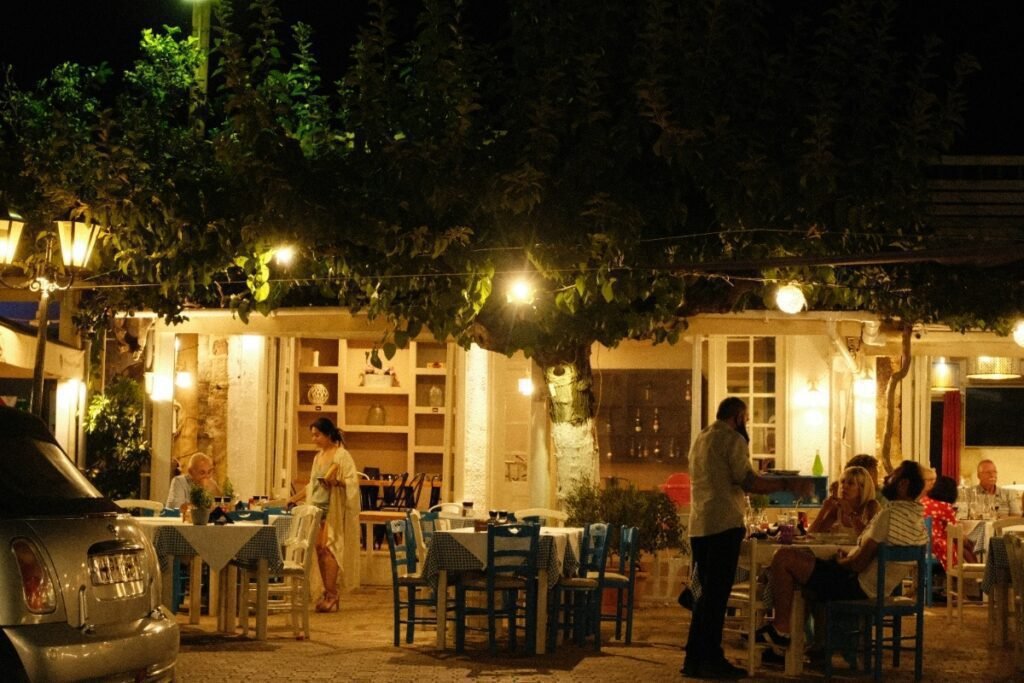
The souvladzidiko (souvlaki shop) is where Greek street-food culture actually lives. In Athens, Thessaloniki, and every provincial town, these counter-service operations produce souvlaki and gyros to a consistent standard. Prices remain among the most stable in the Greek food economy — a wrapped gyros in Athens costs roughly what it cost five years ago in real terms, kept low by fierce competition and volume.
What to order:
- Gyros me pita (“gyros in pitta”) — pork is more traditional than chicken; ask for “me ola” (with everything) for the full garnish of tzatziki, onion, tomato, and chips inside the wrap
- Souvlaki me pita — skewered meat in pitta; more delicate than gyros
- Kalamaki — the skewer itself, ordered as a plate rather than wrapped; standard at sit-down souvlaki restaurants
- Koulouri — sesame-crusted bread rings sold by street vendors early morning; a standard Athens breakfast
Loukoumades in Greece go beyond the basic honey-and-sesame version. Dedicated loukoumades shops in Athens — particularly around Monastiraki — serve them with various toppings. The plain version with thyme honey remains the best.
Bakeries (fournos): Every Greek neighbourhood has one. They open early, produce fresh spanakopita, tiropita, and cheese-filled pastries through the morning, and close or wind down by early afternoon. A warm spanakopita from a neighbourhood bakery at 09:00 is one of the more satisfying cheap meals in Greece.
Local Drinks: Coffee, Wine, Ouzo, and Tsipouro
Answer: Greece has a sophisticated coffee culture built around ellinikos kafes (Greek coffee), frappe, freddo espresso, and freddo cappuccino — all consumed at a pace that would alarm a northern European barista. The country produces excellent wines from indigenous grape varieties. Ouzo and tsipouro are the key spirits, both served with small food accompaniments in traditional settings.
Coffee Culture
Greece takes coffee seriously in a way that surprises many visitors. The country consumes coffee at high rates, spends considerable time in cafés, and approaches the morning drink with real cultural investment.

Ellinikos kafes (Greek coffee, equivalent to Cypriot and Turkish coffee) — grounds brewed in a small pot (briki) and served unfiltered in a small cup. Order sketos (no sugar), metrios (medium), or glykos (sweet). Let the grounds settle. It tastes nothing like filter coffee and everything like something very old and very good.
Frappe — cold instant coffee shaken with water and served over ice — originated in Thessaloniki in 1957 and remains a Greek institution. It looks unpromising. It tastes exactly right on a hot afternoon.
Freddo espresso and freddo cappuccino — cold espresso-based drinks that Greece developed before the rest of Europe caught up with cold coffee — now dominate café culture among younger Greeks. Both involve properly extracted espresso chilled over ice, which makes them significantly better than the frappuccino category they superficially resemble.
The kafeneion (traditional coffee house) operates on different logic from the café. It is slower, quieter, and primarily male-dominated in villages and small towns. Coffee arrives with a glass of cold water. Nobody rushes you.
Wine
Greece produces some of the most interesting wines in Europe from indigenous grape varieties that few outside the wine trade can name.
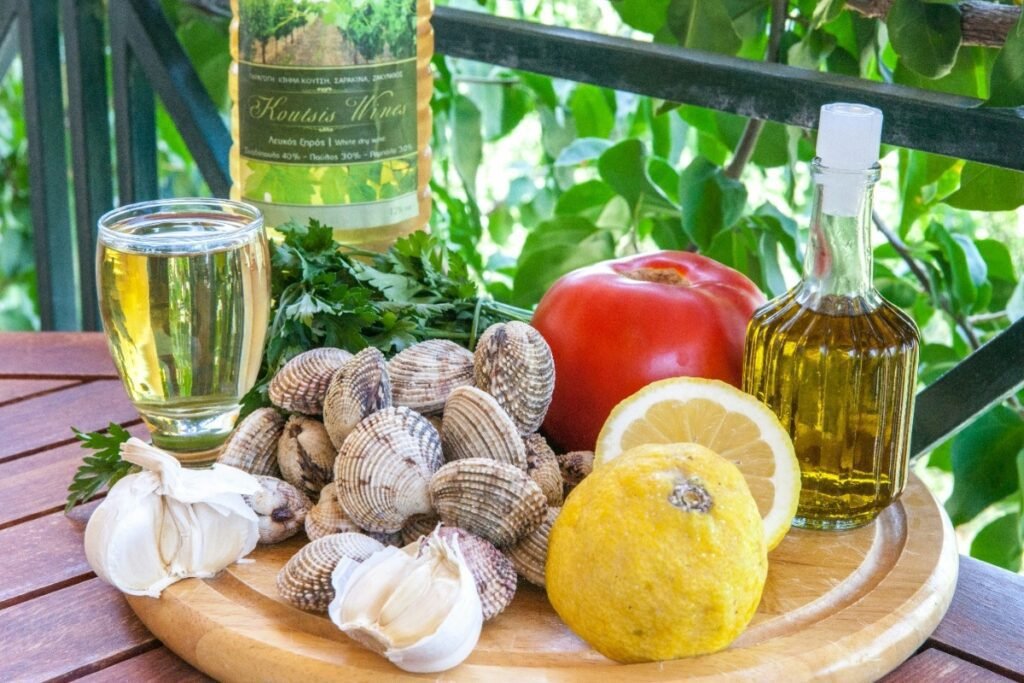
Assyrtiko from Santorini — a dry, mineral, high-acid white wine grown in volcanic soil — has earned genuine international recognition. On the island it is expensive; buy it in Athens wine shops to understand the quality at a fair price.
Xinomavro from Naoussa in northern Greece is Greece’s most serious red grape: tannic, aromatic, and age-worthy. It lacks the international marketing of Barolo, which it occasionally resembles, and accordingly costs a fraction of the price.
Agiorgitiko from Nemea in the Peloponnese produces softer, more approachable reds. It appears on most taverna wine lists and represents reliable everyday drinking.
Moschofilero from Mantineia — a pale, aromatic white — and Malagousia — a fuller, floral white revived from near-extinction — round out a wine list that rewards exploration well beyond the house wine category.
Retsina — the pine-resin-flavoured wine that defined Greek wine’s bad reputation internationally — is worth trying once in Athens for historical context. Modern low-resin versions are considerably more approachable than the old formula.
Ouzo, Tsipouro, and Mastiha
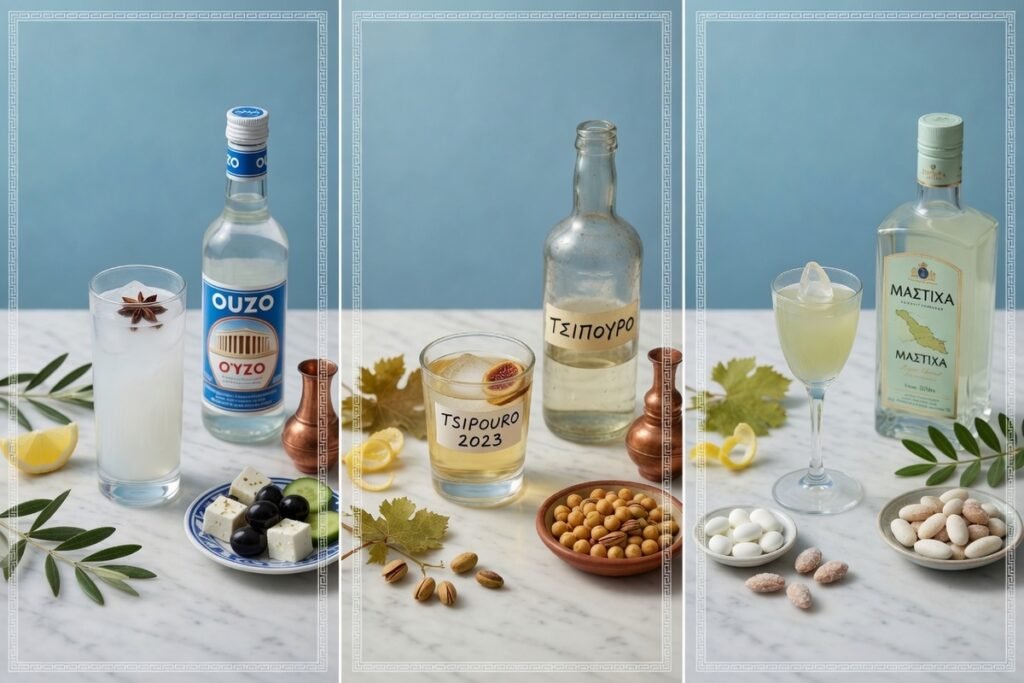
Ouzo is the national aperitif: an anise-flavoured spirit, typically 37–42% ABV, that you drink with ice and water (which turns it milky white), alongside small mezedes. The correct setting is an ouzerie on a summer afternoon, not a shot glass at a tourist bar. On Lesvos, where producers make the finest ouzo, this ritual achieves its best expression.
Tsipouro (called tsikoudia in Crete) is a grape marc spirit — clear, potent, and variable in quality. The best versions from Thessaly and Macedonia are genuinely excellent; the homemade versions served in village tavernas carry real character. Unlike ouzo, tsipouro has no anise flavour, which makes it a cleaner drink.
Mastiha liqueur from Chios — made from the resin of mastic trees — has a distinctive piney, slightly medicinal character. Greek people drink it either on ice as a digestif or in long mixed drinks. It is unusual enough to try at least once.
| Drink | Context | Typical Price |
|---|---|---|
| Ellinikos kafes | Kafeneion, morning | €1.50–€2.50 |
| Frappe | Cafés, beach bars | €2.50–€4.00 |
| Freddo espresso | Cafés | €3.00–€5.00 |
| Mythos/Fix beer | Bars, tavernas | €3.00–€5.00 |
| Ouzo (measure, with mezedes) | Ouzerie | €3.00–€5.00 |
| Tsipouro (measure) | Ouzerie, taverna | €3.00–€5.00 |
| Assyrtiko (glass) | Wine restaurant | €6.00–€14.00 |
| House wine (glass) | Taverna | €4.00–€7.00 |
| Mastiha liqueur | Restaurant, bar | €5.00–€9.00 |
| Carafe of house wine (500ml) | Taverna | €8.00–€15.00 |
What Should Tourists Avoid?
Answer: Avoid restaurants immediately on tourist promenades and harbour fronts in Athens (Plaka), Santorini (caldera ridge), Mykonos Town, and Rhodes Old Town. These charge substantially more for food that reflects no particular tradition. Avoid ordering moussaka from a display that shows it pre-made and sitting under a heat lamp — it was almost certainly not made that day.
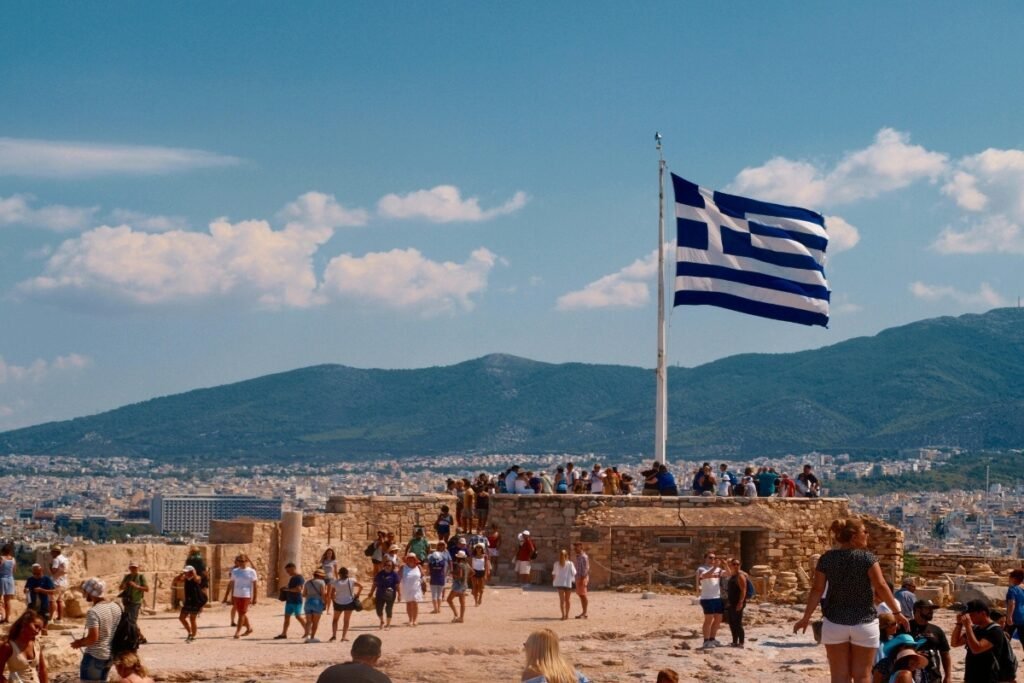
Athens and Island Tourist Traps
- The Plaka tourist belt, Athens: Plaka — the old neighbourhood below the Acropolis — serves food that is Greek in name and largely indifferent in quality. Every restaurant there understands that it sits between two million tourists and the most famous monument in Europe. Walk north towards Monastiraki or south towards Koukaki for meaningfully better food at lower prices.
- Caldera-view restaurants, Santorini: The views from Oia and Fira are extraordinary. The food at restaurants that charge €25–€35 for a main course to access those views is not extraordinary. Adequate, occasionally good, and always overpriced — if you want the view, order a drink. If you want a proper meal, walk away from the ridge.
- Harbour-front fish in tourist ports: Fresh fish tavernas in active fishing villages are excellent; harbour-front fish restaurants in major tourist ports (Heraklion, Kos Town, Corfu Town’s tourist strip) operate on different logic. Ask where the fish comes from before ordering — frozen fish at fresh-fish prices is common in high season.
Signs of a Tourist-Facing Kitchen
- Pre-made moussaka under a heat lamp: This is the single most reliable indicator of a tourist-facing kitchen. A proper moussaka requires making in the morning and baking for service. Kitchens that pre-make it and keep it warm under a lamp have already decided that tourists won’t know the difference.
- “Tourist menus” with photographs and multiple languages: These indicate a kitchen that optimises for volume rather than quality. They are not universally bad but rarely produce the best food the area has to offer.
Traveller Practicality: Dietary Needs, Solo Dining, Families
Answer: Vegetarians eat reasonably well in Greece through mezedes, salads, pastries, and legume dishes — Greece has a long tradition of oil-based Lenten cooking (nistisima) that produces excellent vegetable dishes. Vegans manage but require vigilance around feta and dairy. Halal food is difficult to find outside Athens and larger cities. Greek restaurants welcome solo diners without ceremony.
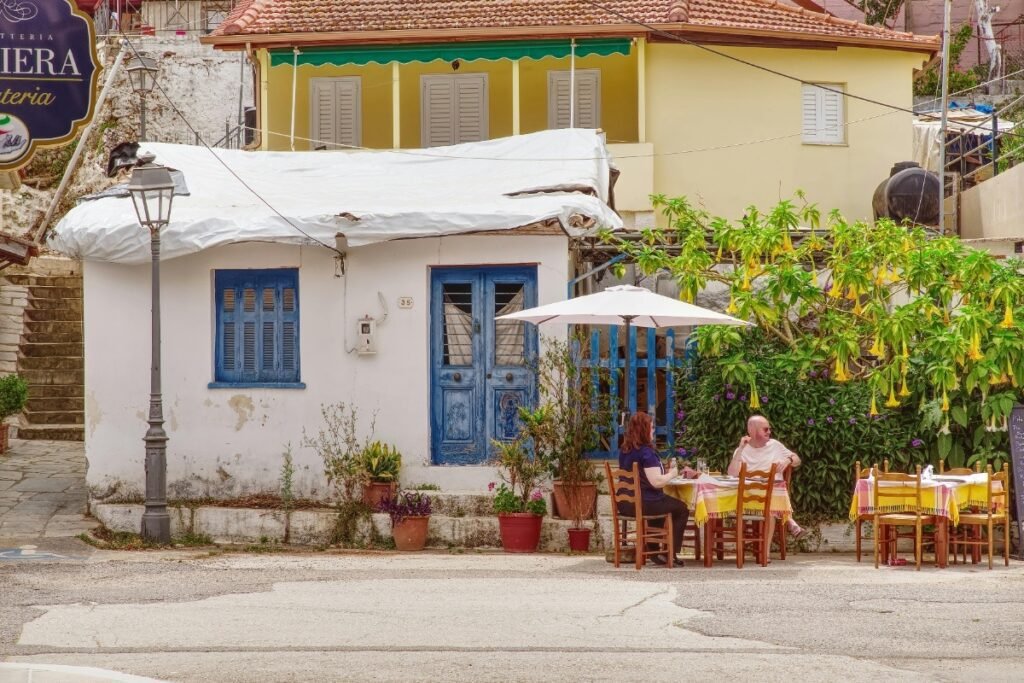
Vegetarian Reality
Greece surprises vegetarians positively. The Lenten (nistisima) tradition of Greek Orthodox cooking produces a large category of genuinely good dishes cooked without meat or dairy: gigantes plaki (giant baked beans in tomato sauce), fasolada (white bean soup), gemista (stuffed tomatoes and peppers with rice), horta (boiled wild greens with olive oil), and various pulse dishes.
Beyond Lenten dishes, a vegetarian eating through a mezedes spread does well: horiatiki salad, spanakopita, tiropita, saganaki, tzatziki, grilled courgettes, fava, taramasalata, and stuffed vine leaves all appear on standard menus. The key is knowing which of these contain meat or fish — taramasalata uses carp roe, some dolmades contain minced meat, and some apparently vegetable-based casseroles go into meat stock.
Dedicated vegetarian restaurants remain rare outside Athens and Thessaloniki. In villages and on smaller islands, a vegetarian’s best option is often to scan the side-dish and mezedes section of the menu rather than the mains.
Families with Children
Greek restaurants treat children as normal members of a meal rather than inconveniences. Most tavernas provide high chairs on request, servers accommodate requests for plain pasta or grilled chicken without issue, and the pace of a mezedes meal suits children who eat at irregular speeds. Greeks eat late, so the 19:00–20:00 window — when most tourists with children eat — gives families a calmer, more attentive experience than the later local rush.
Halal Availability
Halal food is available in central Athens (the Omonia area has a significant Muslim population and halal butchers and restaurants), in Thessaloniki, and in cities with Turkish Cypriot or Middle Eastern communities. Outside urban centres, halal-certified meat is difficult to find. Seafood and fish tavernas represent the most practical solution for Muslim travellers visiting smaller islands or rural areas.
Allergy Awareness
Awareness of food allergies in smaller tavernas is uneven. Major allergens — nuts in baklava and pastries, gluten in filo, dairy throughout — are present but rarely labelled. In Athens and tourist-heavy areas, staff handle English-language allergy queries competently. In village restaurants, clear communication and some basic Greek phrases help considerably. Celiacs face real challenges: bread and filo appear widely, and cross-contamination in small kitchens is probable.
Local Dining Etiquette in Greece
Answer: Greek dining culture moves at a pace that rewards relaxation. Nobody rushes you away from a table. The bill never arrives uninvited. Sharing dishes across the table is the cultural default. Staff appreciate a tip of around 10%, though nothing is compulsory, and rounding up the bill is common practice. Restaurants usually charge a small amount for bread they bring automatically.
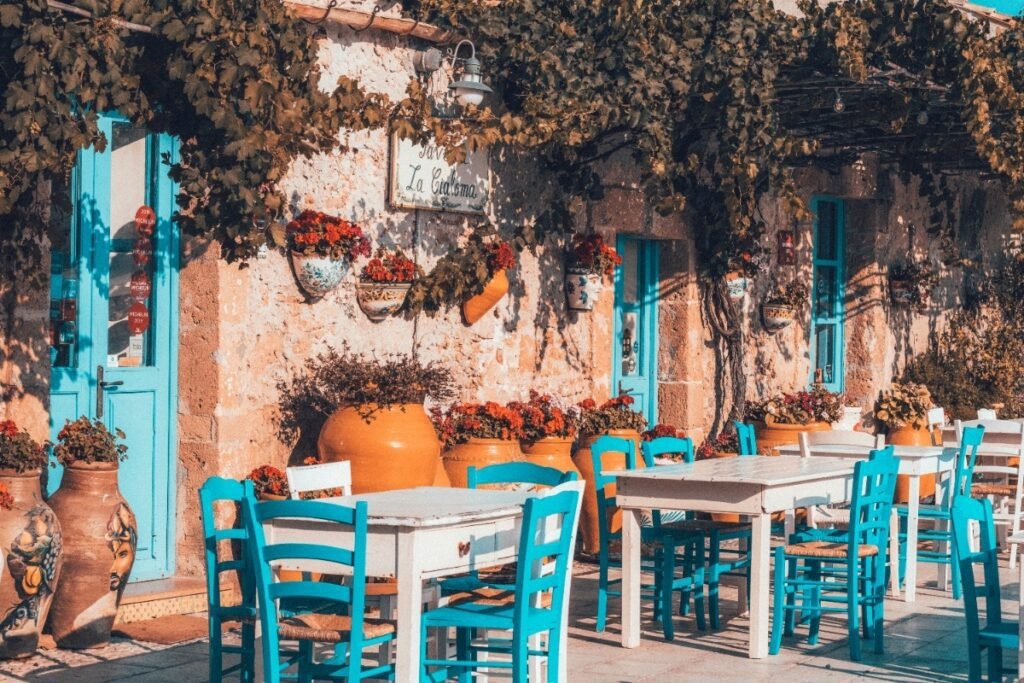
How Greek Meals Work
- Pace: Meals in Greece, particularly in evenings, progress slowly. This is a cultural feature, not a service failure. A three-hour dinner is normal in good company.
- The bill: You must request it — ton logariasmo, parakalo. No Greek restaurant brings an unsolicited bill. Waiting for it to arrive wastes time.
- Bread charge (couvert): Most tavernas and restaurants automatically bring bread and charge a small couvert fee of €0.50–€1.50 per person. This appears as a line on the bill. It is legitimate and standard.
- Sharing: Greeks order to share. Ordering mezedes and main dishes for the table rather than individually per person aligns with how the food works.
Tipping, Fish Pricing, and Practical Notes
- Water: Tap water is safe in most of mainland Greece and larger islands. Smaller islands sometimes have brackish tap water; bottled water is the safe option there. Staff will bring bottled water unless you specify tap.
- Tipping: 10% at sit-down restaurants with table service is the common practice. Rounding up to the nearest convenient figure is also acceptable. Souvlaki counters and bakeries don’t expect tips.
- Haggling or negotiating: Not appropriate in restaurants. Asking for a taste before ordering fish by weight at a fish taverna is entirely normal and expected.
- Fish by weight: Most fish taverna menus list the price per 100g or 200g. Staff weigh the fish before cooking. Ask to see the fish in the chiller, confirm the weight before it goes to the kitchen, and check the calculation on the bill. A normal part of the transaction, not rudeness.
Best Areas for Food by Budget and Traveller Type
| Traveller Type | Best Area | Why |
|---|---|---|
| Budget | Exarchia (Athens) or any provincial town | Honest neighbourhood tavernas, no tourist premium |
| Wine touring | Naoussa (Xinomavro) or Nemea (Agiorgitiko) | Winery visits, village restaurants, excellent value |
| Seafood | Lesvos or a working Cretan fishing village | Real fish culture; ouzeries with octopus and sardines |
| Breakfast culture | Thessaloniki | Bougatsa shops, koulouri, the best morning food in Greece |
| Serious food (modern Greek) | Koukaki or Monastiraki, Athens | Neighbourhood restaurants doing contemporary Greek cooking |
| Traditional village food | Cretan interior or Peloponnese villages | Slow lamb, dakos, wild greens; the best of the old kitchen |
| Solo traveller | Athens (any neighbourhood off the tourist belt) | Walkable, diverse, easy to eat well alone |
| Family | Crete or Corfu | Child-friendly culture, accessible food, calmer pace than Athens |
| Short stay (1–2 days) | Athens | Most concentrated combination of food quality and variety in Greece |
Where To Stay in Greece?
Hilton’s Greece portfolio totals 57 properties and is clearly anchored by Hilton Athens (now transitioning elements toward Conrad Athens The Ilisian) as the flagship urban landmark. It combines a compact core of city hotels in Athens with selected resort options on islands and coastal areas rather than uniform nationwide density. This makes the Greece page useful for landmark-led stays with Athens as the strongest operational base.
For travellers, Hilton in Greece delivers most consistent value in Athens, where the flagship property provides reliable full-service facilities, while island and resort options remain more selective. Use the Hilton Greece page primarily as a directory: filter by destination (Athens, Crete, Rhodes, Mykonos, etc.) first, then verify the exact property name, address, current review scores, and access details (e.g., beachfront, seaplane proximity, or city centre) on the individual hotel page before booking.
| Hotel & Location | Best For | Unique Feature | Verified Rating | Action |
|---|---|---|---|---|
|
Hilton Greece Resorts (General) Island & Coastal Destinations, Greece |
Island & Seaside Stays | Hilton’s regional directory features diverse beachfront and island properties bookable across Greece. | 4.6/5 | BOOK NOW |
|
Hilton Greece City Hotels (General) Urban Gateways, Greece |
Central City Stays | Convenient urban hotel listings pathing the way to Greece’s main historic city centres. | 4.8/5 | BOOK NOW |
|
Conrad Athens The Ilisian 46 Vasilissis Sofias Avenue, Athens 115 28, Greece |
Luxury & Landmark Stays | The iconic 1963 Hilton Athens reimagined as a ultra-luxury urban resort. Features Acropolis views, Yannis Moralis façades, and the city’s largest outdoor pool. | 4.3/5 | BOOK NOW |
|
Conrad Athens (Resort Partnerships) Athens Riviera / Golden Zone, Greece |
City Perks & Beach Access | Provides a seamless city base mixed with tailored access privileges to the premium coastal beachfront strips nearby. | 4.3/5 | BOOK NOW |
|
Additional Hilton Greece Properties Bespoke Destinations, Greece |
Flexible Regional Travel | Dynamic search engine gateway showcasing Hilton’s expanding boutique footprint across mainland and island Greece. | 4.3/5 | BOOK NOW |
Important Things Travellers Should Know Before Eating in Greece
- Greeks eat very late. Lunch runs 14:00–16:00. Dinner before 20:30 is unusual; most locals eat at 21:00–22:30. Arriving at a restaurant at 19:00 in summer means eating in an empty room. The atmosphere develops considerably later.
- August changes everything. Many of Athens’ best neighbourhood restaurants close for August while owners travel to their home islands. The tourist-facing restaurants that stay open do brisk trade but may not represent the city’s best cooking. Plan accordingly.
- Portion sizes are generous. Greek taverna portions — particularly for salads, dips, and mains — run larger than visitors from northern Europe expect. Order fewer dishes than you think you need and add more if necessary.
- Sunday is a long-lunch culture. Greeks treat Sunday as the most important meal of the week. Tavernas fill from 14:00 onwards. Village tavernas near Athens particularly busy; book ahead for specific restaurants.
- Fish pricing by weight: Always confirm the weight of fish before ordering at a fish taverna. The price per 100g listed on the menu can translate to a surprisingly large total. This is not a trap — it is simply a different pricing logic. Knowing it in advance prevents surprise.
- Supermarket wine: Greek wine available in supermarkets costs substantially less than the same bottle in a restaurant. A good bottle of assyrtiko or xinomavro from a supermarket runs €8–€15; the same wine at a restaurant starts at €25–€40. Buying a bottle for a sunset on a terrace makes excellent economic sense.
Frequently Asked Questions About Food in Greece
Signature Dishes and Regional Differences
What is the most important dish to eat in Greece?
There is no single answer across a country this regionally diverse. In Athens and the mainland, a properly made moussaka or a slow mezedes dinner represents the essential experience. Thessaloniki’s answer is bougatsa at a specialist shop in the morning. In Crete, the focus shifts to dakos and slow‑roasted lamb in a village taverna. Each region produces a distinct answer to this question, which is part of why eating across Greece rewards curiosity.
Is Greek food the same as Turkish food?
They share a long common history and many dishes — dolmades, baklava, moussaka (in variant forms), and yoghurt‑based dishes appear across both cuisines. Shared Ottoman heritage explains much of the overlap. The differences exist but operate at the level of spice combinations, cooking fats, and specific preparations rather than wholesale distinction. Both cuisines trace the same geography.
What makes Cretan food different from mainland Greek food?
Crete’s food tradition emphasises wild greens (horta), local olive oil of exceptional quality, fresh sheep cheeses (graviera, mizithra, anthotyro), rusks (paximadia), and slow‑cooked lamb. The island also uses a wider range of herbs and a more assertive application of olive oil than mainland kitchens. Cretan cuisine attracts academic attention as one of the originators of the Mediterranean diet concept.
Drinks, Wine, and Spirits
What is the difference between ouzo and tsipouro?
Ouzo contains anise, giving it a pronounced liquorice flavour and the characteristic milky‑white appearance when you add ice or water. Tsipouro is a clear grape marc spirit with no anise — closer to Italian grappa or Cypriot zivania. Northern Greece and Crete favour tsipouro; Cretans call their version tsikoudia. Ouzo belongs to Lesvos and the Aegean island tradition. Both accompany food in traditional settings.
What is assyrtiko wine and why do people talk about it?
Assyrtiko is a white grape variety indigenous to Santorini, grown in volcanic basalt soil without irrigation. It produces a dry, mineral, high‑acid wine with citrus and saline character that ages well and pairs excellently with seafood. Its combination of quality and genuine regional identity has earned it recognition among international wine buyers. On Santorini it commands high prices; bottles from the same producer cost significantly less in Athens wine shops.
Practical Dining Questions
Restaurant Hours in Greece
How late do Greek restaurants stay open?
Most tavernas and restaurants stay open until midnight or later during the summer months. In cities and tourist areas, kitchens usually serve food until 23:00–24:00. Village restaurants and kafeneions vary more, but the general pattern remains consistent. Arriving for dinner around 21:00 aligns well with local dining habits and ensures a livelier atmosphere.
Menus and Ordering
Do Greek restaurants have an English menu?
In Athens, major cities, and tourist‑heavy areas, English menus are common. However, in village tavernas or small‑town restaurants, menus may exist only in Greek, and staff often describe dishes verbally. A reliable approach is to ask “ti ehete simera?” (what did the kitchen make today). This question usually leads to the freshest and most authentic dishes available.
Water Safety
Is Greek tap water safe to drink?
Tap water is safe on the mainland and larger islands, including Athens. On smaller Cycladic islands and some Dodecanese islands, the water is technically safe but often tastes brackish due to desalination. Many locals prefer bottled water. In western Crete, tap water is generally excellent.
Vegetarian and Vegan Options
Can you eat well as a vegetarian in Greece?
Yes. Greece offers a wide range of naturally vegetarian dishes thanks to the Orthodox fasting tradition. Classics such as gigantes plaki, fasolada, gemista, and various horta preparations appear on most menus. Combining these with meze‑style dining provides plenty of variety. Vegans can manage, although dairy products, especially feta, appear throughout the cuisine.
Tipping and Payment
Is tipping expected in Greek restaurants?
Tipping is customary but not required. Most locals and European visitors leave around 10% or round up the bill. At souvlaki shops, bakeries, and fast‑food counters, tipping is neither expected nor common.
© 2026 — Editorial travel content. Not affiliated with the Greek National Tourism Organisation, any regional tourism body, or any commercial food or hospitality operator. Pricing figures are approximate and subject to change.
Editorial & Accuracy Standards
- Expert Review:
Ammara Azmat,
Senior Travel Mobility Analyst (12+ years experience) - Status: Verified for accuracy against official 2026 service data and real-time traveller reports.
- Our Process: This content follows our Fact-Checking Policy.