
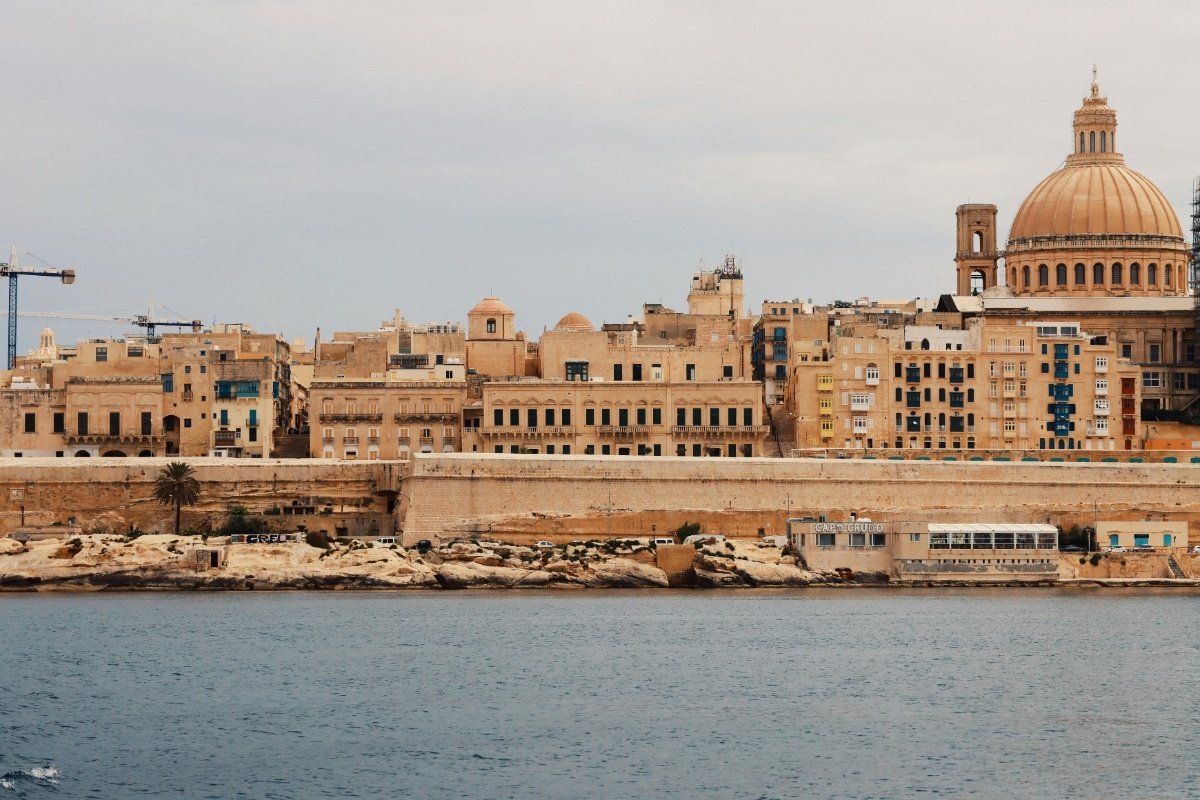
Rabbit, Ricotta, and Resistance: Decoding Malta’s Culinary Map in 2026
Sunset Weekly Disclosure: To help keep our guides free, this post contains affiliate links. If you click through and make a booking (such as hotels, flights, tours, or travel experiences), we may earn a commission at no extra cost to you. Sunset Weekly is an independent travel and lifestyle publication. While we may receive compensation from affiliate partners, this does not influence our editorial content, recommendations, or opinions. #ad
Quick Answer: Maltese food draws on Arab, Italian, British, and Norman influences to produce a distinct Mediterranean island cuisine built around rabbit, fresh fish, sheep’s milk cheese, and some of the cheapest and most satisfying street food in Europe. However, the tourist restaurant economy in Valletta, Sliema, and St Julian’s charges significantly more for cooking that rarely represents Malta at its best. The most honest food on the island costs almost nothing and sits in a pastizzerija.
Editorial note: This guide covers Malta and Gozo with equal attention to practical eating and realistic expectations. Pricing reflects 2025–2026 conditions. No commercial operators have contributed to or influenced this content.
Malta punches well above its size as a food destination. The island’s cooking reflects a genuinely layered cultural history — Arab spice sensibilities, Italian pasta traditions, British influence on baking and breakfast culture, and a deep fishing heritage that produces excellent seafood from clean Mediterranean waters. However, most visitors never reach the best of it because they eat on the tourist promenades of Sliema and Valletta’s waterfront, where the food looks Maltese but behaves like generic Mediterranean tourist fare.
The good news is that genuinely Maltese food is not difficult to find. Moreover, it costs very little — pastizzi from a village pastizzerija cost under €0.50 each, ħobż biż-żejt from a street counter barely more, and a full rabbit stew lunch at a local village restaurant runs €12–€18. Understanding what to look for and where to look changes the eating experience entirely.
What Food Is Malta Known For?
Answer: Malta is known for pastizzi (flaky ricotta or pea pastry), fenek (rabbit, the national dish), ħobż biż-żejt (bread with tomato paste, tuna, and capers), ġbejniet (sheep’s milk cheeselets), lampuki (mahi-mahi, seasonal), timpana (macaroni in pastry), and Kinnie (the bitter orange national soft drink). However, the depth of Maltese food extends well beyond this familiar shortlist.
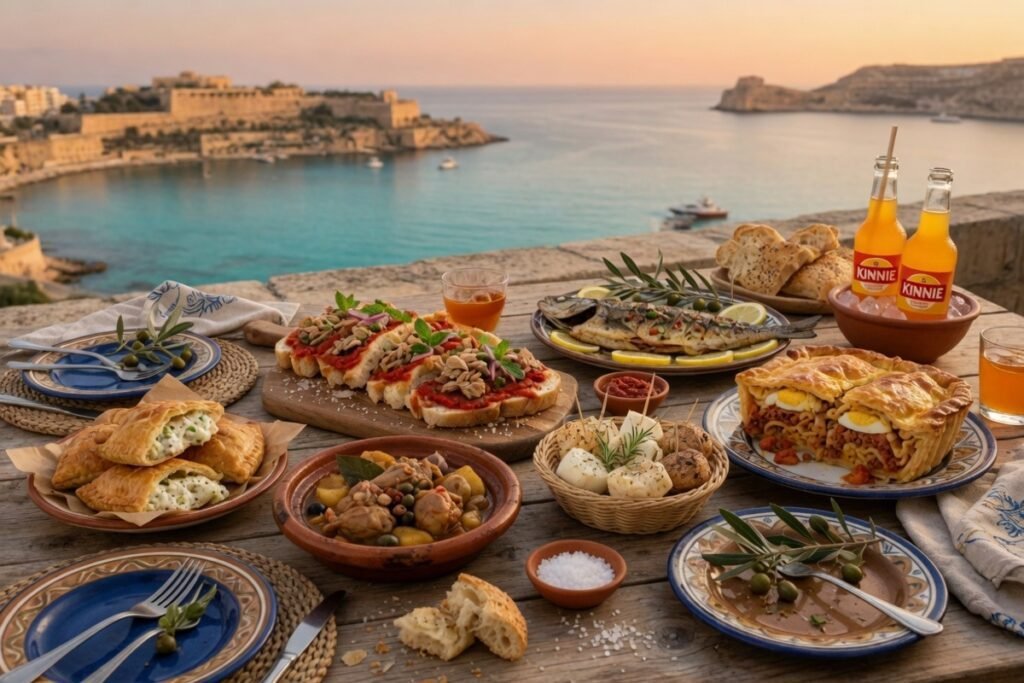
Malta’s food identity reflects its position as a crossroads of Mediterranean history. Arab traders introduced spices, citrus, and a love of sweet-savoury combinations that persist in dishes such as kapunata. Italian proximity, however, brought pasta traditions that Maltese cooks adapted into distinctly local forms — ross fil-forn (baked rice) and imqarrun il-forn (baked macaroni) represent the most direct evidence. British colonial influence, additionally, left traces in breakfast culture and the strong tea habit that coexists, somewhat incongruously, with Maltese espresso culture.
What makes Maltese food distinct is the way these influences merged with a local agricultural and fishing tradition shaped by a small, rocky island. Rabbit became the dominant meat because it suited the terrain. Sheep and goat cheeses developed because cattle farming was impractical. Capers, wild fennel, and sun-dried tomatoes appear constantly because they thrive in the climate without irrigation. Consequently, the result is a cuisine of genuine local logic rather than historical accident.
Signature Maltese Dishes Every Traveller Should Know
Answer: The essential Maltese dishes include pastizzi, fenek (rabbit stew or fried), ħobż biż-żejt, ġbejniet, braġioli (beef olives), lampuki pie, ross fil-forn, and timpana. Additionally, bigilla (broad bean dip) and kapunata (Maltese caponata) appear on most menus and reflect the island’s Arab and Italian culinary heritage simultaneously.
Essential Dishes: A Quick-Reference Guide
| Dish | What It Is | Best Context |
|---|---|---|
| Pastizzi | Flaky pastry filled with ricotta or mushy peas; diamond-shaped | Pastizzerija; morning or afternoon; under €0.50 each |
| Ħobż biż-żejt | Crusty bread rubbed with tomato paste, topped with tuna, capers, olives, and olive oil | Village bars and street counters; excellent cheap lunch |
| Fenek (rabbit stew) | Rabbit braised in wine, garlic, and tomatoes; the national dish | Village restaurants, particularly on Gozo; Sunday lunch |
| Fenek moqli | Fried rabbit, usually with chips and salad | Casual restaurants; Gozo villages |
| Ġbejniet | Small fresh or dried sheep/goat’s milk cheeselets; dried version coated in pepper | As a starter; Gozo producers; village shops |
| Braġioli | Thin beef stuffed with hard-boiled egg, bacon, and breadcrumbs, braised in wine sauce | Traditional restaurants; a home-cooking classic |
| Lampuki | Mahi-mahi; seasonal (September–November); baked, fried, or in a pie | Fish restaurants; only worth ordering in season |
| Lampuki pie | Lampuki with spinach, olives, and capers in pastry | Autumn bakeries and restaurants only |
| Timpana | Macaroni with minced meat and egg, enclosed in pastry and baked | Traditional restaurants; very filling |
| Ross fil-forn | Baked rice with minced meat, eggs, and tomato | Home cooking; traditional restaurants |
| Bigilla | Broad bean dip with garlic, olive oil, and herbs; served with Maltese bread | Starters; village bars; naturally vegetarian |
| Kapunata | Maltese caponata: aubergine, tomatoes, capers, olives, and vinegar | Side dish or starter; excellent at room temperature |
| Kinnie | Bitter orange soft drink with aromatic herbs; the national non-alcoholic drink | Everywhere; order the original, not the diet version |
Understanding Maltese Food Culture
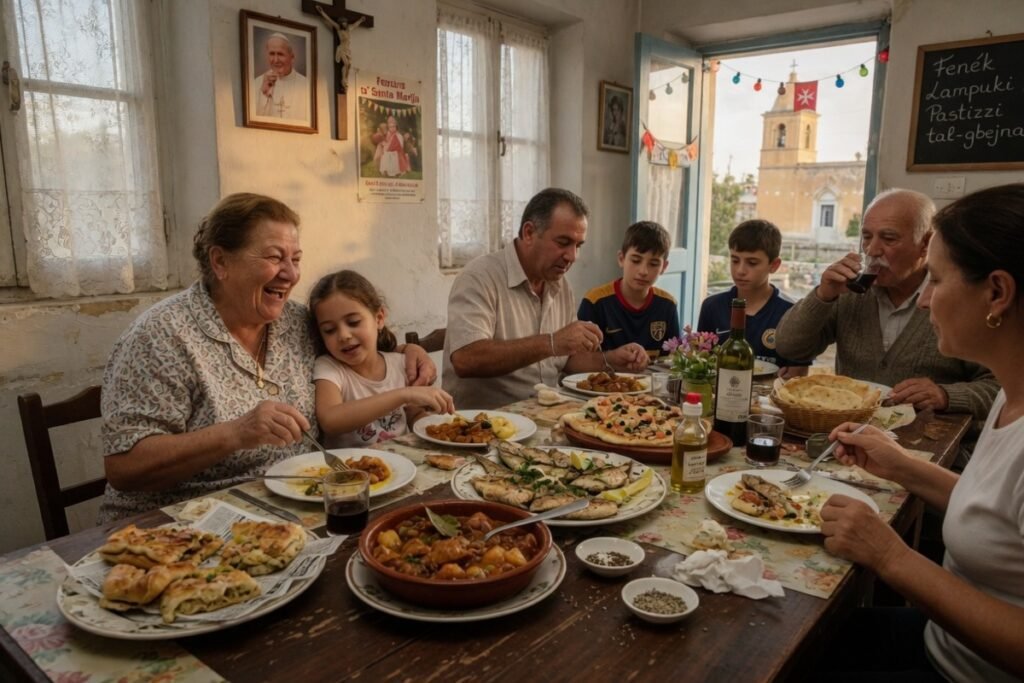
Answer: Maltese food culture centres on family meals, village feast days, fresh fish traditions, and a deep attachment to a small number of genuinely iconic dishes. However, the experience of eating in Malta differs considerably between the main island and Gozo — and between tourist zones and the village restaurants where Maltese people actually eat
Malta: The Main Island
The main island of Malta carries the full weight of the country’s tourism economy, which means the restaurant landscape divides clearly between tourist-facing and locally-facing operations. Valletta, Sliema, St Julian’s, and Bugibba all contain heavy concentrations of tourist restaurants. However, these areas also have good food if you know which indicators to look for.
The pastizzerija (pastizzi shop) is the most democratic food institution on the island. Every town and village has at least one, they open early and often run through the afternoon, and the food they sell — pastizzi, qassatat, and ħobż biż-żejt — reflects genuine Maltese daily eating rather than a tourist-adjusted version of it. Consequently, starting any exploration of Maltese food at a pastizzerija costs almost nothing and establishes an immediate baseline for what Maltese flavour actually tastes like.
Village restaurants in towns such as Birkirkara, Mosta, Rabat, and Żebbuġ see very little tourist traffic. As a result, they produce honest, inexpensive Maltese cooking for a local lunch crowd that expects value and familiarity. These are the places where braġioli, timpana, and fenek appear in their most straightforward and satisfying forms.
Gozo: Distinct and Worth the Trip
Gozo functions as a separate culinary world from the main island, despite lying only 25 minutes away by ferry from Ċirkewwa. The smaller island moves more slowly, receives fewer day tourists than it once did, and maintains a village restaurant culture that feels genuinely rooted rather than performed.
Fresh ġbejniet (sheep’s milk cheeselets) from Gozo carry a different character from supermarket versions on the mainland — specifically, fresh Gozo ġbejniet have a clean, slightly sour flavour and a texture closer to ricotta than the hard, peppercorn-coated aged versions. Additionally, Gozo honey (għasel tal-Għawdex) and Gozo sea salt from the ancient Xwejni salt pans near Marsalforn appear as genuinely local products worth buying.
The villages of Victoria (Rabat), Xagħra, Nadur, and Mġarr all have good village restaurants. Moreover, Gozo produces the best rabbit on the archipelago — the fenkata (a communal rabbit feast) tradition remains stronger here than anywhere on the main island. A weekend trip to Gozo specifically for rabbit stew and ġbejniet represents a reasonable food-tourism strategy.
Where Do Locals Actually Eat in Malta?
Answer: Locals eat in village restaurants (often called trattorie), pastizzeriji, village bars, and fish restaurants near working harbours. They avoid the Valletta waterfront restaurants, the Sliema promenade dining strip, and the tourist-facing restaurants in St Julian’s — all of which charge more for cooking that rarely reflects genuine Maltese food culture.
Valletta and the Three Cities
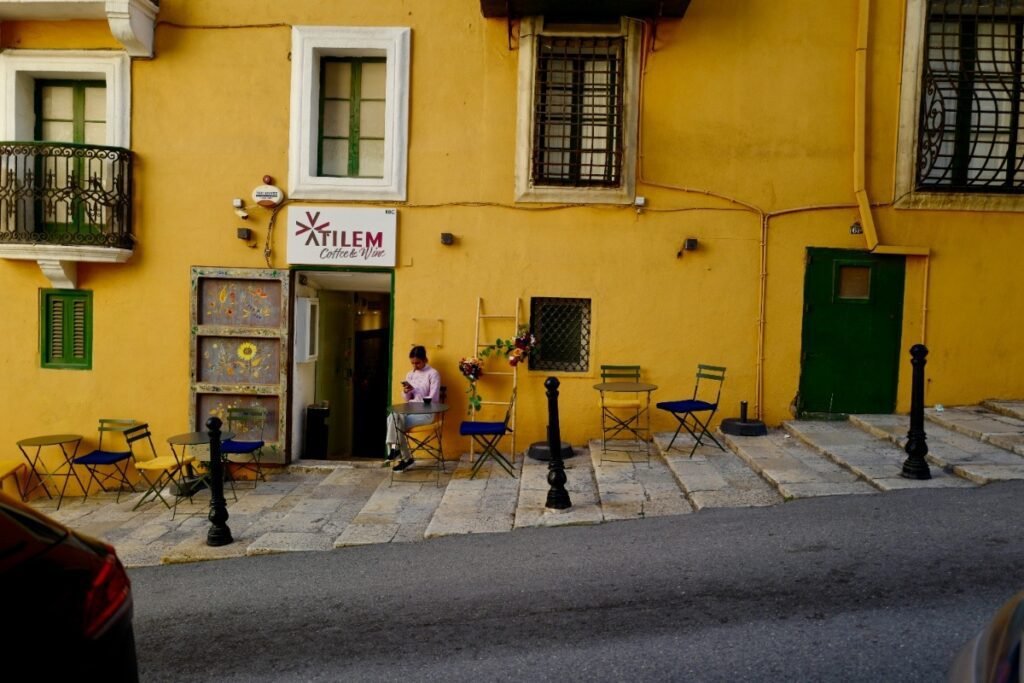
Valletta has a serious restaurant scene alongside its tourist operations. The streets away from the waterfront — particularly around Strait Street, the lanes off Republic Street, and the area near St George’s Square — contain a mix of quality that rewards exploration. However, restaurants immediately on the Valletta Waterfront (Pinto Wharf) charge premium prices primarily because of location rather than cooking quality.
Birgu (Vittoriosa), across the Grand Harbour, offers a calmer alternative to Valletta with notably lower prices and a more local dining atmosphere. Similarly, Cospicua and Senglea have unpretentious restaurants serving genuine Maltese food at non-tourist prices — these Three Cities neighbourhoods see very little passing tourist traffic.
Towns and Villages
The inland and southern towns of Malta — Birkirkara, Mosta, Rabat, Żebbuġ, and Żejtun — produce the most honest mid-range Maltese eating. These are the places where a three-course lunch with fenek, bigilla to start, and a glass of local wine costs €15–€20 per person. Furthermore, Sunday lunches at village restaurants attract large family groups, which is both an indicator of quality and a reason to book ahead.
Marsaxlokk and the South
Marsaxlokk is Malta’s most celebrated food destination in its specific lane: fresh fish. The Sunday morning fish market beside the harbour is the most legitimate tourist-friendly food experience on the island — genuinely used by local fishermen and Maltese families, not staged for visitors. Additionally, the fish restaurants along the Marsaxlokk waterfront serve some of the best seafood on the island, though prices have risen considerably as the village’s reputation has grown.
The surrounding area — Żurrieq, Birżebbuġa, and the southern coastal villages — contains fish restaurants with lower profiles and prices than Marsaxlokk itself. Consequently, travellers willing to drive ten minutes south find equivalent seafood quality at noticeably better value.
How Expensive Is Food in Malta?
Answer: Malta sits at a mid-range price point for European eating — more expensive than Cyprus or Greece in budget terms, but considerably cheaper than western European cities. However, the tourist-area premium in Valletta and Sliema adds 40–80% to prices compared with equivalent village restaurants serving the same food.
| Meal Type | Budget Range (per person) | Notes |
|---|---|---|
| Pastizzi (each) | €0.30–€0.50 | Tourist areas charge €0.80–€1.50 |
| Ħobż biż-żejt (counter) | €1.50–€3.50 | Village bar or street counter |
| Pastizzerija snack meal | €2–€5 | Pastizzi + qassatat + drink |
| Village restaurant lunch | €10–€18 | Main, side salad, local wine |
| Mid-range dinner (Valletta) | €25–€40 | Starter, main, wine; tourist-zone pricing |
| Upscale/modern Maltese | €45–€75 | Fine dining; Valletta or St Julian’s |
| Marsaxlokk fish lunch | €20–€35 | Fresh catch; varies by fish selection |
| Kinnie (café/bar) | €1.50–€2.50 | More in tourist zones |
| Cisk beer (bar) | €2.00–€4.00 | Tourist bars charge €4–€6 |
| Local wine (glass, restaurant) | €3.00–€7.00 | House wine at lower end |
| Bajtra liqueur (shot) | €3.00–€5.00 | Local prickly pear spirit |
| Espresso (café) | €1.20–€2.50 | Tourist areas charge more |
Village versus tourist-zone gap: A rabbit stew lunch at a Gozo village restaurant costs €12–€16 per person with wine. The equivalent dish at a tourist-area restaurant in Valletta costs €22–€30. Consequently, any traveller willing to take a bus or rent a car eats better and spends considerably less.
Street Food and Pastizzi Culture
Answer: The pastizzerija is Malta’s most important food institution — a small shop selling flaky pastries filled with ricotta or mushy peas for under €0.50 each. Additionally, ħobż biż-żejt (Maltese bread with toppings) from village bars and street counters represents a second tier of genuinely cheap, genuinely Maltese street eating that most visitors miss entirely.
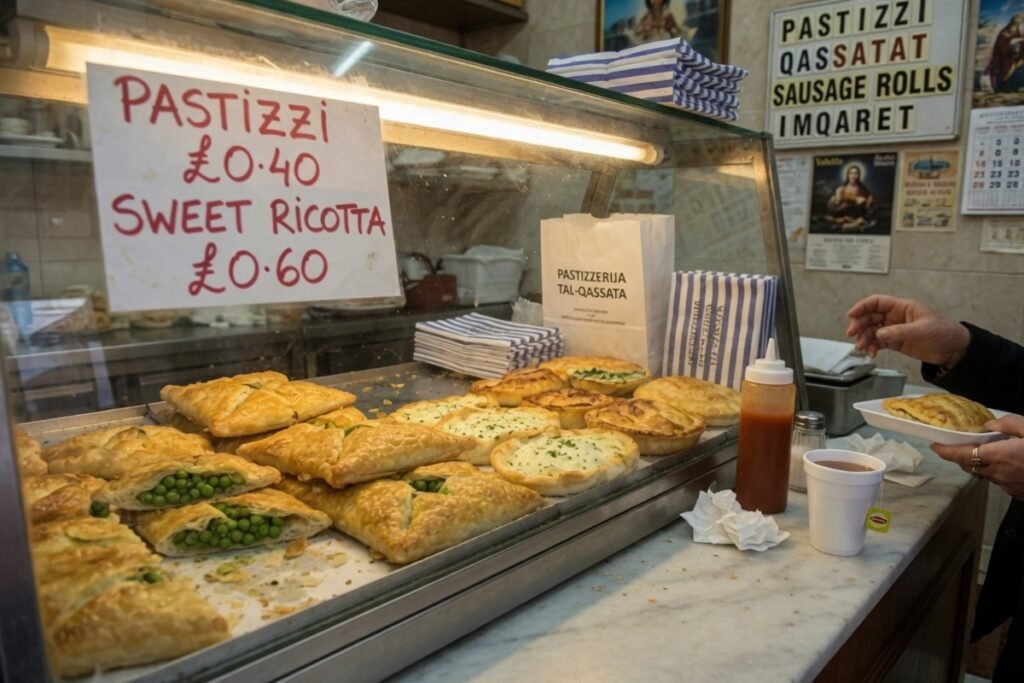
The Pastizzerija
The pastizzerija operates on a simple model: a glass counter filled with pastizzi, qassatat (larger round pastries), and sometimes ħobż biż-żejt. Prices sit at €0.30–€0.50 per pastizzi at a local pastizzerija and climb to €1.50 at tourist-facing versions near major sights.
Crystal Palace in Rabat is the most famous pastizzerija in Malta, attracting locals and visitors at all hours.. However, every village has its own equivalent, and the hyperlocal ones — without English signs and with only Maltese people in the queue — consistently produce better pastizzi. The ricotta version is the standard; the mushy pea version (pastizzi tal-piżelli) has a slightly earthier, more assertive flavour and reflects a distinct preference among locals.
Freshness matters considerably. A pastizzi straight from the oven — the lard-laminated pastry still crackling, the filling still hot — is substantially better than one sitting in a display case for two hours. Consequently, arriving at a pastizzerija in the mid-morning or early afternoon, when most operations do a fresh bake, gives the best result.
Ħobż biż-żejt and Village Bar Food
Ħobż biż-żejt (literally “bread with oil”) begins with a cut of ftira (Maltese ring-bread) or a thick slice of ħobż Malti, rubbed with kunserva (tomato paste), drizzled with olive oil, and topped with tinned tuna, capers, olives, sliced tomato, and basil. Many village bars serve it as a lunchtime staple for €2–€4. Furthermore, some go beyond the classic formula — adding ġbejniet, sun-dried tomatoes, or anchovies. Specifically, the version served at a working village bar alongside a cold Cisk at midday represents one of the most satisfying cheap meals in the Mediterranean.
Bigilla — a thick dip of mashed broad beans with garlic, olive oil, and herbs — often accompanies ħobż at bars and in restaurants as a starter. It is naturally vegan, costs almost nothing, and arrives with enough bread to constitute a light meal.
Local Drinks: Kinnie, Cisk, Wine, and Bajtra
Answer: Malta’s most distinctive drinks are Kinnie (the bitter orange soft drink beloved nationally), Cisk lager (the dominant local beer), local wines from indigenous grape varieties, and bajtra (prickly pear liqueur). Additionally, Malta has a strong espresso and café culture partly inherited from Italian proximity and partly from its own urban coffee-house tradition.
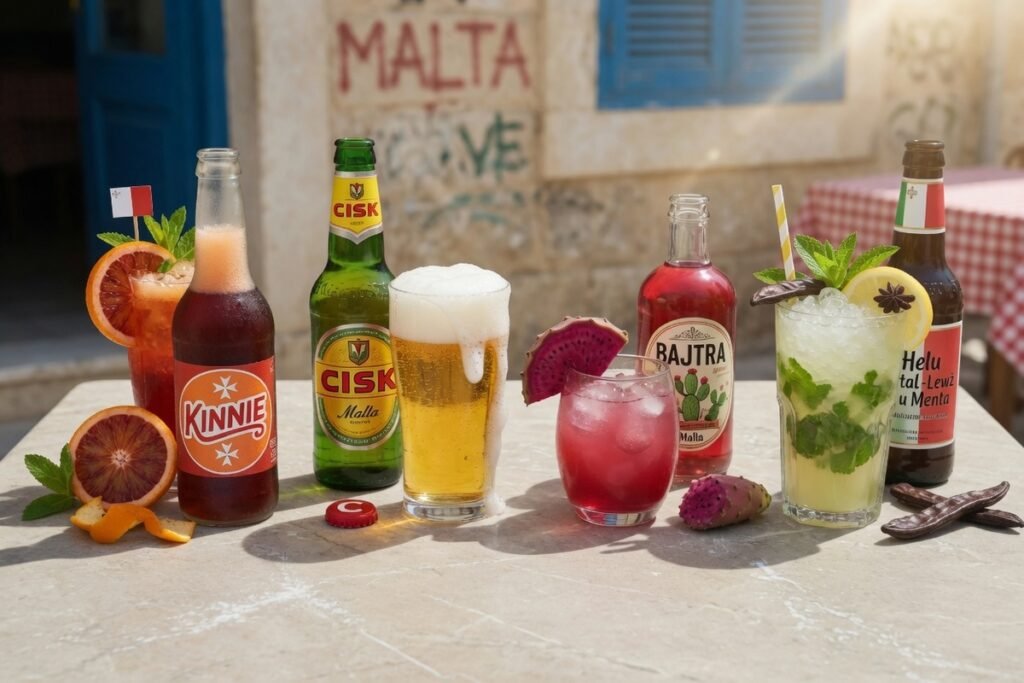
Coffee, Kinnie, and Soft Drinks
Maltese café culture operates around espresso, cappuccino, and the mid-morning pastizzi stop. Coffee prices remain relatively low by western European standards — an espresso at a non-tourist café costs €1.20–€1.80. However, tourist-zone café prices in Valletta and Sliema climb to €2.50–€3.50 for the same drink.
Kinnie is the single most culturally distinctive drink in Malta. Farsons brewery has produced it since 1952, using bitter Seville oranges and a blend of aromatic herbs to create a sweet-bitter soft drink unlike anything sold elsewhere. Many Maltese drink it chilled straight from the bottle. However, it also mixes well with spirits — specifically with vodka or rum — and appears as a mixer in tourist bars across the island. The original version, rather than the zero-sugar or flavoured variants, is the one worth trying.
Additionally, fresh fruit juices, carob syrup drinks, and lemon-based soft drinks appear at traditional bars and village cafés. These reflect the island’s Arab culinary heritage more directly than most other drink options on the menu.
Beer, Wine, and Spirits
Cisk is Malta’s national lager, produced by the Farsons brewery in Mriehel. It is a clean, light lager well-suited to the Mediterranean climate and pairs naturally with most Maltese food. Farsons also produces Hopleaf (a pale ale), Blue Label (stronger), and seasonal specials. However, Cisk remains the default — ordering one in a Maltese bar carries the same cultural weight as ordering a Kingfisher in Goa.
Malta grows two indigenous grape varieties: Ġellewża (a red) and Ghirgentina (a white). These grow poorly elsewhere and consequently give Maltese wine a genuine regional identity. The main producers — Marsovin, Meridiana, and Delicata — all make wines worth trying, particularly the whites, which suit local seafood well. A bottle in a local restaurant runs €12–€22; supermarket prices run considerably lower.
Bajtra is a liqueur produced from the prickly pear cactus fruit that covers Malta’s countryside in late summer. It has a vivid magenta colour, a sweet, slightly medicinal flavour, and roughly 20% ABV. Additionally, local anisette and local brandy appear at village bars and in traditional drinking contexts.
| Drink | Local Price | Notes |
|---|---|---|
| Espresso (café) | €1.20–€1.80 | Tourist zones: €2.50–€3.50 |
| Kinnie (bottle, bar) | €1.50–€2.50 | More widely available than any other local drink |
| Cisk (bar, draught or bottle) | €2.00–€4.00 | Tourist bars: €4–€6 |
| Local wine (glass) | €3.00–€7.00 | House wine at lower end |
| Local wine (bottle) | €12–€22 | Restaurant price; supermarkets cheaper |
| Bajtra liqueur (shot) | €3.00–€5.00 | Best as a post-meal digestif |
What Should Tourists Avoid?
Answer: The main tourist traps in Malta concentrate on the Valletta Waterfront, the Sliema promenade, the St Julian’s dining strip, and restaurants immediately adjacent to major archaeological sites. However, none of these are dishonest in the scam sense — they simply charge visitor prices for cooking that rarely reflects the genuine Maltese kitchen.
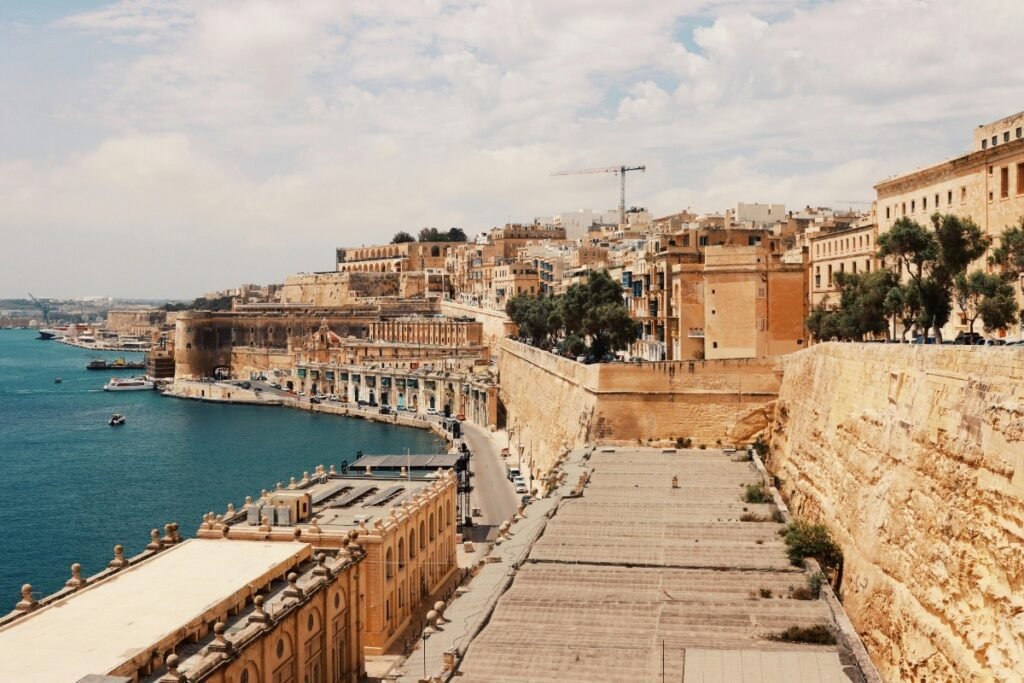
Valletta Waterfront and Sliema
The Valletta Waterfront (Pinto Wharf) area is attractive and convenient. However, the restaurants here charge substantially more than the food quality warrants, and the menus lean toward safe Mediterranean-international rather than distinctly Maltese. Specifically, a meal on the waterfront costs 50–80% more than a comparable meal ten minutes’ walk uphill into Valletta’s interior streets.
Sliema’s promenade restaurants follow the same pattern. The seafront setting provides value in terms of views; it provides considerably less in terms of food. Consequently, eating in Sliema’s back streets rather than on the Tower Road frontage produces both better food and better prices for travellers willing to walk a few minutes.
St Julian’s and Paceville cater primarily to a young, international crowd. The area does have some good restaurants; however, it also concentrates the island’s most tourist-facing operations. Furthermore, inflated cocktail prices and unremarkable food define the main strip rather than the exceptions to it.
Ordering Mistakes
Ordering rabbit outside Gozo: Fenek exists on menus across Malta. However, the best rabbit cooking on the archipelago sits firmly in Gozo, where the fenkata tradition runs deepest. A village trattoria in Gozo produces a substantially more satisfying fenek than a Valletta tourist restaurant, even at the same listed price.
Ignoring lampuki season: Lampuki (mahi-mahi) is one of Malta’s most distinctive fish — but it appears only in autumn (September to November). Lampuki on a menu outside this window almost certainly means frozen rather than fresh. Similarly, ordering lampuki pie outside the season loses the entire point of the dish.
Paying tourist prices for pastizzi: A pastizzi near Valletta’s main sights costs €0.80–€1.50. The same pastizzi at a village pastizzerija costs €0.30–€0.50. The tourist version is not better — it simply sits in a more convenient location for visitors who haven’t been told the difference.
Traveller Practicality: Dietary Needs, Families, Allergies
Answer: Vegetarians find Malta manageable but not particularly generous — the cuisine centres on meat, fish, and dairy. However, several naturally vegetarian dishes (bigilla, pastizzi tal-piżelli, kapunata, and ħobż biż-żejt without tuna) provide solid options. Families eat well, as Maltese restaurants generally welcome children without ceremony.
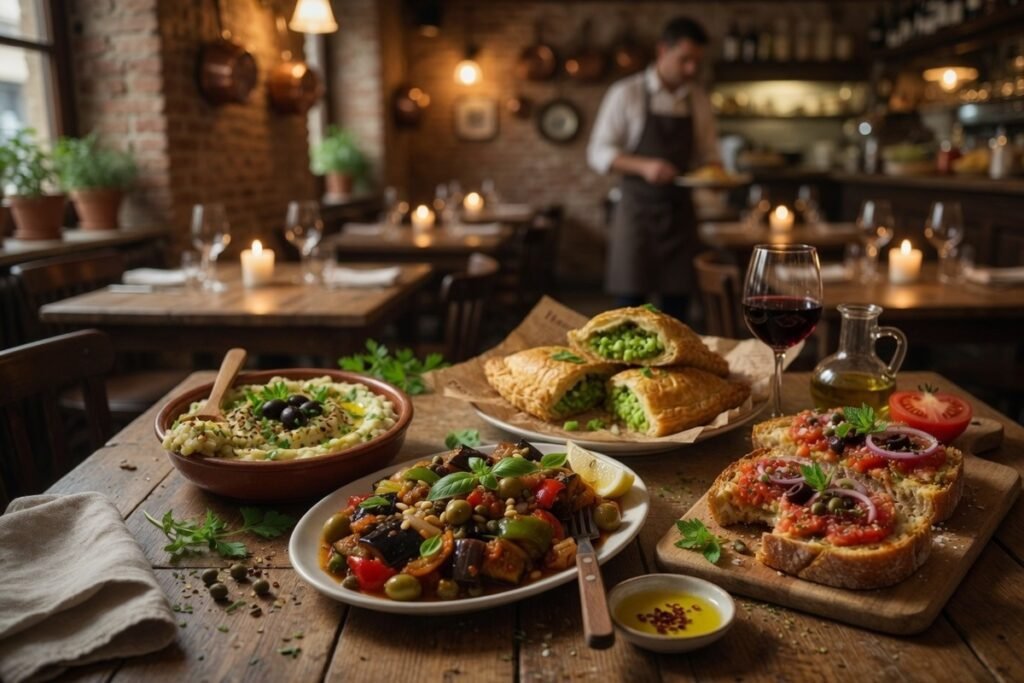
Vegetarian and Vegan Reality
Malta’s food culture does not centre on vegetable cooking, though it does include several genuinely good plant-based dishes. Bigilla (broad bean dip), kapunata (Maltese caponata), ħobż biż-żejt without tuna, pastizzi tal-piżelli (pea-filled pastry), and various vegetable soups represent the most reliable vegetarian options at traditional restaurants.
However, the Maltese concept of a dedicated vegetarian main course is less developed than in northern European restaurants. Consequently, a vegetarian at a village restaurant often assembles a meal from starters and side dishes rather than a dedicated main. This works well in practice — bigilla, ġbejniet, kapunata, and a basket of ħobż Malti constitute a thoroughly satisfying lunch.
Vegans face greater challenges. Ġbejniet and ricotta appear throughout the cuisine, butter features in pastry, and egg appears in several baked dishes. However, bigilla, plain grilled vegetables, and ħobż biż-żejt without cheese provide a workable base. In tourist-area restaurants with international menus, vegan options tend to be more explicitly available.
Families and Allergy Awareness
Malta accommodates families well. Maltese restaurants — particularly village restaurants and trattorie — treat children as normal participants in a meal. High chairs appear at family-friendly establishments; informal restaurants rarely have them but manage flexibly without issue.
Allergy awareness varies by establishment. Tourist-facing restaurants in Valletta and Sliema handle English-language allergy requests competently. However, at village restaurants and pastizzeriji, clear communication requires more effort — particularly around gluten (pastry appears everywhere) and nuts (almonds feature prominently in Maltese pastries and desserts). Additionally, shellfish allergies require care in fish restaurants where cross-contamination in small kitchens is a realistic concern.
Local Dining Etiquette in Malta
Answer: Maltese dining culture moves at a relaxed, friendly, and unhurried pace. Nobody pressures diners to leave or turn tables. Tipping is not mandatory but 10% at sit-down restaurants reflects standard practice. However, at pastizzeriji and village bars, nobody expects tips.
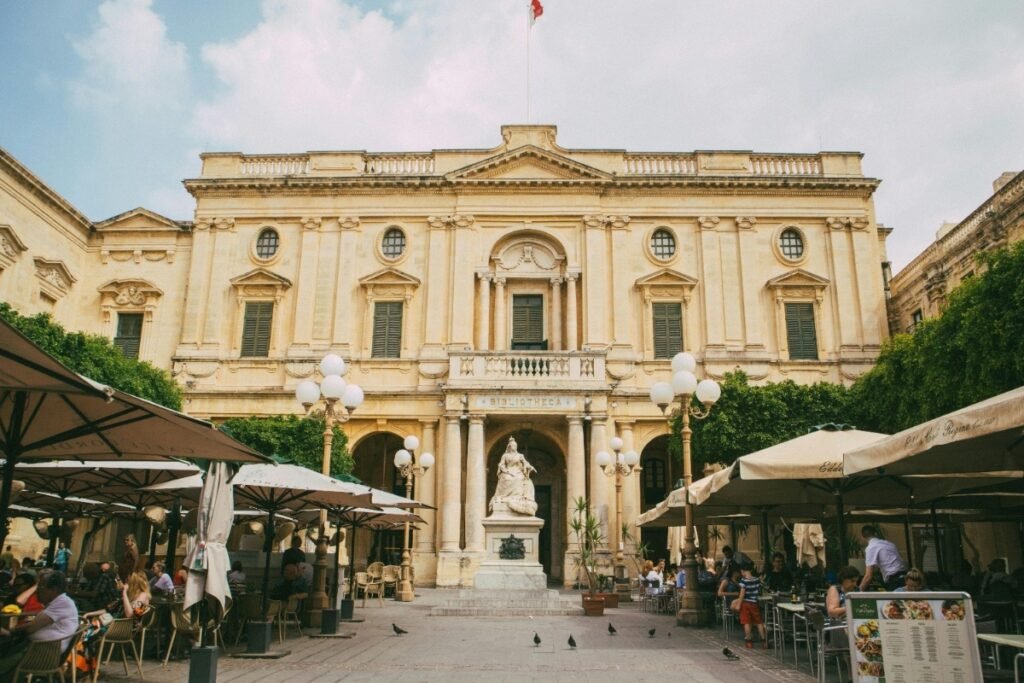
Table Customs and Meal Structure
Maltese sit-down meals typically follow a three-course structure: starter (bigilla or soup), main (usually meat or fish), and dessert or coffee. However, the shared-dishes format found in Greece or Cyprus does not apply here — Maltese restaurants generally expect individual ordering rather than communal sharing across the table.
Bread arrives automatically at most restaurants and typically incurs a cover charge (coperto) of €1–€2 per person. Furthermore, water arrives as bottled still or sparkling — Malta’s tap water is technically safe to drink, but restaurant tap water consumption is low. Specifically, asking for tap water in a tourist-area restaurant may receive a polite redirection toward the bottled options.
Village restaurants move at an unhurried pace. Consequently, arriving with two hours available for lunch rather than forty-five minutes ensures a considerably more enjoyable experience. Maltese families treat Sunday lunch as the week’s most important social occasion — village restaurants fill from noon onwards on Sundays.
Tipping and Practical Notes
Tipping in Malta follows a European rather than American model. At sit-down restaurants, 10% is appropriate and appreciated. Rounding up the bill or leaving loose change also works well. However, at pastizzeriji, village bars, and self-service counters, nobody expects any tip.
Most tourist-area restaurants, cafés, and mid-range Maltese restaurants accept cards. However, pastizzeriji, village bars, and smaller family restaurants often prefer or require cash. Consequently, carrying €20–€30 in small notes at all times prevents inconvenience at the establishments most worth visiting. ATMs operate widely across Malta; availability in rural Gozo is lower but manageable.
Best Areas for Food by Budget and Traveller Type
| Traveller Type | Best Area | Why |
|---|---|---|
| Budget/street food | Any village pastizzerija across Malta | Cheapest, most authentic Maltese eating; under €5 for a filling snack meal |
| Rabbit and traditional food | Gozo villages (Victoria, Xagħra, Nadur) | Best fenek on the archipelago; genuine fenkata culture |
| Fresh fish | Marsaxlokk (Sunday market) or the south coast | Most legitimate fish experience accessible to tourists |
| Couple/weekend food trip | Gozo for a night or two | Slower pace, better ġbejniet, intact village restaurant culture |
| Wine and local produce | Marsovin (Marsa) or Meridiana (Ta’Qali) | Winery visits with Ġellewża and Ghirgentina tastings |
| Modern Maltese dining | Valletta interior streets (away from waterfront) | Contemporary Maltese cuisine at better prices than the promenade |
| Family dining | Village trattorie in Birkirkara or Mosta | Child-friendly, honest food, none of the tourist-zone premium |
| Short stay (1–2 days) | Valletta interior streets plus one Marsaxlokk visit | Covers traditional and fish in a compact, walkable itinerary |
Where To Stay in Malta?
Expedia’s Malta coverage works best for comparing three distinct trip styles on a compact island: St Julian’s for resort and nightlife access, Sliema for urban seafront positioning, and Balluta/Portomaso for premium waterfront and marina stays. The platform supports fast comparison in a sharply segmented market where properties differ significantly by location and vibe rather than offering a homogeneous product.
The practical mapping is clear: Hyatt Regency Malta and Hilton Malta deliver full-service St Julian’s resort experiences (Paceville area); Courtyard by Marriott Sliema provides the strongest seafront urban base; Malta Marriott Resort & Spa adds a refined spa-oriented option; and The Westin Dragonara Resort stands as the most clearly resort-oriented waterfront property on a private peninsula near Portomaso Marina. Always treat recent guest review scores and exact access details (beach, promenade, or marina proximity) as live-page verification items before booking.
| Hotel & Location | Best For | Unique Feature | Verified Rating | Action |
|---|---|---|---|---|
|
Hyatt Regency Malta 77 Sqaq Lourdes, St George’s Bay, St Julian’s STJ3311, Malta |
St Julian’s & Lifestyle Trips | Heart of St Julian’s, a short walk from St George’s Bay and Paceville. | 9.6/10 | BOOK NOW |
|
Courtyard by Marriott Sliema L Graham Street, Sliema SLM1712, Malta |
Sliema Breaks & Seafront | Rooftop pool with panoramic skyline views and a central Sliema location near the promenade. | 9.6/10 | BOOK NOW |
|
The Westin Dragonara Resort St Julian’s, Malta |
Resort Stays & Families | Dragonara Peninsula location with direct sea access and classic large-resort facilities. | 9.6/10 | BOOK NOW |
|
Malta Marriott Hotel & Spa Balluta Bay promenade, St Julian’s, Malta |
Upscale Leisure & Spa | Set across the promenade from Balluta Bay, in a converted historic villa setting. | 9.6/10 | BOOK NOW |
|
Hilton Malta Portomaso waterfront, St Julian’s, Malta |
Marina Views & Families | Overlooks Portomaso Marina and sits about 15 minutes from Valletta. | 9.4/10 | BOOK NOW |
Important Things Travellers Should Know Before Eating in Malta
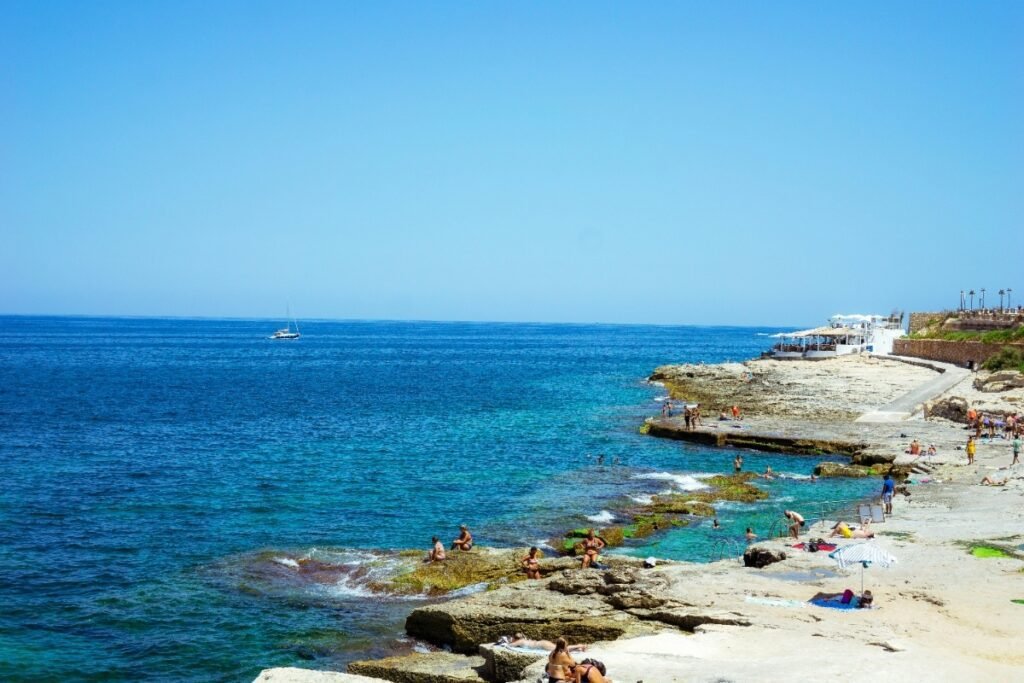
Timing, Seasons, and Feast Days
- Lampuki season runs September to November only. This is the island’s most celebrated seasonal fish, and it genuinely transforms the autumn restaurant menu. Additionally, lampuki pie — lampuki with spinach and capers in pastry — appears only during this window. Visiting outside the season and ordering lampuki means accepting a frozen substitute.
- Village feast days (festi) change the food experience entirely. Every village in Malta holds an annual parish festa, typically in summer. Street food vendors, nougat stalls, and food stands appear around the decorated churches and piazzas. Furthermore, local pastry shops produce festa-specific sweets that appear at no other time of year. However, village restaurants may be fully booked during these events, so planning ahead matters.
- Sunday lunch is a serious meal. Maltese families treat Sunday lunch as the week’s most important occasion. Consequently, village restaurants fill from noon and sometimes sell out of their best dishes by 14:00. Booking ahead on Sundays is advisable at any restaurant outside the tourist belt.
Costs, Customs, and Practical Notes
- Gozo is consistently better value than Malta. The same meal costs 15–25% less on Gozo than in Valletta or tourist Malta. Moreover, the cooking is often better — the ferry crossing of around €4.65 return for foot passengers justifies the trip on food grounds alone.
- Kinnie is not for everyone. The bitter-orange flavour divides visitors sharply. Nevertheless, trying it at least once — cold, from a glass bottle, at a village bar — gives a genuine taste of Maltese identity that no other drink provides.
- Maltese bread (ħobż Malti) is genuinely excellent. The crust is thick and hard, the crumb is dense and slightly sour. Specifically, bread bought from a traditional bakery (forn) early in the morning — still warm, sold by weight — justifies seeking out even without any topping. This bread is the foundation of Maltese food culture more than any single dish.
Frequently Asked Questions About Food in Malta
Key Dishes and Street Food
What is the national dish of Malta? Fenek — rabbit — is Malta’s national dish, and it holds genuine cultural significance beyond the culinary. Specifically, stuffat tal-fenek (rabbit stew braised in wine, garlic, and tomatoes) is the most traditional preparation, though fenek moqli (fried rabbit) is equally popular. Gozo produces the best versions, and the fenkata tradition — a communal rabbit feast, often held outdoors — remains an important social occasion on both islands.
What are pastizzi and where should I buy them? Pastizzi are flaky, diamond-shaped pastry parcels filled with either ricotta or mushy peas. They are the most important street food in Malta and cost €0.30–€0.50 at a local pastizzerija. However, not all pastizzeriji are equal — the best ones produce fresh batches throughout the day, and the pastry crackles straight from the oven. Among the most well-known is Crystal Palace in Rabat — busy at all hours and a reliable benchmark. However, any village pastizzerija with a queue of locals produces equally good results.
Maltese Drinks and Gozo
What is Kinnie and should I try it? Kinnie is a Maltese soft drink produced by the Farsons brewery since 1952, made from bitter Seville oranges and aromatic herbs. It tastes like a cross between Campari and traditional tonic water — sweet and bitter simultaneously. Specifically, it represents Maltese food identity as distinctively as any dish on the island. Trying it cold, from a glass bottle, at a village bar provides the best context for an honest first assessment.
Is Gozo worth visiting specifically for the food? Yes, without qualification. Gozo has better rabbit, better ġbejniet, better village restaurants, and a more intact traditional food culture than the main island. Furthermore, it produces its own sea salt (from the Xwejni salt pans) and honey that appear in local cooking and make excellent purchases. A day trip built specifically around a Gozo village lunch, fresh ġbejniet, and a walk past the salt pans represents a genuinely rewarding food-tourism itinerary.
Practical Dining Questions
How much does food cost in Malta compared to other Mediterranean destinations? Malta sits in the mid-range for Mediterranean eating — comparable to southern Italy and slightly more expensive than Cyprus or Greece outside their tourist zones. However, the gap between tourist-area and local prices in Malta is particularly sharp. A pastizzi lunch at a village pastizzerija costs almost nothing; a sit-down tourist-area meal in Valletta costs considerably more. Eating locally and avoiding the waterfront promenades keeps daily food costs genuinely low.
Do Maltese restaurants accept card payments? Tourist-area restaurants, cafés, and larger establishments across Malta and Gozo accept cards. However, pastizzeriji, village bars, and smaller family restaurants typically operate cash-only. Consequently, carrying €20–€30 in small notes covers most street-food and local-restaurant situations without inconvenience.
What time do restaurants in Malta serve dinner? Most Maltese restaurants serve dinner from 19:00 to 22:00. However, unlike Greece or Spain, Malta does not maintain a particularly late eating culture — local families typically eat dinner between 19:30 and 21:00. Tourist-area restaurants stay open later to accommodate visitors with different schedules.
Can vegetarians eat well in Malta? Adequately, yes. Several genuinely good plant-based dishes — bigilla, kapunata, pastizzi tal-piżelli, ħobż biż-żejt without tuna — provide satisfying options. However, assembling a complete vegetarian meal at a traditional village restaurant typically requires ordering from the starters and side-dish section rather than the mains. In tourist-area restaurants with international menus, explicitly vegetarian options are more widely available.
© 2026 — Editorial travel content. Not affiliated with the Malta Tourism Authority, Visit Malta, or any commercial food or hospitality operator. Pricing figures are approximate and subject to change.
Editorial & Accuracy Standards
- Expert Review:
Ammara Azmat,
Senior Travel Mobility Analyst (12+ years experience) - Status: Verified for accuracy against official 2026 service data and real-time traveller reports.
- Our Process: This content follows our Fact-Checking Policy.