
How to Eat in Taiwan: Night Markets, Tainan Specialities and Etiquette
Sunset Weekly Disclosure: To help keep our guides free, this post contains affiliate links. If you click through and make a booking (such as hotels, flights, tours, or travel experiences), we may earn a commission at no extra cost to you. Sunset Weekly is an independent travel and lifestyle publication. While we may receive compensation from affiliate partners, this does not influence our editorial content, recommendations, or opinions. #ad
Quick Answer: Taiwan delivers some of the best-value food in Asia. Night markets, breakfast soy milk shops, bowl after bowl of braised pork rice, and the city of Tainan — widely regarded as Taiwan’s food capital — reward travellers who explore beyond Taipei. Tipping is not customary, prices are low, and the convenience store culture is genuinely excellent. This is one of the most accessible food destinations in the world.
Editorial note: This guide covers Taiwan’s major food regions with attention to practical eating, pricing, and realistic traveller expectations. Pricing reflects 2025–2026 conditions. No restaurants, tourism boards, or commercial operators have contributed to or influenced this content.
Taiwan is not a single food culture — it is several operating at once. Japanese colonial influence runs through fifty years of culinary history. Hokkien and Hakka immigrant traditions shaped the everyday kitchen. Indigenous Taiwanese foodways contribute ingredients and techniques found nowhere else. The result is a cuisine of exceptional depth. It rewards curiosity rather than caution. Furthermore, Taiwan’s street food and night market tradition makes this depth accessible at very low prices. Most of the country’s best food costs under NTD 100 (approximately £2.40 or $3).
What Food Is Taiwan Known For?
Answer capsule: Taiwan is known for beef noodle soup, braised pork rice, scallion pancakes, oyster vermicelli, stinky tofu, gua bao, bubble tea, and night market culture. Tainan contributes its own distinct dishes — danzai noodles, coffin bread, and milkfish congee. Bubble tea originated in Taiwan in the 1980s and remains one of the country’s most globally recognised food exports.
Taiwan’s food identity reflects layered cultural history. Japanese colonial influence left a love of clean presentation and quality ingredients. Hokkien immigrants from Fujian province brought braised pork, oyster-based dishes, and the tradition of cooking over long, slow heat. Indigenous communities contributed ingredients — wild boar, millet, mountain herbs — found in specific regional restaurants.
However, Taiwan’s most democratic food format is the street stall. Night markets evolved from simple roadside cooking into organised evening food districts. They now attract a mix of locals and visitors. Consequently, the street stall remains the truest expression of what Taiwan actually eats daily.
Taiwan’s Essential Dishes at a Glance
| Dish | What It Is | Best Context |
|---|---|---|
| Lu rou fan | Braised pork belly over rice; rich, sweet soy sauce | Everywhere; the definitive Taiwanese comfort food |
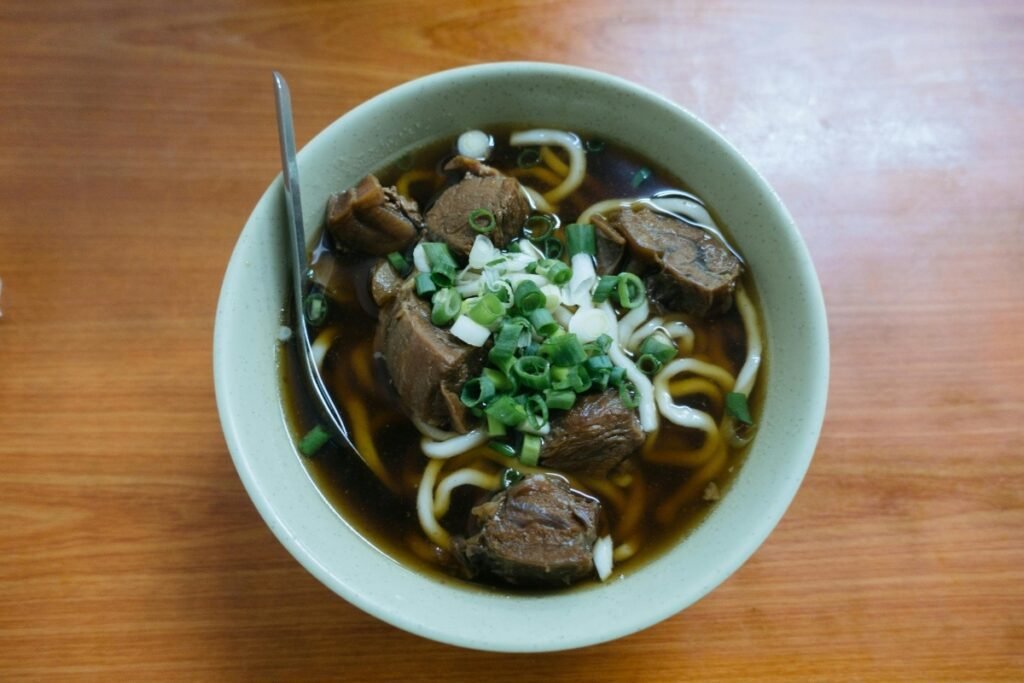
| Beef noodle soup | Slow-braised beef shank in spiced broth; chewy noodles | Specialist beef noodle shops; Taipei has hundreds |
| Oyster vermicelli | Thin rice noodles with oysters in sticky sweet potato starch broth | Night markets; traditional shophouses |
| Gua bao | Steamed bun with braised pork belly, pickled mustard greens, and peanut powder | Night markets; dedicated gua bao shops |
| Scallion pancake | Flaky, layered fried dough with spring onion; often served with egg | Breakfast stalls; morning markets |
| Stinky tofu | Fermented tofu, deep-fried or braised; pungent smell, mild flavour | Night markets; the smell is worse than the taste |
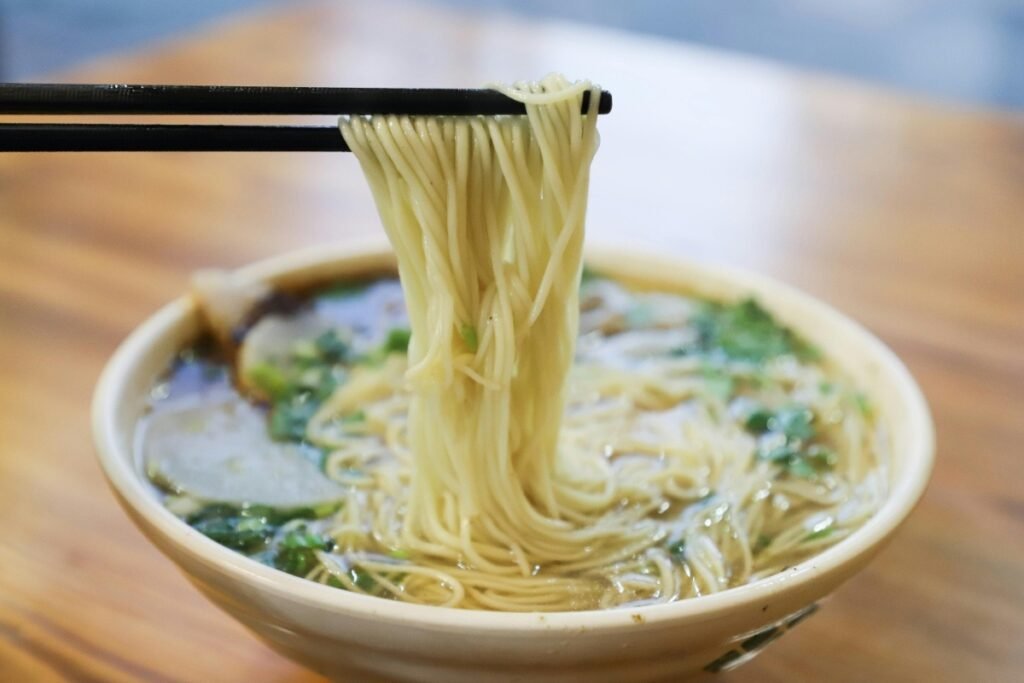
| Danzai noodles | Thin noodles in shrimp broth with braised pork; a Tainan speciality | Tainan specifically; the original shop dates to 1895 |
| Coffin bread | Hollowed thick toast filled with creamy seafood or meat stew | Tainan only; a local invention from the 1940s |
| Milkfish congee | Smooth rice porridge with milkfish, ginger, and sesame oil | Tainan; a breakfast institution |
| Taro balls | Chewy taro and sweet potato spheres in sweet soup; hot or cold | Jiufen village; dessert stalls across Taiwan |
| Bubble tea | Cold tea with chewy tapioca pearls; originated in Taichung, 1980s | Everywhere; originator shops in Taichung |
| Pineapple cake | Dense pineapple jam in shortcrust pastry; Taiwan’s most famous souvenir | Bakeries, gift shops; quality varies considerably |
Understanding Taiwan’s Regional Food Cultures
Answer: Taiwan divides into four meaningful food regions: Taipei (diverse, cosmopolitan, night market hub), Tainan (the food capital, deepest culinary tradition), Taichung (bubble tea origin, Fengjia Night Market), and Kaohsiung (port city, strong seafood and Hakka traditions). Each city rewards a different kind of eating.
Taipei: The Cosmopolitan Kitchen
Taipei contains the widest variety of food in Taiwan. However, it is not the island’s most original food city. Its strength lies in concentration — specialist beef noodle shops, Japanese-influenced izakayas, high-end Taiwanese cuisine, and some of the country’s most famous night markets all sit within a single city.
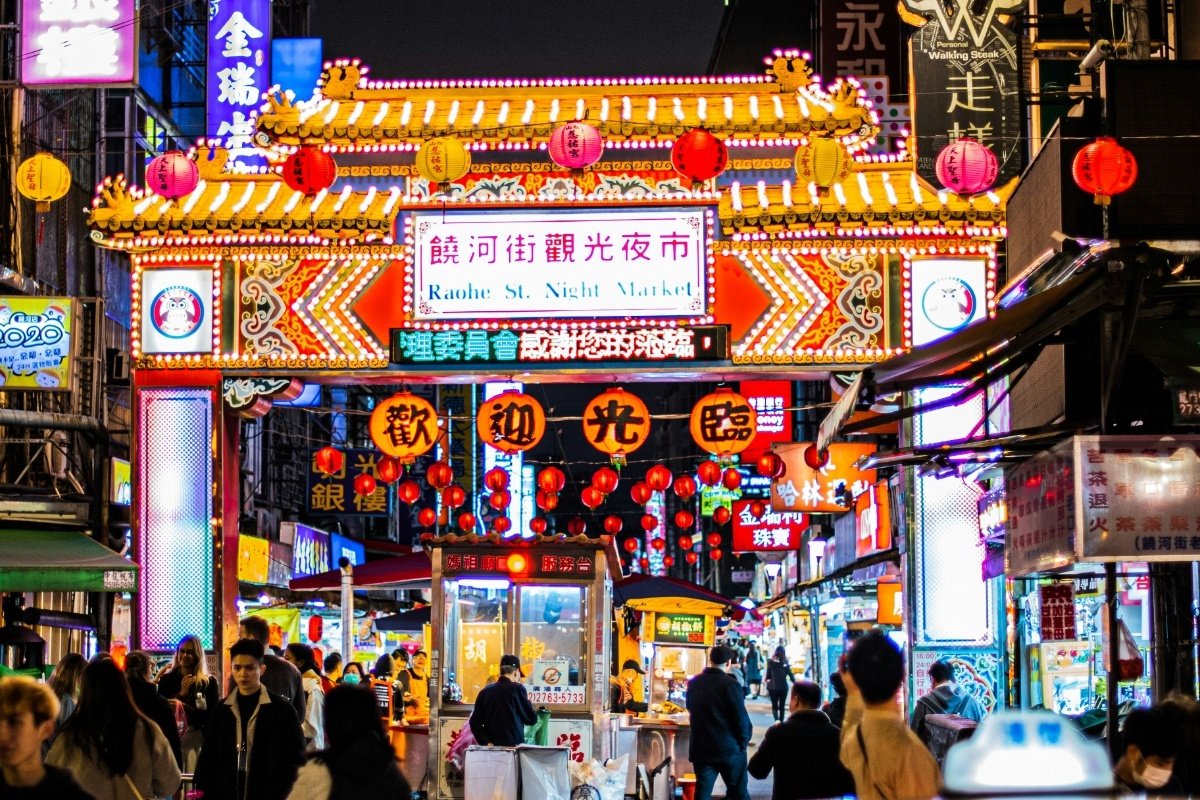
The night markets most associated with Taipei are Shilin, Raohe, Ningxia, and Tonghua (Linjiang Street). Shilin attracts the most tourists and has consequently raised its prices. Raohe and Ningxia are smaller, more local, and produce better everyday food. Ningxia specifically specialises in traditional Taiwanese dishes rather than the tourist-facing fried and grilled items that dominate Shilin.
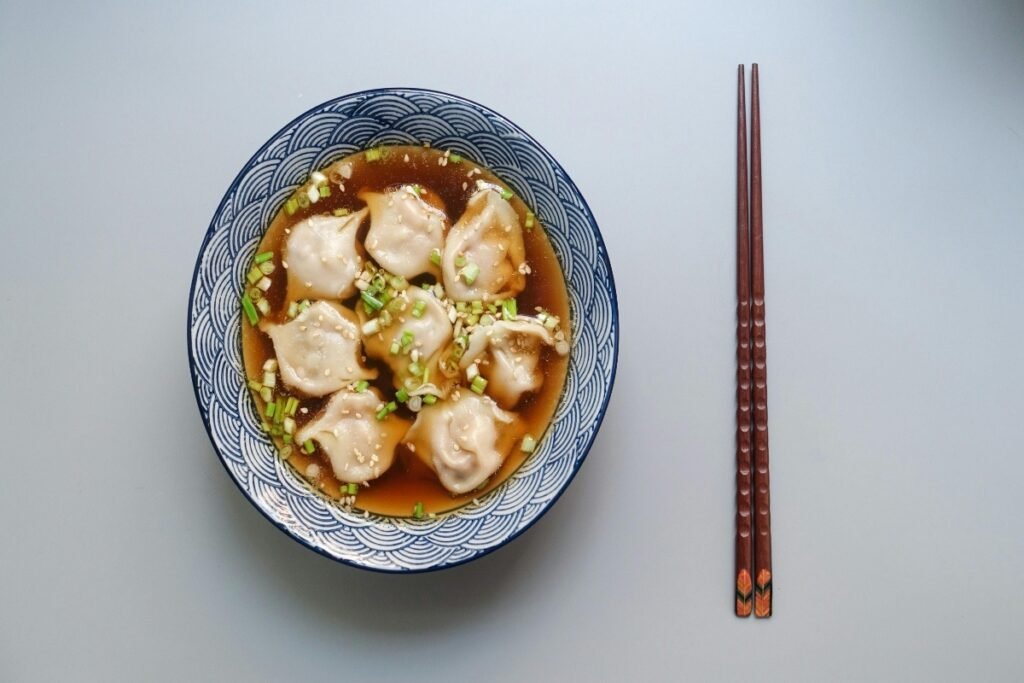
Din Tai Fung originated in Taipei in 1958 as a cooking oil business and became famous globally for its xiaolongbao (soup dumplings). Its Yongkang Street location remains a food pilgrimage for many visitors. However, queues run long — 90 minutes to two hours on weekends — and comparable dumplings are available across the city at lower prices. Din Tai Fung is worth visiting once for the quality and precision. It is not the only context for excellent dumplings in Taiwan.
The Yongkang Street area in Da’an District concentrates a range of quality restaurants beyond Din Tai Fung. Dihua Street in Datong District offers the best dried goods market in Taiwan. Xinyi District has the city’s most polished restaurant scene and its most expensive meals.
Tainan: Taiwan’s Food Capital
Tainan is the oldest city in Taiwan. It also produces the most distinct and celebrated regional food on the island. Specifically, Tainan cooking reflects centuries of Hokkien immigrant tradition. Dishes here are generally sweeter and more complex than their Taipei equivalents.
The city’s breakfast culture alone justifies a visit. Milkfish congee shops open before dawn. Virtual queues form outside the best danzai noodle restaurants. Coffin bread — thick toast hollowed out and filled with a creamy seafood stew — appears only in Tainan and reflects local ingenuity rather than tourist invention.
Furthermore, Tainan’s food markets and old streets carry an authenticity that other Taiwanese cities have partially lost to development. The Koxinga Shrine area, the streets around Chihkan Tower, and the Anping district all concentrate traditional food stalls. Tainan is the destination for a traveller whose primary reason to visit Taiwan is food.
Taichung: Bubble Tea and Fengjia
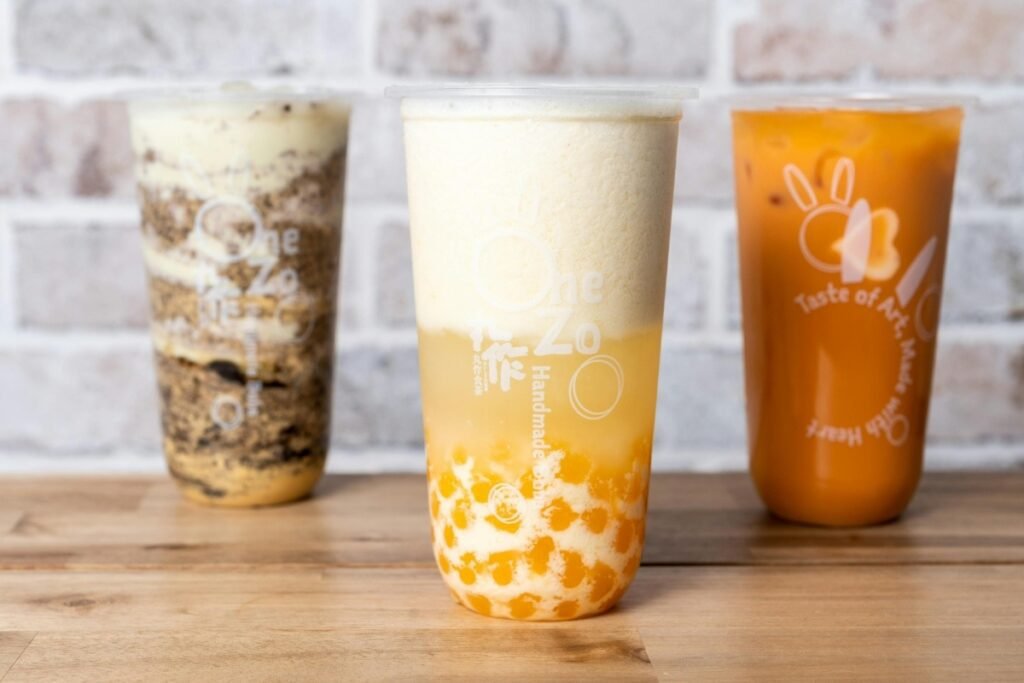
Taichung is the origin of bubble tea. Both Chun Shui Tang and Hanlin Tea Room claim to have invented the drink in the late 1980s. However, the debate is secondary to the experience — visiting one of the original shops provides context that no Taipei franchise replicates.
Fengjia Night Market near Tunghai University is Taiwan’s highest-grossing night market by revenue. It attracts enormous crowds on weekends. Consequently, weekday evenings produce a much more manageable experience. Fengjia is known for innovation — unusual flavour combinations and experimental street food appear here before reaching other markets.
Kaohsiung: Seafood and the South
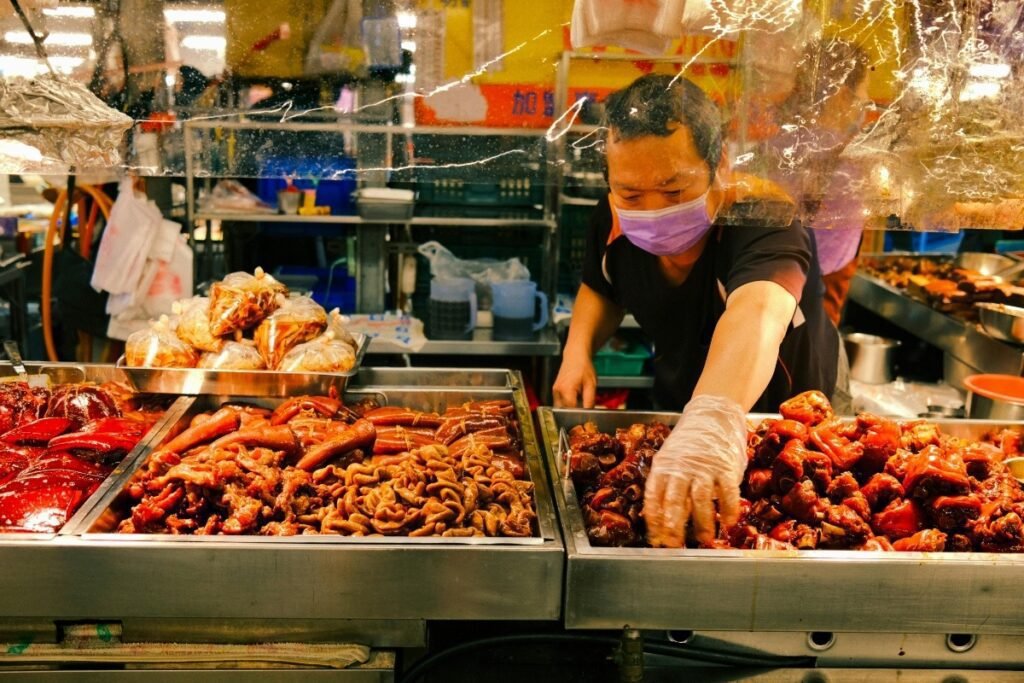
Kaohsiung is Taiwan’s second city and its major port. Its food culture reflects this — fresh seafood markets, strong Hakka culinary traditions, and a night market scene that caters primarily to locals rather than tourists. Liuhe Night Market on Liuhe Road is the city’s most accessible for visitors. However, the smaller local markets in residential districts produce more honest cooking at lower prices.
Night Market Culture in Taiwan
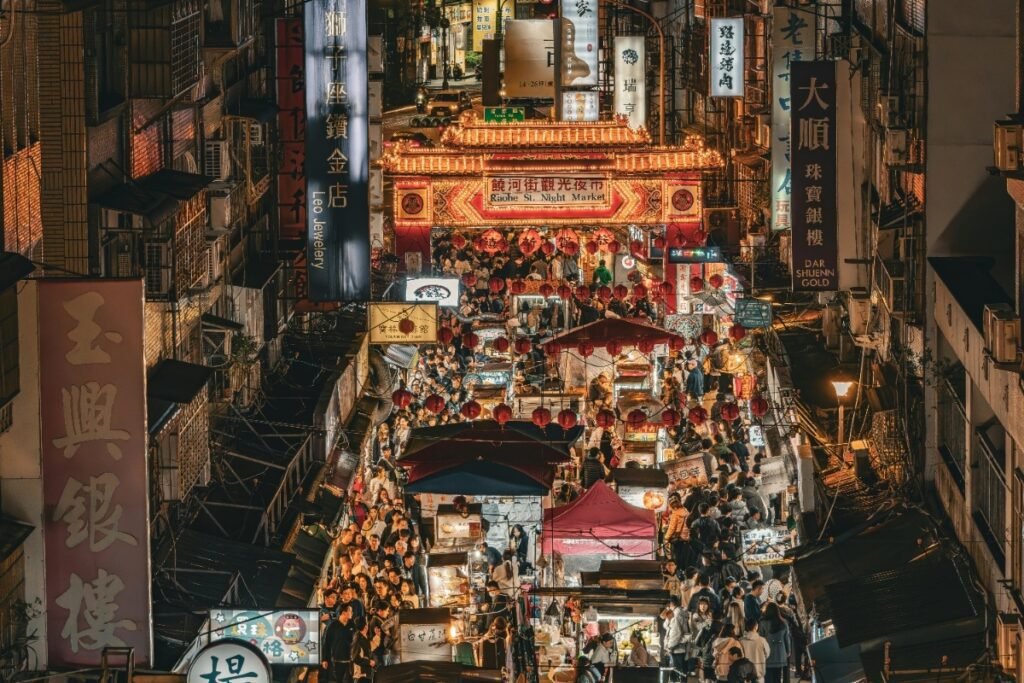
Answer: Night markets are the backbone of Taiwanese street food culture. They open in the early evening (typically 18:00–20:00) and run until midnight or later. Eating at a night market involves moving between stalls, ordering small portions, and eating standing or at shared plastic tables. Prices are low. Most dishes cost NTD 50–150 (£1.20–£3.60).
How Night Markets Actually Work
Night markets in Taiwan are not primarily tourist attractions. They serve the local residential population as an alternative to cooking at home. Consequently, the food reflects genuine local preferences — not a curated selection of photogenic dishes for international visitors.
Most stalls specialise in one or two items. This narrow focus is a quality indicator. A stall selling only oyster vermicelli for thirty years produces better oyster vermicelli than a stall selling fifteen different dishes. Furthermore, long queues at a specific stall carry real meaning — locals queue for quality, not novelty.
What to Order and How
Ordering at a night market stall typically involves pointing at a menu or a display. Holding up fingers to indicate quantity works reliably. Basic Mandarin or Taiwanese Hokkien phrases help considerably — “yi ge” (one portion) and a confident point resolves most interactions.
Specifically, the best strategy for a first night market visit is to eat small portions across multiple stalls. Taiwan’s night market portions suit this approach perfectly. A full dinner costs NTD 200–400 (£5–£10) when spread across five or six stalls.
Which Night Markets to Prioritise
| Night Market | City | Character | Best For |
|---|---|---|---|
| Ningxia Night Market | Taipei | Small, local, traditional | Traditional Taiwanese dishes; less tourist pressure |
| Raohe Street Night Market | Taipei | Mid-sized, accessible | Reliable quality; black pepper bun at the temple entrance |
| Shilin Night Market | Taipei | Large, tourist-facing | Worth visiting once; higher prices than other Taipei markets |
| Fengjia Night Market | Taichung | Enormous, innovative | Experimental food; go on a weekday |
| Liuhe Night Market | Kaohsiung | Accessible for visitors | Fresh seafood; good for an evening in Kaohsiung |
| Huayuan Night Market | Tainan | Primarily local | Tainan specialities; less international visitor traffic |
How Expensive Is Food in Taiwan?
Answer: Taiwan is one of the most affordable food destinations in Asia. A full day of eating well — breakfast, lunch, night market dinner — typically costs NTD 400–700 (£9–£17). Sit-down restaurants at the mid-range level cost NTD 300–600 per person (£7–£14). Fine dining exists in Taipei but remains accessible compared with equivalent quality in Europe.
Pricing by Meal Type
| Meal Type | NTD | Approx. GBP | Notes |
|---|---|---|---|
| Night market dish (single portion) | 50–150 | £1.20–£3.60 | Most iconic dishes under NTD 100 |
| Braised pork rice (lu rou fan) | 35–60 | £0.85–£1.45 | The cheapest satisfying meal in Taiwan |
| Beef noodle soup (restaurant) | 150–350 | £3.60–£8.40 | Price reflects broth quality and beef cut |
| Scallion pancake with egg (breakfast) | 40–60 | £0.95–£1.45 | Standard breakfast stall price |
| Bubble tea (standard) | 50–80 | £1.20–£1.90 | Premium shops charge NTD 120–160 |
| Set lunch (local restaurant) | 100–200 | £2.40–£4.80 | Includes rice, main, and soup |
| Mid-range dinner (sit-down, per person) | 300–600 | £7.20–£14.40 | Good neighbourhood restaurant |
| Fine dining tasting menu (Taipei) | 1,800–4,500 | £43–£108 | Before drinks; significantly cheaper than Europe |
| Taiwan Beer (convenience store) | 35–55 | £0.85–£1.30 | Cheapest in Asia for this quality |
| Coffee (independent café) | 120–180 | £2.90–£4.30 | Specialty coffee scene is well developed |
| Convenience store meal (7-Eleven) | 50–120 | £1.20–£2.90 | Genuinely good; a legitimate meal option |
Tipping in Taiwan
Taiwan has no tipping culture. Nobody expects a tip at a restaurant — not at night market stalls, food courts, or casual restaurants. However, some higher-end restaurants add a 10% service charge to the bill — this appears as a line item rather than an expectation of additional gratuity. Consequently, food in Taiwan costs exactly what the menu states, with no social arithmetic required.
Street Food and Convenience Store Culture
Answer: Taiwan’s street food culture extends beyond night markets into morning markets, breakfast stalls, and one of the world’s most exceptional convenience store systems. 7-Eleven and FamilyMart in Taiwan sell genuinely good prepared food — steamed buns, tea eggs, rice boxes, and hot foods — at prices well below any sit-down restaurant. This is not a compromise option. It is a legitimate part of how Taiwan eats.
Morning Market and Breakfast Culture
Taiwanese breakfast culture is one of Asia’s most distinctive. It centres on soy milk shops — traditional establishments open from 05:00 or 06:00 serving freshly made warm or cold soy milk alongside you tiao (fried dough sticks), scallion pancakes, and dan bing (egg crepe). These shops identify themselves by their early opening and their queuing local clientele.
Specifically, a breakfast of warm unsweetened soy milk and a freshly made scallion pancake costs NTD 60–90 (approximately £1.45–£2.20). This represents Taiwan’s most traditional morning meal. It also represents excellent food at minimal cost.
Furthermore, many wet markets across Taiwan contain breakfast vendors serving congee, noodle soups, and braised dishes from early morning. These are primarily attended by market workers and elderly residents. However, they produce some of the most honest and affordable cooking in the country.
The Convenience Store as a Food Institution
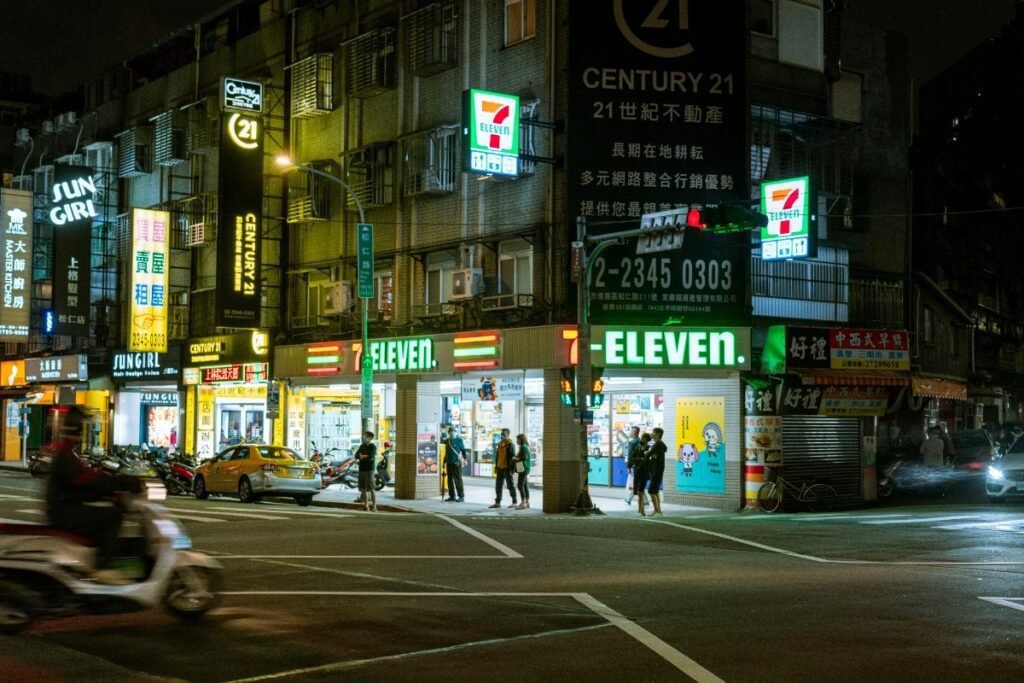
Taiwan has more convenience stores per capita than almost any country on earth. 7-Eleven, FamilyMart, Hi-Life, and OK Mart operate on every main street in every city and town. These are not the limited petrol-station stores found in Europe. They are genuinely useful food destinations.
Specifically, the hot food section offers steamed buns, tea eggs, oden (Japanese-style fishcake and egg broth), and rice boxes. The refrigerated section stocks sandwiches, onigiri (rice balls), and cold noodle dishes. A complete and satisfying meal from 7-Eleven costs NTD 80–150 (£1.90–£3.60). Additionally, convenience stores in Taiwan sell Taiwan Beer, hot coffee, and bubble tea at competitive prices.
Taiwan’s Drinking Culture
Answer: Taiwan’s drinking culture centres on bubble tea, fresh juices, soy milk, and a casual beer culture built around Taiwan Beer (Taiwan Sheng). The island also produces Kaoliang — a strong sorghum spirit from Kinmen Island — and an increasingly serious specialty coffee scene in Taipei and Taichung. Tipping applies at no point in this culture.
Bubble Tea: Origin and How to Order
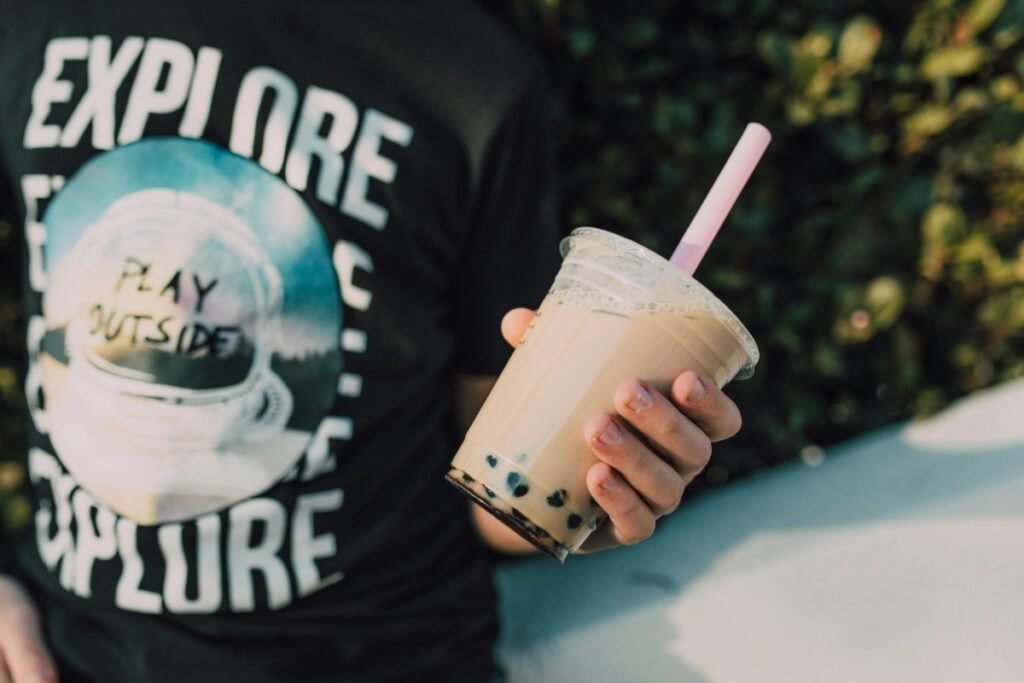
Bubble tea — cold tea with chewy tapioca pearls — originated in Taiwan in the 1980s. Taichung is the accepted birthplace. Two establishments, Chun Shui Tang and Hanlin Tea Room, both claim the invention. The historical dispute remains open. However, both shops produce excellent bubble tea that differs considerably from the franchise versions found globally.
Ordering bubble tea in Taiwan involves specifying sweetness and ice level. Most shops offer a scale: 0%, 25%, 50%, 75%, or 100% sugar. Ice levels run similarly. Specifically, 50% sugar and 50% ice produces a balanced result for most palates new to the format. Full sugar and full ice is the local default in Taiwan’s heat.
Beer and Spirits
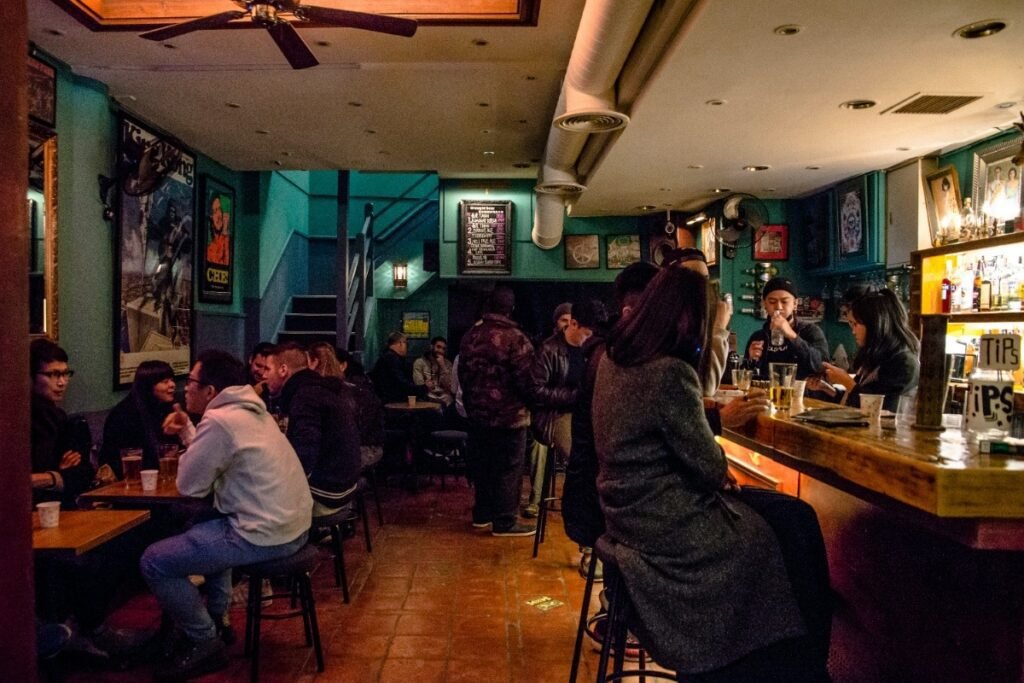
Taiwan Beer (Taiwan Sheng), produced by the Taiwan Tobacco and Liquor Corporation, is a light, clean lager suited to the climate. It pairs naturally with spicy, flavourful street food. A bottle from a convenience store costs NTD 35–55 (£0.85–£1.30). At a restaurant or bar it costs NTD 80–150.
Kaoliang is a clear sorghum spirit from Kinmen Island, off the coast of Fujian province. It runs at 58% or 38% ABV. Kinmen 58 is the most famous variety. Traditionally, diners drink it straight from small cups alongside food. Consequently, it pairs with strong flavours — braised pork and pickled vegetables — in a way that beer does not.
Taiwanese Tea Culture
Taiwanese tea culture runs deeper than tourist gift shops suggest. The island produces exceptional oolong teas — specifically Alishan and Li Shan high-mountain oolongs. It also produces Taiwanese Eastern Beauty (Dongfang Meiren) and sun-dried black teas from Yuchi in Nantou County. A proper tea house experience in Taipei or Jiufen costs NTD 200–400 per person for multiple steepings. This is the most distinctively Taiwanese drinking experience available.
| Drink | Best Context | Typical Price (NTD) |
|---|---|---|
| Bubble tea (standard, shop) | Any bubble tea chain or independent shop | 50–80 |
| Bubble tea (premium, Chun Shui Tang) | Taichung or Taipei branches | 120–160 |
| Fresh sugarcane juice (stall) | Night markets, street stalls | 40–60 |
| Warm soy milk (breakfast stall) | Morning markets, traditional soy milk shops | 25–40 |
| Taiwan Beer (convenience store) | 7-Eleven, FamilyMart | 35–55 |
| Taiwan Beer (restaurant) | Night market restaurants, izakayas | 80–150 |
| Kaoliang 58 (restaurant measure) | Traditional restaurants, especially in Kinmen | 80–150 |
| Specialty coffee (independent café) | Taipei, Taichung specialty cafés | 120–180 |
| High-mountain oolong (tea house) | Tea houses in Jiufen, Taipei, Maokong | 200–400 per person |
What Should Tourists Avoid?
Answer: The main tourist-facing food traps in Taiwan concentrate on over-visited night markets (specifically Shilin on weekends), overpriced souvenir food shops near major attractions, and restaurants in hotel lobbies or international shopping malls. However, Taiwan’s tourist food problem is less acute than in most other Asian food destinations. Local and tourist prices rarely diverge dramatically.
Night Market Caution
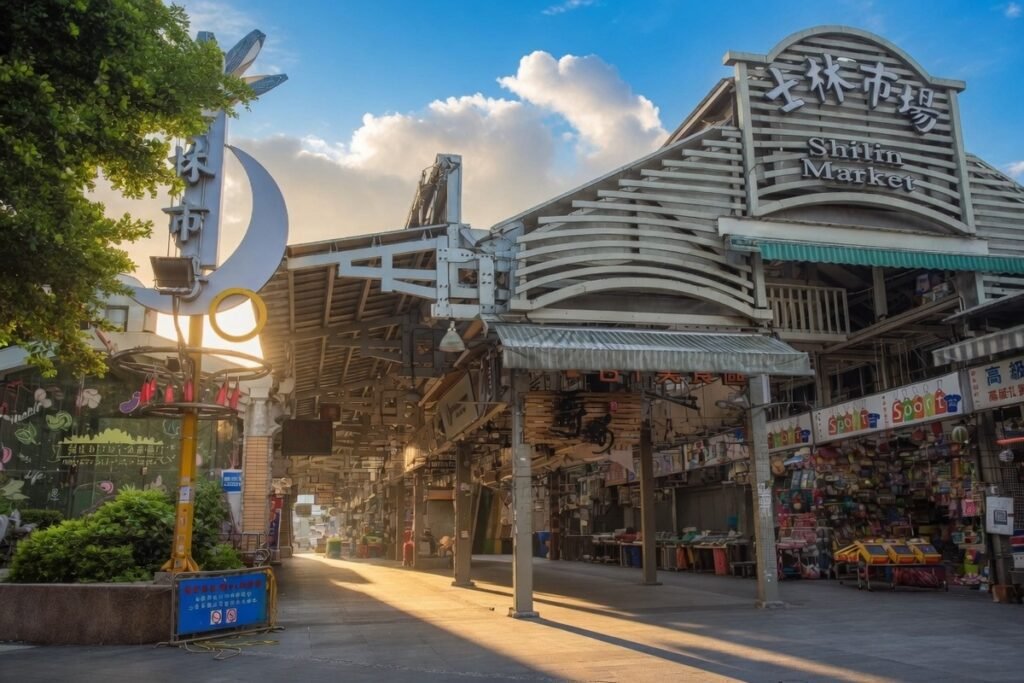
Shilin Night Market on weekends concentrates extremely large crowds into a relatively small area. Prices run higher than comparable items at Ningxia or Raohe. Furthermore, many stalls near Shilin’s busiest entrances operate primarily on tourist traffic. Visiting on a Tuesday or Wednesday evening produces prices and atmosphere closer to the local norm.
Taiwanese “tourist fried chicken” at markets specifically facing international visitors uses lower-quality cuts and emphasises portion size over flavour. Specifically, the enormous deep-fried chicken cutlets (ji pai) sold in tourist-facing stalls are a different product from the quality chicken preparations available at local restaurants.
Souvenir Food
Pineapple cakes near major tourist sites charge 40–60% more than the same product at established bakeries. Specifically, shops around Taipei 101 and Chiang Kai-shek Memorial Hall run premium pricing on identical products. Buying pineapple cakes and sun cakes from established manufacturers — Sunnyhills, Vigor Kobo, or Yixin Bakery — produces significantly better results at better prices.
Traveller Practicality: Vegetarians, Families, Allergies
Answer: Taiwan is one of Asia’s most vegetarian-friendly destinations. The island’s Buddhist vegetarian restaurant tradition (素食, sù shí) produces genuinely good plant-based cooking. Yellow signs with red characters mark these establishments across every city and town. Families eat well here — restaurants welcome children in essentially all eating contexts. Allergy awareness, however, is uneven outside urban centres.
Vegetarian Reality
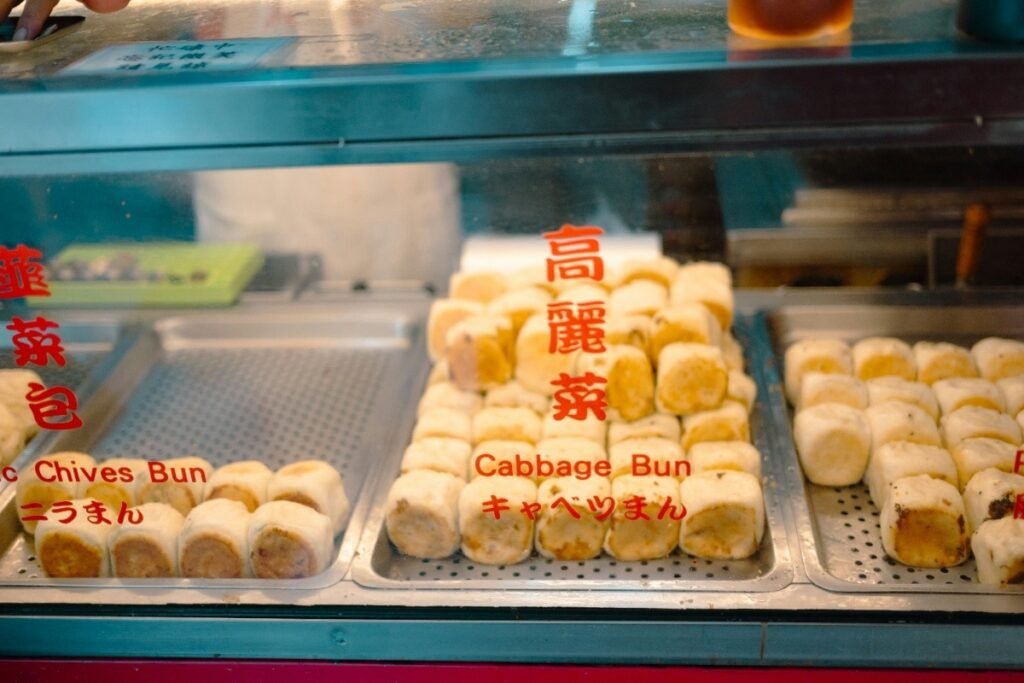
Taiwan’s Buddhist vegetarian tradition is genuine rather than trend-driven. Sù shí (vegetarian) restaurants appear across every city, town, and many villages. Yellow signs marked with red characters or the character 素 identify them consistently.
However, Taiwanese Buddhist vegetarianism also excludes five pungent vegetables — garlic, onions, green onions, shallots, and chives — per Buddhist dietary rules. Some strict establishments cook without these entirely. Consequently, dishes may taste milder than their non-vegetarian equivalents. Asking about this when ordering prevents surprise.
Beyond dedicated vegetarian restaurants, many dishes are naturally meat-free. Scallion pancakes, tofu dishes, taro preparations, and vegetable congee appear across general menus. Furthermore, Taiwan’s night markets contain more plant-based options than markets in most other Asian countries.
Families and Allergy Awareness
Taiwan accommodates families naturally in almost every eating context. Children eat late alongside adults. Night markets, in particular, suit mixed groups of all ages and appetites. Most dishes are small enough for sharing between a child and an adult.
However, sesame, peanuts, and shellfish appear widely in Taiwanese cooking — often as garnishes or in sauces rather than as primary ingredients. Specifically, peanut powder appears as a topping on gua bao, tang yuan, and some desserts without always appearing on the menu description. Travellers with nut allergies should specify this at every interaction. English-language communication at night market stalls runs thin. Having the allergy written in Traditional Chinese (我對花生過敏 — I am allergic to peanuts) resolves most situations.
Local Dining Etiquette in Taiwan
Answer: Taiwanese dining culture moves at a relaxed, communal pace. Nobody expects a tip anywhere — not at restaurants, night markets, or cafés. Sharing dishes across the table is the norm at sit-down meals. Tables turn at a reasonable pace in busy restaurants. Furthermore, chopstick etiquette matters: never leave chopsticks standing upright in rice, and never use them to pass food directly to another person’s chopsticks.
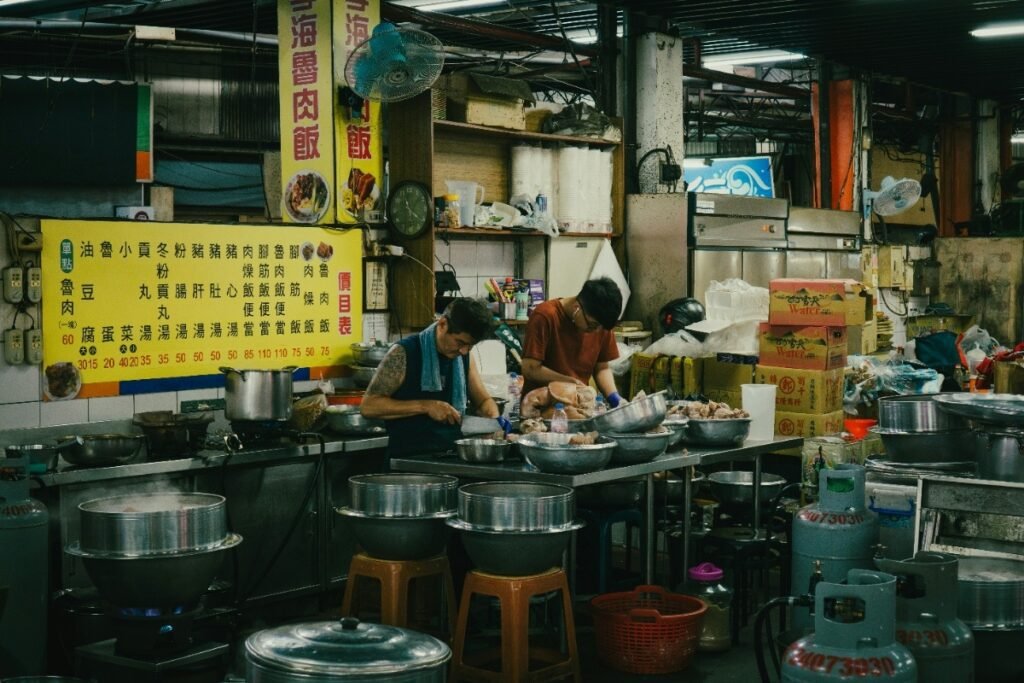
Table Customs
Sitting down at a Taiwanese restaurant generally involves receiving tea or water automatically — often free, occasionally charged. Communal dishes arrive simultaneously rather than in courses. Sharing is both practical and expected.
Bills in Taiwan arrive when presented or when requested. At sit-down restaurants, asking for the bill — “mai dan” in Mandarin — is straightforward. However, at night market stalls and food courts, payment happens at the time of ordering. Consequently, carry small bills (NTD 50, 100, 200) for smooth night market transactions.
At many queue-based restaurants, a number ticket or queue management system controls the order. Specifically, the process involves collecting a ticket, watching for your number to appear, and then ordering at the counter. This system is efficient. Understanding it prevents confusion at busy lunch spots.
Chopstick Etiquette
Two chopstick behaviours carry strong cultural weight in Taiwan. Leaving chopsticks standing upright in a bowl of rice resembles incense sticks at a funeral — avoid this entirely. Passing food from chopstick to chopstick recalls another funeral ritual — place food on a plate or directly into someone’s bowl instead.
Additionally, communal dishes often come with serving chopsticks. Using personal chopsticks for communal dishes is less common in Taiwan than in some neighbouring countries. However, practices vary by context — follow the lead of other diners at the table.
Best Areas for Food by Budget and Traveller Type
| Traveller Type | Best Area | Why |
|---|---|---|
| Traditional Taiwanese food | Tainan (old city area) | Deepest culinary tradition; danzai noodles, coffin bread, milkfish congee |
| Night market culture | Ningxia or Raohe, Taipei | Smaller, more local, better quality than Shilin |
| Bubble tea origin story | Taichung (Chun Shui Tang) | The originator shop; pairs with Fengjia Night Market |
| Budget eating | Any 7-Eleven, morning market, lu rou fan shophouse | NTD 50–150 per meal; no tourist premium |
| Japanese-influenced cuisine | Taipei (Da’an, Xinyi districts) | Strong izakaya, ramen, and Japanese-Taiwanese fusion culture |
| Vegetarian | Taipei or Tainan (sù shí restaurants) | Highest concentration of Buddhist vegetarian restaurants |
| Seafood | Kaohsiung or northeastern coast fishing towns | Fresh catch from the Taiwan Strait and Pacific coast |
| Tea culture | Jiufen, Maokong (Taipei), or Nantou County | High-mountain oolong at source; traditional tea house experience |
| Short stay (1–2 days) | Taipei (with one Tainan day trip) | Full spectrum from night markets to refined dining |
Where To Stay in Taiwan?
Agoda maintains broad Taiwan coverage with over 25,000 listed properties and dedicated country pages designed for fast comparison shopping across cities rather than deep editorial analysis. In practice, this structure supports quick filtering by destination, price, and review score, yet individual property pages often require clicking through for full guest ratings and detailed photos rather than surfacing every metric directly in search snippets.
For Taiwan, the platform’s strongest practical value lies in geographic spread: Taipei for major international transport hubs and urban density, Tainan for heritage sites and street food, Taichung for central-western access and family-friendly options, and Kaohsiung for high-speed rail convenience plus port and coastal links. Treat Agoda as a high-volume booking marketplace with wide inventory, where final hotel selection should prioritise exact address, station proximity, property type, and verified recent reviews over brand name alone.
| Hotel & Location | Best For | Unique Feature | Verified Rating | Action |
|---|---|---|---|---|
|
Silks Place Tainan No. 1 Heyi Rd, West Central District, Tainan, Taiwan |
Culture & Heritage Stays | Near the National Museum of Taiwan Literature and National Art Museum of Taiwan Literature, with a buffet breakfast and in-house grill restaurant. | 9.2/10 | BOOK NOW |
|
Kindness Hotel Kaohsiung Main Station Kaohsiung, Taiwan |
Budget & Rail Travellers | Agoda’s Taiwan inventory includes this property, but the snippet here does not surface the full detail set. | 9.2/10 | BOOK NOW |
|
53 Hotel No. 27 Zhongshan Rd., Central District, Taichung City 400, Taiwan |
City Stays & Station Access | Boutique-style hotel close to Taichung Station and Taichung Park. | 8.8/10 | BOOK NOW |
|
Caesar Metro Taipei 167, Bangka Blvd., Wanhua District, Taipei, Taiwan |
City Breaks & MRT Access | 745 rooms, outdoor pool, fitness centre, and a 3-minute walk to MRT Longshan Temple Station. | 8.6/10 | BOOK NOW |
|
Caesar Park Hotel Taipei Taipei, Taiwan |
Central Stays & Rail Access | Listed by Agoda as a Taiwan hotel, but the snippet did not expose full property details. | 8.3/10 | BOOK NOW |
Important Things Travellers Should Know Before Eating in Taiwan
Timing, Seasons, and Practical Notes
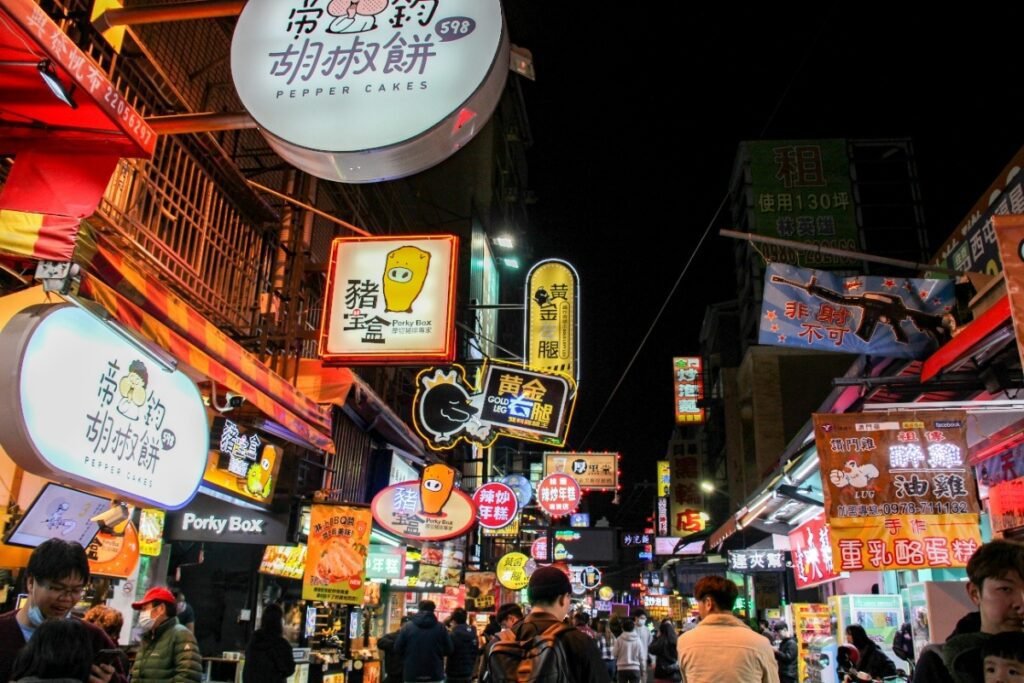
- Night markets open in the evening. Most stalls start between 17:00 and 19:00. Peak activity runs 20:00–22:00. Arriving early means fewer crowds and fresher stock at each stall. However, some popular stalls sell out before 21:00.
- Tipping is genuinely not done. This is not a cultural formality — no service staff expects a tip anywhere in Taiwan. Leaving money on the table after a meal creates confusion rather than gratitude. The price on the menu or board is the price you pay.
- Breakfast starts early. The best soy milk shops and scallion pancake stalls open at 05:30–06:30 and often sell out by 09:00. Visiting a traditional Taiwanese breakfast institution requires an early start.
- Tainan deserves its own trip. Visiting Taiwan without spending at least one full day in Tainan misses the island’s most important food culture. Tainan is two hours from Taipei by HSR (High Speed Rail) — accessible on a day trip but better as an overnight stay.
Costs, Customs, and Food Safety
- Convenience stores are a legitimate meal option. 7-Eleven in Taiwan is not a fallback position. It is a functioning part of the food system. A tea egg, a steamed bun, and a cold oolong tea from FamilyMart costs NTD 80–100. This is a reasonable breakfast or snack by any standard.
- Food safety at night market stalls is generally reliable. Taiwan’s food safety standards rank high compared with most Asian street food destinations. High turnover at popular stalls keeps food cooking fresh rather than sitting. Avoiding uncooked meat and pre-cut fruit left in open heat reduces risk further.
- Carry small change. The smallest denomination Taiwanese bill is NTD 100. Many night market stalls cannot easily break large notes. Carrying NTD 50 and 100 coins (and 100 bills) makes transactions faster.
- Seasonal fruit deserves attention. Mangoes in summer (July–September) from southern Taiwan are exceptional by any global standard. Pineapples, guava, and custard apples reach peak quality at specific seasonal windows. Buying from a fruit vendor in a wet market at peak season represents one of Taiwan’s best eating experiences.
Frequently Asked Questions About Food in Taiwan
Night Markets, Dishes, and Classics
What should I eat at a Taiwanese night market? The most reliable first-visit order across any major market would include oyster vermicelli, braised pork rice (lu rou fan), stinky tofu (the smell precedes the taste by a wide margin — push through it), and a bubble tea or fresh sugarcane juice to finish. Additionally, scallion pancakes eaten directly from the griddle represent the most universally approachable Taiwanese street food. Most of these cost NTD 50–100 each.
What is stinky tofu and should I try it? Stinky tofu undergoes fermentation in a brine solution, producing a powerful odour. The smell genuinely challenges most first-time visitors. However, the flavour is considerably milder than the smell suggests. Deep-fried stinky tofu — served with sweet and spicy sauce and pickled cabbage — has a crispy exterior and soft interior. It is a genuinely good dish once the sensory barrier is overcome. Furthermore, the braised version found in some restaurants is milder still.
Is bubble tea from Taiwan different from bubble tea elsewhere? Significantly, yes. Taiwanese bubble tea uses higher-quality tea bases — often freshly brewed rather than powdered — and tapioca pearls with a chewy texture calibrated to the specific drink. Specifically, the original Chun Shui Tang version in Taichung uses jasmine green tea, honey, and freshly made pearls. The global franchise version uses artificial flavouring and mass-produced pearls. The difference is immediately apparent.
Ordering, Tipping, and Getting Around
How do I order food at a Taiwanese night market stall? Most stalls display their menu on a board or sign, often in Chinese with prices. Pointing at what you want and holding up fingers for quantity works reliably. Some stalls have paper order forms — point at the item and write the number. A few Taiwanese words help: “yi ge” (one portion), “la” (spicy), “bu la” (not spicy), “xie xie” (thank you). The transaction is brief and efficient at most stalls.
Is vegetarian food easy to find in Taiwan? Yes — Taiwan is one of Asia’s easiest countries for vegetarian eating. Buddhist vegetarian restaurants (sù shí) mark themselves with yellow signs and the 素 character. They appear in every city and most towns. Additionally, many general restaurants offer vegetarian-friendly dishes. The primary challenge is the exclusion of garlic and onion at strictly Buddhist establishments. However, secular vegetarian restaurants without this restriction exist across Taiwan’s major cities.
Breakfast and Travel Between Cities
What is the Taiwanese breakfast culture? Traditional Taiwanese breakfast centres on freshly made soy milk, scallion pancakes, you tiao (fried dough sticks), dan bing (egg crepe), and rice congee. Dedicated breakfast shops open before 06:00 and often close by 10:00. Additionally, convenience stores serve a parallel breakfast culture of steamed buns, onigiri, and hot drinks available 24 hours. Both systems are distinctly Taiwanese. Neither resembles a western hotel breakfast.
How do I get to Tainan from Taipei? The High Speed Rail (HSR) connects Taipei to Tainan in approximately 1 hour 40 minutes. Tickets cost NTD 1,080–1,350 depending on seat class and booking timing. The HSR station sits outside Tainan city centre — a local train or bus connects to the old city area in approximately 15 minutes. Tainan is entirely manageable as a day trip from Taipei. However, staying overnight allows for the city’s dinner and late-night food culture.
© 2026 — Editorial travel content. Not affiliated with the Taiwan Tourism Administration, any regional tourism body, or any commercial food or hospitality operator. Pricing reflects 2025–2026 conditions and is subject to change.
Editorial & Accuracy Standards
- Expert Review:
Ammara Azmat,
Senior Travel Mobility Analyst (12+ years experience) - Status: Verified for accuracy against official 2026 service data and real-time traveller reports.
- Our Process: This content follows our Fact-Checking Policy.