
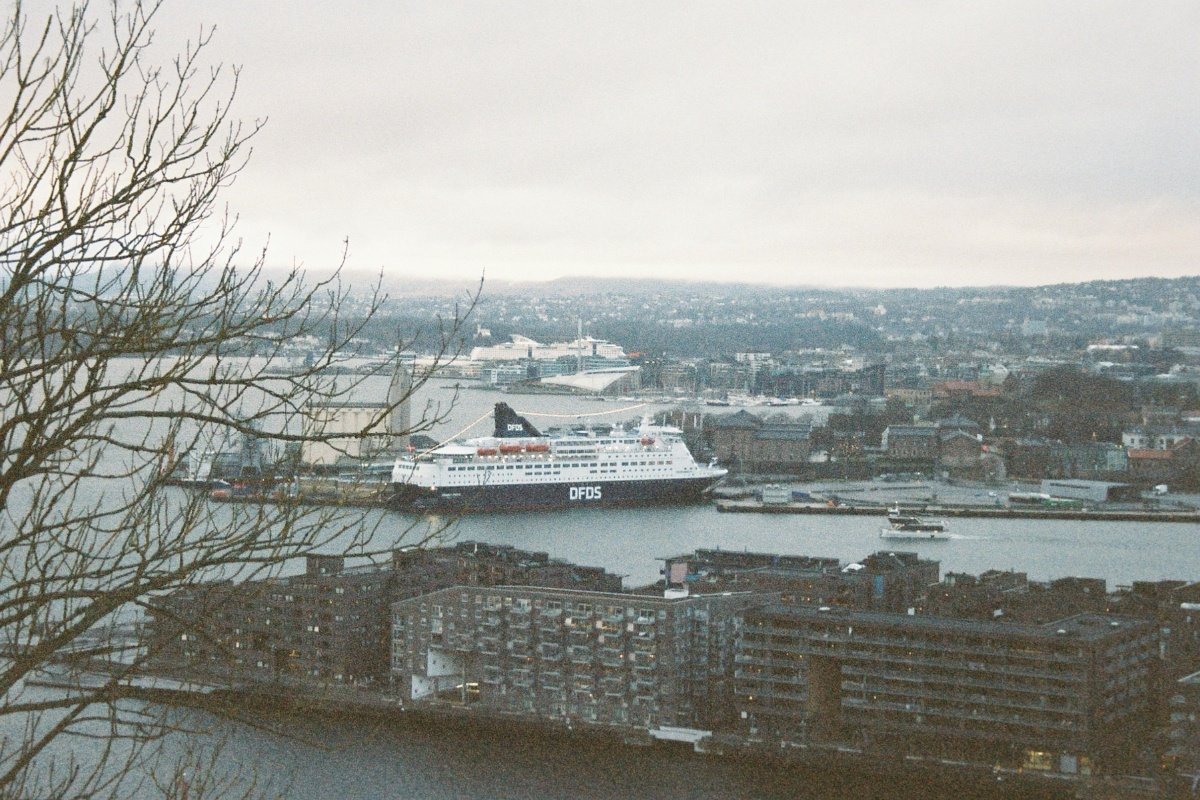
Karlshamn to Klaipėda — DFDS Baltic Corridor
Sunset Weekly Disclosure: To help keep our guides free, this post contains affiliate links. If you click through and make a booking (such as hotels, flights, tours, or travel experiences), we may earn a commission at no extra cost to you. Sunset Weekly is an independent travel and lifestyle publication. While we may receive compensation from affiliate partners, this does not influence our editorial content, recommendations, or opinions. #ad
Overview
The Karlshamn–Klaipėda DFDS route runs twice weekly and crosses the Baltic Sea in approximately 18–20 hours aboard eco-classified vessels Aura Seaways and Luna Seaways. It is the operational gateway to the Curonian Spit — a 98-kilometre UNESCO World Heritage peninsula — and remains significantly underused by British travellers, who tend to default to flying into Vilnius and driving north. This article makes the case for the maritime approach, structured entirely around operational facts rather than ambient atmosphere.
Border & Safety: EES in the Schengen Internal Context
This crossing moves between Sweden (Schengen) and Lithuania (Schengen). For EU and Schengen-passport holders, it is a borderless transit. For UK passport holders, Lithuania represents a Schengen external entry point only if arriving from outside the Schengen zone. Since Karlshamn sits within Sweden — a full Schengen member — UK travellers who completed their EES biometric registration at their first Schengen entry point (typically a Swedish airport or the Helsingborg–Helsingør crossing) do not re-register on this internal leg.
EES became fully operational on 10 April 2026. Confirm your registration is logged before you board at Karlshamn. Lithuanian border police at Klaipėda passenger terminal on Žvejų Gatvė conduct spot checks on international arrivals. Carry your registration confirmation as a PDF or screenshot — do not rely on border officers to retrieve it from the central eu-LISA database without prompting.
The Vessels: Aura Seaways & Luna Seaways
Aura & Luna Seaways Specifications
| Specification | Aura Seaways | Luna Seaways |
|---|---|---|
| Classification | Eco-Class Ro-Pax | Eco-Class Ro-Pax |
| Fuel System | LNG-capable / Low-Sulphur | LNG-capable / Low-Sulphur |
| Accessible Door Width | 92 – 96 cm | 92 – 96 cm |
| Accessible Lifts | Larger format boarding access | Larger format boarding access |
| Passenger Decks | 4 | 4 |
The Manoeuvrability Advantage — Framed Correctly
Aura Seaways and Luna Seaways are newer vessels than the Baltic fleet generation they replaced. They use modern bow thruster arrays that provide more responsive berthing in constrained ports. At Klaipėda’s ferry terminal — which sits within the narrow Curonian Lagoon channel — this translates to cleaner, faster berthing approaches and less residual vessel movement during the final docking window.
What this means in practice: For wheelchair users and travellers with vestibular sensitivities, newer vessels on this route offer a measurably more comfortable final approach than their predecessors. The accessible cabin door widths of 92–96 centimetres on Aura Seaways and Luna Seaways exceed the 88–90 centimetre standard on older North Sea ships. Confirm lift dimensions with DFDS’s accessibility team at booking, as interior specifications can vary by vessel refit cycle and are not consistently published across third-party aggregators.
The Destination Architecture: Klaipėda & the Curonian Spit
Klaipėda Old Town
Klaipėda’s Old Town sits directly north of the ferry terminal, accessible via Žvejų Gatvė on foot in under eight minutes. The half-timbered architecture along Teatro Aikštė reflects the city’s Memel-era German heritage. The Annchen von Tharau Fountain at Teatro Aikštė is your first useful orientation landmark. Do not confuse the cruise terminal — south of the ferry berth — with the passenger terminal. They share adjacent waterfront but use separate access gates.
Curonian Spit (UNESCO World Heritage Site)
The Curonian Spit is a 98-kilometre sand dune peninsula shared between Lithuania and Russia’s Kaliningrad Oblast. The Lithuanian section — Neringa — is accessible via the Smiltynė ferry from Klaipėda’s Old Town pier, a three-minute crossing. Vehicles require a Neringa entry permit; purchase it at the Smiltynė ferry ticket office on Žvejų Gatvė before boarding. Day visitor permits cost approximately €3 per person in 2026.
The Spit’s primary ecological risk is foot traffic on dune faces. Use marked timber boardwalk paths at Parnidis Dune exclusively. Rangers at the Neringa National Park office on Naglių Street issue on-the-spot fines for dune trampling.
Final-Mile Logistics: Klaipėda Port to City & Beyond
Klaipėda Port & Regional Transfers
| Method | Destination | Duration | Cost (2026 Est.) |
|---|---|---|---|
| Walk | Klaipėda Old Town (Teatro Aikštė) | 8 Minutes | Free |
| Taxi / Bolt App | Klaipėda Train Station | 6 Minutes | €4 – €6 |
| Local Bus (No. 1) | City Centre | 14 Minutes | €1.00 |
| Smiltynė Ferry | Curonian Spit (Neringa Entry) | 3 Minutes | €1.50 (Per Person) |
| Car Hire | Vilnius (via A1 Motorway) | 3 Hours 20 Mins | From €28/day |
Critical Information
The Back Door: Karlshamn has no city-centre rail connection to the Swedish high-speed network. Karlshamn station, on the Blekinge Coastal Railway, sits 1.2 kilometres from the ferry berth. The connecting service reaches Malmö Central in approximately two hours. From Malmö, passengers connecting to Copenhagen Kastrup Airport face a ticketing trap: the standard Pågatåg regional service requires a separate Danish DSB ticket from Kastrup station. The SJ Sweden X 2000 inter-city service includes the Øresund Bridge transit within a single through-ticket. Book via the SJ Sweden app rather than the DSB website and specify a through-ticket to Kastrup. The price difference is marginal. The operational difference — one ticket versus two, one queue versus two — is not.
Key Ferry FAQs (Quick Guide)
1. When Does Check-in Close?
Passengers should complete check-in no later than 45 minutes before departure. During peak travel periods, it’s wise to arrive around 90 minutes in advance to allow extra time.
2. How Long Is the Crossing?
The ferry journey usually takes approximately 13 hours and 30 minutes, depending on conditions and schedule.
3. What Facilities Are Available Onboard?
Ships operated by DFDS are equipped with a range of amenities, including:
- different cabin categories
- shopping areas
- dedicated spaces for children
This makes the crossing comfortable for both short breaks and overnight travel.
4. Can I Bring My Own Food and Drinks?
You’re generally allowed to bring your own snacks and soft drinks, but these should be consumed inside your cabin.
Alcohol is usually not permitted to be brought onboard.
5. Are There Any Luggage Limits?
Ferries are far more flexible than airlines. There are no strict baggage limits, so you can bring what fits in your vehicle or what you can carry onboard comfortably.
6. Can I Travel With Pets?
Yes, pets are welcome, but they must stay in designated pet-friendly cabins or in onboard kennel facilities.
7. What Booking Options Are Available?
You can choose from a variety of travel options, ranging from basic seating to fully equipped private cabins, depending on your budget and comfort preference.
8. Where Can I Check Schedules or Book Tickets?
For the latest sailing times and reservations, visit the official route page for the Karlshamn–Klaipėda ferry route operated by DFDS.
Editorial & Accuracy Standards
- Expert Review:
Ammara Azmat,
Senior Travel Mobility Analyst (12+ years experience) - Status: Verified for accuracy against official 2026 service data and real-time traveller reports.
- Our Process: This content follows our Fact-Checking Policy.