
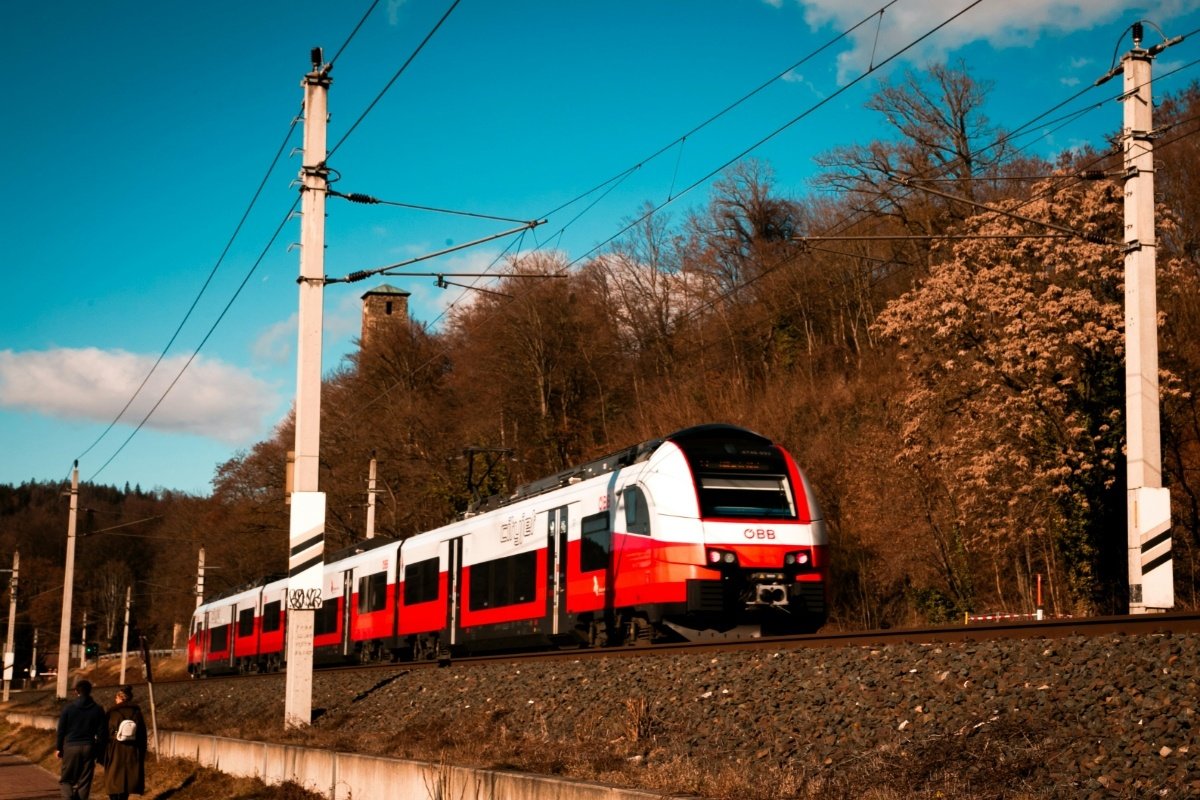
Rail Europe: The Complete Guide to Booking European Train Journeys
Sunset Weekly Disclosure: To help keep our guides free, this post contains affiliate links. If you click through and make a booking (such as hotels, flights, tours, or travel experiences), we may earn a commission at no extra cost to you. Sunset Weekly is an independent travel and lifestyle publication. While we may receive compensation from affiliate partners, this does not influence our editorial content, recommendations, or opinions. #ad
Rail Europe is an international rail booking platform designed to help travellers plan and book train journeys across multiple European countries from a single interface. Rather than navigating separate websites for each national operator, users can search routes, compare fares, and purchase Rail Europe tickets covering services from dozens of carriers in one place. The platform suits international travellers — particularly those visiting Europe from outside the continent — as well as anyone planning a multi-country rail itinerary. Beyond point-to-point tickets, Rail Europe also provides access to Eurail passes, which cover unlimited or flexible travel across participating European networks. For anyone looking to book European trains efficiently, without managing accounts across multiple operator websites, Rail Europe offers a practical and well-established starting point.
Quick Overview
- Type: International rail booking platform
- Coverage: Europe-wide, including France, Germany, Italy, Spain, Switzerland, Netherlands, Austria, Belgium, and more
- Key operators covered: SNCF, Deutsche Bahn, Eurostar, Trenitalia, Renfe, SBB, ÖBB, Thalys, and others
- Best for: Multi-country trips, international travellers, rail pass purchases, cross-border route planning
How Rail Europe Booking Works
Search and Booking
Rail Europe functions as both a search aggregator and a direct booking platform. Users enter a departure city, destination, and travel date to view available train services. Results display journey options from relevant operators, including departure times, travel durations, transfer points, and current fares. From there, selecting a service takes the user through to checkout, where Rail Europe processes the transaction on behalf of the relevant carrier.
The platform covers a wide range of European rail operators within a single session. This means a traveller can book an Eurostar leg from London to Paris and a Deutsche Bahn ICE connection from Paris to Berlin without leaving the Rail Europe interface. For multi-leg itineraries crossing several countries, this consolidated approach reduces the time and complexity involved in sourcing tickets independently.
Ticket Delivery
Rail Europe delivers tickets digitally for most bookings. E-tickets and mobile barcodes cover the majority of European routes, meaning passengers rarely need to collect physical documents at a station. Some operators and routes still require a printed ticket or station collection, so checking the delivery method at the booking stage is advisable. The Rail Europe app stores tickets and journey details for easy access on the day of travel.
Rail Europe Routes and Coverage Across Europe
Major Countries and Cities
Rail Europe connects travellers to services across most of the European rail network. In France, SNCF TGV routes run from Paris to Lyon, Marseille, Bordeaux, Toulouse, and across the border into Switzerland and Spain. In Germany, Deutsche Bahn ICE services link Berlin, Frankfurt, Munich, Hamburg, and Cologne, with onward connections into Austria and the Netherlands.
Italy features strongly through Trenitalia and Italo services, covering Milan, Rome, Florence, Naples, and Venice. In Spain, Renfe high-speed AVE trains connect Madrid, Barcelona, Seville, and Valencia. Switzerland, though not an EU member, integrates well into the Rail Europe booking system via SBB services. Zurich, Geneva, Basel, and Bern all appear as destinations within the platform.
For travellers moving between countries, Rail Europe simplifies the planning process considerably. A journey from Amsterdam to Rome, for instance, involves multiple operators and border crossings. Rail Europe surfaces the relevant connections and, in many cases, allows booking across the full itinerary in a single transaction.
Cross-Border Strengths
Cross-border journeys represent Rail Europe’s strongest use case. Domestic rail booking platforms — such as Trainline for UK travel or individual national operator websites — tend to focus on their home market. By contrast, Rail Europe specifically targets international itineraries. This focus makes it a more natural fit for travellers building routes that cross three or more countries, where sourcing each leg separately would add significant administrative overhead.
Rail Europe Tickets, Eurail Passes and Pricing
Point-to-Point Tickets
Point-to-point tickets cover a specific journey between two stations on a defined date. Rail Europe prices these tickets according to what the underlying operator charges, plus a service fee in some cases. Advance fares on popular routes — Eurostar London to Paris, SNCF Paris to Lyon, or Deutsche Bahn Frankfurt to Berlin — follow the same early-booking logic as booking directly. In other words, earlier bookings generally secure lower fares, as cheap allocation tiers sell first.
For straightforward journeys on well-known routes, comparing Rail Europe’s total price against direct operator pricing is worth doing. On some bookings, the convenience fee adds a small premium over buying directly. On multi-leg international bookings, however, the consolidation benefit usually offsets any price difference.
Rail Passes
Rail Europe provides access to Eurail passes, which offer a set number of travel days across participating European rail networks within a defined period. Pass options range from single-country passes to the Global Pass, which covers over 30 countries. Travellers choose a pass based on how many travel days they need and how widely they plan to roam.
Passes deliver the best value under specific conditions. A traveller covering five or more countries over two to three weeks, with several long-distance journeys planned, will often find a Global Pass cheaper than buying individual point-to-point tickets. However, on shorter trips or itineraries focused on one or two countries, point-to-point advance fares frequently undercut the pass price. Working out the approximate cost of individual tickets before committing to a pass is the most reliable way to assess which option delivers better value for a specific trip.
One lesser-known detail worth noting: Eurail pass holders still need to book seat reservations on many high-speed services — including TGV, Eurostar, and Deutsche Bahn ICE trains. These reservations carry an additional fee and must be booked separately. On some popular routes during peak periods, reservation availability can be limited. Factoring reservation costs into the overall pass budget gives a more accurate picture of the true cost compared to point-to-point alternatives.
Why Travellers Use Rail Europe
Multi-country booking in one place. Rail Europe connects services from dozens of operators across a single platform. Consequently, travellers planning routes through France, Switzerland, Italy, and Spain can research and book the full itinerary without switching between operator websites.
Simplified planning for international visitors. For travellers arriving from outside Europe — particularly from North America, Australia, or Asia — navigating individual national rail websites in different languages adds complexity. Rail Europe offers a single English-language interface covering the full European network, which removes that friction considerably.
Access to Eurail passes. Rail Europe is one of the primary authorised retailers for Eurail passes. For travellers who want flexible multi-country coverage without booking every leg individually, this makes it a natural starting point for pass research and purchase.
Wide operator coverage. Alongside major operators such as Eurostar, Deutsche Bahn, SNCF, and Trenitalia, Rail Europe also covers smaller regional carriers. This broader coverage is useful when an itinerary includes less-travelled corridors that fall outside the scope of single-country platforms like Omio or Trainline.
Consolidated journey management. Storing multiple international tickets within one booking account simplifies journey management. Rather than tracking confirmations from five separate operators, travellers manage everything through a single Rail Europe account and app.
Smart Travel Tips
Passes Versus Point-to-Point Tickets
Calculate before committing to a pass. Eurail passes suit high-frequency, multi-country itineraries. For a two-week trip crossing six or more countries with daily train travel, a Global Pass often represents genuine value. For a focused itinerary covering two countries with three or four journeys, advance point-to-point tickets typically cost less. Running a rough cost comparison before purchasing is always worthwhile.
Remember to budget for reservations. High-speed services across Europe generally require a seat reservation on top of the Eurail pass. On Eurostar, TGV, and ICE trains, these fees add up over a long trip. Including them in the total pass cost gives a fair comparison against individual ticket alternatives.
Booking and Planning
Book early on popular routes. Eurostar services between London and Paris or Brussels, SNCF TGV trains during French school holidays, and Trenitalia services on the Milan to Rome corridor all sell out cheap allocation tiers quickly. Booking six to eight weeks ahead secures the best available fares on these routes.
Plan connections with adequate transfer time. Cross-border journeys often involve tight connections at international hubs such as Paris Gare du Nord, Brussels-Midi, or Zurich Hauptbahnhof. Building in at least 30 minutes between legs — and more at large stations — reduces the risk of a missed connection causing significant disruption to a multi-country itinerary.
Use Rail Europe for the research phase. Even for travellers who ultimately book direct with individual operators, Rail Europe’s search function provides a useful overview of route options and fare levels across an itinerary. Comparing results across Rail Europe, Omio, and direct operator sites ensures no significantly cheaper option goes unnoticed.
Final Verdict
Rail Europe delivers the most value for international travellers building multi-country itineraries across Europe. Its consolidated access to operators including Eurostar, SNCF, Deutsche Bahn, Trenitalia, and Renfe — alongside Eurail pass availability — makes it a practical single point of contact for complex rail travel planning.
For simple, single-operator journeys within one country, booking directly or using a domestic platform such as Trainline may save the service fee without meaningful loss of functionality. However, for anyone crossing multiple borders, comparing pass options, or managing several legs across different European networks, Rail Europe simplifies the process in a way that individual operator sites cannot easily replicate.
Plan and compare European rail journeys to find the combination of tickets, passes, and routes that fits your itinerary.
Rail Europe FAQs: Tickets, Passes and Onboard Rules
Can I make changes to my train ticket booking?
Yes, in many cases you can modify a booking.
The ability to change dates, times, or routes depends on the ticket’s fare conditions, which Rail Europe displays before purchase. Therefore, flexible fares offer more options than discounted advance tickets.
Can I get a refund for my train ticket?
Sometimes. Refund eligibility depends on the ticket type and fare rules.
Some tickets allow full or partial refunds within a set window, while others do not. However, Rail Europe lets you request eligible refunds directly through your online account.
Can I book a train ticket for someone else?
Yes. You can book tickets on behalf of another person.
You simply enter the traveller’s name during checkout, even if the booking account belongs to you. As a result, group and family bookings are straightforward.
What is the baggage policy on Rail Europe trains?
Most European trains allow passengers to carry luggage free of charge.
Instead of strict weight limits, operators expect travellers to manage and store their own bags. However, individual operators may apply size rules, especially on high‑speed services.
Are seat reservations required on Rail Europe trains?
Some trains require seat reservations, while others do not.
High‑speed and international services, such as TGV, Eurostar, and AVE trains, usually require a reservation. In contrast, many regional trains across Germany and Switzerland do not.
Can I bring pets on board Rail Europe trains?
Policies vary by train operator rather than by Rail Europe itself.
Some operators allow small pets in carriers, while others restrict animals entirely or allow only assistance dogs. Therefore, checking the rules for your specific operator before travel is essential.
Is there an age restriction for travelling alone on European trains?
Age rules depend on the country and train operator.
Many operators allow children to travel alone from a certain age, while others require adult supervision. Consequently, parents should review the operator’s unaccompanied minor policy in advance.
What is the process for travelling with a bicycle?
Bicycle policies differ by operator and service type.
Some trains require a bike reservation, while others allow bikes only if they fold or fit in a bag. Therefore, checking bike availability at booking time helps avoid last‑minute issues.
Are there special discounts for seniors or students?
Yes, many operators offer age‑based or student discounts.
Rail Europe also sells rail passes that provide reduced pricing for young travellers and seniors on eligible routes. As a result, discounted fares are often available without booking directly with each operator.
Is Wi‑Fi available on Rail Europe trains?
Wi‑Fi availability depends on the train operator and route.
Most modern high‑speed trains across Europe provide onboard Wi‑Fi, although connection quality varies between countries and services.
Editorial & Accuracy Standards
- Expert Review:
Ammara Azmat,
Senior Travel Mobility Analyst (12+ years experience) - Status: Verified for accuracy against official 2026 service data and real-time traveller reports.
- Our Process: This content follows our Fact-Checking Policy.