
Swiss Railways (SBB) 2026: Your Complete Guide to Swiss Trains
Sunset Weekly Disclosure: To help keep our guides free, this post contains affiliate links. If you click through and make a booking (such as hotels, flights, tours, or travel experiences), we may earn a commission at no extra cost to you. Sunset Weekly is an independent travel and lifestyle publication. While we may receive compensation from affiliate partners, this does not influence our editorial content, recommendations, or opinions. #ad
Swiss Federal Railways — known as SBB in German, CFF in French, and FFS in Italian — is Switzerland’s national rail operator and one of the most reliable train networks in Europe. SBB runs an integrated timetable that connects major cities, regional towns, mountain villages, and international destinations. The network suits leisure travellers, business passengers moving between Zurich, Bern, and Geneva, and anyone using Switzerland as a hub for broader European rail travel. SBB’s punctuality record is well established. Most services run on time, and connections between trains are designed to precise intervals across the full network. For travellers who value efficiency and wide geographic coverage, Swiss trains deliver a standard that few national rail systems in Europe consistently match.
Quick Overview
- Type: National rail operator
- Coverage: Switzerland-wide, plus cross-border routes into Germany, France, Italy, and Austria
- Key operators integrated: SBB intercity, RegioExpress, S-Bahn urban rail, and scenic routes via affiliate operators
- Best for: City-to-city travel, regional exploration, mountain access, cross-border European journeys
SBB Routes and Destinations in Switzerland
Major City Connections
SBB’s intercity network connects Switzerland’s main urban centres with frequent, fast services. Zurich to Bern takes approximately one hour. The Geneva service runs to around two hours forty minutes. Basel, by contrast, is reachable from Zurich in under an hour — one of the fastest intercity connections on the network.
Bern, as the federal capital, serves as a central interchange for services heading west to Geneva, south to Interlaken, and east back towards Zurich. Geneva connects directly to Lausanne in around forty minutes. Lausanne, in turn, sits on the main western rail axis linking France with central Switzerland.
Regional and Mountain Access
Beyond the main intercity routes, SBB’s regional network reaches smaller towns and villages that many other European rail systems would not serve directly. Interlaken, accessed from Bern in around fifty minutes, functions as the gateway to Grindelwald and the Jungfrau region. Lucerne, meanwhile, is reachable from Zurich in under an hour and connects to Zug and the broader central Swiss lake district.
Mountain rail services — including rack railways and narrow-gauge trains run by partner companies — extend the network into high-altitude areas. Connections to Zermatt, St Moritz, and the Engadin valley all appear within the unified SBB timetable. As a result, travellers book and manage mountain rail segments through the same system as main-line services.
Scenic Routes
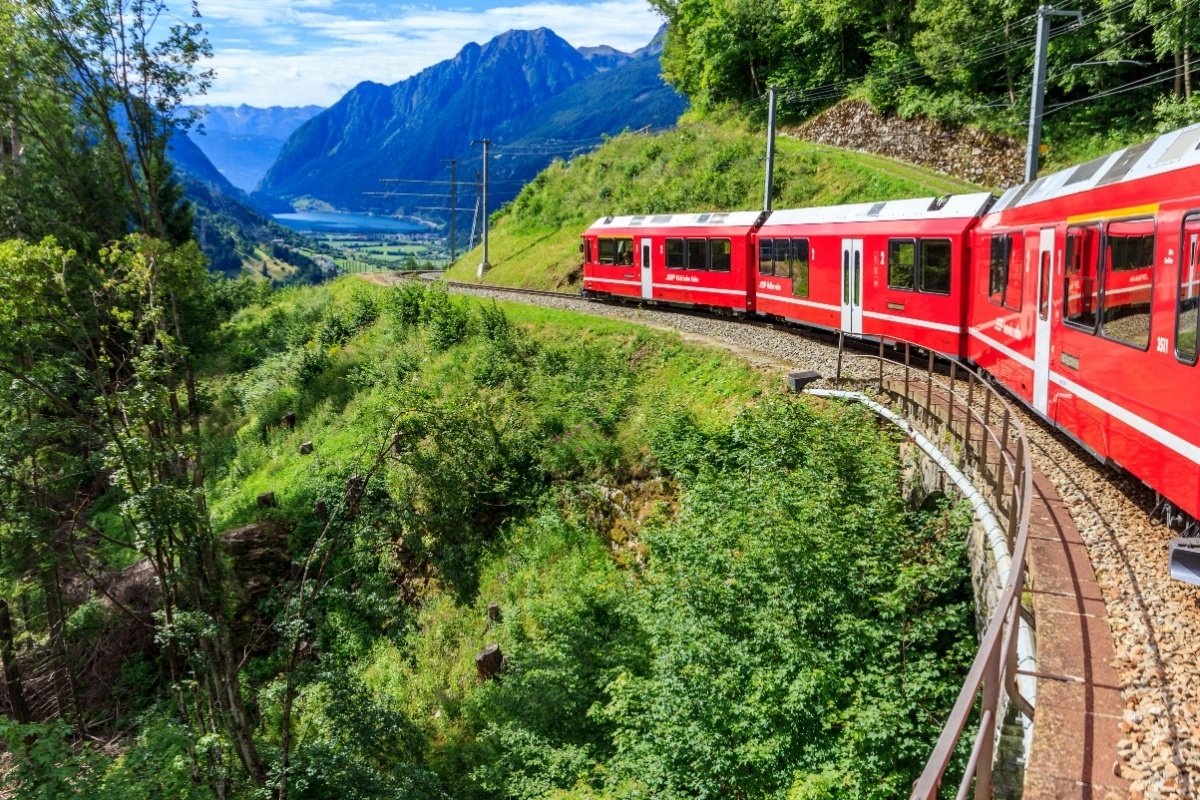
Several SBB-integrated routes carry a significant scenic dimension alongside their practical function. The Gotthard Panorama Express connects Lugano with Flüelen via Lake Lucerne. The Glacier Express runs between Zermatt and St Moritz through the Alps, operated by Matterhorn Gotthard Bahn and Rhätische Bahn within the SBB ecosystem. The Bernina Express, similarly, links Chur with Tirano in Italy via the UNESCO-listed Bernina Pass.
All three services run to standard timetables and require advance reservations. They are bookable through SBB’s platform alongside conventional intercity journeys. Planning these routes during daylight hours — in summer or early autumn for the clearest visibility — produces the most rewarding experience without any deviation from normal booking procedures.
How the Swiss Rail System Works
Integrated Timetable
SBB operates what is known as an integrated pulse timetable. Under this system, trains across all operators are scheduled to arrive and depart at coordinated intervals — typically on the hour or half-hour. Connections between services are designed into the schedule rather than left to chance. In practice, a traveller changing from an intercity service to a regional train can expect a connection window of just a few minutes. The regional service times its departure to follow the intercity arrival closely.
This coordination extends across bus, tram, and boat services in many areas. Consequently, passengers transfer between transport modes on a single shared timetable. The approach reduces waiting times and makes spontaneous travel — arriving in a town and catching the next onward connection — reliably straightforward across most of Switzerland.
Punctuality and Frequency
SBB consistently reports punctuality rates above 90% across the national network. On busy intercity corridors, trains run at least every thirty minutes throughout the day. On some routes, services run every fifteen minutes during peak hours. This frequency means that missing a train rarely results in a long wait. On regional lines, hourly departures are standard, with some rural routes running every two hours.
Ticketing and Transfers
SBB tickets cover travel across all integrated services — intercity, regional, S-Bahn, and partner mountain railways — within a single fare zone or point-to-point purchase. Tickets are available through the SBB app, website, or station machines. The app is particularly well suited to day-of-travel use, handling ticket purchase, timetable search, and live platform information within a single interface.
SBB Ticket Types, Passes and Pricing
Standard and Saver Fares
SBB offers full-price flexible tickets alongside Supersaver fares, which provide discounted pricing on advance bookings for specific journeys. Supersaver fares carry restrictions on changes and refunds, similar in structure to advance fares on other European rail systems. For popular intercity routes, booking several weeks ahead delivers meaningful savings over the walk-up price.
Swiss Travel Passes and Rail Cards
The Swiss Travel Pass covers unlimited travel across the national network — including SBB services, mountain railways, lake steamers, and many urban transport systems. It is available through Rail Europe, SBB directly, and other authorised retailers. Day passes and multi-day flexi passes also exist, catering to different itinerary structures.
The Half Fare Card is a lesser-known but highly practical option. It provides a 50% discount on all SBB tickets for a calendar year in exchange for an annual fee. For travellers planning multiple journeys over several days, the card frequently pays for itself within the first two or three trips. Importantly, it is available to non-Swiss residents and purchases through SBB’s website.
Pricing Relative to Other European Rail
SBB standard fares sit higher than those of most other European national rail operators. Switzerland’s cost of living and the density of services in a mountainous country both contribute to this pricing structure. However, comparing fares against the Supersaver tier — rather than the walk-up price — narrows the gap considerably. For travellers holding a Eurail Global Pass, which includes SBB services, the effective per-journey cost drops further still.
Comparing options through Rail Europe or Omio alongside direct SBB pricing gives the clearest overall picture before committing to a booking approach.
Why Travellers Choose Swiss Federal Railways
Exceptional reliability. SBB’s punctuality record is among the strongest of any national rail operator in Europe. Consequently, travellers can plan connections, excursions, and onward travel with greater confidence than on networks where delays are more frequent.
Dense coverage across a complex geography. Switzerland’s mountainous terrain makes surface transport challenging to operate efficiently. Despite this, SBB and its integrated partners reach a remarkable proportion of the country, including alpine destinations that would otherwise be inaccessible by any practical means.
Integrated transfers across all modes. Unlike many European networks, SBB’s timetable coordination extends to buses, trams, and lake boats. Furthermore, a single ticket often covers multiple transport modes within a defined route, removing the need to buy separate fares for each connecting segment.
Frequency on key corridors. Half-hourly or better services on major routes mean travellers rarely need to plan rigidly around departure times. This frequency suits both structured itineraries and more spontaneous travel patterns equally well.
Scenic value alongside practical function. Several SBB-integrated routes pass through alpine landscapes that few rail journeys elsewhere in Europe replicate. Moreover, unlike dedicated tourist services that run once daily and carry a premium, many scenic corridors operate as standard timetabled services at normal fares.
Smart Travel Tips
Passes and Pricing
Assess the Half Fare Card for multi-day visits. For any visit involving four or more separate rail journeys, the card is worth calculating against full ticket prices. The annual fee divides quickly across multiple discounted journeys. In many cases, it produces better value than a Swiss Travel Pass or point-to-point Supersaver fares for medium-length stays.
Check Eurail and Swiss Travel Pass coverage before booking individually. Eurail Global Pass holders can travel on most SBB services, though some scenic routes require a reservation supplement. For travellers already holding a Eurail pass, adding SBB travel does not require a separate ticket on most main-line services. Confirming reservation requirements for the Glacier Express and Bernina Express before departure avoids unexpected costs.
Planning and Timing
Book scenic routes well in advance. The Glacier Express, Bernina Express, and Gotthard Panorama Express all require advance seat reservations. These sell out during peak summer months. Booking early — through SBB directly or via Rail Europe — secures both the seat and the preferred departure time.
Plan scenic journeys for daylight hours. Alpine routes through the Bernina Pass and the Gotthard corridor are best experienced in natural light. On longer routes, checking departure times against sunset during the travel period ensures the most rewarding experience at no additional cost.
Use the SBB app for real-time connections. The app handles live timetable search, ticket purchase, and platform updates. Moreover, it displays connection reliability indicators for tight transfers, which is particularly useful when planning journeys across multiple regional legs within the integrated timetable.
Final Verdict
Swiss Federal Railways works best for travellers who value reliability, frequency, and wide geographic reach. SBB’s integrated timetable and strong punctuality record make it the default choice for travel within Switzerland. Coverage of both urban centres and remote mountain regions adds a versatility that few national rail networks can match.
For visitors planning multiple journeys across several days, the Half Fare Card or Swiss Travel Pass typically delivers better value than full-price point-to-point tickets. For cross-border travel, SBB connects cleanly with Eurail, Deutsche Bahn, and SNCF services, making it a coherent part of a broader European rail itinerary.
Explore Swiss rail routes and scenic journeys to plan the combination of cities, regions, and mountain connections that suits your trip.
SwissPass FAQs
What is the SwissPass card?
The SwissPass is an identification card for Swiss public transport subscriptions.
It is not a travel ticket itself. Instead, it stores products such as the Half Fare Travelcard, GA Travelcard, and regional transport passes, allowing inspectors to verify your entitlement digitally.
Which products can be loaded onto a SwissPass?
A SwissPass can store public transport subscriptions, including annual or monthly passes and the Half Fare Travelcard.
In addition, it supports selected partner services such as leisure, mobility, and regional access products, making it a central card for transport and affiliated services across Switzerland.
Getting and Managing a SwissPass
How do I get a SwissPass card?
You can apply for a SwissPass online via sbb.ch or in person at a staffed public transport sales point.
You will need a valid identity document and a compliant passport-style photo. Physical card delivery typically takes around 10 days, so ordering in advance is recommended.
What should I do if my SwissPass is lost?
If your SwissPass is lost or stolen, report it immediately at a station counter, via your online SwissPass account, or through the SwissPass contact centre.
A replacement card can be issued for a fee. If you use SwissPass Mobile, the digital version can be used while waiting for the physical replacement.
Why does SwissPass require an updated photo?
SwissPass requires a current photo to ensure accurate identity verification during ticket inspections.
Updating photos every few years helps prevent misuse and ensures quick, reliable checks—especially on long‑distance, cross‑border, or premium services.
Travelling with SwissPass
What happens if I forget my SwissPass card?
If you forget your physical SwissPass, you can visit a staffed ticket office and request a temporary replacement for a small administrative fee.
Alternatively, if you have activated SwissPass Mobile, the digital version shown in the SBB app is accepted by inspectors.
Which partner services work with SwissPass?
SwissPass is supported by a range of Swiss partner services, including Mobility Carsharing, PubliBike, several ski resort lift systems, and cultural or leisure passes such as museum access.
This reduces the need to carry separate cards for different services.
SwissPass Mobile
What is SwissPass Mobile?
SwissPass Mobile is the digital version of your SwissPass, available in the SBB Mobile app.
To use it, you must link your SwissPass customer number to your SBB account. Inspections require the live in‑app display—screenshots or static images are not valid.
Do I need internet access to show SwissPass Mobile?
No.
Once your SwissPass Mobile has loaded in the app, it remains available offline, which is particularly useful when travelling through tunnels, remote alpine regions, or areas with limited mobile reception.
Should I still carry the physical SwissPass card?
Yes, where possible.
While SwissPass Mobile is widely accepted, some partner services—such as certain mountain railways or ski lifts—may still require the physical RFID card. Carrying the card also provides a backup in case of battery or device issues.
Editorial & Accuracy Standards
- Expert Review:
Ammara Azmat,
Senior Travel Mobility Analyst (12+ years experience) - Status: Verified for accuracy against official 2026 service data and real-time traveller reports.
- Our Process: This content follows our Fact-Checking Policy.