
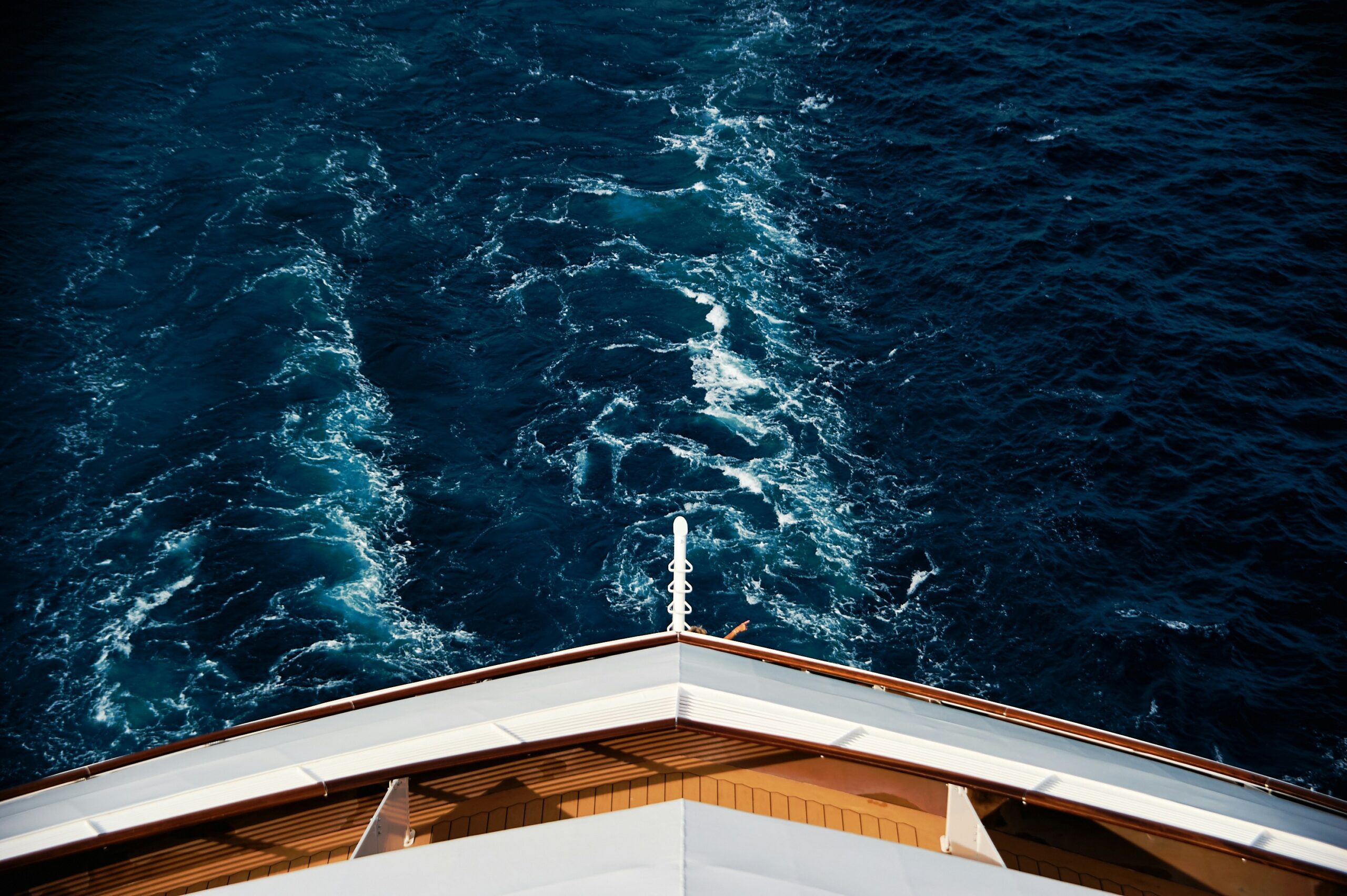
For travellers who prioritised substance over scale, Fred Olsen’s 2027 Grand Voyage on the Borealis represents a deliberate choice to bypass the “floating cities” of modern cruising in favour of maritime intimacy. Departing Southampton on 21 January 2027, this circumnavigation is a 98-night technical journey that rewards those who look beyond the brochure.
The Ship Architecture: Stability and Space
Borealis (formerly Holland America’s MS Rotterdam) was built by Fincantieri (a premier Italian shipbuilding group) with a “High-Speed Transatlantic Hull.” In 2027, this engineering heritage remains her greatest asset. Unlike modern “flat-bottom” ships designed for coastal calm, Borealis features a deep draft of 8.1 metres.
This deep displacement ensures superior stability in the heavy swells of the Pacific and Southern Oceans. With a Passenger Space Ratio (PSR) of 45.7 (Gross Tonnage 61,849 / 1,353 guests), she provides significant “Psychological Breathing Room” compared to the high-density mega-liners currently dominating the 2027 world cruise market (where PSRs often drop to 28–30).
✧ 2027 Grand Voyage: Pricing & Grade Analysis ✧
98-Night World Cruise | Southampton Departure | Adult-Only
| Cabin Grade / Fare | Investment (PP) | Value Proposition | Action |
|---|---|---|---|
| Balcony Junior Suite Grade: BJ | £26,699 | Private outdoor space; essential for sea days across the Atlantic and Pacific. | Plan Trip → |
| Terrace Cabin Grade: TC | £21,899 | Direct access to promenade decks; perfect balance of fresh air and value. | Plan Trip → |
| Freedom Fare Entry Level | £15,499 | Includes gratuities and selected drinks. The most cost-effective circumnavigation. | Plan Trip → |
💡 Expert Advice: On a 98-night voyage, the Balcony Junior Suite costs approximately £114 more per day than the entry fare. For long ocean crossings, a private balcony is a significant factor in long-term guest well-being.
2027 Itinerary Forensics: The “Back-Door” Strategy
The routing avoids the frantic “whistle-stop” pace of larger voyages, prioritising Overnight Port Clusters and remote access.
- Japan Mastery (Mar 07–12): Overnights in Tokyo and Osaka are the “Kingmakers” of this trip.
- Expert Shortcut: The ship docks at the International Cruise Terminal (Aomi). Avoid industrial bus transfers; take the Yurikamome automated train line for a scenic, high-tech entry into the city centre with views of the Rainbow Bridge.
- The Ho Chi Minh Pivot: Docking at Hiep Phuoc (an industrial port) puts you 90 minutes from the city. The “Pro-Move” here is the Speedboat to Saigon excursion, bypassing the heavy industrial road traffic.
- The Jamestown Anchor (Apr 15): St Helena is a Tender Port. If the South Atlantic swell exceeds 1.5 metres, landing becomes impossible for those with mobility issues. Always plan for a “sea day” here as a precaution.
📑 Operational Baseline: The Freedom Fare Inclusions
A Transparent Value Assessment for the 2027 Grand Voyage
| Category | Specific Inclusion Details |
|---|---|
| Gastronomy | Full board including 5-course à la carte dinners, late-night Supper Club, and traditional Afternoon Tea. |
| Leisure | Evening show productions, live music, enrichment lectures, and full access to the fitness centre & pools. |
| Freedom Perks | Selected drinks with lunch and dinner, pre-paid gratuities, and shuttle services for ports over one mile from the ship. |
The Guest Verdict: Expectation vs. Reality
Real-world feedback from long-term Fred Olsen voyagers validates this technical advantage. Travellers like Kay highlight a “time-travel” quality to the service, specifically citing a 1:2.1 crew-to-guest ratio that allows staff members like Jasper to provide intuitive, personalised dining experiences.
However, transparency is a core pillar of our audit. Long-time cruisers like Heather and Maria note that while the ship is impeccably maintained, the Borealis is “beginning to look dated” in specific public areas. In my professional opinion, this cosmetic vintage is a negligible trade-off for the superior service and the ship’s ability to maintain a 25-knot speed reserve—a critical insurance policy for port punctuality in 2027.
⚓ Technical Comparative Matrix
Borealis vs. 2027 Industry Standard Benchmarks
| Technical Metric | Borealis (Classic) | 2027 Mega-Liner Avg. | Forensic Verdict |
|---|---|---|---|
| Space Ratio (PSR) | 45.7 (Premium) | 30.5 (High Density) | Superior “Psychological Breathing Room.” |
| Port Logic | Overnight Clusters | 8-Hour Whistle-stops | Tokyo/Osaka overnights are the “Kingmakers.” |
| Service Scale | 1:2.1 Ratio | 1:3.5+ Ratio | Personalised “Old-School” service model. |
| Hull / Draft | Deep Transatlantic (8.1m) | Shallow Coastal (7.0m) | Superior stability in heavy open-ocean swells. |
Forensic benchmarks are calculated against 2027 industry capacity averages. © Sunset Weekly Intelligence.
The Grand Voyage “Survival Guide” (FAQs)
Q: How do we handle the new EU Entry/Exit Scheme (EES)? A: Fred Olsen’s manifest team manages the digital pre-registration, but ensure your biometric passport is valid for the Lisbon and La Coruña calls.
Q: What is the dress code for 98 nights? A: Versatility is mandatory. While Fred Olsen maintains “Formal Nights,” the daily vibe is “Smart-Casual.” Pack for three seasons: Atlantic spring, Pacific humidity, and Cape autumn.
Q: Is Wi-Fi reliable on the Pacific crossing? A: Expect latency. While Starlink is being rolled out, satellite “shadow zones” exist. Manage your “My Cruises” account tasks while in port.
Final Verdict!
The Borealis 2027 World Cruise is for the Strategic Traveller. It trades flashy modernity for maritime stability and high-ratio service. For the long Atlantic and Pacific crossings, I recommend the Balcony Junior Suite (Grade BJ) at £26,699pp; on a 98-night voyage, private outdoor air is a mandatory investment for long-term well-being.
Editorial & Accuracy Standards
- Expert Review:
Ammara Azmat,
Senior Travel Mobility Analyst (12+ years experience) - Status: Verified for accuracy against official 2026 service data and real-time traveller reports.
- Our Process: This content follows our Fact-Checking Policy.