
What to Eat and Drink in Mallorca in 2027: Local Dishes, Wines, Markets and Where to Find Them
Sunset Weekly Disclosure: To help keep our guides free, this post contains affiliate links. If you click through and make a booking (such as hotels, flights, tours, or travel experiences), we may earn a commission at no extra cost to you. Sunset Weekly is an independent travel and lifestyle publication. While we may receive compensation from affiliate partners, this does not influence our editorial content, recommendations, or opinions. #ad
Quick Answer
To eat like a local in Mallorca in 2027, start with pa amb oli, sobrassada, tumbet and an ensaïmada, then pair them with a red made from the island’s Manto Negro grape.
For the best ingredients, visit Palma’s Mercat de l’Olivar from Monday to Saturday, or Sineu’s Wednesday market, which dates back to 1306. Also, look for EU-protected labels such as Sobrasada de Mallorca, Ensaimada de Mallorca and DO Binissalem. Finally, Condor’s Summer 2027 timetable includes flights from Germany to Palma de Mallorca.
The Sunset Weekly Connection Reality: Experiencing Mallorca’s culinary culture means seeking out authentic specialties like tumbet and ensaïmada alongside local markets in Palma and Sineu. Utilizing protected designations ensures origin quality, while Condor’s summer 2027 flight schedule from Germany makes reaching Palma de Mallorca convenient for food-focused travel.
BOOK NOWMallorca’s Food and Drink at a Glance
| What to try | What it is | Where to find it |
|---|---|---|
| Pa amb oli | Bread rubbed with ramellet tomato and olive oil | Cafés, bars and village restaurants |
| Sobrassada | Soft, paprika-red cured pork sausage | Markets and delicatessens |
| Tumbet | Layered vegetable bake in tomato sauce | Traditional restaurants |
| Arròs brut | Spicy rice dish with game | Inland restaurants, especially in cooler months |
| Ensaïmada | Spiral pastry made with pork lard | Bakeries (forns) across the island |
| Manto Negro | Mallorca’s signature red grape | DO Binissalem wineries and wine shops |
| Hierbas de Mallorca | Aniseed and herb liqueur | Served after meals in restaurants |
Sources: Spanish Ministry of Agriculture (MAPA), Balearic Islands tourism (illesbalears.travel) and DO Binissalem, checked 4 November 2026.
Five Mallorca Food Myths to Clear Up Before You Go
Before you start eating, it’s worth clearing up five common misunderstandings.
- “The ensaïmada is a simple sweet bun, so it’s vegetarian.” It isn’t. In fact, the name comes from saïm, meaning pork lard, which goes into the dough.
- “Any sobrassada you buy on the island is from Mallorca.” Not necessarily. In fact, only packs labelled Sobrasada de Mallorca carry the EU’s protected geographical indication.
- “Mallorca has one wine region.” It has two. Specifically, DO Binissalem and DO Pla i Llevant are both EU-protected designations, while three Vi de la Terra labels also cover Mallorcan wine.
- “Palma’s food markets are open every day.” They’re not. Instead, Mercat de l’Olivar and Mercat de Santa Catalina both open Monday to Saturday, so plan market visits away from Sundays.
- “You can fly home with olive oil in your cabin bag.” Only in tiny bottles. That’s because, under EU security rules, each liquid in hand luggage must be 100 ml or less, so wine and olive oil should go in your checked bag.
Traditional Mallorcan Dishes to Try
In general, Mallorcan cooking is rustic and seasonal, built on pork, vegetables, olive oil and almonds. So rather than ordering from a generic tourist menu, look for these island classics.
Pa amb Oli
Pa amb oli means “bread with oil”, and it’s Mallorca’s everyday snack. First, the bread is rubbed with the ramellet tomato, a local variety that, according to the Balearic Islands tourism board, is grown using the dry farming method. Then it’s drizzled with olive oil and topped with cheese, ham or olives.
Sobrassada de Mallorca
Next, sobrassada (sobrasada in Spanish) is a soft, spreadable cured pork sausage. Its red colour, in particular, comes from pebre bord de tap de Cortí, an exclusive Mallorcan pepper variety. According to the Balearic tourism board, the peppers are dried on cords on house façades, then oven-baked and ground with a millstone. Locals spread it on bread, and you’ll also see it paired with honey.
Tumbet
For vegetarians, tumbet is especially worth ordering. It’s a layered bake of fried potatoes, aubergines and peppers under tomato sauce, and the Balearic tourism board describes it as fresh and light. However, check whether it’s served alongside meat or fish.
Arròs Brut
On the other hand, arròs brut is a hearty dish for cooler months. Indeed, the Balearic tourism board describes it as a spicy rice dish cooked with game meat. Despite its name, which means “dirty rice”, it’s one of the island’s most comforting winter dishes.
Frit Mallorquí and Porcella
Meanwhile, frit mallorquí is a traditional fry-up of potatoes, peppers and lamb or pork, often including offal. Porcella rostida, roast suckling pig, is also the island’s celebration dish. Both are classics of Mallorca’s inland restaurants.
Coca de Trampó and Savoury Pastries
For a light lunch, try coca de trampó. Specifically, it’s a thin, savoury base topped with trampó, a mix of onion, green pepper and tomato seasoned with oil, salt and paprika. In addition, bakeries sell panades, savoury pastries filled with meat, fish or peas, and cocarrois, filled with seasonal vegetables, raisins and pine nuts.
Variat
Finally, if you’re out for an aperitif, order a variat. According to the Balearic tourism board, this plate of many small tapas has accompanied Mallorcan aperitifs for almost a century.
Mallorca’s Sweet Treats
Ensaïmada de Mallorca
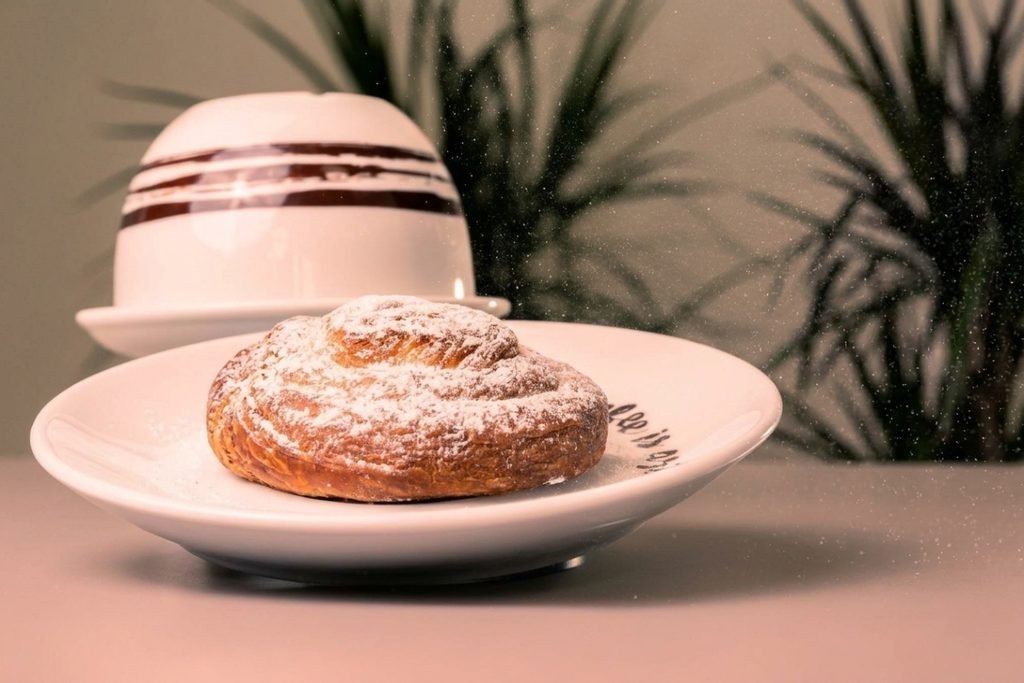
The ensaïmada is Mallorca’s signature pastry, and it was already known in the 17th century. According to the Balearic tourism board, the dough is made with flour, water, sugar, eggs and sourdough, plus pork lard, and it must rise for at least 12 hours.
The original version, the llisa, has no filling. However, bakers also fill ensaïmadas with cabell d’àngel (angel’s hair pumpkin jam), cream, chocolate or apricot jam. Later in the year, at Christmas, you’ll even find them filled with turrón. If you want a protected product, look for the Ensaimada de Mallorca label, which covers both the plain and the cabell d’àngel versions.
Robiols and Gató d’Ametlla
Similarly, robiols are pasty-shaped pastries filled with angel’s hair jam, a ricotta-style cheese or vanilla cream. Once an Easter treat, they’re now sold all year. Also look for gató d’ametlla, a traditional almond cake, often served with almond ice cream. It showcases the island’s almonds, which have their own protected status.
Mallorca’s EU-Protected Foods and Wines
When you shop, these official labels are the easiest way to know a product really comes from Mallorca. Spain’s Ministry of Agriculture lists these registered names that cover Mallorca.
| Protected name | Type | Category |
|---|---|---|
| Oli de Mallorca | PDO | Extra virgin olive oil |
| Oliva de Mallorca | PDO | Table olives |
| Pebre bord de Mallorca | PDO | Paprika |
| Sobrasada de Mallorca | PGI | Cured sausage |
| Almendra de Mallorca (Ametlla de Mallorca) | PGI | Almonds |
| Ensaimada de Mallorca | PGI | Pastry |
| Binissalem | PDO (DO) | Wine |
| Pla i Llevant | PDO (DO) | Wine |
| Mallorca | PGI (Vi de la Terra) | Wine |
| Serra de Tramuntana-Costa Nord | PGI (Vi de la Terra) | Wine |
| Hierbas de Mallorca | Geographical indication | Spirit |
| Palo de Mallorca | Geographical indication | Spirit |
Source: Spanish Ministry of Agriculture, Fisheries and Food (MAPA), list of registered EU designations, updated 2 July 2026 and checked 4 November 2026.
A PDO (Protected Designation of Origin) is the stricter label, because the product must be made in the area from start to finish. By contrast, a PGI (Protected Geographical Indication) requires a strong link to the place, but not every stage has to happen there.
Mallorca’s Wines: Two DO Regions and Native Grapes
DO Binissalem
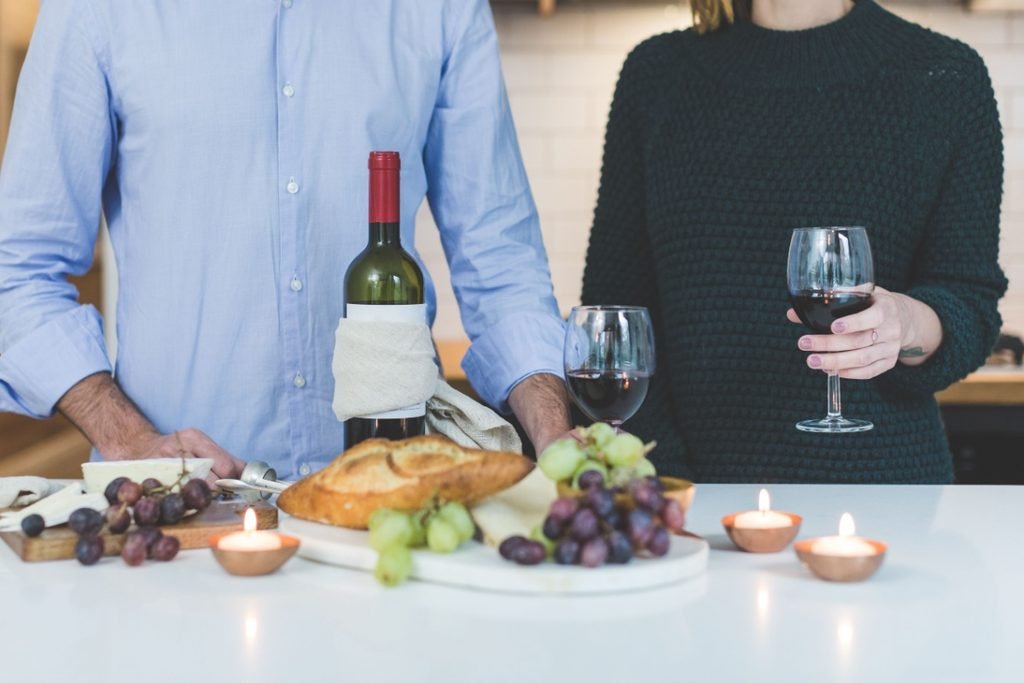
According to its regulatory council, DO Binissalem was recognised in 1990. Today, it covers five municipalities in the centre of the island: Santa Maria del Camí, Consell, Binissalem, Santa Eugènia and Sencelles.
The rules favour native grapes. For example, red wines must contain at least 30% Manto Negro, while whites need at least 50% Moll (also called Prensal Blanc) or Moscatel. As a result, the council describes the reds as having ripe red fruit with good structure, and the whites as fresh, with white fruit and citrus notes.
DO Pla i Llevant
Meanwhile, DO Pla i Llevant covers 18 municipalities in the centre and east, including Algaida, Artà, Felanitx, Manacor and Sineu. According to the Balearic tourism board, 13 wineries and nearly 70 growers produce wine here. Its native grapes also include Callet, Manto Negro, Fogoneu and Gorgollassa for reds, and Prensal Blanc and Giró Ros for whites.
Mallorca’s Native Grapes at a Glance
| Grape | Colour | Where it’s most important |
|---|---|---|
| Manto Negro | Red | DO Binissalem, at least 30% of its reds |
| Callet | Red | DO Pla i Llevant |
| Fogoneu | Red | DO Pla i Llevant |
| Gorgollassa | Red | Both DO regions |
| Moll (Prensal Blanc) | White | Both DO regions |
| Giró Ros | White | Both DO regions |
Sources: DO Binissalem regulatory council and Balearic Islands tourism, checked 4 November 2026.
So when you order wine, ask for a bottle made mainly from these grapes. That way, you’ll taste something you can’t easily find at home, especially outside Spain.
What Else to Drink
- Hierbas de Mallorca: an aniseed liqueur macerated with a secret mix of aromatic plants. It’s traditionally drunk after a meal.
- Palo de Mallorca: by contrast, a dark drink made by macerating cinchona bark and gentian. Like Hierbas, it has its own protected geographical indication.
- Local olive oil: not a drink, of course, but Oli de Mallorca is made from Mallorquina, Arbequina and Picual olives, so it’s well worth tasting at a market.
Where to Find It: Mallorca’s Best Food Markets
Palma’s Covered Markets
| Market | Monday to Friday | Saturday | Sunday |
|---|---|---|---|
| Mercat de l’Olivar | 7:00am to 2:30pm, partial afternoon opening until 8:00pm | 7:00am to 3:00pm | Closed |
| Mercat de Santa Catalina | Stalls 7:00am to 3:00pm, food service until 5:00pm | Stalls 7:00am to 3:00pm, food service until 5:00pm | Closed |
Sources: Mercat de l’Olivar and Mercat de Santa Catalina official websites, checked 4 November 2026.
Mercat de l’Olivar has served Palma since 1951, and its gastronomy area stays open until 4:00pm, Monday to Saturday. At Santa Catalina, however, the fishmongers are closed on Mondays, so go from Tuesday if you want to see the day’s catch.
Weekly Village Markets
| Market | Day | What to look for |
|---|---|---|
| Sineu | Wednesday morning | Fruit, vegetables and the island’s only weekly market with live animals |
| Inca | Thursday morning | Fruit, vegetables, olives, cured meats and cheeses |
| Santanyí | Wednesday and Saturday mornings | Local produce, cheese, preserves, sausages, olives, wines and spirits |
| Santa Maria del Camí | Sunday morning | Local produce from the surrounding countryside |
| Pollença | Sunday, 8:00am to 1:30pm | Around 300 stalls, many selling organic produce |
Source: Balearic Islands tourism (illesbalears.travel), checked 4 November 2026.
Above all, don’t miss Sineu. According to the Balearic tourism board, King Jaume II established its market in 1306. Since village markets are mostly morning affairs, arrive early, before the stalls start packing up.
A Food Lover’s Week in Mallorca
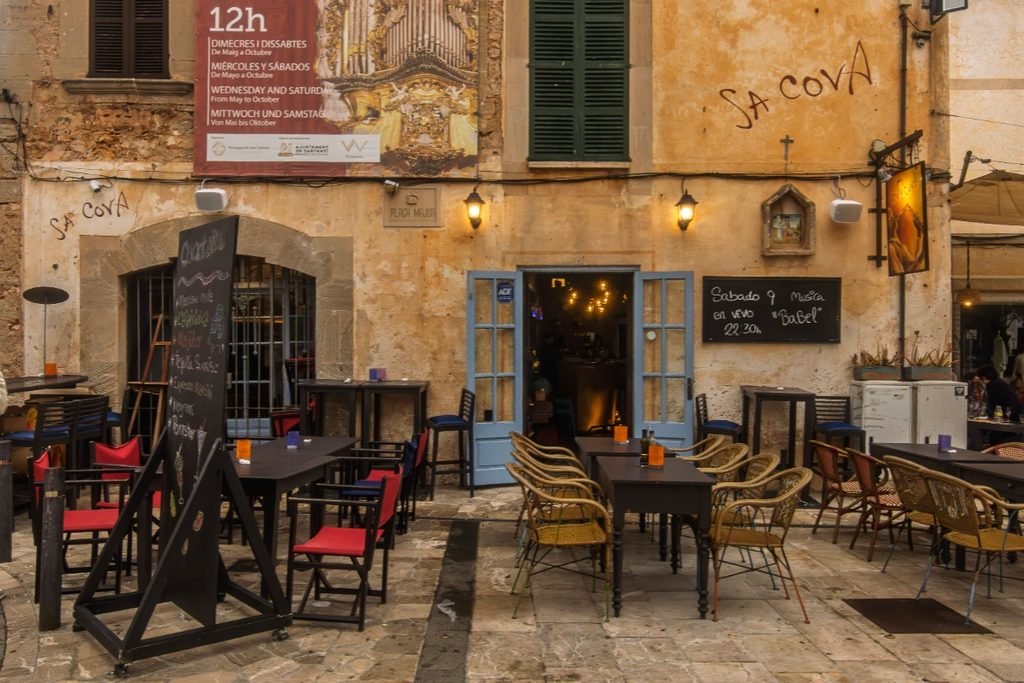
- Monday: first, start in Palma at Mercat de l’Olivar, then have pa amb oli for lunch.
- Tuesday: next, visit Mercat de Santa Catalina, when its fishmongers are open again.
- Wednesday: drive inland for Sineu’s market, then stay for a traditional lunch.
- Thursday: browse Inca’s market, then explore DO Binissalem wine country nearby.
- Friday: after that, head east to taste Callet reds in the DO Pla i Llevant area.
- Saturday: then spend the morning at Santanyí’s market in the south-east.
- Sunday: finally, choose Pollença or Santa Maria del Camí, since Palma’s covered markets are closed.
How to Eat Like a Local
- Make lunch your main meal: in Spain, lunch rather than dinner is traditionally the biggest meal of the day. Many restaurants also offer a fixed-price menú del día at lunchtime, which is often the best value.
- Eat with the seasons: tumbet and coca de trampó suit summer, while arròs brut is better in cooler months.
- Order a variat with your aperitif: it’s an easy way to try several small dishes at once.
- Read the label: for gifts, choose products with an official PDO or PGI label rather than generic souvenirs.
What Travellers Say About Eating in Mallorca
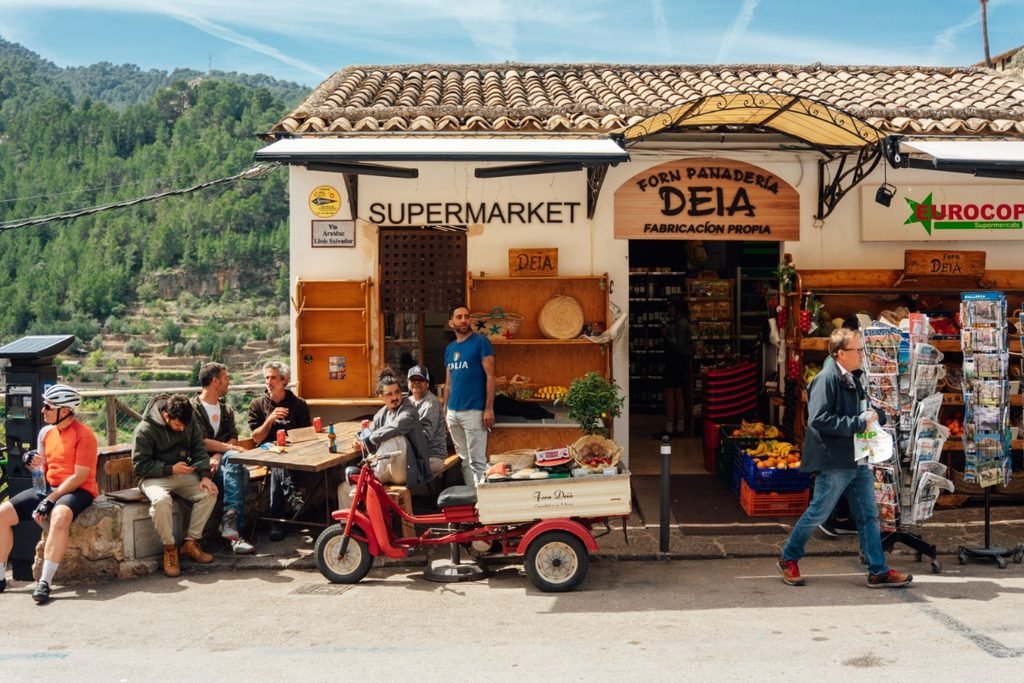
Before writing this guide, I read traveller discussions to see how visitors approach food on the island. Here are the common themes, paraphrased rather than quoted.
- Go inland: many travellers say the most traditional food is found in inland towns rather than in the busiest resorts.
- Visit a market early: visitors often recommend arriving at Sineu early, before the late-morning crowds.
- Hire a car for market days: since markets are spread across the island, travellers say a car makes it easier to combine them with lunch and wineries.
- Choose the quieter months: experienced visitors also suggest May, September and October for easier restaurant bookings and better market browsing.
Common Mistakes to Avoid
- Planning a Palma market trip on a Sunday. Both covered markets are closed, so go to Pollença or Santa Maria del Camí instead.
- Arriving at a village market at midday. Most stalls trade in the morning, so get there early.
- Packing olive oil or wine in your cabin bag. Each liquid must be 100 ml or less, so use your checked bag.
- Buying unlabelled “Mallorcan” products. Instead, look for the official PDO or PGI name on the pack.
- Ordering only international wines. Instead, ask for Manto Negro, Callet or Prensal Blanc.
- Assuming the ensaïmada is vegetarian. It’s made with pork lard.
How to Get There With Condor
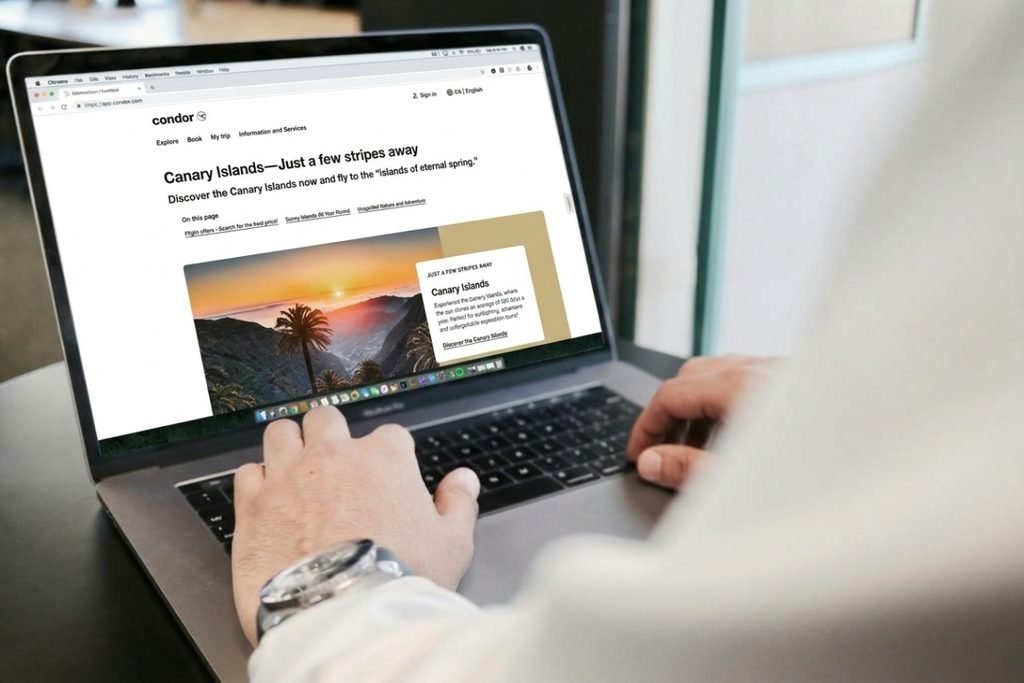
Condor’s Summer 2027 timetable, from 1 May to 31 October 2027, includes flights from Germany to Palma de Mallorca. In fact, Condor lists Palma flights from Frankfurt, Munich, Düsseldorf, Hamburg, Stuttgart and Nuremberg, among other German airports. However, not every airport has a flight every day, so check your departure airport when you search.
The new baggage rules also help food lovers. From 1 May 2027, Condor’s Economy fares with a checked bag include one 23 kg suitcase, so you’ll have more room for olive oil, wine and boxed ensaïmadas on the way home. If you need even more space, you can also add extra baggage. Alternatively, Business Class includes two 32 kg bags from 1 May 2027, plus a guaranteed free middle seat on short- and medium-haul flights. Either way, wrap bottles well before you pack them.
Which Mallorca Food Experience Suits You?
| If you want… | Do this |
|---|---|
| The most traditional market | Sineu on a Wednesday morning |
| A market and lunch in Palma | Mercat de l’Olivar or Santa Catalina, Monday to Saturday |
| Wine country | DO Binissalem, around Santa Maria del Camí and Binissalem |
| Lighter reds from native grapes | DO Pla i Llevant and its Callet wines |
| Edible gifts with a guarantee | PDO and PGI products such as Oli de Mallorca and Sobrasada de Mallorca |
Final Verdict
Overall, Mallorca rewards travellers who eat like locals. Start with pa amb oli and sobrassada, try tumbet and arròs brut, and finish with an ensaïmada and a glass of Hierbas. Then plan your week around Palma’s covered markets and the village markets, especially Sineu on a Wednesday. Finally, check Condor’s Summer 2027 flights to Palma from your nearest German airport, and leave room in your suitcase for a bottle of DO Binissalem.
FAQs
What is the most famous food in Mallorca?
The ensaïmada and sobrassada are probably the island’s most famous foods, especially as edible gifts. Both have EU protected geographical indications, as Ensaimada de Mallorca and Sobrasada de Mallorca.
Is ensaïmada vegetarian?
No. The name comes from saïm, meaning pork lard, which is part of the dough. For a vegetarian dish, order tumbet instead.
What wine is Mallorca known for?
Mallorca is known for wines from native grapes, especially the red Manto Negro. Under DO Binissalem rules, for example, red wines must contain at least 30% Manto Negro.
When is Mercat de l’Olivar open?
It’s open Monday to Friday from 7:00am to 2:30pm, with partial afternoon opening until 8:00pm, and on Saturday from 7:00am to 3:00pm. It’s closed on Sundays.
What day is Sineu market?
Sineu market takes place every Wednesday morning. According to the Balearic tourism board, King Jaume II established it in 1306.
Can I take Mallorcan olive oil home in my hand luggage?
Only in containers of 100 ml or less, since EU security rules limit liquids in hand luggage. So pack larger bottles of olive oil or wine in your checked bag.
Does Condor fly to Mallorca?
Yes. Condor’s Summer 2027 timetable includes flights from Germany to Palma de Mallorca, from 1 May to 31 October 2027.
Editorial & Accuracy Standards
- Expert Review:
Ammara Azmat,
Senior Travel Mobility Analyst (12+ years experience) - Status: Verified for accuracy against official 2026 service data and real-time traveller reports.
- Our Process: This content follows our Fact-Checking Policy.