
Beijing Travel Guide 2026: 7 Must-Visit Places You Cannot Miss
Sunset Weekly Disclosure: To help keep our guides free, this post contains affiliate links. If you click through and make a booking (such as hotels, flights, tours, or travel experiences), we may earn a commission at no extra cost to you. Sunset Weekly is an independent travel and lifestyle publication. While we may receive compensation from affiliate partners, this does not influence our editorial content, recommendations, or opinions. #ad
Last updated: May 2026 | Practical travel guide for first-time and returning visitors to Beijing, China
Quick Answer: Beijing rewards visitors who approach it with patience and curiosity. The Forbidden City, the Great Wall, the Summer Palace, the Temple of Heaven, the ancient Hutong alleyways, Tiananmen Square, and the imperial parks of Beihai and Jingshan together span over six centuries of Chinese imperial history — and together they form one of the most historically concentrated capitals on earth.
Beijing is one of those cities that requires more time than most visitors initially allow. The distances between major sites are significant. The historical depth is genuinely vast. Consequently, the city repays slower exploration far more than a checklist approach. Planning your Beijing itinerary around the seven experiences below — rather than attempting to cover everything — produces a considerably more rewarding visit.
Each place listed here represents a different layer of Beijing’s identity. The Forbidden City offers imperial grandeur. The Great Wall reveals engineering audacity. The Hutongs provide neighbourhood intimacy. The imperial parks offer quiet reflection. Together, they make a compelling and complete first encounter with one of the world’s great capitals.
1. The Forbidden City — The World’s Largest Imperial Palace Complex
The Forbidden City served as the ceremonial and political centre of China for nearly five hundred years. It housed twenty-four emperors across the Ming and Qing dynasties. Today it functions as the Palace Museum — the most visited museum in the world. The complex covers 720,000 square metres of courtyards, gates, halls, and gardens within its red walls.
What to See and How to Navigate
The Forbidden City is entered from the south through Tiananmen Gate and exits at the north through the Gate of Divine Might. The central ceremonial axis contains the most imposing architecture and the largest crowds. It runs through the Hall of Supreme Harmony, the Hall of Central Harmony, and the Hall of Preserving Harmony. Arriving at opening time (currently 08:30) gives the clearest views before tour groups fill the courtyards.
However, the eastern and western wings receive considerably fewer visitors. These areas contain some of the most interesting collections — the Clock and Watch Gallery, the Treasure Gallery, and the reconstructed inner court apartments. They reward a slower, more deliberate visit than the central axis alone.
Booking and Practicalities
The Forbidden City requires advance ticket booking through the official Palace Museum website. Same-day tickets are not available at the gate. The daily visitor limit fills quickly during peak season. Booking three to five days ahead is advisable during the April–October busy period. Audio guides are available for hire at the entrance. They add significant context to halls that can otherwise appear imposing but opaque without historical background.
2. The Great Wall of China — Beijing’s Most Essential Day Trip
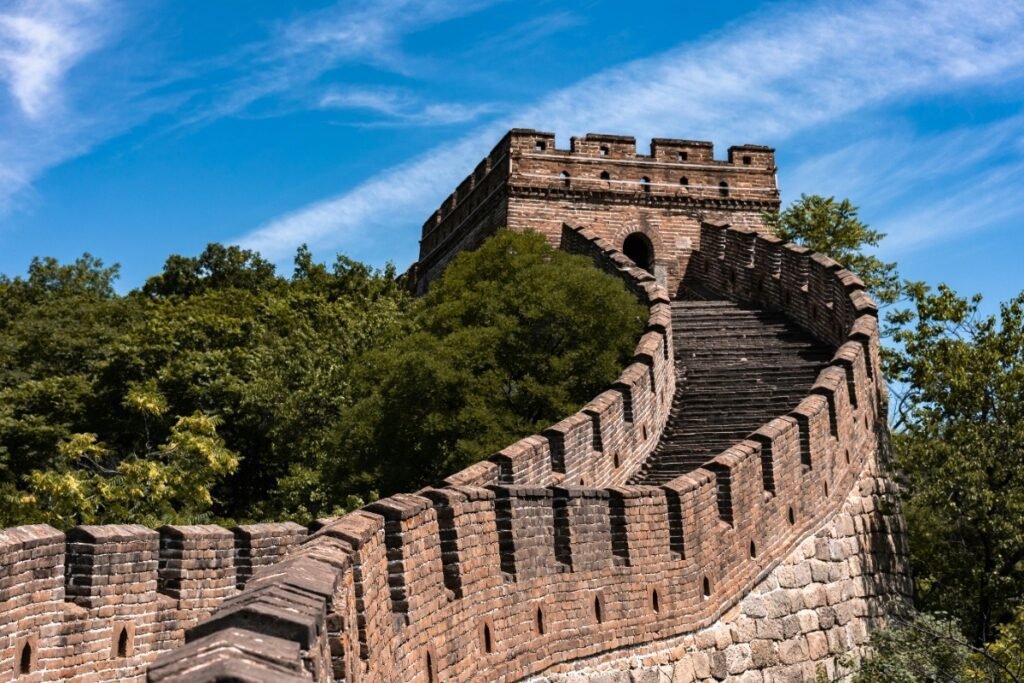
The Great Wall stretches approximately 21,000 kilometres across northern China. Day trips from Beijing cover a range of sections. Badaling is fully restored and heavily visited. Mutianyu, Jinshanling, and Simatai offer partially restored alternatives with considerably fewer crowds. Each section delivers a fundamentally different experience of one of the world’s most extraordinary engineering achievements.
Choosing the Right Section
Badaling is the most visited Great Wall section in the world. It is also the easiest to reach from Beijing. Consequently, it is the most crowded — particularly on weekends and public holidays, when the wall resembles a slow-moving queue rather than a mountain hike. The infrastructure is comprehensive and the restoration complete. This makes it accessible for all fitness levels.
Mutianyu sits approximately ninety minutes from central Beijing. It offers a more balanced experience — fully restored, with a cable car for the ascent and a toboggan slide for the descent. Furthermore, it attracts fewer visitors than Badaling. The forest backdrop is particularly striking in autumn when the foliage turns.
Jinshanling and Simatai suit visitors who want a more challenging experience. The sections are partially restored, the terrain is steeper, and there are dramatically fewer tourists. Jinshanling requires a guide and involves a genuine hike. The scenery rewards the effort considerably.
Practical Considerations
Wear appropriate footwear for whichever section you choose. The stone steps are steep, uneven, and can be slippery in wet conditions. Additionally, start early to secure parking at the wall’s base. This also allows you to reach the higher sections before midday heat builds in summer. Most visitors spend two to four hours on the wall itself. Factor in travel time when planning the day.
3. The Summer Palace — Beijing’s Imperial Lakeside Retreat
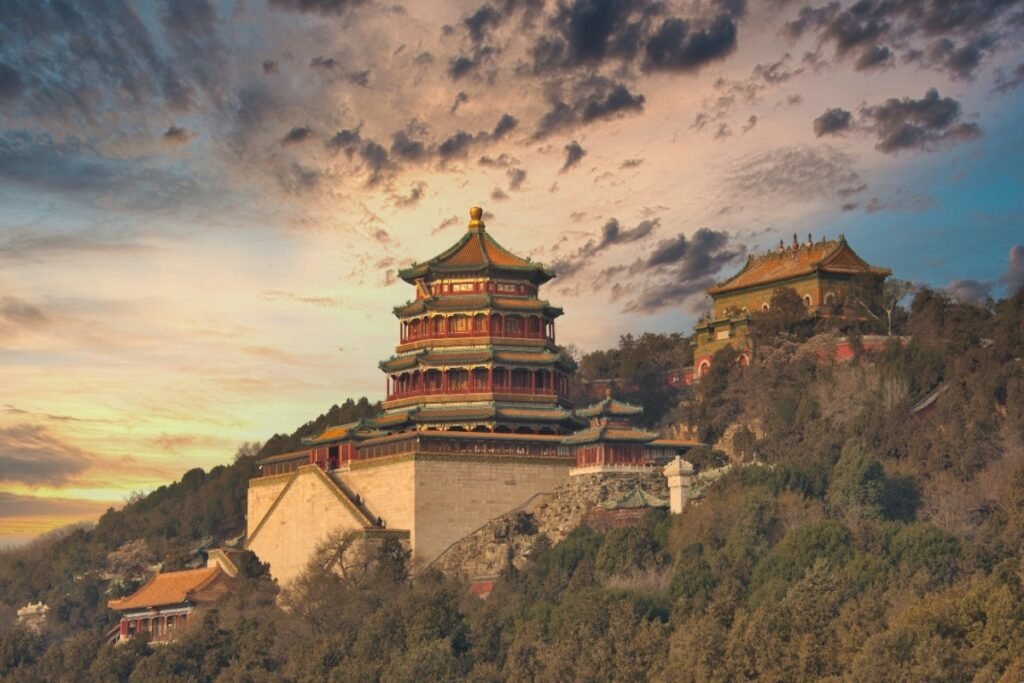
The Summer Palace covers approximately 2.9 square kilometres on the northwest outskirts of Beijing. It combines Kunming Lake, Longevity Hill, and a large collection of pavilions, corridors, temples, and gardens. The Qing dynasty imperial court used it as a summer retreat from the Forbidden City. UNESCO recognises it as a World Heritage Site.
The Long Corridor and Kunming Lake
The Summer Palace’s most celebrated feature is the Long Corridor — a covered walkway stretching 728 metres along the northern shore of Kunming Lake. It is decorated with over 14,000 painted scenes from Chinese history, mythology, and landscape. Walking the full length takes approximately twenty minutes at a leisurely pace. The painted panels vary considerably in subject and execution and reward close attention.
Kunming Lake covers three-quarters of the entire Summer Palace area. Hiring a rowing boat provides the most distinctive perspective on the complex. From the water, you can see the Seventeen-Arch Bridge, the marble boat structure at the western shore, and Longevity Hill’s temple structures reflected in the lake. In winter, the lake freezes sufficiently for ice skating — a local experience that most overseas visitors do not encounter.
The Hill and Temple Structures
Climbing Longevity Hill leads to the Tower of Buddhist Incense — the Summer Palace’s most visible landmark. The climb provides panoramic views across the lake and toward the Beijing skyline. It is moderate and takes approximately fifteen to twenty minutes from the lakefront. Additionally, the Suzhou Street area at the rear of the hill recreates a Qing dynasty market street alongside a canal. It offers a quieter alternative to the main lakeside promenade.
4. The Temple of Heaven — Where Emperors Communicated With the Sky
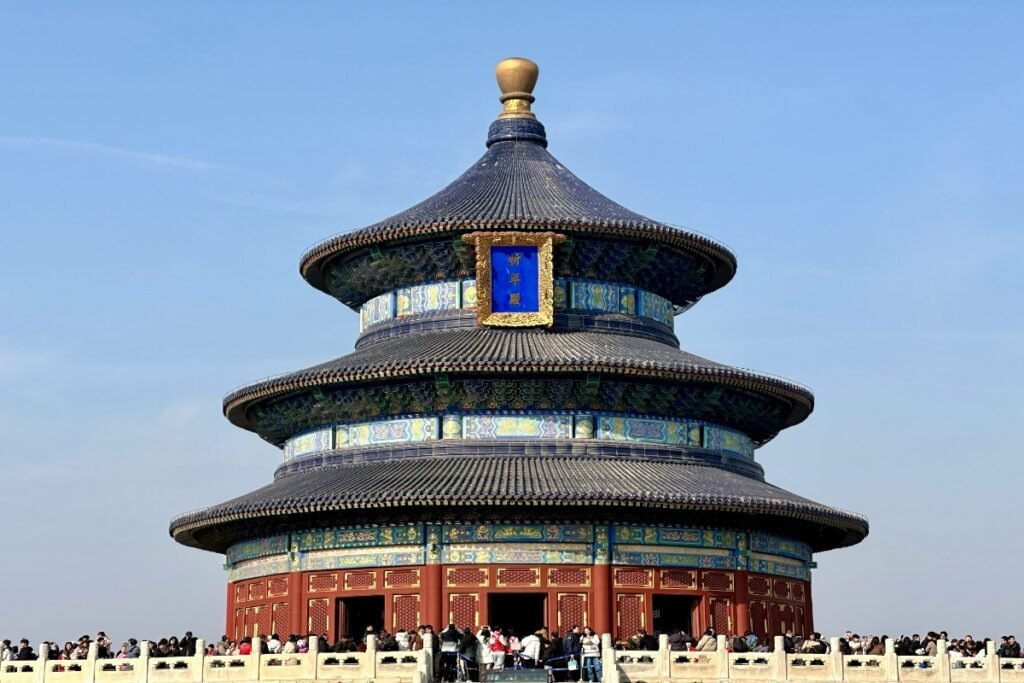
The Temple of Heaven complex in southern Beijing served as the site of imperial ceremonies. The emperor — as the Son of Heaven — performed annual rituals here to pray for good harvests. Built in 1420 during the Ming dynasty, the complex covers 2.73 square kilometres. It contains the circular Hall of Prayer for Good Harvests — one of the most recognisable buildings in China.
The Hall of Prayer for Good Harvests
The Hall of Prayer for Good Harvests stands on a three-tiered white marble terrace. It rises 38 metres without a single nail in its wooden structure. The circular form and deep blue roof tiles represent heaven. The square base represents earth. This relationship between the two forms the heart of the ritual performed here annually.
The interior contains four central columns representing the seasons. Twelve inner columns represent the months. Twelve outer columns mark the two-hour divisions of the traditional Chinese day.
The structure’s geometry is most apparent from the elevated walkway connecting the main ceremonial buildings. Specifically, the Red Stairway Bridge runs from the Hall of Prayer south to the Circular Mound Altar. Walking this pathway gives a sense of the complex’s full ceremonial scale.
The Park Experience
Unlike most of Beijing’s imperial sites, the Temple of Heaven park opens early. Local residents use it daily for tai chi, ballroom dancing, card games, calligraphy practice, and group singing. This is particularly true in the morning hours before tour groups arrive. The park opens at 06:00; buildings require a separately purchased ticket. Arriving early and spending time with the morning park activity provides one of Beijing’s most authentic neighbourhood encounters.
5. The Hutongs — Beijing’s Ancient Alleyway Neighbourhoods
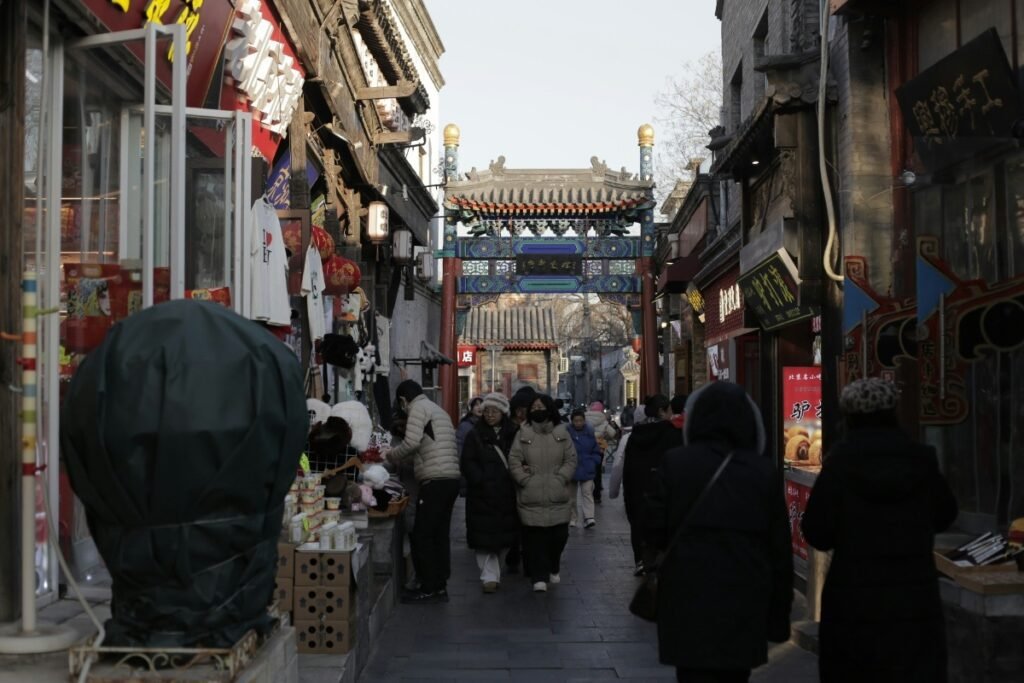
Beijing’s Hutongs are narrow alleyways connecting traditional courtyard residences (siheyuan). They formed the residential fabric of the imperial city for six centuries. The surviving Hutongs concentrate around the Drum and Bell Towers, Houhai Lake, and Nanluoguxiang. Together, they offer a street-level alternative to the grandeur of the imperial sites — a genuine experience of the city’s lived history.
Where to Explore
The area around Houhai Lake provides the most atmospheric Hutong wandering. Houhai connects with Qianhai and Xihai to form an interconnected lake system. Residential lanes open unexpectedly onto willow-lined shores throughout this area. The Drum Tower and Bell Tower at the northern end anchor the district historically. They also offer elevated views across the rooftops of the surrounding lanes.
Nanluoguxiang is the most tourist-oriented of Beijing’s Hutong streets. It runs north-south through the Dongcheng district as a single lane lined with cafés, independent shops, and food stalls. It suits visitors who want a comfortable entry point into Hutong culture without navigating less-signposted residential lanes.
Rickshaw Tours vs Walking
Rickshaw tours operate throughout the main Hutong areas. They provide a rapid introduction to the geography and some narrative context. However, walking independently — even without a map — produces more serendipitous encounters. Specifically, you are more likely to find courtyard entrances, neighbourhood temple compounds, and local residents going about their day. The most rewarding Hutong experiences consistently happen in the lanes branching off the main tourist thoroughfares. Walking those side lanes is always worth the short detour.
6. Tiananmen Square — The Symbolic Centre of Modern China
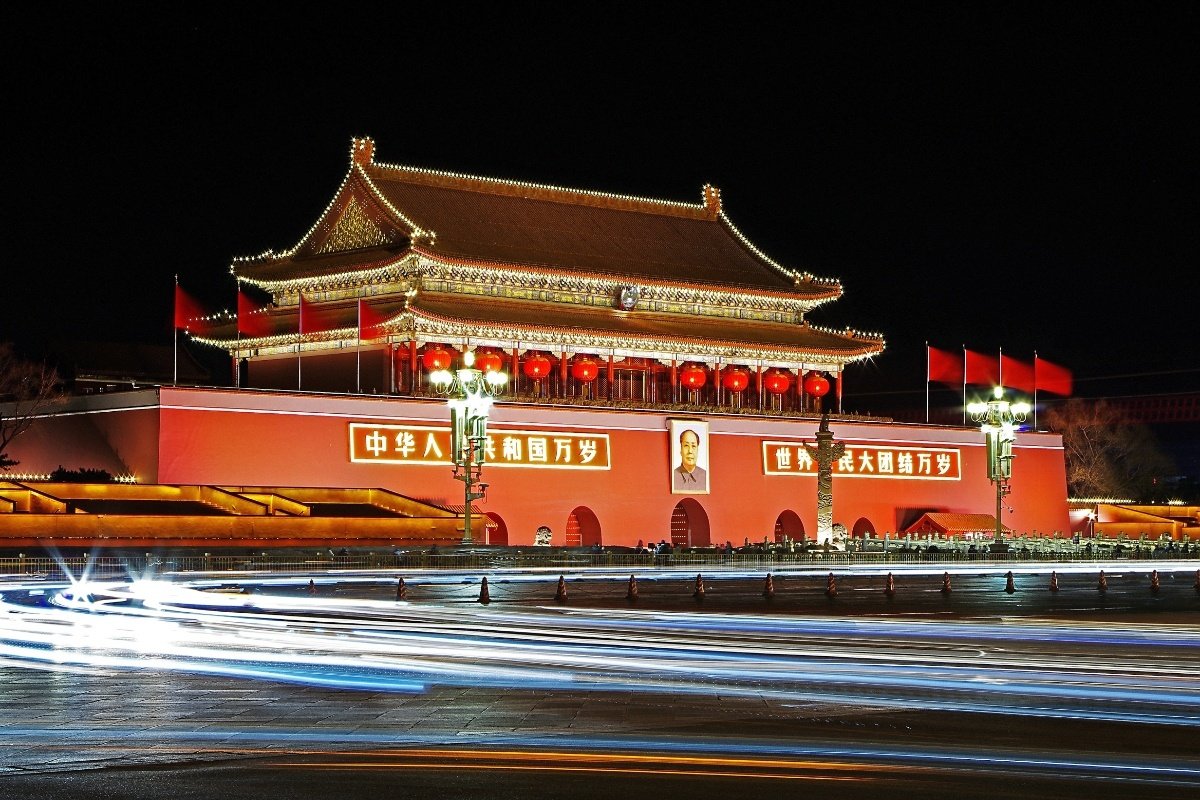
Tiananmen Square is one of the largest public squares in the world. It covers 440,000 square metres in the heart of Beijing. The Forbidden City sits to the north; the Chairman Mao Memorial Hall to the south. The square holds enormous significance in modern Chinese political history and serves as the symbolic centre of the People’s Republic.
Understanding the Square
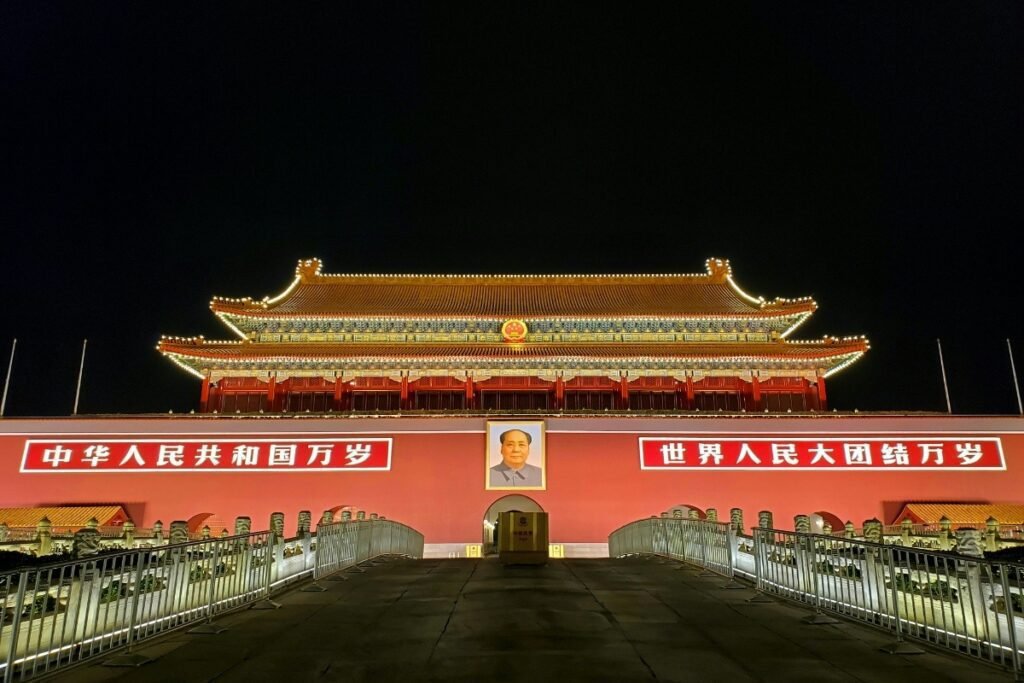
Tiananmen Square is flanked on the east by the National Museum of China and on the west by the Great Hall of the People. Above Tiananmen Gate at the square’s northern edge hangs the iconic portrait of Mao Zedong — the same gate through which visitors enter the Forbidden City. The Monument to the People’s Heroes stands at the square’s centre.
The Chairman Mao Memorial Hall is open to visitors in the morning only. It requires a separate queue. Arrive early, as lines form from opening time and the hall closes at midday. Photography is prohibited inside the memorial hall. Bags must be checked before entry.
The Flag Ceremony
The daily flag-raising ceremony at sunrise draws large crowds of Chinese visitors. Similarly, the flag-lowering ceremony at sunset is equally well attended. Both represent some of the square’s most charged and atmospheric moments. The exact times change daily according to the sunrise and sunset calendar. The relevant authorities publish the schedule — checking it before visiting is worthwhile if the ceremony is a priority.
7. Beihai Park and Jingshan Park — Beijing’s Imperial Gardens
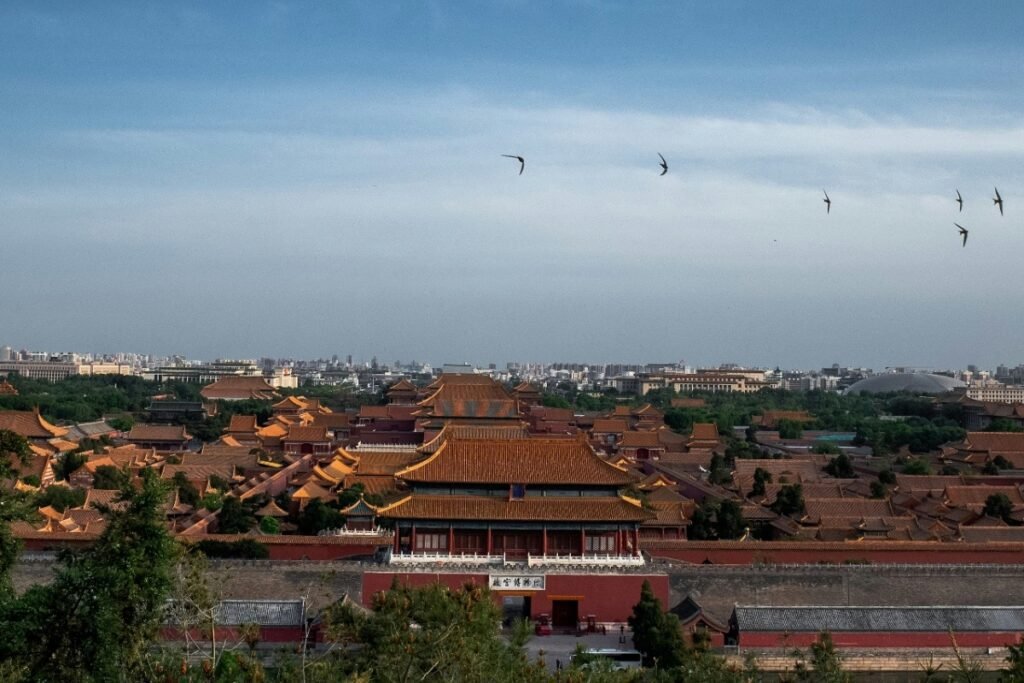
Beihai Park and Jingshan Park sit immediately north of the Forbidden City. Both connect to the imperial complex by history and geography. Jingshan Park’s central hilltop provides the finest elevated view of the Forbidden City’s rooftops — a perspective not available from within the palace itself. Beihai Park surrounds a lake dominated by the White Dagoba, a Tibetan-style stupa visible from much of central Beijing.
Jingshan Park: The Forbidden City From Above
Jingshan Park sits on an artificial hill. The earth used to create it came from excavating the Forbidden City’s moat. The summit pavilion sits approximately 45 metres above the surrounding streets. From there, it provides a direct north-facing view across the Forbidden City’s full rooftop sequence — from the Gate of Divine Might immediately below through to Tiananmen Gate at the far southern end.
This view is the most frequently reproduced aerial image of the Forbidden City. It is best experienced in the early morning when the golden rooftiles catch angled light. Climbing takes approximately ten to fifteen minutes on a well-maintained path. Entry is inexpensive and crowds are manageable even during peak season. Consequently, Jingshan is one of Beijing’s most rewarding low-effort, high-reward stops.
Beihai Park: Lake, Temple, and Local Life
The Park’s Imperial History
Beihai Park covers approximately 68 hectares. Beihai Lake sits at its centre, with the White Dagoba crowning Jade Island in the lake’s southern section. The park has served as an imperial garden since the tenth century — considerably older than the Forbidden City. That history gives it a layered, unhurried quality that contrasts with the Forbidden City’s formal grandeur.
Local Life on the Lake
Furthermore, Beihai is genuinely used by local residents throughout the year. Morning exercises, rowing on the lake, and weekend family visits are all common. Hiring a rowing boat in summer and skating on the frozen lake in winter are well-established local traditions. They give the park a living quality that purely tourist-facing sites cannot match.
Where to Stay in Beijing
Beijing is a large city. Your accommodation location significantly affects how efficiently you can cover its major sites. The central districts — Dongcheng and Xicheng — place you within walking distance of Tiananmen Square and the Forbidden City. They also provide subway access to the Summer Palace and Temple of Heaven. The Chaoyang district offers proximity to the embassy quarter, international dining, and the 798 Art District. However, it sits further east from the main imperial sites.
For travellers who want consistently reliable standards and professional service, Marriott Bonvoy hotels in Beijing provide strong coverage across the capital’s key districts. Properties sit near the central business district, the Forbidden City, and the Hutong areas. The Marriott Bonvoy portfolio allows loyalty points to accumulate throughout your Beijing stay. Consequently, it is a practical choice for frequent travellers visiting China as part of a longer international itinerary.
Where to Stay in Beijing – Marriott Bonvoy Hotels
| Hotel Name | Address | Contact | Rating | Action |
|---|---|---|---|---|
| Courtyard Beijing Changping | 101 Binhe Road, Changping District | +86 10-89759999 | ★★★★★ | BOOK NOW |
| Renaissance Beijing Capital | 61 Dongsanhuan Middle Rd, Chaoyang | +86 10-5863 8888 | ★★★★☆ | BOOK NOW |
| The Ritz-Carlton, Beijing | 83A Jian Guo Road, Chaoyang District | +86 10-5908 8888 | ★★★★☆ | BOOK NOW |
| Beijing Marriott Northeast | 26A Xiao Yun Road, Chaoyang District | +86 10-59278888 | ★★★★☆ | BOOK NOW |
| Aloft Beijing Huairou | Compound No 9, Huairou District | +86 10-56736666 | ★★★★☆ | BOOK NOW |
Beijing Travel FAQs: Everything You Need to Know Before You Visit in 2026
Entry, Visas, and Essentials
Visas and Entry Requirements
Do I need a visa to visit Beijing in 2026? Most foreign nationals require a Chinese tourist visa (L visa) to enter China. You obtain it from the Chinese embassy or consulate in your home country before travel. However, China has expanded its visa-free policies for select nationalities in recent years. The transit visa-free period has also been extended. Check the most current requirements via the official Chinese embassy website or the UK government’s China travel advice page (gov.uk/foreign-travel-advice/china) well before departure. These policies change periodically.
Is internet access available in Beijing, and do I need a VPN? China operates a national firewall that blocks many international websites and applications including Google, Gmail, WhatsApp, Instagram, Facebook, and YouTube. Consequently, downloading a reputable VPN before entering China is strongly advisable for travellers who rely on these services. Once inside China, downloading VPN software becomes considerably more difficult. A local Chinese SIM card (available at Beijing Capital International Airport) provides reliable mobile data, but the firewall applies regardless of your network provider.
Currency and Payments
What currency does China use, and how do I pay in Beijing? China uses the Chinese Yuan (CNY), also referred to as Renminbi (RMB). Beijing has transitioned significantly toward mobile payment — WeChat Pay and Alipay dominate most daily transactions at restaurants, shops, markets, and transport. International visitors can now link foreign bank cards to WeChat Pay’s international version, which simplifies payment considerably. Additionally, carry some cash in CNY for smaller vendors, temple entrance fees, and situations where digital payment is unavailable. Withdraw CNY from international ATMs at Bank of China or ICBC, which reliably accept foreign cards.
Getting Around Beijing
Subway and Transport
How do I use the Beijing subway system? The Beijing Metro is one of the most extensive subway networks in the world. It covers all major tourist sites efficiently. Purchase a transit card (Yikatong card) from any metro station service window for a small deposit. Top it up with cash as needed — card payment on the subway uses this card rather than a contactless bank card. Alternatively, single-journey paper tickets are available from machines at each station. Announcements and signage operate in both Mandarin and English. This makes the system genuinely navigable for non-Mandarin speakers.
Should I use taxis or rideshare in Beijing? Both are practical, though they work differently for foreign visitors. Licensed taxis are metered and reliable. However, communication can be challenging without Mandarin. Showing your destination written in Chinese characters — or using a translation app — is essential. DiDi, China’s equivalent of Uber, operates internationally. It allows booking in English via the DiDi app, making it considerably more accessible for non-Mandarin speakers. Confirm your destination is entered correctly before confirming the journey.
Getting from the Airport
How do I get from Beijing Capital International Airport to the city centre? The Airport Express train connects Beijing Capital International Airport (Terminal 3) to Dongzhimen and Sanyuanqiao metro stations in approximately twenty minutes. From there, onward connections cover the full subway network. The journey costs approximately 25 CNY. Alternatively, licensed taxis operate from the official taxi rank outside arrivals. Confirm the meter is running before the journey begins. Expect approximately forty-five to sixty minutes to central Beijing, depending on traffic.
Planning Your Beijing Visit
Best Time to Visit and Booking
When is the best time to visit Beijing in 2026? April through early June and mid-September through October offer the most comfortable visiting conditions. Spring brings warming temperatures and occasional cherry blossom at the imperial parks. Autumn delivers clear skies, cooler temperatures, and the most atmospheric light on the Great Wall and Forbidden City. Avoid the Chinese National Golden Week holidays — the first week of October and the first week of May. Domestic tourism peaks dramatically then. Major sites reach their maximum capacity. Summer (July–August) brings heat and humidity; winter (December–February) is cold but clear, with thin crowds at most sites.
Do I need to book Beijing attractions in advance? Yes, for the Forbidden City. It requires advance ticket purchase through the Palace Museum’s official website. Same-day tickets are not available at the gate. The Great Wall sections also benefit from advance booking during Golden Week and summer weekends. For other sites — the Summer Palace, Temple of Heaven, and Beihai Park — tickets are generally available on arrival. However, booking ahead during peak periods removes uncertainty. Popular Peking duck restaurants and evening acrobatics shows should be reserved at least several days ahead.
Health, Safety, and Practical Tips
Is Beijing safe for foreign tourists? Beijing is generally safe for foreign visitors. Violent crime in tourist areas is rare. The most common issues are overcharging by unlicensed vendors near major tourist sites, and tea house scams near the Forbidden City and Wangfujing. Decline unsolicited invitations to “traditional tea ceremonies” from strangers — these are well-documented tourist traps. Beyond these specific situations, Beijing is a straightforward city to navigate safely with standard urban awareness.
What health precautions should I take before visiting Beijing? Air quality in Beijing varies significantly by day and season. Checking the daily AQI (Air Quality Index) before outdoor activities is advisable. This is particularly important in winter, when coal heating and calm weather create higher pollution days. On high AQI days, wearing an N95 mask significantly reduces particulate exposure. Additionally, ensure routine vaccinations are current before travel. Consult your GP or a travel health clinic at least six to eight weeks before departure for specific China travel health advice.
Food, Culture, and Etiquette
Eating in Beijing
What should I eat in Beijing? Peking duck (北京烤鸭) is the city’s signature dish. It is genuinely worth eating at a quality restaurant. Quanjude and Dadong are the two most internationally recognised establishments. However, numerous smaller roast duck restaurants serve excellent versions at lower prices. Beyond duck, Beijing cuisine includes zhajiangmian (noodles with soybean paste and minced pork), jianbing (savoury crepes), hotpot, and dumplings. Street food in the Hutong areas and around Wangfujing Food Street provides the widest variety at the most accessible prices.
What cultural etiquette should I know before visiting Beijing? Several customs reward prior awareness. Offering and receiving business cards, gifts, or items with both hands is standard respectful practice. Removing shoes before entering a home is expected if invited to a Chinese residence. Tipping is not a Chinese custom. It can occasionally cause confusion — it is not expected in restaurants, taxis, or hotels. At religious sites and historic ceremonial buildings, dress modestly and speak quietly. Follow any photography restrictions indicated by signs. Learning a few basic Mandarin phrases is appreciated. Specifically, xièxiè (thank you) and nǐ hǎo (hello) are consistently received warmly.
Editorial & Accuracy Standards
- Expert Review:
Ammara Azmat,
Senior Travel Mobility Analyst (12+ years experience) - Status: Verified for accuracy against official 2026 service data and real-time traveller reports.
- Our Process: This content follows our Fact-Checking Policy.