
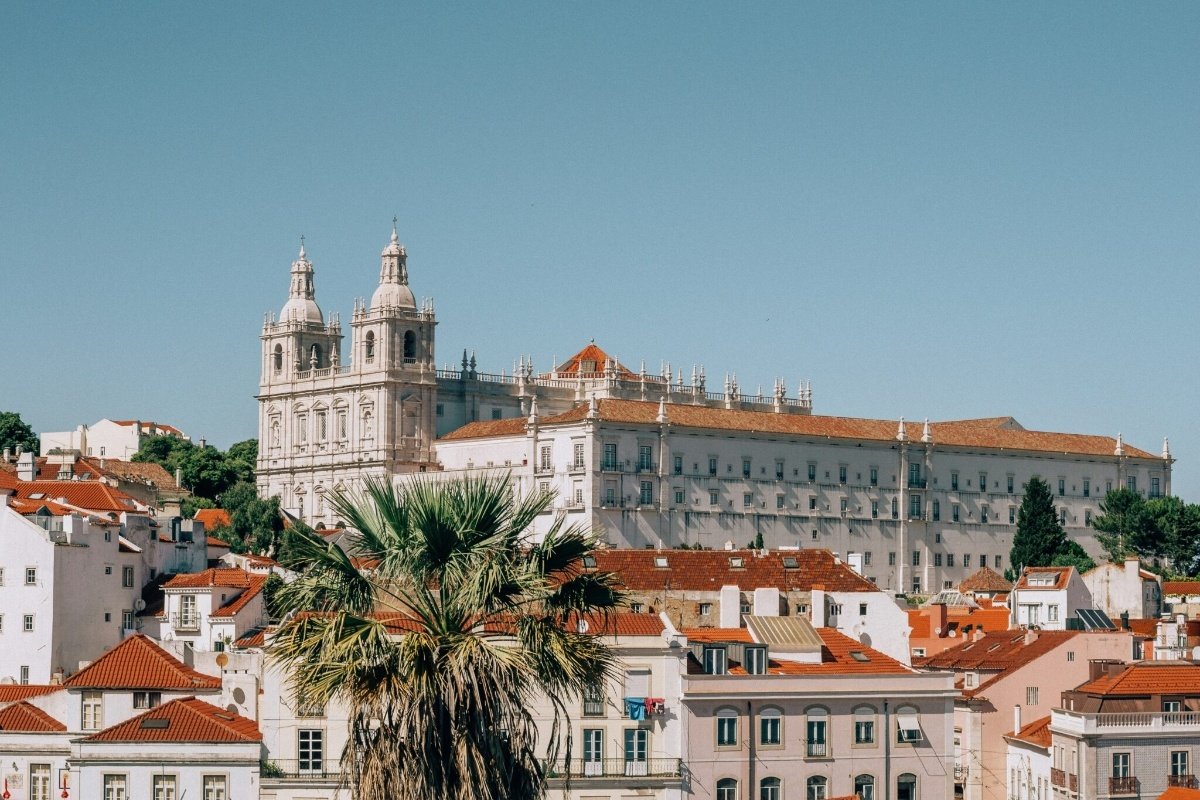
Portugal Travel Guide 2026: 5 Must-Visit Places You Cannot Miss
Sunset Weekly Disclosure: To help keep our guides free, this post contains affiliate links. If you click through and make a booking (such as hotels, flights, tours, or travel experiences), we may earn a commission at no extra cost to you. Sunset Weekly is an independent travel and lifestyle publication. While we may receive compensation from affiliate partners, this does not influence our editorial content, recommendations, or opinions. #ad
Last updated: May 2026 | Practical travel guide for first-time and returning visitors to Portugal
Quick Answer: Portugal combines Atlantic coastline, medieval history, and one of Europe’s most liveable climates into a remarkably compact country. Belém Tower, the Alfama district, the Algarve’s sea caves, Lisbon’s Praça do Comércio, and Sintra’s Pena Palace each represent a different dimension of the country — and together they cover what makes Portugal genuinely worth the journey in 2026.
Portugal has moved from under-the-radar European destination to one of the continent’s most visited countries in less than a decade. Consequently, planning ahead matters more than it once did — but the country’s depth rewards effort. Beyond the well-photographed landmarks, Portugal offers neighbourhood restaurants that have not yet appeared on any algorithm, coastline that stretches further than most visitors realise, and a pace of life that remains distinctly its own despite the increase in tourism.
The five places below represent the essential Portugal — the experiences that deliver on the promise of the destination rather than merely photographing well.
1. Belém Tower — Lisbon’s Most Iconic Monument
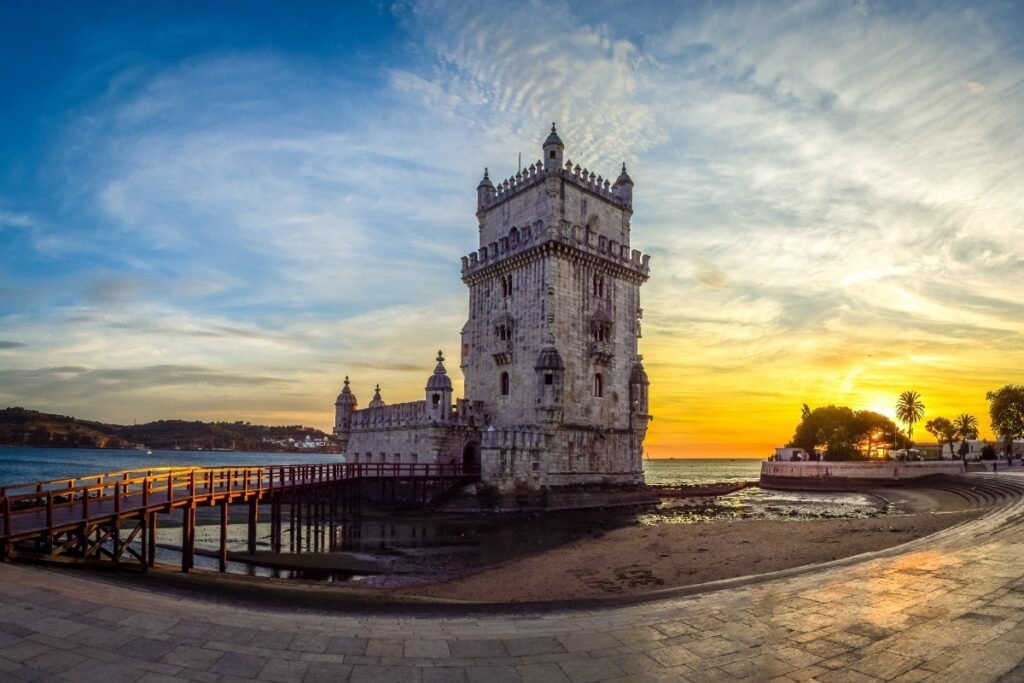
The Torre de Belém stands at the edge of the Tagus River in Lisbon’s Belém district, serving as the ceremonial gateway through which Portuguese explorers departed for Africa, India, and the Americas during the Age of Discovery. Built between 1516 and 1521, it combines late Gothic Manueline architecture with Renaissance elements in a way that remains visually distinctive five centuries later.
What to Expect Inside and Around the Tower
The tower’s exterior is the primary draw. The Manueline stonework features carved armillary spheres, ropes, shields, and crosses of the Order of Christ. These details reward close inspection before you queue for entry. Inside, the tower spans five floors connected by a narrow spiral staircase, leading to a terrace with river views across the Tagus.
Notably, the upper terraces use a staircase narrow enough for single-file movement in each direction. Consequently, queues form during peak hours. The experience is significantly more comfortable before 10:00 AM or after 16:00 PM. Booking tickets online in advance is strongly advisable — queues at the entrance can extend to an hour during summer mornings.
Belém Beyond the Tower
The surrounding Belém district justifies spending a full morning or afternoon here. The nearby Jerónimos Monastery — a UNESCO World Heritage Site — sits a ten-minute walk from the tower. It is one of the finest examples of Manueline architecture anywhere. The Pastéis de Belém bakery has served the original recipe for Pastel de Nata since 1837. It sits directly beside the monastery. Furthermore, the Monument to the Discoveries and the MAAT museum of modern art add context for visitors interested in both Lisbon’s imperial history and its contemporary culture.
2. Alfama District — Lisbon’s Oldest Neighbourhood
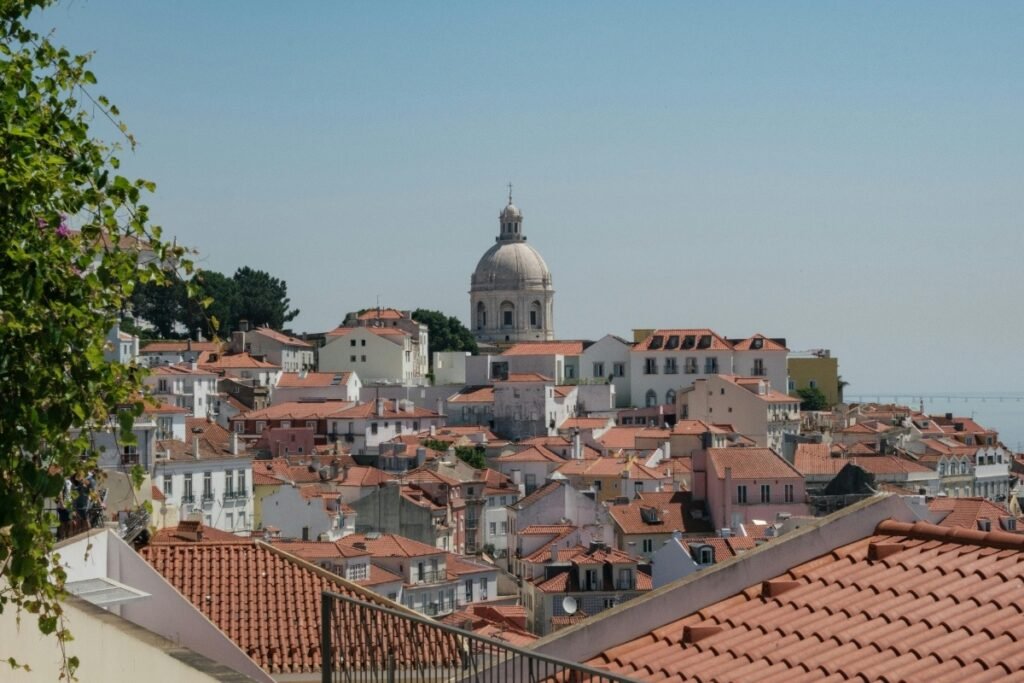
The Alfama is the oldest continuously inhabited district in Lisbon. It predates the 1755 earthquake that destroyed much of the rest of the city. The district climbs the hill below São Jorge Castle through a dense network of narrow lanes, tiled staircases, and viewpoints. It remains a genuine neighbourhood rather than a purely tourist construction.
Walking the Alfama
The Alfama rewards slow, directionless walking more than any planned route. Streets narrow to the width of a single person between whitewashed walls decorated with azulejo tile panels. Laundry hangs between buildings; cats occupy doorsteps with complete authority. Additionally, the district’s several miradouros — viewpoints — offer natural stopping points. These platforms look out across the city’s terracotta rooftops to the Tagus.
The most visited viewpoints are Miradouro da Graça and Miradouro das Portas do Sol. Both are accessible by tram or on foot. Arriving early avoids the peak crowds that gather from mid-morning through to late afternoon, particularly on weekends.
Fado in the Alfama
The Alfama is the spiritual home of fado. Portugal’s distinctive mournful folk music tradition holds UNESCO Intangible Cultural Heritage status. Numerous fado houses operate in the district. Some are tourist-oriented dinner venues; others are smaller, more intimate spaces where the music is the primary focus.
Choosing a fado house with a cover charge absorbed into the food and drink minimum tends to produce a more authentic experience. In either case, arriving early secures the best table positions. Booking ahead is essential during summer months.
3. Algarve: Benagil Sea Cave and Lagos
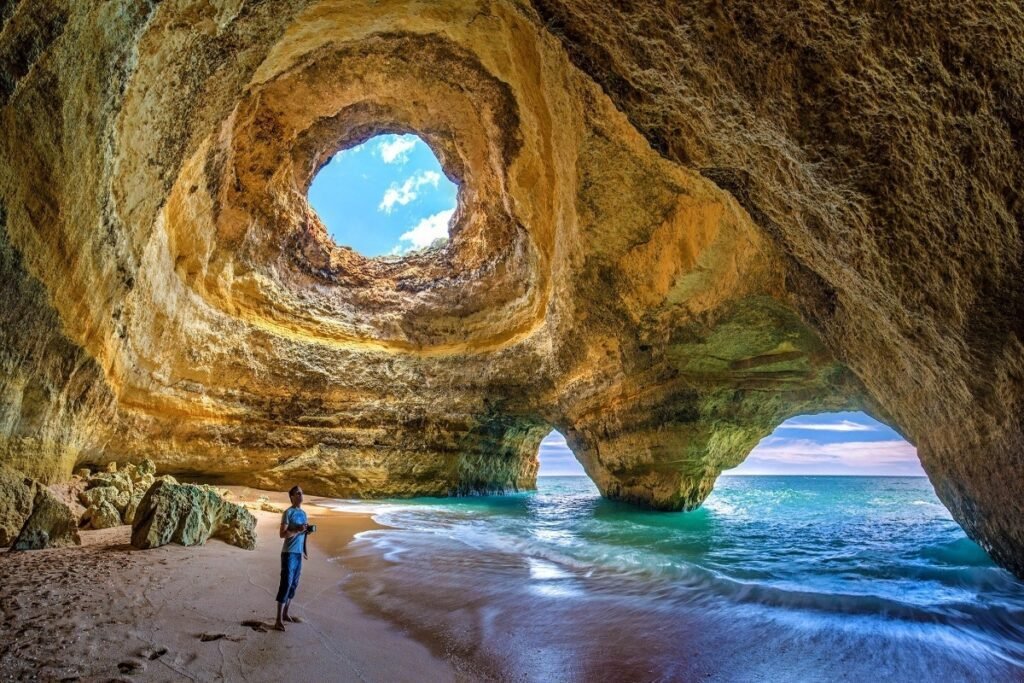
The Algarve’s southern coastline is defined by ochre-coloured limestone cliffs, hidden beach grottos, and water the colour of uncut aquamarine. The Benagil Sea Cave — a cathedral-like rock formation with a natural skylight opening onto a sandy beach inside — is the most photographed natural feature in Portugal. Lagos, nearby, offers the best base for exploring the region’s beaches and boat tours.
Reaching the Benagil Sea Cave
The Benagil Sea Cave sits a short distance along the coast from the village of Benagil. Crucially, it cannot be reached on foot. Access requires either a kayak, stand-up paddleboard, or boat tour — all of which operate from Benagil beach and from Lagos. The cave itself contains a small beach inside the rock chamber. It is accessed through a low arch at water level. That arch becomes impassable at high tide.
Boat tours departing from Lagos typically include Benagil alongside other caves, arches, and rock formations along the Ponta da Piedade headland. Consequently, booking a full coastline tour rather than a single-destination trip produces a considerably more rewarding experience. It also provides context for the geological formations that make this coastline distinctive.
Lagos as an Algarve Base
Lagos combines a medieval walled old town, a working harbour, and direct access to some of Portugal’s finest Atlantic beaches. All of these sit within walking distance of the centre. In contrast to the smaller coastal villages, Lagos has considerably more developed infrastructure — restaurants, accommodation, and transport connections. Consequently, it is the most practical base for day trips along the western Algarve.
Moreover, Lagos to Sagres — the southwestern tip of continental Europe — is a twenty-minute drive. It is worth the short journey. At sunset, the lighthouse at Cabo de São Vicente becomes one of the most atmospheric spots on the Portuguese coast.
4. Praça do Comércio — The Heart of Lisbon
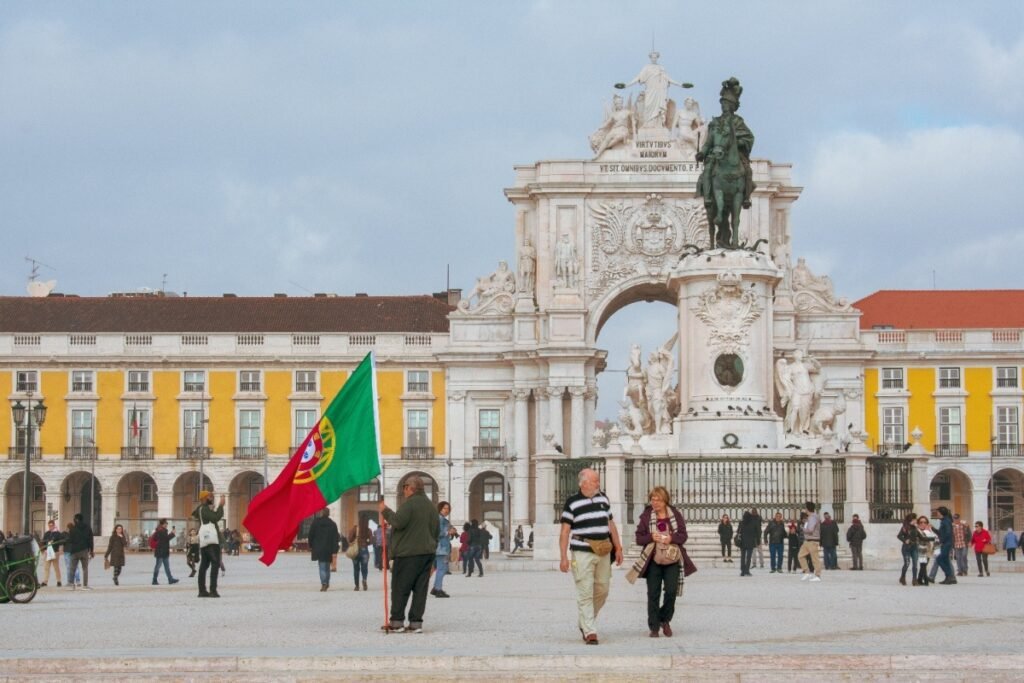
Praça do Comércio is Lisbon’s central waterfront square — a vast, arcaded space flanked by ochre government buildings, open to the Tagus on its southern side and anchored by an equestrian statue of King José I at its centre. It served as the ceremonial entrance to Lisbon for centuries of visitors arriving by sea, and it remains the most significant public space in the Portuguese capital.
Understanding the Square
The square’s current form dates from reconstruction following the 1755 earthquake and tsunami. The Marquis of Pombal oversaw the rebuilding in the decades that followed. The uniform arcaded facades on three sides house ministries, restaurants, and the Lisboa Story Centre museum. This replanning made Pombaline Baixa one of Europe’s earliest examples of organised urban design.
The triumphal arch at the square’s northern edge was completed in 1873. It connects Praça do Comércio to Rua Augusta — the pedestrianised main street of the Baixa. The arch offers a rooftop viewing platform with panoramic views across the square and the Tagus. The climb is modest, and the view is one of the most complete available of central Lisbon.
Praça do Comércio as a Starting Point
Rather than treating the square as a destination to photograph and leave, use it as the starting point for a walking circuit. Specifically, Rua Augusta leads north through the flat Baixa grid to Rossio square. Branching west reaches Chiado’s bookshops and the Brasileira café. Heading east along the waterfront reaches the Alfama. The square’s central position makes it the natural orientation point for exploring Lisbon on foot.
Furthermore, the square hosts outdoor events, food markets, and public performances throughout the year. Checking what is scheduled during your visit adds another dimension to what might otherwise be a brief photography stop.
5. Sintra’s Pena Palace — Portugal’s Fairy-Tale Hilltop Fortress
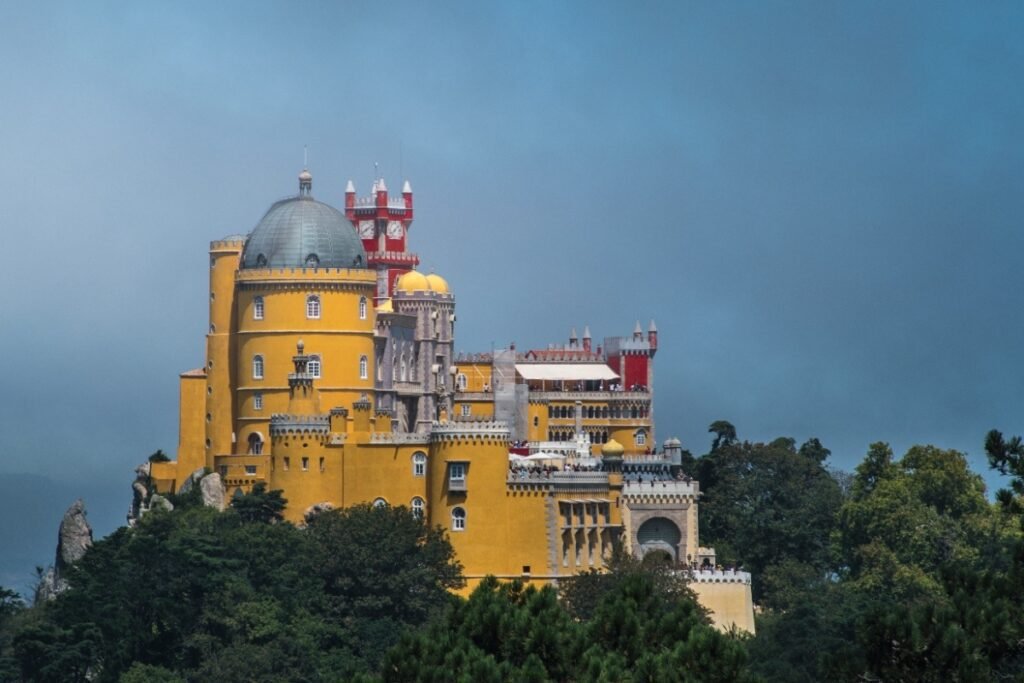
Pena Palace crowns one of the hills above Sintra, approximately forty minutes from central Lisbon by train. Built in the nineteenth century for King Ferdinand II on the ruins of a medieval monastery, it combines Romantic-era architectural fantasy with extraordinary views across the Serra de Sintra to the Atlantic. UNESCO designates the entire Sintra Cultural Landscape as a World Heritage Site.
The Palace Itself
Pena Palace does not conform to any single architectural period. It was designed to be deliberately eclectic. Neo-Manueline, Neo-Gothic, Moorish, and Renaissance elements combine in a building that reflects nineteenth-century Romantic imagination. The exterior features turrets, walkways, and domes originally painted in rich terracotta and mustard yellow. Atlantic moisture has since weathered these to a more muted palette.
The interior preserves its original furnishings and royal decoration. Consequently, it offers an unusually complete picture of the palace as it appeared when the royal family occupied it. Additionally, the surrounding Pena Park covers two hundred hectares of woodland, walking paths, and hidden features — including the Valley of the Lakes.
Getting to Sintra
Sintra lies forty minutes from Lisbon by direct train from Rossio station. That accessibility makes it one of Portugal’s most visited day-trip destinations. Consequently, arriving on the first available train — typically before 09:00 — gives the clearest access to the palace before crowds arrive. Alternatively, staying overnight in Sintra allows evening access to the town’s streets after day visitors have returned to Lisbon.
What Else to See in Sintra
Beyond Pena Palace, Sintra holds several other sites worth your time. Quinta da Regaleira features its famous initiatic well. The Moorish Castle ridge walk offers dramatic hilltop views. The National Palace sits in the town centre and is easily accessible on foot. Planning for a full day — rather than a rushed morning — produces a considerably more satisfying experience of the area.
Where to Stay in Portugal
Choosing where to base yourself in Portugal significantly affects how much ground you can cover and how comfortably you can cover it. Lisbon’s central districts — Baixa, Chiado, and Príncipe Real — place you within walking distance of the Alfama, Belém (by tram), and direct train access to Sintra. For the Algarve, Lagos suits western coast exploration; Albufeira or Vilamoura cover the central and eastern stretches.
For travellers who want consistent quality and reliable standards across multiple Portuguese destinations, Marriott Bonvoy hotels in Portugal offer a well-distributed portfolio covering Lisbon, Porto, Cascais, and the Algarve. Whether you are splitting time between the capital and the coast, or staying in one base for the duration, the Marriott Bonvoy network allows loyalty points to accumulate across a Portugal trip — a genuine benefit for frequent travellers who want recognition and flexibility across the country’s key destinations.
Where to Stay in Portugal – Marriott Bonvoy Hotels
| Hotel Name | Address | Contact | Rating | Action |
|---|---|---|---|---|
| Origine Porto Gaia | R. do Gen. Torres 219, Vila Nova de Gaia | +351 220-430700 | ★★★★★ | BOOK NOW |
| Domes Lake Algarve | Praia da Falésia 811, Apartadó | +351 289 320 700 | ★★★★★ | BOOK NOW |
| Penha Longa Resort | Estrada da Lagoa Azul, Sintra | +351 21-924-9011 | ★★★★★ | BOOK NOW |
| Pine Cliffs Residence | Praia Da Falésia, Albufeira | +351 289-245000 | ★★★★☆ | BOOK NOW |
| Pine Cliffs Hotel | Praia Da Falésia, Albufeira | +351 289-240100 | ★★★★☆ | BOOK NOW |
Portugal Travel FAQs: Everything You Need to Know Before You Visit in 2026
Entry, Visas, and Currency
Entry Requirements
Do UK nationals need a visa or ETA to visit Portugal in 2026? UK citizens do not currently require a visa for short visits to Portugal of up to 90 days within any 180-day period. However, entry requirements can change. Always check the current rules on the official UK government travel page (gov.uk/foreign-travel-advice/portugal) before booking. Also ensure your passport has at least six months of validity from your departure date. Portuguese border control enforces this requirement consistently.
What currency does Portugal use, and do I need cash? Portugal uses the Euro (€). Major cities including Lisbon and Porto are largely card-friendly, with most restaurants, shops, and tourist attractions accepting contactless payment. However, smaller towns, rural areas, rural markets, and some traditional tascas (local restaurants) still prefer or require cash. Withdrawing Euros from an ATM on arrival is the most practical approach. Using a low-fee travel card keeps costs down and covers both urban and rural spending needs.
Money and Costs
Is Portugal expensive for tourists in 2026? Portugal remains one of Western Europe’s more affordable tourist destinations, though prices in central Lisbon and the Algarve have risen noticeably over the past several years. Budget travellers can eat and drink well for considerably less than in Paris or Amsterdam. Midrange dining typically costs €12–€20 per person for a full meal with wine at a traditional restaurant. Peak season (July–August) and popular tourist areas command higher accommodation prices; visiting in shoulder season (April–June or September–October) delivers better value with similar weather.
Getting Around Portugal
Transport Options
What is the best way to travel between Lisbon and Sintra? Take the direct train from Rossio station in central Lisbon. It reaches Sintra in approximately forty minutes and runs frequently throughout the day. The train is considerably more practical than driving. Sintra’s approach roads are narrow; parking is limited and expensive. The train also deposits you directly in the town centre. The journey costs a few euros each way and is one of the most useful short rail trips in Portugal.
Should I rent a car in Portugal? Outside the major cities, yes — particularly for exploring the Algarve coastline, the Alentejo wine region, and areas of northern Portugal not well served by public transport. Within Lisbon and Porto, however, a car creates more difficulty than it solves. Parking is scarce, hills are steep, and the tram and metro systems are both efficient and inexpensive. The most practical approach is to use public transport for city days and hire a car for regional excursions.
Getting from the Airport
How do I get from Lisbon Airport to the city centre? The Lisbon Metro connects the airport directly to central stations including Marquês de Pombal, Baixa-Chiado, and Oriente within twenty to thirty minutes. A single ticket costs approximately €1.65. Alternatively, taxis and licensed rideshare services (Uber, Bolt) operate legally from the airport. These provide a direct door-to-door option. They typically cost €10–€20 to central Lisbon, depending on destination and time of day. Avoid unlicensed drivers who approach arrivals without a meter.
Planning Your Portugal Trip
Best Time to Visit and Booking
When is the best time to visit Portugal in 2026? April through June and September through October offer the most practical balance of weather, crowd levels, and pricing. Spring delivers warm temperatures, green landscapes, and the wildflower season in the Alentejo and Algarve. Autumn maintains warmth without summer’s peak temperatures, and accommodation costs drop after the August school holiday surge. July and August bring reliable sunshine. However, crowds at Algarve beaches and Lisbon’s most popular sites are significant — busier than most visitors expect, even with advance planning.
Do I need to book attractions in advance in Portugal? Yes, for the most visited sites. Pena Palace in Sintra, Jerónimos Monastery in Belém, and Belém Tower all sell out on peak days. Popular Algarve boat tours face the same issue — particularly on weekends between June and September. Booking tickets online two to four weeks in advance during peak season is strongly advisable. Fado dinner houses in Lisbon fill up quickly too. Book at least several days ahead to avoid disappointment at the most respected venues.
Safety, Weather, and Practicalities
Is Portugal safe for tourists? Portugal consistently ranks among Europe’s safest countries for visitors. Petty theft occurs in busy tourist areas — primarily phone snatching and pickpocketing on tram 28, at crowded viewpoints, and at popular beaches. However, serious crime against tourists is rare. Standard urban precautions are sufficient for most situations: keep bags closed and visible, and avoid using your phone while walking in unfamiliar areas at night. Portugal’s emergency number is 112.
What should I pack for Portugal? Portugal’s weather varies considerably by region and season. The Algarve runs warmer and drier than Lisbon year-round; the north is wetter and cooler. In all regions, a light waterproof layer is useful even in summer. Atlantic weather can shift quickly. Comfortable walking shoes with grip are essential for Lisbon’s hilly cobblestone streets. Smooth-soled footwear becomes genuinely hazardous on wet stone pavements. Sunscreen is necessary from April onwards. UV intensity in the Algarve is higher than Northern European visitors typically anticipate.
Food, Culture, and Tipping
Eating and Drinking
What should I eat in Portugal? Portugal’s food is one of its most rewarding aspects. Pastel de Nata — the custard tart — is the most famous export. It is best eaten warm from a bakery, or from Pastéis de Belém in Lisbon. Bacalhau (salt cod) appears in dozens of preparations. It is considered Portugal’s national dish. Grilled sardines (sardinhas assadas) are at their best during the summer festival season. The Alentejo region produces Portugal’s most celebrated red wines. The Douro Valley produces Port and increasingly impressive dry table wines. Eating the daily menu (menu do dia) at local tascas provides a full meal at a fraction of tourist restaurant pricing.
Do I need to tip in Portuguese restaurants? Tipping in Portugal is appreciated but not mandatory. Unlike some countries, service charges are not automatically added to bills. Rounding up to the nearest euro is common practice. Leaving five to ten percent for good service is also standard. At casual tascas and cafés, leaving small coins is typical. At higher-end restaurants, ten percent is a recognised gesture of satisfaction. Tipping is never required. It should reflect your genuine experience of the service.
Editorial & Accuracy Standards
- Expert Review:
Ammara Azmat,
Senior Travel Mobility Analyst (12+ years experience) - Status: Verified for accuracy against official 2026 service data and real-time traveller reports.
- Our Process: This content follows our Fact-Checking Policy.